

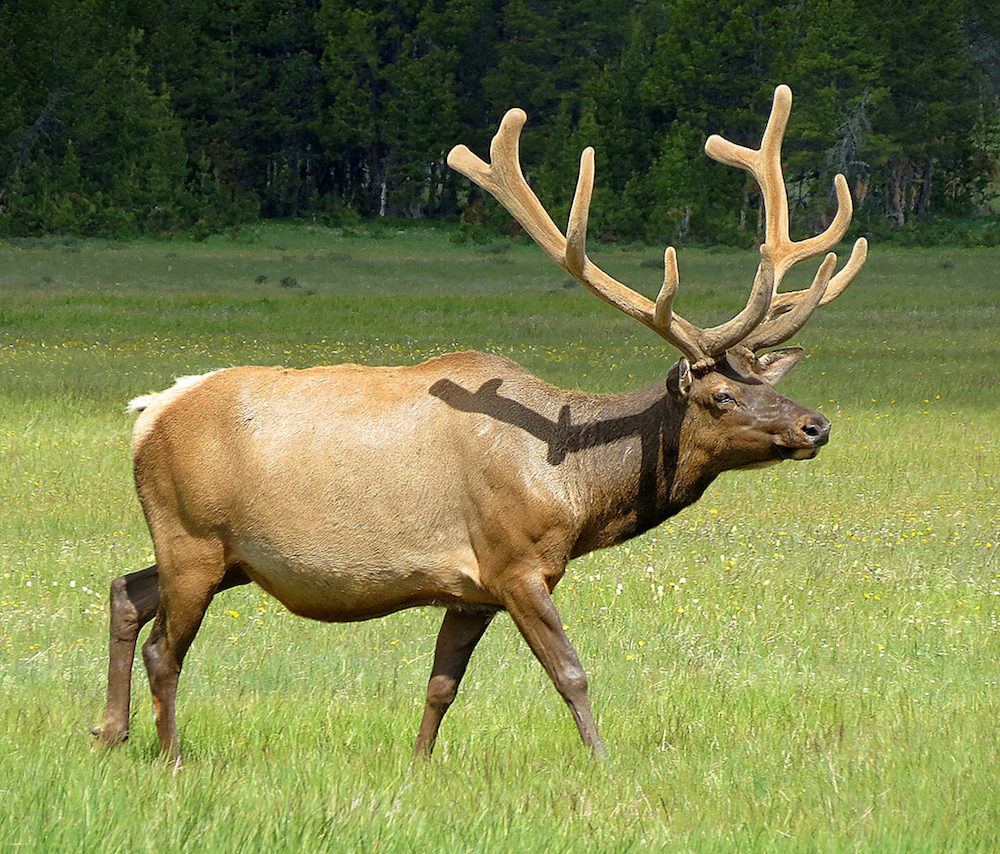
Wyoming Game and Fish is considering changing 30-year-old elk hunting regulations and non-resident quotas may attract most of the attention.
The agency doesn’t have a proposal for any changes yet, but will evaluate public input to decide whether to update regulations, said Doug Brimeyer, deputy chief with the wildlife division of Wyoming Game and Fish.
Currently non-residents receive 16 percent of limited-quota full-price licenses — i.e “bull tags” — for the most highly coveted “lottery” hunting areas. Out-of-staters are also eligible for full-price general licenses – valid in any of the state’s non-limited quota hunting areas. Total non-resident full-price licenses — limited quota and general area tags combined — are capped at 7,250 each year.
Additionally, visiting hunters can apply for reduced price licences, commonly called cow/calf tags.
The topic of making a change arose at a Game and Fish commission meeting last year, Brimeyer said. The commission asked the agency to collect information and summarize public input for the commission.
The request didn’t come as a surprise, Brimeyer said.
“This has been an issue for 30 years,” he said. “It’s an issue we knew would come up again and again.”
Moose, mountain goat and bighorn sheep permit allocations are set by state statute in Wyoming.
For antelope, non-residents can get more licenses in areas where there isn’t as high an interest in hunting. They also often pay trespass fees to hunt on private land. Managers also adjust deer and antelope quotas each year based on the condition of the populations.
Elk permits are different. In the 1970s, the agency issued non-resident permits on a first-come, first-served basis, Brimeyer said. In 1987, the Game and Fish Commission established a non-resident quota of 16 percent and in 1989 capped the non-resident quota at 7,250. That hasn’t changed even though the elk population has grown.
There were 65,000 elk in Wyoming in 1980 compared to more than 100,000 in 2017, Brimeyer said. About 25,000 elk are harvested each year. The bull-to-cow ratio also increased from 15 to 100 in 1980 to 36 to 100 in 2016.
Hunting is the agency’s primary tool for managing elk populations, Brimeyer said. Elk hunting, especially who gets permits in the state, is an often “emotional topic,” Brimeyer said. “People are really passionate about the ability to hunt in Wyoming.”
Some hunters worry about crowding and residents fear losing opportunities to those that live out-of-state. Others, especially outfitters, note the elk population growth and how many non-residents are turned away each year. (In 2017, 23,000 non-residents applied for permits, Brimeyer said.) They want to offer more opportunities and feel the population can sustain, and perhaps even needs, the additional culling.
Sy Gilliland, owner of S and S Outfitters and Guides and vice-president of the Wyoming Outfitters and Guides Association, said wildlife managers should evaluate the cap on licenses each year. The elk population has grown while the quota has stayed stagnant, he said.
“We have an incredible number of elk and somebody needs to kill some of them to keep the herd in check,” he said.
Numbers should be evaluated each year and if the elk population remains as robust as it is today there should be more permits, specifically for non-residents, because that is where there is growth and demand and far more people who want permits than get them each year.
“There is no such thing as a resident elk hunter in Wyoming that is being turned away,” he said.
Gilliland said he realizes annually reviewed quotas means the numbers could also decrease depending on the year. The state will never be able to meet the full demand from out-of-state-hunters, he said, but it’s the best way to manage the population.
Gilliland also noted the amount of money non-residents pay to hunt in Wyoming and the potential for more revenue if more people are allowed to hunt in the state. A non-resident elk license is $692 compared to the $57 fee for a resident.
But some resident hunters don’t want to see any changes. Jeff Muratore, a hunter in Casper, said he likes the current system that gives non-residents 16 percent of the permits in limited quota areas and leaves the other 84 percent for residents.
“I think it’s a very fair allocation and I don’t want to see that allocation change,” he said. “I don’t think I know any residents who are willing to give up any part of their percentage.”
Muratore also opposes an increase of the 7,250 overall cap. Expanding the overall number of non-resident permit holders would put more hunters in the general areas hunting for bull elk.
“The general areas do not have room for more hunters,” he said. “It would be too much strain on the resource.”
Non-residents also receive 16 percent of calf/cow permits in addition to the 7,250 full-price tags, Muratore said. Total non-resident elk license sales in 2017 amounted to 12,574, including cow/calf tags. The elk population has remained around 100,000 for a while, so current management seems to work, Muratore said.
Help sustain WyoFile — donate to our Spring Fund Drive.
The one change Muratore would like to see is a change in the date of the non-resident drawing for limited quota areas. It currently takes place in February, earlier than most states, according to Game and Fish, to help non-resident hunters make plans. It’s so early the season hasn’t been officially set and the drawing is based on estimates, Muratore said.
Wyoming Game and Fish is taking public comment through June 6 and hosted public meetings around the state earlier this month. Wyoming Game and Fish will host a Facebook Live event 10:30 to 11:30 a.m. on May 22.
