

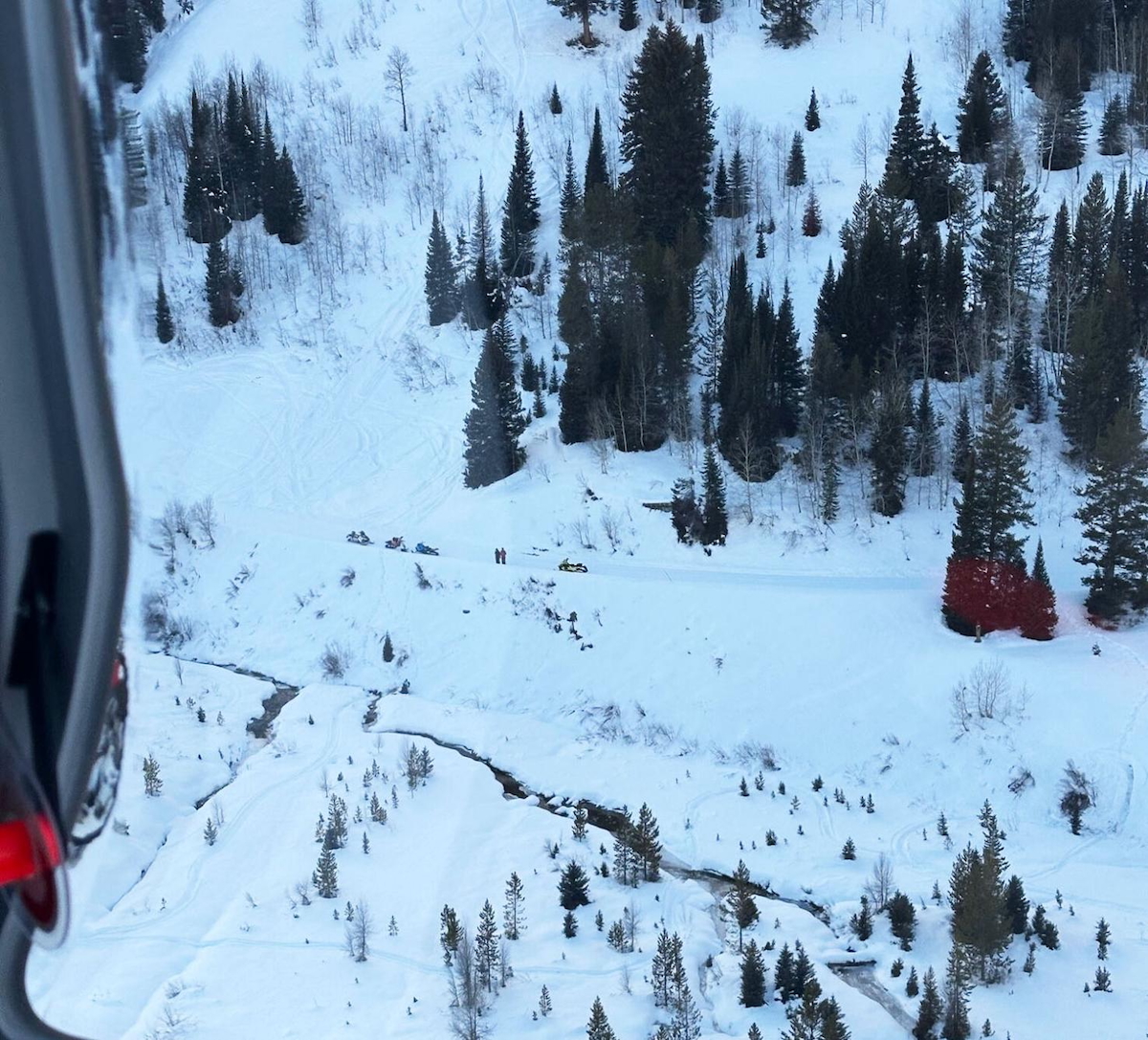
JACKSON—Within four days in January 2026, two visitors died on separate snowmobiling trips guided by the same outfitter, Teton Tour Company, a subsidiary of the international conglomerate Aramark.
The Bridger-Teton National Forest, which issues Teton Tour Company its outfitting permit, issued the firm a new six-year permit in March, according to information obtained via a Freedom of Information Act request.
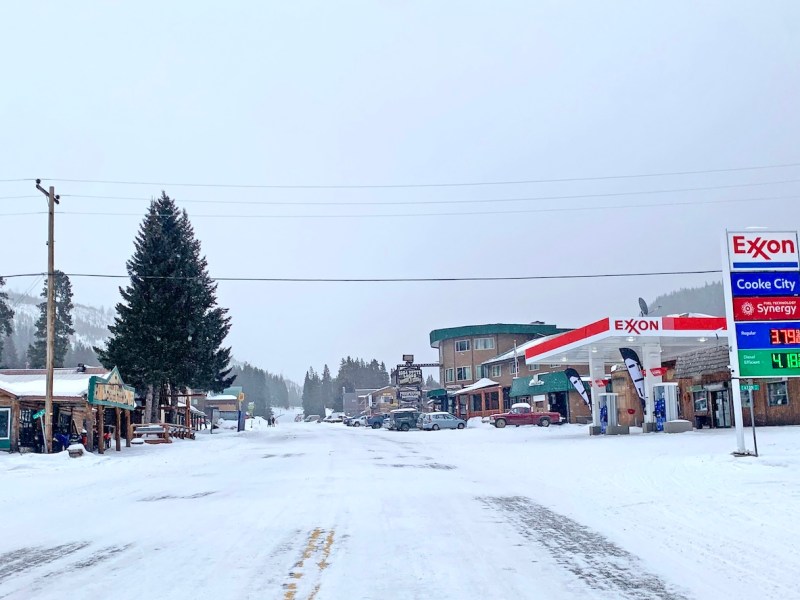
Teton Tour Company operates out of the Mad River Boat Trips building in Jackson and Togwotee Mountain Lodge on Togwotee Pass. Aramark, which, in 2025, raked in more than $18 billion, operates in a range of industries, slinging everything from boozy ice cream at ballparks like Coors Field to workers’ meals on North Atlantic oil and gas platforms. It also has a handful of businesses in Jackson.
The winter incidents raised questions about the firm’s broad operations in Jackson Hole and its winter safety policies. Aramark declined to answer specific questions about those policies and how it reacted to the accidents, instead providing the News&Guide two written statements.
What does Aramark operate in Jackson Hole?
In the winter, the Bridger-Teton permits Teton Tour Company to operate snowmobile tours from the Gros Ventre, Granite Creek and Togwotee-area trailheads, according to information obtained via a Freedom of Information Act request. It is also the only firm allowed to guide snowmobile trips in the Granite Creek drainage. In Yellowstone National Park, Aramark has guided snowmobiling trips under the name “Scenic Safaris at Jackson Hole.”
In the summer, Aramark operates Signal Mountain Lodge in Grand Teton National Park, having acquired the contract from Forever Resorts. It also guides whitewater rafting trips as Mad River Boat Trips, a business it acquired as part of the Forever Resorts deal in 2022. Aramark also acquired Sands Whitewater in 2018, but has since rolled the Sands business into Mad River. The firm also rents UTVs and guides UTV trips and road tours in Grand Teton and Yellowstone via Scenic Safaris.
“We are deeply saddened by the tragic loss of life that occurred during these snowmobiling accidents,” Sheena Weinstein, Aramark’s senior director of external communications, said in the first statement. “The safety of our guests and employees is extremely important to us.”
The accidents
Teton County Coroner Brent Blue released the victims’ names shortly after the accidents. Edith Linares Pike, 32, died Jan. 23 in the Granite Creek drainage. Joshua Dillon Escamilla, 31, died Jan. 26 on Togwotee Pass. Both Pike and Escamilla hit trees on their snowmobiles. They died from blunt trauma to the head and chest, Blue said. Family members did not respond to requests for comment delivered via GoFundMe and a funeral home.
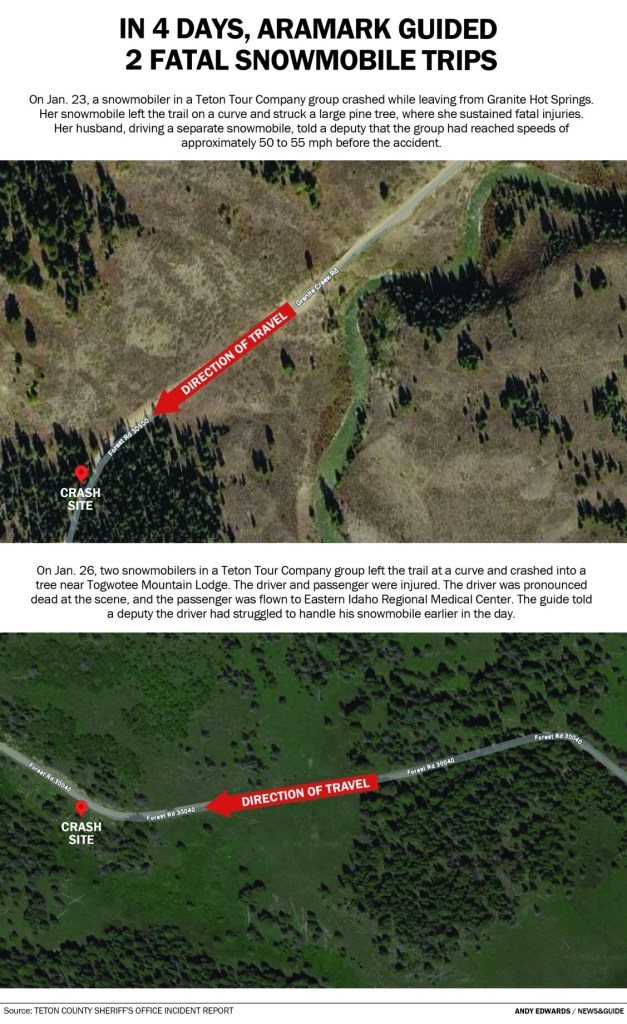
In Granite Creek, a Teton County Sheriff’s Office incident report, obtained via a public records request, indicates that, before the crash, the guided snowmobilers may have been traveling as fast as 55 miles per hour. The report also indicates that Pike, who died in the Granite crash, was not wearing a helmet when she was found. The guide, who is not named, told a sheriff’s deputy that he was unsure if she had buckled her chin strap.
On Togwotee, a separate report indicates that Escamilla, who was driving with his wife, Katelyn, in the passenger seat, may have struggled to handle the sled appropriately, and accidentally accelerated uncontrollably — a common snow machining mistake that guides call “whiskey throttle.” There’s no indication that alcohol was involved in either accident.
Other Jackson Hole guides declined to comment on the specifics of the accidents but said snowmobiling is an inherently dangerous sport. Their firms manage risk with training, responsible trip planning and careful guide and client education. The accidents spooked other outfitters, who spent days afterward explaining safety protocols to concerned guests.
“My staff was on high alert,” said Dave Knauss, the owner of Off-Grid Experiences, which guides snowmobile trips from Turpin Meadow Ranch under the ranch’s permit. “We didn’t want that to happen to us.”
In a follow up statement, provided after the News&Guide asked for more specifics, Weinstein said safety is Aramark’s “top priority.”
“We remain committed to providing safe experiences for our guests and employees,” she wrote. “We maintain multiple layers of protocols, training, and operational checks designed to support safe experiences on every snowmobiling tour. We operate in accordance with all applicable regulations and permit requirements, and we regularly review and reinforce our procedures and training as part of our ongoing commitment to safety.”
The statements, issued to the News&Guide via email, were the first and only time Aramark addressed the fatal accidents publicly, according to a review of the company’s social media statements and press releases.
Teton Tour Company is managed from Togwotee Mountain Lodge by Dan Clouse, Aramark’s Destination’s Wyoming district manager. He deferred comment to Weinstein.
Weinstein declined to answer written questions about helmet policy; guest education around speed and control; the speed in Granite Creek; how the firm responded to the accidents internally; whether its safety policies were being reviewed; and whether its recently issued permit was altered after the incidents.
“Out of respect for the families, we are not in a position to provide further comment at this time,” Weinstein wrote in her first email.
Aramark has operated Togwotee Mountain Lodge since 2008. It purchased Teton Tour Company in 2013, and operates it in conjunction with the lodge.
No criminal charges
In January, Teton County Search and Rescue posted about the rescues on social media. The organization did not release identifying information about the victims or the company who guided them in line with longstanding Search and Rescue policy.
The News&Guide obtained the firm’s name via a Wyoming Public Records Act request to the Teton County Sheriff’s Office, which released two incident reports confirming that Teton Tour Company guided the fatal trips. Those reports do not allege criminal activity or inappropriate behavior on the part of Teton Tour Company or its parent company, Aramark.
“There are no criminal charges and our investigation is complete,” said Sgt. John Faicco with the Sheriff’s Office. “Both were deemed accidental.”
The Bridger-Teton relied on Sheriff’s Office reports and talked with Teton Tour Company guides and managers about what happened and reached similar conclusions. The causes of the incidents were unknown or “likely operator error,” Public Affairs Specialist C.J. Adams said in an email.
“It did not appear that either case involved negligence by the guides or faulty equipment, and no Sheriff’s Office findings pointed to fault on the part of guides or their equipment,” Adams wrote.
The forest did not discipline Teton Tour Company because the firm did not appear to violate its operating plan, a Bridger-Teton spokesperson said. Officials also haven’t tweaked the firm’s permit as a result of the accidents.
The Bridger-Teton declined to make officials available for an interview, and instead answered questions over email.
The Granite accident
The Jan. 23 accident happened as a roughly 10-person Teton Tour Company group was returning from Granite Hot Springs to the trailhead.
Pike was riding her own sled. As the group left the trailhead, she was third in line behind her husband, Jonathan, and the guide, who was not named, according to Teton County Sheriff’s Deputy Jess Stone’s written recollection of an interview with Pike’s husband and the guide.
As the group returned to the trailhead, it was traveling between 50 and 55 mph, Pike’s husband reported. The guide told the deputy “the group was riding well” and that he’d reached “speeds of approximately 45-50 mph.”
At one point, Pike’s husband and the guide apparently became separated from the rest of the group. Both told the deputy they stopped to wait for the others to catch up. After some time, they turned around, drove back down the road and saw Pike lying on the ground on the side of the road. The guide later told the deputy that Pike’s helmet was missing and she appeared to have struck a tree, according to the police report.
“When asked about the helmet, [the guide] was positive all members in the group had helmets on when they departed the hot springs,” Stone wrote in the police report. The guide was “unsure if she had buckled the chin strap.”
The guide and Pike’s husband began administering Pike first aid. When they arrived, she was unconscious and had shallow breathing, according to the police report. She later stopped breathing, and the guide could not locate her pulse. The guide began CPR, which continued until first responders arrived.
High speeds?
The incident raises questions about the guided party’s speed.
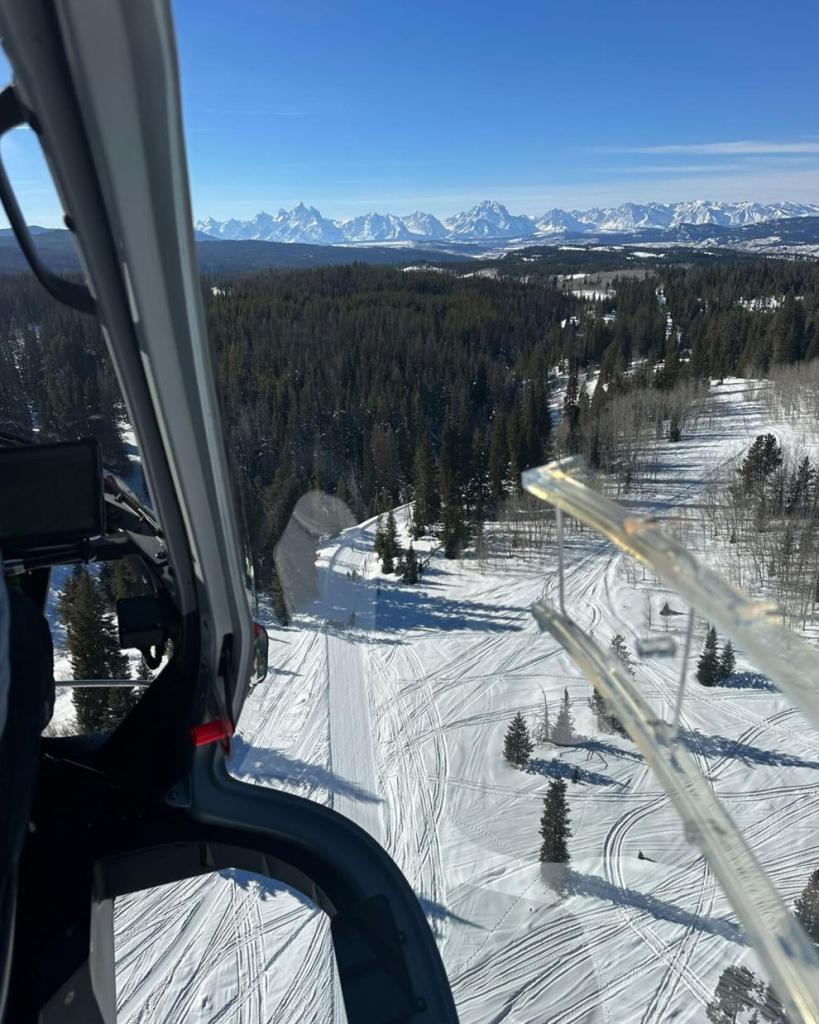
Yellowstone National Park sets a 35 mph speed limit for snowmobiles. The Custer-Gallatin National Forest sets a 45 mph speed limit outside West Yellowstone, Montana. There are no speed limits on the Bridger-Teton National Forest, where the Granite Creek crash occurred, Jackson District Ranger Todd Stiles said.
Setting a speed limit requires engineer evaluation to ensure the limit is not “arbitrary,” Stiles said. Instead, most U.S. Forest Service roads and snowmobile trails have a “reasonable and prudent” speed limit that is subjective and based on road conditions.
“With that said, law enforcement can issue citations if an individual is acting careless or reckless on our roads and trails,” Stiles wrote in an email. “Careless and reckless arguably has a wide definition, but in my experience, you know it when you see [it] as a law enforcement officer.”
Other guides declined to comment on the speed. Nobody was charged.
The Togwotee accident
Four days later, Joshua and Katelyn Escamilla were on a guided snowmobile tour with Teton Tour Company when Joshua Escamilla drove the snowmobile he and his wife were riding off the trail and into a tree, according to the Sheriff’s Office incident report.
The Escamillas were on a private tour and had been heading west along Four Mile Road, a trail that connects Togwotee Mountain Lodge, which Aramark operates, to Turpin Meadow Ranch.
The guide, who was unnamed, told Deputy Tia Stanton that earlier in the tour, Joshua Escamilla was having some issues handling the snow machine he and Katelyn were operating. Specifically, the guide said Escamilla “had been using both hands to turn and would throttle the gas, projecting the snowmobile forward quickly due to the increase in pressure on the accelerator” — the definition of whiskey throttling. The guide instructed Escamilla to steer with his left hand and adjust speed with his right, and told the deputy Escamilla understood those instructions.
As the couple came around the curve just before they crashed, their sled’s right ski was raised off the ground, “an indicator that not enough weight was distributed into the inside of the turn,” according to Stanton’s report.
The guide, Stanton wrote, believed that Escamilla “reverted to the habit of grabbing both handles hard” — a sign of whiskey throttling — “causing the snowmobile to launch forward, instead of making the turn.” The sled left the trail and hit a tree. Both Escamillas were thrown from the sled.
The guide turned around, responded and began administering aid. Katelyn Escamilla initially was unconscious and breathing, while Joshua was alert and talking, but complaining of chest and waist pain, according to Deputy Jesse Willcox’s interview with the guide. About 20 minutes later, Joshua began to complain of difficulty breathing and became unresponsive.
The guide started CPR and applied an automatic defibrillator with assistance from Togwotee Mountain Lodge staff.
‘Whiskey throttle’
On most snowmobiles, riders are advised to steer with their left hand and control their speed with their right because the throttle is typically a push-lever on the right handlebar.
When a snow machine rider panics and accidentally grabs the handlebars tightly — or when they try to steer with both hands, rather than steering with their left — they can inadvertently accelerate, or “whiskey throttle.”
Nervous guests are particularly vulnerable to making the mistake, which can happen over bumps, or when a rider feels like they’re losing control and grips the handlebars harder.
Warning and educating guests about whiskey throttle was a key part of Will Mook’s safety speech when he worked as an Aramark guide.
Mook is now the executive director of Advocates for Multi-Use of Public Land, a nonprofit that advocates for shared recreational spaces for snowmobilers, dirt bikers, mountain bikers and backcountry skiers.
“When you’re feeling loose and out of control and you grip tighter, it causes you to accelerate,” Mook said, explaining one way “whiskey throttle” can happen. “It throws gas on the fire and makes things worse.”
“I had always worked on my safety speech to really respect that throttle and start off really slow,” Mook added. “Yes, we’re on vacation. Yes, we’re having fun. But we’ve got to ease into it because they can be dangerous.”
Teton Tour Company declined to answer questions about how it trains guests to avoid the common mistake.
The families
The families of Escamilla and Pike, contacted via GoFundMe and a funeral home, did not respond to requests for comment.
The GoFundMe for the Escamillas said on Feb. 4 that Katelyn Escamilla, who was life-flighted from Togwotee Pass, suffered “significant injuries” and was “under close medical supervision.”
On Feb. 27, Escamilla’s cousin Jaclyn DiMatteo posted an update that said Escamilla had been transferred to a Georgia rehab facility, “where she has started her journey to recovery.”
As of press time, the GoFundMe had raised roughly $66,000 of the $70,000 the Escamillas are seeking for Katelyn’s medical care and for Josh’s funeral and memorial services.
“Above all, we ask for continued prayers, for peace and comfort for Josh’s loved ones, for healing for Katelyn, and for strength in the days ahead,” DiMatteo wrote.
A family obituary for Pike says she was raised in upstate New York, and an accountant with Bonadio Group in New York City.
“Emmy was known for her bright smile, infectious laugh, and rare ability to make everyone feel welcome,” the family obituary says. “She was deeply devoted to her family and friends, maintaining close and meaningful connections no matter the distance.”

Chad, would you have the same heartless comment if one of your family members died in such a tragic accident? Or would you try to show some compassion? I am sure the grieving families would appreciate the latter.
Robert, I stated a fact in six short words.
Snowmobiling is dangerous.
This article seemed to take some shots at the companies “safety policies”. Does the author expect a company employee to operate the throttle for the customer?
Stating a fact should not be viewed as “heartless of lack of compassion”, this wasnt about the accident victims it was about going after a company that offers a recreational activity that could be fatal if you make a mistake. This is what waivers are for.
This is what waivers are for.