

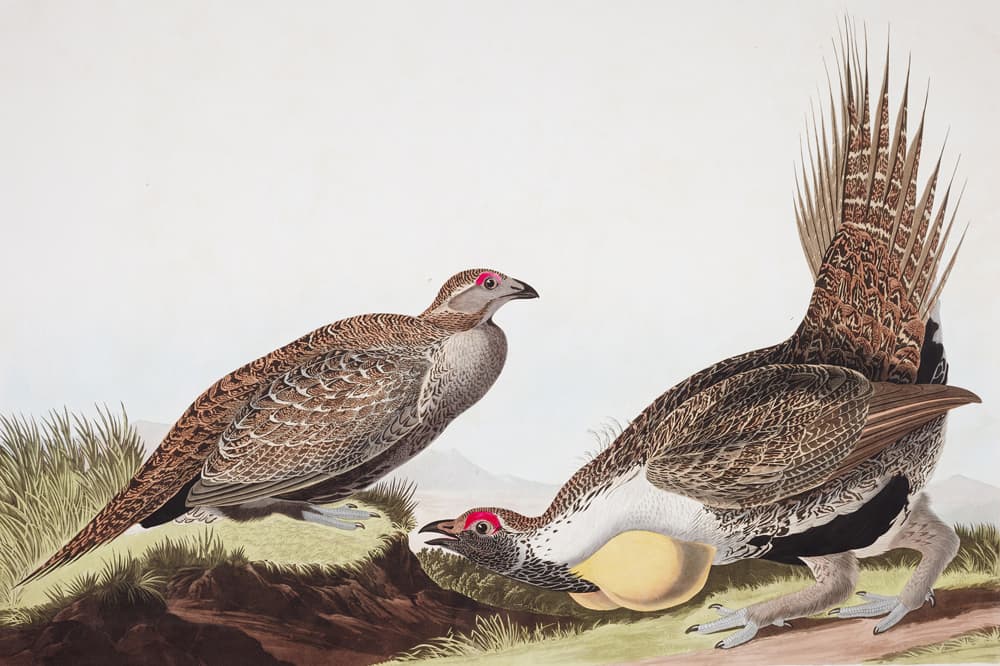
Gov. Mark Gordon and Wyoming’s Sage Grouse Implementation Team deserve thanks and credit for updating and reissuing the long-standing Sage Grouse Executive Order. Doing so early in his tenure displays the governor’s awareness of the importance of sage grouse conservation to both the economy and the natural character of the state of Wyoming. With the new executive order, Wyoming can continue to tout its leading role in the effort to conserve the species across its range and preclude the need to list the species as threatened or endangered.
The updated policy is a bit simpler, and aspires to improve — rather than simply maintain — habitat and populations, as well as better address the issue of noise impacts. Perhaps most importantly, it encourages invasive weed control — an increasingly crucial issue in Wyoming that past versions of the policy were silent about.
However, the policy remains flawed in that new oil and gas leasing is proceeding in Core Sage Grouse Areas, within the very best sage grouse habitat on Earth, thanks to recent ill-advised federal policy changes. While leasing alone does not directly impact sage grouse habitat or populations, it confers a right to develop and, even under the stipulations imposed by the executive order, such development could have significant, if not devastating, negative impacts to the best remaining sage grouse populations not just in Wyoming, but on the planet.
Even with its imperfections, I consider the state’s policy a bulwark against the federal administration’s “energy dominance” assault on public lands and some of the most critical wildlife habitat across the West. The federal administration is seeking to erode the Endangered Species Act, the National Environmental Policy Act and has amended the 2015 federal sage grouse plans. Moreover, the administration seeks to squelch any science that isn’t self-serving. Some federal scientists are being reassigned to new physical locations or into different jobs if the results of their research and reporting of such doesn’t conform to the administration’s worldview and agenda.
In a recent opinion piece, Secretary of Agriculture Sonny Perdue rationalized his agency’s changes to the 2015 sage grouse plans, claiming they were done in collaboration with stakeholders. Apparently the only stakeholders with a voice were developers and commodity producers. Perdue claims the federal revisions were needed to provide more site-specific flexibility to accommodate energy development and ranching while also meeting the goals of sage grouse conservation. But the 2015 plans did provide such flexibility — the feds simply removed the requirement that flexibility be based on scientific evidence.
The new federal policies also defer to individual states with the same flexibility rationale, but the plans in those states vary in quality. Few other state policies rise to the standards Wyoming has accomplished. That means the overall effectiveness of sage grouse conservation efforts will likely decline without the reasonably strong federal umbrella.
Perdue then had the gall to state, “the Forest Service worked together with many local, state and federal agencies in an unprecedented conservation effort that has helped save the sage grouse from making its way to the Endangered Species list.”
Perdue is right! But the decision not to list the species was made in 2015, and the recent federal revisions explicitly undo much of the historic cooperative and science-based effort that resulted in that decision.
Support civil civic discourse with a tax-deductible contribution today.
Inexplicably, Perdue fails to mention the USDA-NRCS Sage-Grouse Initiative, perhaps the most effective rangewide sage grouse management program still in practice. The on-the-ground work being done on private lands since 2010, as well as the supporting science associated with the program, are worthy endeavors that should be supported and expanded to other species of prairie grouse and the nation’s grasslands they occupy.
I certainly agree with Perdue’s father’s folksy words, “if you take care of the land, the land will take care of you.” But those words largely ring hollow when I look at how Perdue and the rest of the federal administration sets policy for how those lands, our lands, are managed.


Thanks Tom, please keep offering your perspective on this issue. There are many like me that value your opinion.
Tim
Tom
Well written! The Sage grouse plan was written over a number of years with public input. As we know this administration is all about energy first. Multiple use has has been discarded. The Robber Barons are in control.
Well said.
Thanks Tom for your on going advocacy.