

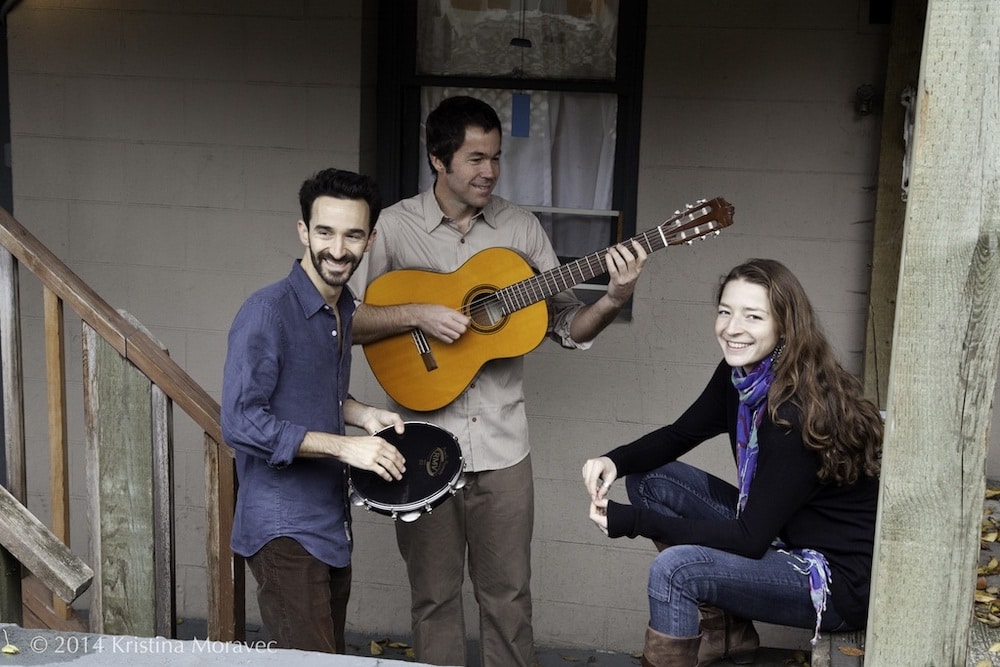
Before writing about Maracujá’s new album, full disclosure: I am the father of the band’s vocalist, saxophonist, fiddler and rhythm guitarist Caitlin Belem, a native of Buffalo, Wyoming.
While this means I may harbor an unconscious bias in the band’s favor, it also means that I have known her music and the band’s for many years and can comment from this perspective. That said, this is a wonderful recording, marked by the band members’ longtime commitment to Brazilian samba and bossa nova along with other Latin American musical traditions, mostly from Cuba, Argentina and Peru.
Maracujá means passionfruit in Portuguese. We think of passion as reflecting energy, drive, feeling. In Brazil, the fruit is also believed to have a calming effect, putting eaters in a state of meditative readiness. The band’s name then gives us a clue about both a passionate love of and a carefully crafted presentation of the music.
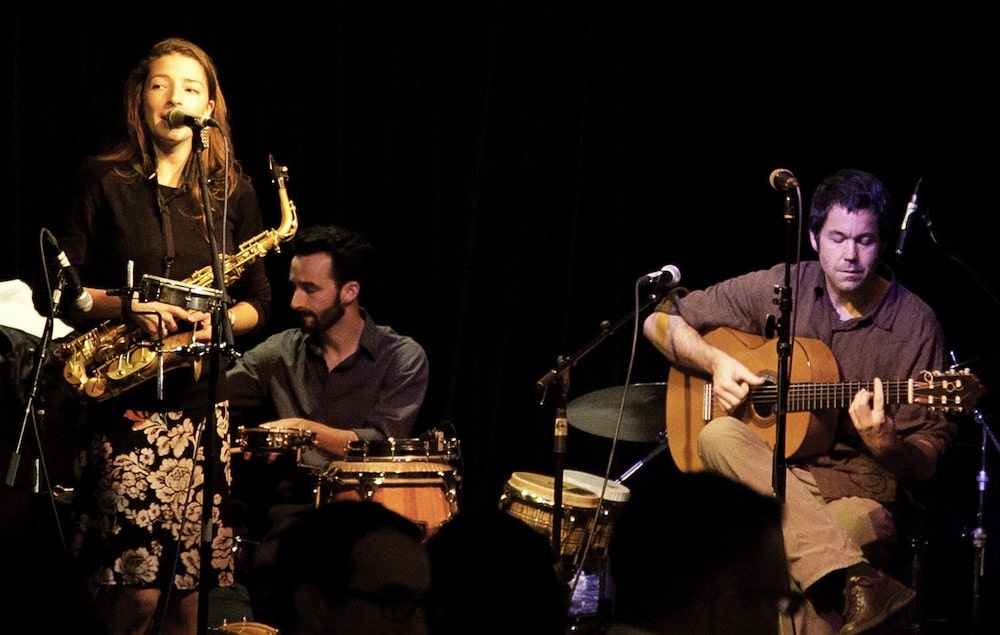
All of the players — Belem along with Sam Esecson on percussion and backing vocals, and Terrence Rosnagle on lead and rhythm guitar and backing vocals — are deeply immersed in Brazilian and Latin American music. All three have studied music in Brazil, in addition to studying and playing other kinds of music in various parts of the world.

Admiraçaõ (pronounced Odd-gee-me-raw-SOW with a slightly rolled “r” on raw) is Portuguese for admiration. That is both the title and the core theme of this recording — admiration for the masterworks of Brazilian and Latin American popular music.
Beginning with “Dança da Solidão” — the dance of solitude or perhaps more accurately loneliness — and ending with the lullaby “Acabou Choraré”— no more tears — the recording includes some of the most widely heard songs in the samba and bossa nova repertoire.
These include “A Vizinha Do Lado” (The Next Door Neighbor Lady); “O Namorado Da Viuva” (The Widow’s Boyfriend); “Canto Das Tres Raças” (the Song of the three Races); and the title song, “Admiraçaõ” (Admiration, a representative Brazilian love song with lyrics like, “My eyes never tire of caressing you. I continually find a new angle from which to admire you.”)
As “Admiraçaõ’s” author has found new angles from which to admire the beloved, Maracujá has found new angles from which to admire well-known Brazilian songs, and new ways to interpret them.
For a good example of this, compare “Dança da Solidão,” to the same song performed by Beth Carvalho, one of Brazil’s most famous and respected popular musicians. With a faster tempo, a breathier vocal quality, multiple string parts and heavier percussion, Carvalho’s “Dança da Solidão” throws a bit of gravel into our eyes as we cry. Belem’s more serene interpretation, meanwhile, marked by her clear vocal tone, is more wistful. Esecson’s reserved percussion and Rosnagle’s unpretentious guitar solo largely following the melody reinforce this feel. The arrangement exposes our loneliness while preserving it.
In addition to the Brazilian songs on this recording, there are two widely known Latin American songs. “Alfonsina y el Mar” tells the story of the Swiss born Argentine poet Alfonsina Storni. She was an early 20th century feminist who, after giving birth to a child out of wedlock, sought anonymity in Buenos Aires in order to continue working as a writer and schoolteacher. Suffering from breast cancer, she committed suicide in 1938, it is said, by stepping off a pier and walking into the water until she drowned. Welcomed and given solace by the creatures of the sea, it was only in death that she could find freedom and happiness.
The Afro-Peruvian song “María Lando” tells of the thousands of anonymous women who come to Lima seeking better lives only to find endless menial work. The morning sun bursts over the city like a winged statue. The beauty of midday is a bell ringing as clear as water. And the long cup of night carries the moon across the sea. But for María Lando there is no daybreak, no midday, no night. For her there is only work, no time to lift her eyes.
Both “Alfonsina y el Mar” and “María Lando” offer texts of social awareness carried by memorable melodies and played by Maracujá in arrangements that highlight the emotional potency of the songs. That potency is made greater by Belem’s vocal style, which is cool and warm at the same time, felt and reserved.
Support WyoFile with a tax-deductible donation today.
While I’ve focused on the social significance of these two, don’t be misled. As much as it is a testament to the narrative power that can reside in popular song, “Admiração” is also a contemporary take on some of the great Brazilian party songs — songs about singing and dancing, about celebrating, about being passionately and happily alive. It’s a joy to hear them in this recording.
Studio Wyoming Review is supported in part by generous grants from the Wyoming Cultural Trust Fund, a program of the Wyoming Department of State Parks and Cultural Resources and the Wyoming Arts Council with funding from the Wyoming State Legislature and the National Endowment for the Arts

They are special. Great interpretation of a wonderful genre. We are big fans and enjoy their music – cds, concerts – often!
I’m glad Alyson posted this on FB, David. Ordering!
A great addition. I ordered two copies. Thanks.