

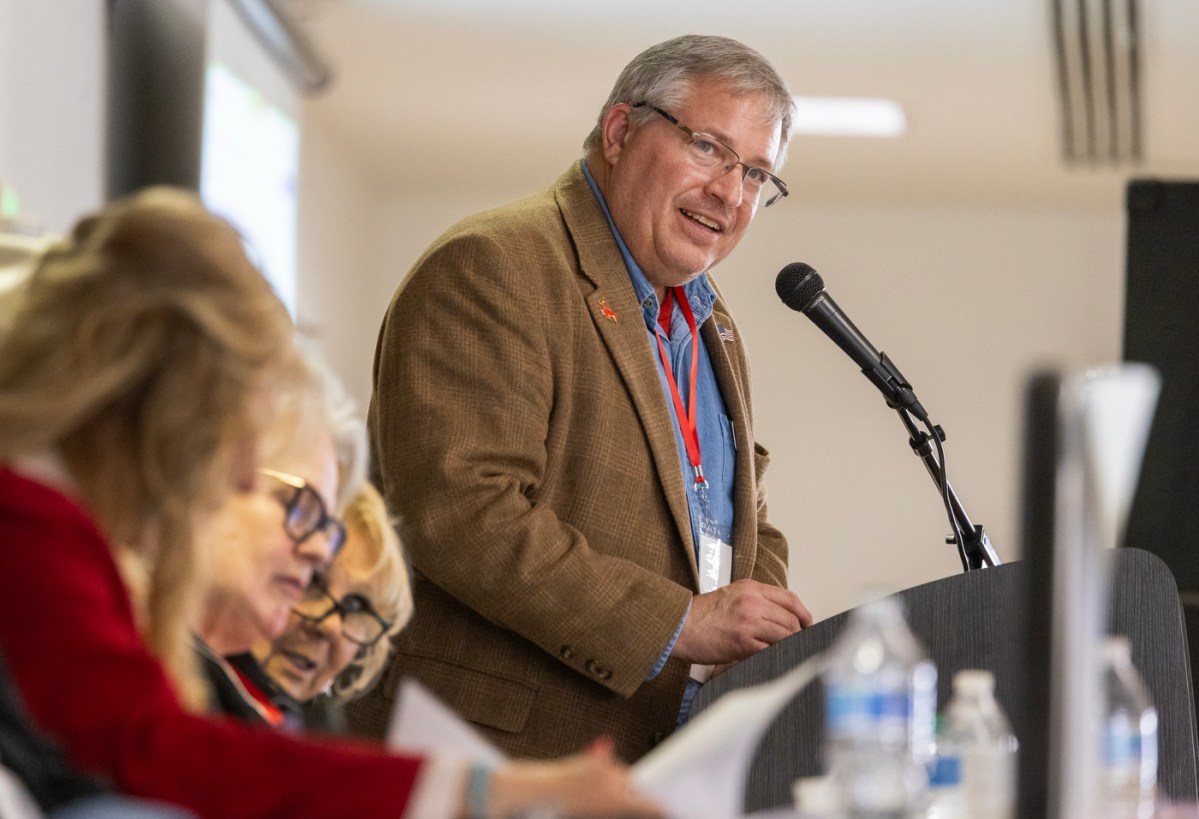
The Wyoming Republican Party must follow state law, a district court judge ruled Friday, rejecting the state GOP’s argument that certain sections of the election code infringe on its freedom of association.
The ruling represents the latest development in a yearslong debate over how or to what extent the state governs political parties — private organizations that sometimes make decisions with critical public implications.
The case stems from the state GOP ordering the Hot Springs County Republican Party to disregard state law and a Wyoming Supreme Court ruling, and overturn the results of its 2025 local leadership elections.
After the county party did so — effectively changing the outcome of two key races — the ousted chairman and state committeeman filed a lawsuit, arguing that the state party illegally intervened.
District Court Judge James Kaste ruled in the plaintiffs’ favor Friday, granting their request for a favorable ruling without a trial and ordering the county party to revert to its initial election results.
“Defendants claim that Wyoming Statutes unconstitutionally burden the Party’s associational rights and as a result the bylaws, not the statutes, control who can vote for county central committee chairman, state committeeman, and state committeewoman,” Kaste wrote. “Defendants are incorrect.”
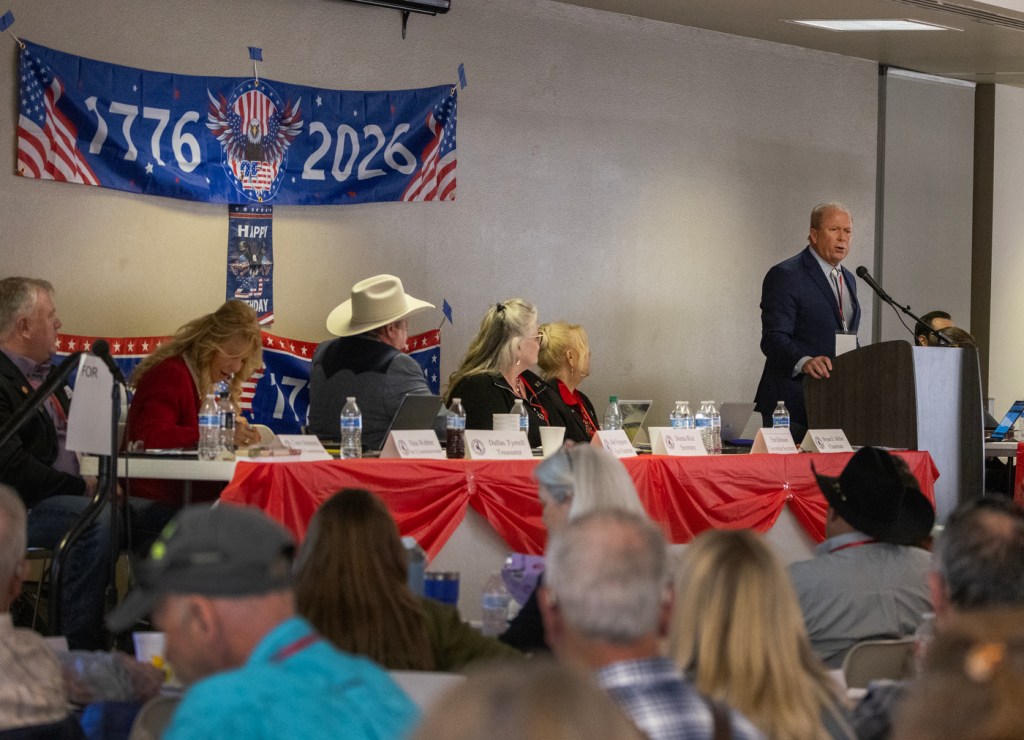
Wyoming Republican Party Chairman Bryan Miller told WyoFile the party is weighing its next steps.
“Although the party is highly disappointed by the district court’s ruling, we were not all that surprised at this initial decision,” Miller wrote in a statement. “The Party is considering our options including an appeal to the Wyoming Supreme Court.”
In the meantime, Miller wrote, “the Party will abide by the district court’s order to seat the plaintiffs as we prepare for our next actions.”
The Wyoming Supreme Court considered a similar dispute in 2023. It ruled that a party’s bylaw did not supplant state law. However, the court did not decide whether the state law in question violated the party’s constitutional right to freedom of association since it was “not properly presented and the Wyoming Attorney General was not notified of, or allowed to participate in, the litigation,” the ruling stated.
If the state party appeals the decision in Hot Springs County, the Supreme Court would be tasked with weighing the constitutionality of several laws because they were considered in the district court’s ruling.
In the meantime, the state GOP has been gearing up to buck another section of the election code that prohibits major parties from financially backing one candidate over another before the primary election. At its convention in April, Miller said he expected the party to get sued for doing so and had already hired attorneys to mount its own legal challenge.
How we got here
Every two years, the public elects precinct committee members for both the Republican and Democratic parties as part of Wyoming’s primary election, as outlined in state law.
The responsibilities of precinct members vary, but arguably their most significant duty involves selecting nominations for political vacancies. In 2022 alone, for instance, Republican precinct members were tasked with selecting nominees for two of the state’s top elected officials.
Precinct members also decide their local party’s leadership. In March 2025, precinct members in the Hot Springs County GOP elected Joe Martinez and Philip Scheel, respectively, as chairman and state committeeman.
The results of the election, however, were quickly called into question when Cheryl Aguiar, former county chairman and now a state committeewoman, filed a complaint with the state party, alleging that precinct committee members who lost in the 2024 election had a right to vote due to a party bylaw.
The Wyoming Republican Party’s Dispute Resolution Committee ultimately sided with Aguiar. At its next meeting, the Hot Springs County Party conducted a recount, which included ballots from ousted precinct members, resulting in a new chairman, Brady Harvey, and a new state committeeman, Russell Lewis.
Soon after, Martinez and Scheel filed a lawsuit.
The ruling
When a political party claims a statute violates its right of association, an assessment commonly known as the Anderson-Burdick balancing test applies, Kaste wrote in his ruling.
Named after two U.S. Supreme Court rulings, the test is used to determine whether a voting restriction violates the First and 14th amendments. More specifically, it requires a court to balance the burden on the right to vote with the government’s interest in the law.
“The statutes impose minimal burdens on the Party’s associational rights and are amply justified by the state’s important regulatory interests,” Kaste wrote in his ruling. “Defendants spend little time considering the burdens actually imposed by the statutes they challenge and essentially no time considering the voluntary decisions made by the Party in its bylaws.”
Furthermore, the state party, in its arguments, relied “on two cases that are readily distinguishable from this case while ignoring cases that are more squarely on point,” the ruling states.
While the state GOP pointed to a Supreme Court ruling in California, Kaste pointed to Supreme Court rulings in Washington and Arizona.
The party recently invoked the California ruling in its decision to buck state law, and endorse and financially back Republican candidates before the primary election. In Eu v. San Francisco County Democratic Central Committee, the high court ruled 8-0 that California’s bans on political party endorsements in primary elections alongside regulations on internal party structure violated the First Amendment’s guarantee of free speech and association.

In its filings in the Hot Springs County case, the party also pointed to the ruling.
However, “Wyoming’s Election Code is not comparable to California’s,” Kaste wrote in his ruling, because the two states govern political parties quite differently.
And like the Washington and Arizona rulings, Kaste wrote, the court concluded that the provisions in Wyoming’s state law at issue impose only a minimal burden on the Wyoming Republican Party.
“It would be a real problem if a vacancy occurred in a public office and the State had no one to call,” the ruling states. “These statutes also ensure that the governing bodies of major political parties meet at least biennially in a state convention. This furthers the state’s interest in orderly elections by requiring major parties to perform necessary tasks, like nominating presidential electors, before general elections.”
Martinez and Scheel won their elections, Kaste wrote, and should have been installed in those offices.
“The Dispute Resolution Committee made a manifest mistake of law in concluding otherwise.”

Good job Maggie.
I’m glad to see that the Wyoming GOP is the party of law and order again.