

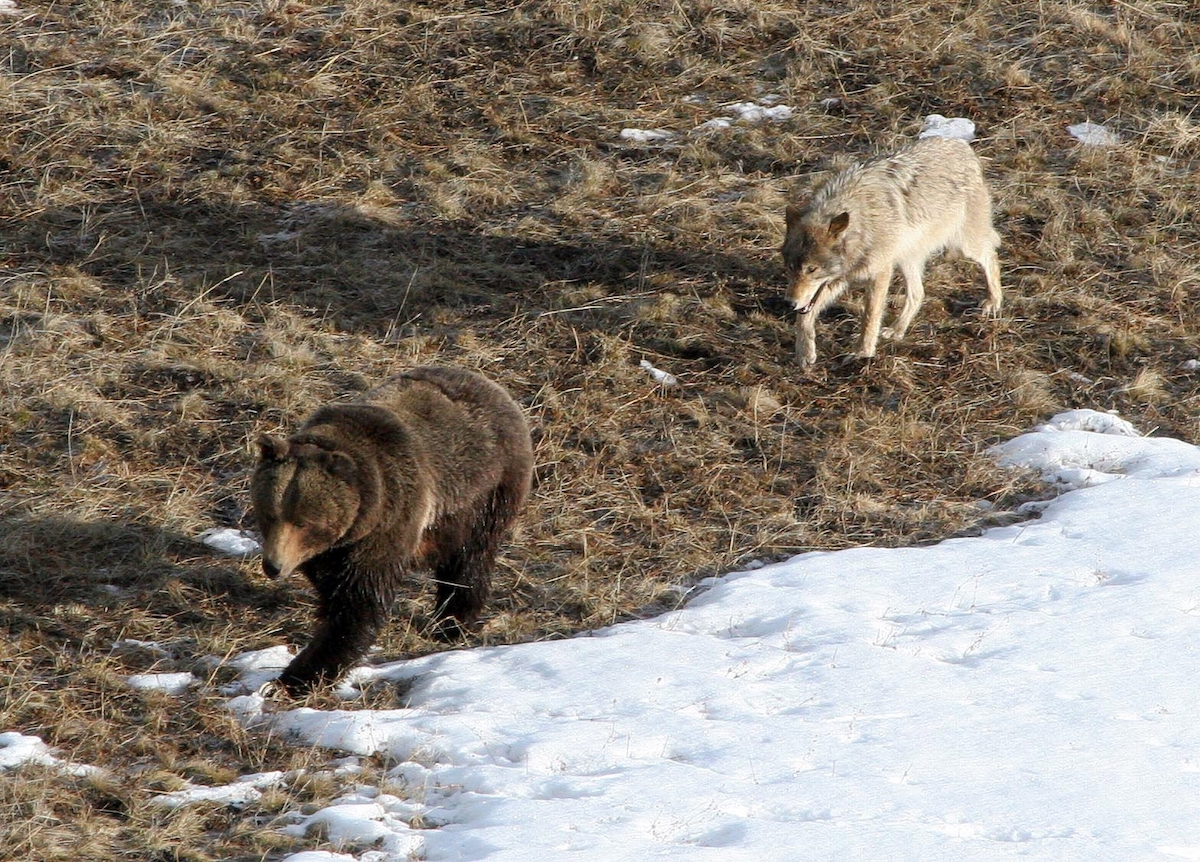
Is there any habit harder to break than harboring a grudge against an old adversary? Yet burying hatchets is exactly what it might take to conserve our wildlife, in the face of ever-increasing pressures on the places they need to survive.
Consider grizzly bears. In 1973, grizzlies were on a steep decline and headed for the list of threatened species. Wolves were almost extirpated from the West.
Opinion
As that story was told, its villains were often the folks in the cowboy hats. It was an old tale that cattle and predators didn’t mix. Environmentalists came up with all kinds of insults for livestock producers, but the one that stung the most was “welfare rancher.”
It was true that some livestock interests played into negative stereotypes, promising to “shoot, shovel and shut up” any predators caught within rifle range.
But fast-forward 50 years to 2024. Those few hundred grizzly bears have been reproducing under the protection of the Endangered Species Act, and now number perhaps 2,000 in the Northern Rockies. Since the 1990s, wolves have gone from a handful to about 2,500 in the Northern Rockies.
This has been a conservation success story. Yet too often the story still smears a broad brush on the same bad guy, the rancher.
If you ask someone in Montana, Idaho or Wyoming what the largest environmental threat is, they probably won’t say the biodiversity crisis or climate change. Most times out here, the air blows clean and the place is full of open space.
But Westerners are likely to rue something they see with mounting heartbreak: Family farms and ranches lost to development, open spaces built on and paved over.
While bears and wolves have expanded their range in the last half-century, times have been hard on local agricultural producers. High production and shipping costs, low commodity prices and meat packing monopolies tighten the vise. Millions of acres of ranch lands have been transformed by trophy homes, ranchettes or roadside strip malls.
It turns out that losing all that ranch land is bad for the environment. More residential sprawl means lost winter range and wildlife migration routes for deer, elk and antelope, which people, mountain lions and wolves depend on. And the loss of farming and ranching has significantly more negative consequences. It’s irreversible.
Subdivisions are essentially minefields for hungry bears. Garbage cans, pet food and hobby chickens are just too much temptation for bruins to resist. Fed bears end up dead bears.
A problem, yes, but also an opportunity. Conservation groups like the Montana Land Reliance and scores of local land trusts are focusing on conserving agricultural lands. The same ethos is beginning to take hold in the wildlife advocacy world as well.
There is a joint benefit in keeping bears acting like bears and not raiding ranches. Ranchers and their families feel safer and have more and fatter calves to send to market. Wildlife advocates enjoy more wild animals behaving as they should in the habitats where they can best survive.
The good news is, we have the technology to reduce conflicts between agricultural producers and bears and other wildlife. Range riders are essentially hired hands on horseback, keeping an eye on predators and livestock alike. Electric fences can keep bears, wolves and coyotes out of calving and lambing pastures. With some extra effort, livestock carcasses that are part of ranch life can be disposed of, composted or rendered so they don’t attract wildlife.
Bears sometimes eat calves and lambs, of course, and can even cause trouble with farm crops, eating corn on the cob and chickpeas in the field and learning to pry open grain bins. But merely shooting the offender is rarely a long-term solution. Another hungry animal is sure to show up.
It’s not fair to expect ranchers to pay all those costs because society at large has decided it wants predators on the landscape. That’s where conservationists and wildlife agencies can come in, with private-public partnerships to get those solutions in place on the ground.
Don’t expect everyone to buy into this solution-based conservation paradigm. There is something deeply emotionally satisfying about engaging in political battles, no matter which side you are on.
But the story is changing. Are we nimble enough to change with it?

Across the Great Basin and other areas of the semi-arid west, water determined settlement patterns. Largely bottom country with more water and richer soils than the uplands were good locations to homestead. And of course these places have always been and continue today to provide important wildlife habitat. What was attractive to settlers is immensely and increasingly attractive for piecemeal subdivision and development and leads to fragmentation of wildlife habitat and disruption of movement corridors. Fragmentation is habitat loss, a non-renewable resource.
Tim, Idaho
Thank you for the fair article and for the thoughtful comments. Those who comment with the “welfare rancher” mantra prove exactly the point of the article. When you have no actual skin in the game, lobbing shells at an unseen enemy gives great satisfaction
Who doesn’t have “skin in the game”?
All taxpayers have skin in the game due to the subsidies that are handed out. Generations of ranchers have expected the general public to prop up their “lifestyle” because they think they are owed something.
Agree. Ranching is by far the best stewardship of the land in Wyoming – rampant subdivisions are the number one threat to Wyoming’s wildlife and habitat – thats why conservation is so important including conservation easements obtained from rural landowners. Bashing of the ranching community serves no purpose in this strongly conservative state where the agricultural community controls the legislature and state house. It never ceases to amaze how anti-ranching people can live in Wyoming and criticize the culture on which our state is established. I would never move to california and proceed to criticize their approach to living. I hate to say it harshly but it needs to be said – if you can’t accept Wyoming for what it is, then you need to relocate – you’re in the wrong state. Ranching is core to our values and that isn’t about to change – and we have more guns per person than any other state. Love it or leave it.
I’m afraid you kind of played down the impact on food producing ranchers from the constant pressure on them by enviros. Putting recreation ahead of food production isn’t really smart.
Wyoming welfare ranchers provide next to nothing in regards to what you call “food production”.
All ranching operations could end today and the typical consumer wouldn’t even notice. Enough with the idolization
If you crash Wyoming’s farming and ranching industry, it will be of little consequence to the food needs of the nation. However, Wyoming would be vastly impoverished both in terms of food and traditional culture. And you think there’s a problem today with land conversion? Each agricultural property that gets subdivided is another nail in the coffin of habitat for wildlife large and small, as well as for native vegetation. Especially when you consider that most agricultural lands are the ones that were worth homesteading back in the day, because they had water, soil, and favorable topography.
It is good to finally see such common sense in the media. Thank you.