

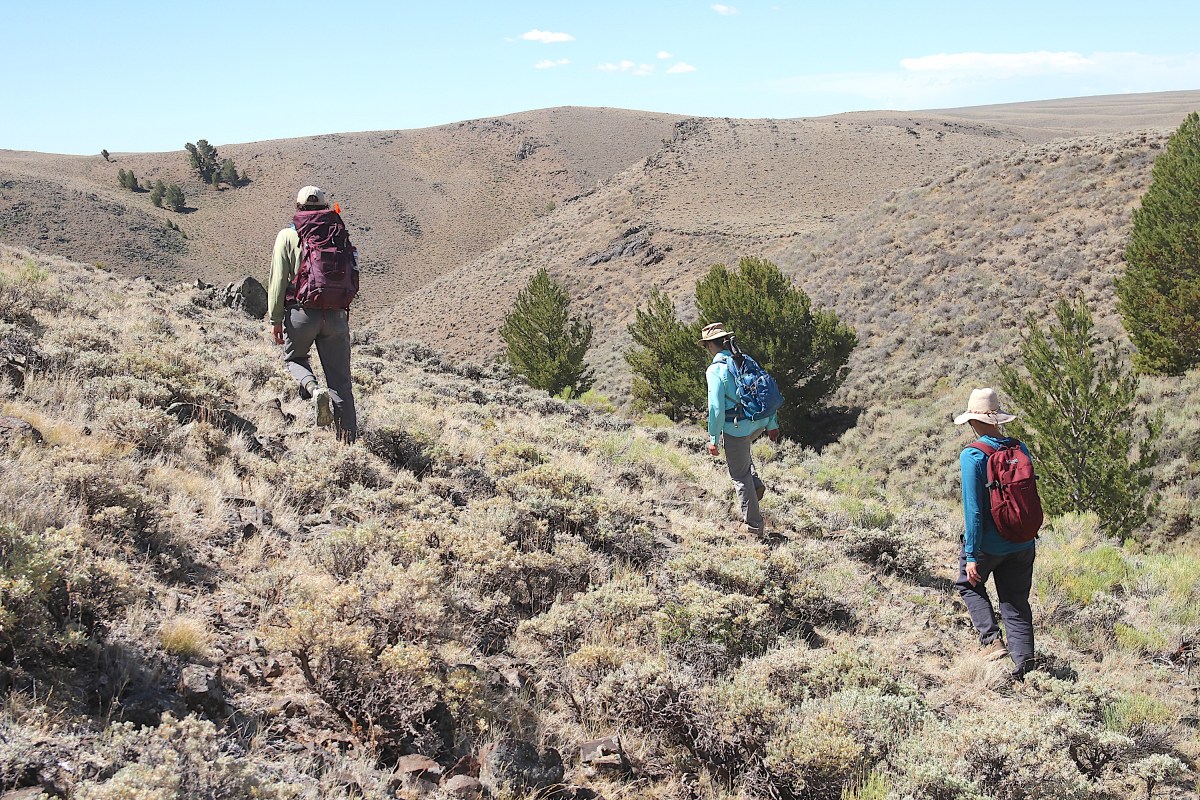
SOUTH PASS—Corinna Riginos planted her feet among shin-high sagebrush that stretched out of sight. The ecologist, who leads the science team for The Nature Conservancy-Wyoming, was trying to verify if noxious cheatgrass also grew nearby.
Walking along the 7,500-foot-high rolling tableland, not a single blade could be found.
“When we think about ‘defending the core,’ here we are at ground zero,” Riginos said on a still early July morning. “We have this real opportunity to try to keep it that way. Practically speaking, how do we get there?”
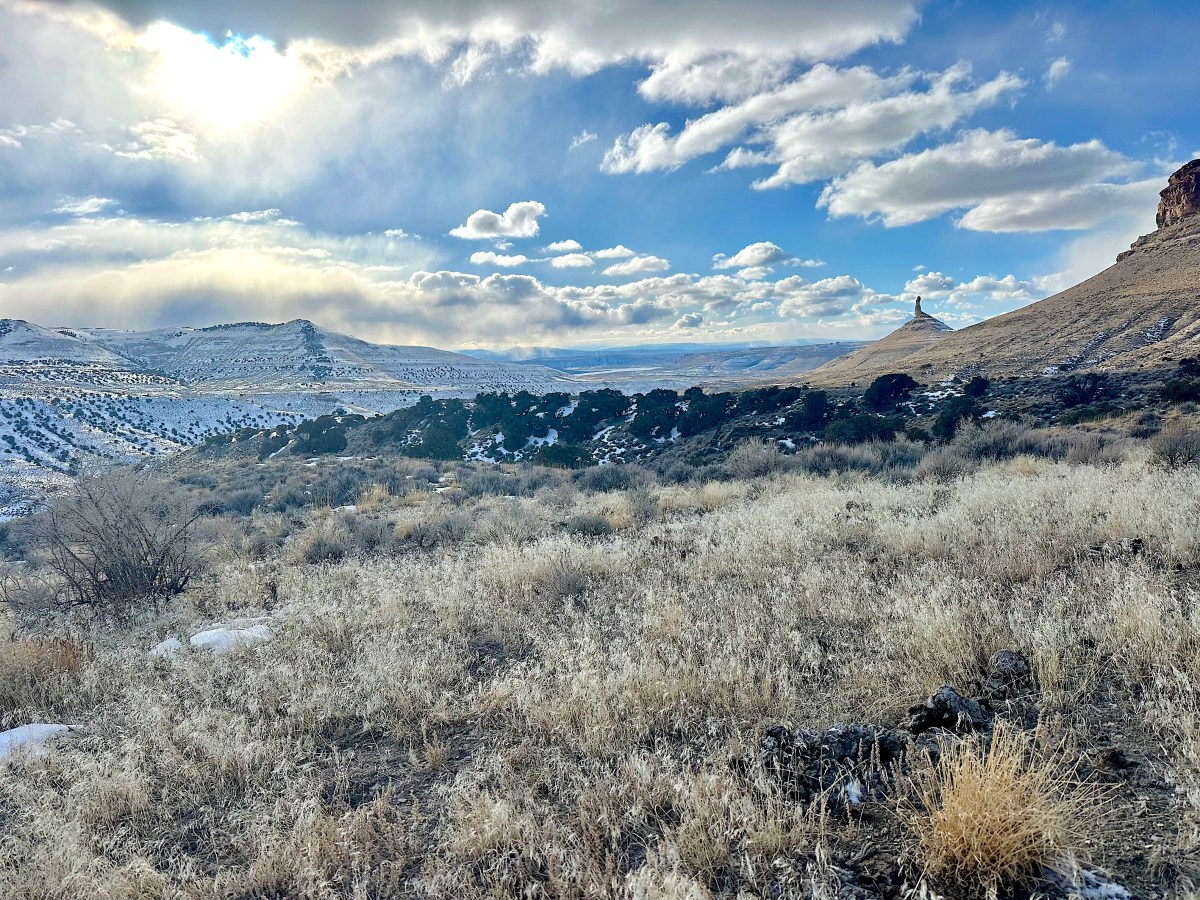
“The core” refers to the best sagebrush remaining on Earth. Sagebrush is the backbone of an ecosystem in decline everywhere, including Wyoming. Still, places like South Pass and the Green River Basin are home to, by far, the largest and healthiest sagebrush tracts that are left.
“There’s 16 million acres of core sagebrush area in Wyoming,” Riginos said. “That’s half of what there is across the whole western sagebrush ecosystem.”
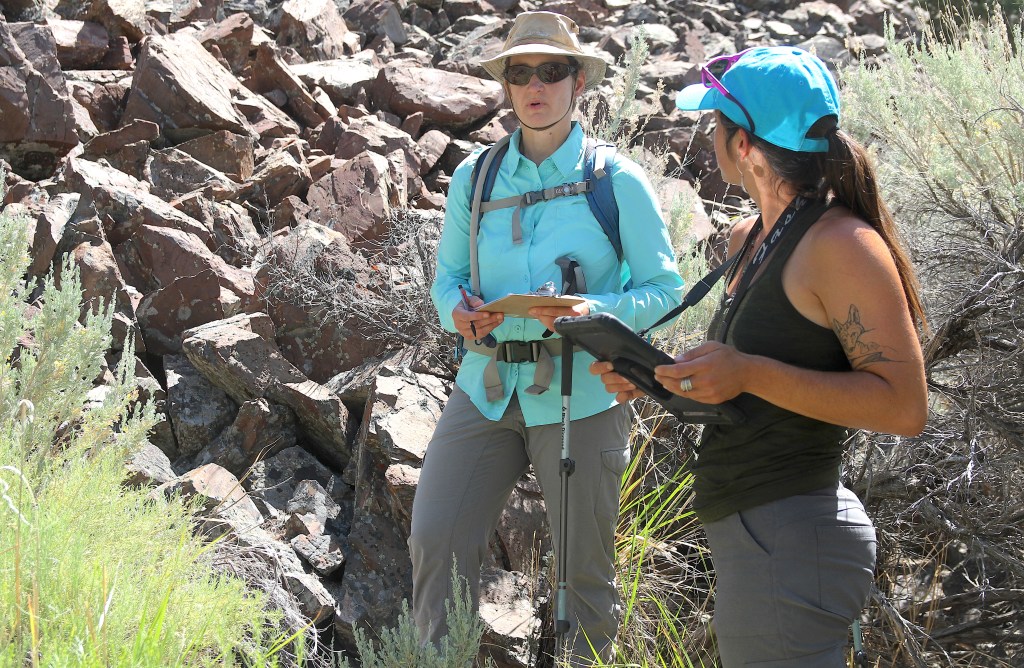
Cheatgrass poses perhaps the gravest threat to the shrinking habitat’s long-term persistence. Riginos and fellow TNC scientists Courtney Larson and Charlotte Cadow are embarking on a yearslong mission to get ahead of that threat. They’re trying to find cheatgrass before it takes over.
Where cheatgrass grows in thick, there’s no mistaking it. The landscape’s very color is the telltale sign.
“Cheatgrass has a nice seasonal signature,” Larson said. “It greens up early, then it turns kind of purpley-colored. And then it dies off earlier than other grasses.”
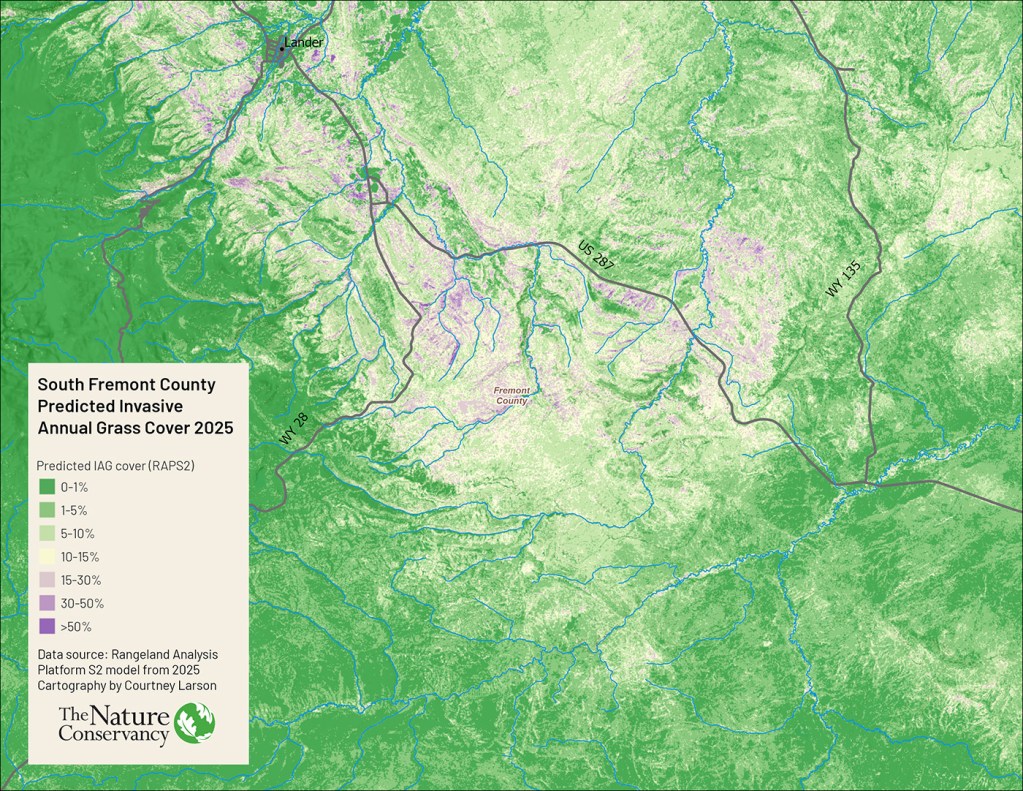
As a result, heavily invaded areas can be easily mapped using satellite imagery.
But predictive models don’t do so well when cheatgrass accounts for less than 15% of the groundcover. The Nature Conservancy crew knows that from experience. In summer 2025, they went to 200 survey plots where they found no cheatgrass. Yet, their modeling predicted 88% of those sites would have some trace amount.
“They overpredict, at low levels of cheatgrass,” Larson said.
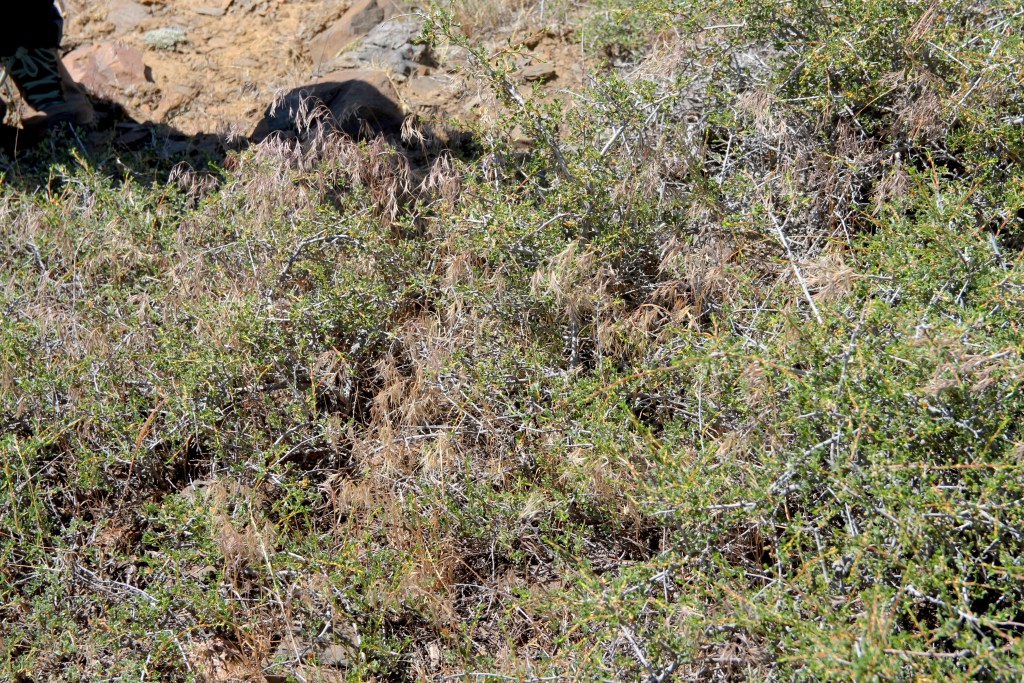
One of the crew’s goals is to dial in the predictive models. Verifying what’s growing where takes a whole lot of fieldwork.
“We’re going to try to get 400 random points,” lead sagebrush technician Lauren Marsh said while en route to one of them.
During the 2025 field season, TNC’s techs found the invasive annual species in unlikely corners of Fremont County — deep into the Wind River Range up St. Lawrence Basin and on the high slopes of Green Mountain.
“We’re seeing it at 9,000 feet,” Riginos said. “Someone else saw it at 10,000 feet last year.”
There have even been patches documented along forested, north-facing slopes, she said.
“It’s heartbreaking and mindblowing at the same time,” Riginos said. “The models of habitat suitability don’t really end: 78% of Wyoming is suitable habitat.”
Teton County’s also seeing signs of invasion into landscapes that land managers once thought immune.
“We found cheatgrass at 8,000 feet in the Gros Ventre,” Cadow said.
The Jackson Hole crew has even been observing little patches in the conifers where elk are bedding down, she said, and also where elk manure is especially prevalent.
“In Teton County, we’re really seeing wildlife as a vector,” Cadow said. “Cheatgrass is getting a foothold higher and more remotely than we anticipated.”
Dropping into Sweetwater Canyon during the early-July outing, Riginos, Larson, Marsh and Joey Friedman descended toward several survey plots where they were confident they’d find cheatgrass.
On the steeper, south-facing slopes, it was everywhere. Riginos grabbed a pile of cured, tinder-dry seeds and stems that accumulated atop the soil in the canyon.
“Super good fire starter,” she said. “There’s a reason they call it grassoline.”
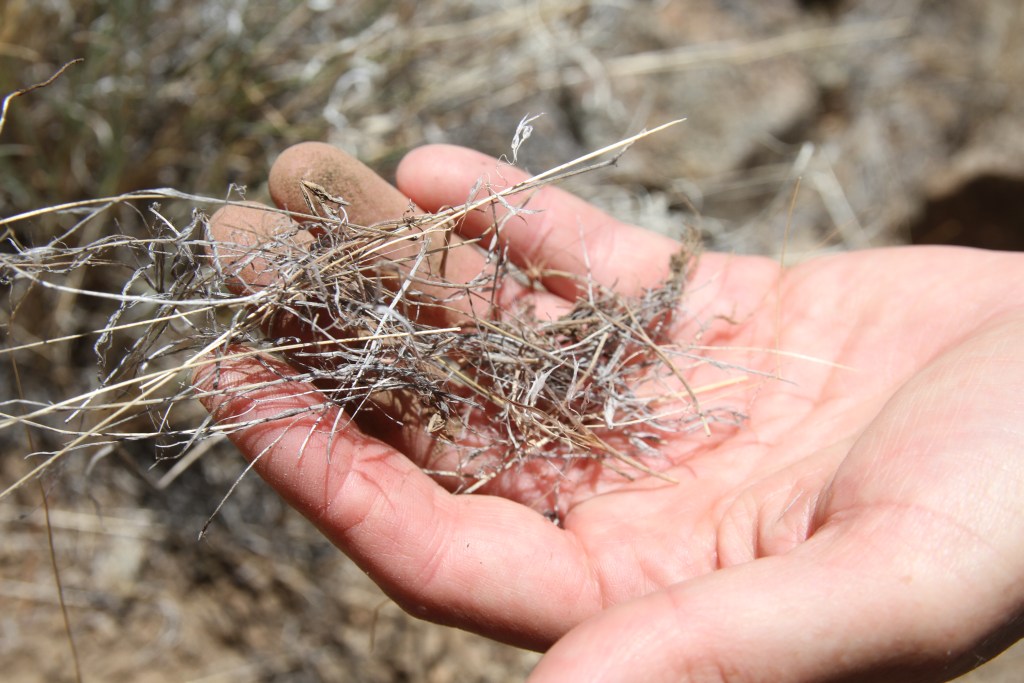
One of cheatgrass’ most harmful traits is that it speeds up the wildfire cycle. When an infested area burns, the cheatgrass grows back even thicker. Then the landscape’s even more prone to burn yet again, creating an ecologically devastating feedback loop.
Wildfire-scarred landscapes from the 2024 House Draw Fire and 2025 Red Canyon Fire have become top priorities for keeping cheatgrass from taking over. Funding to pay for the pricey herbicide that’s the most effective at keeping cheatgrass at bay is hard-fought.
“A lot of the energy and intention and money goes to those [post-wildfire] situations,” Riginos said. “My fear is that we’re not putting enough focus on these places where we have this opportunity to hold the line.”
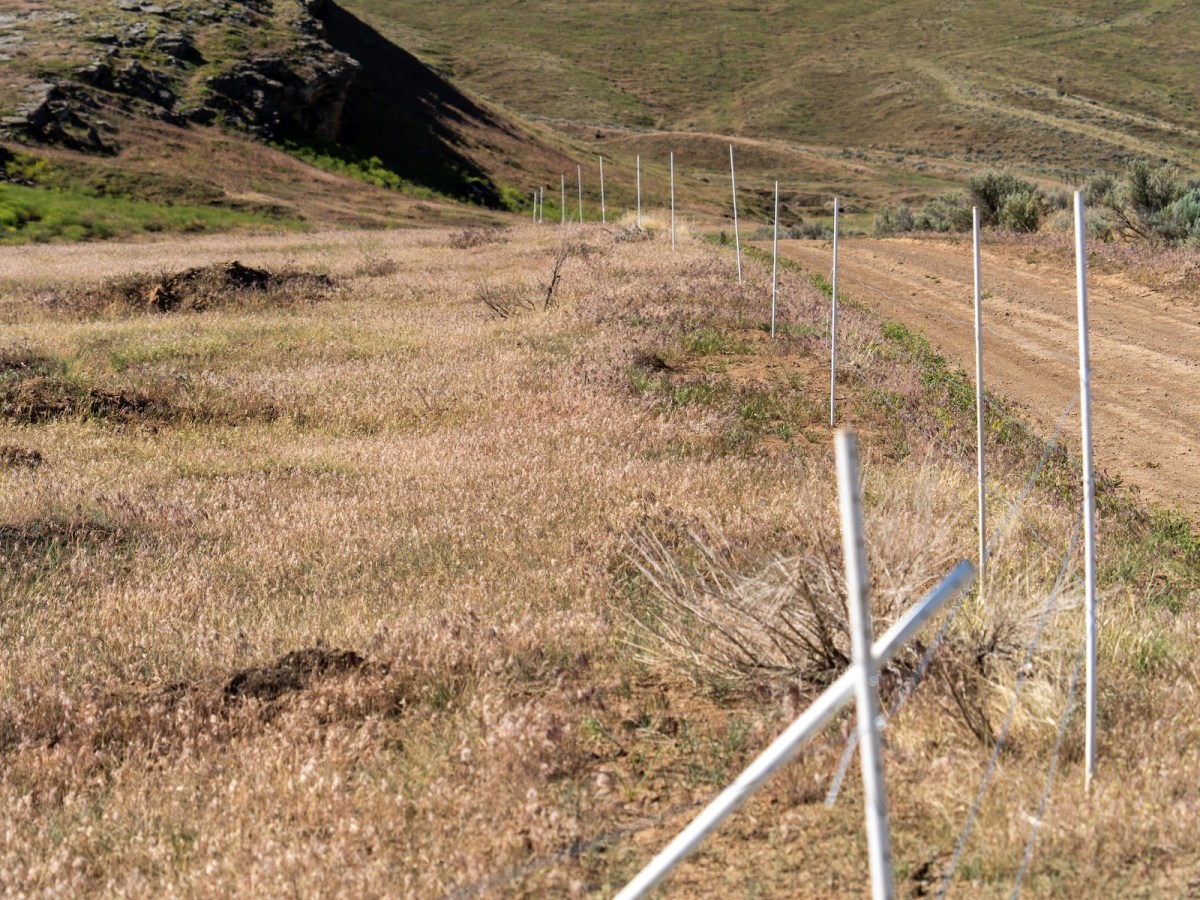
Currently, land managers who steward the least-invaded reaches of Wyoming have a tough argument for funding when they’re competing for limited dollars with weed and pest districts losing their cheatgrass fights.
The Nature Conservancy’s research could help make their case.
“An ounce of prevention is worth a pound of cure,” Riginos said. “How do we do that intelligently?”

the NC is pretty good at letting the ultra rich park their money, yet I don’t think anybody should be holding their breath to hear what the Nature Conservancy thinks about actual ‘conservation’ issues
Cheat grass isn’t “invasive” as the article claims, nor it is a “grave threat” to sage brush. And, herbicides are not the answer.
When we bought our ranch, we had areas of cheat grass that have all but disappeared, without resorting to toxic herbicides. I have observed patches of cheat grass come and go over the years, without my interference. We simply avoid overgrazing, and a rainy season or two helps perennial species compete. Cheat grass is, by the way, a very early-season source of green forage for livestock and wildlife alike. It is perhaps unsightly to see vast areas of cheatgrass, but proper management without the use of herbicides restores the natural balance.
As far as burn areas or disturbed soils go, cheat grass is a succession plant. It comes back quickly and shades the soil, while the perennial grasses take more time to establish.
Cheatgrass, native to Eurasia, is highly invasive across the West. To argue otherwise is nonsensical. It poses significant threats to sagebrush habitats. It uses up water and soil nutrients in spring, depleting soils for native grasses, forbs, and sagebrush itself, in addition to directly crowding them out. It then serves as the perfect medium for frequent hot fires that eventually kill native plants, including sagebrush. It is unpalatable, nutritionally worthless, and forms awns that are dangerous by early summer. It degrades (and via fire, destroys) habitats for obligate sagebrush insect, mammal and bird species. Most of your thoughts are directly contradicted by both peer-reviewed research and anything more than casual intellectual curiosity and observation of range conditions. You don’t live in sagebrush steppe, you live in mixed-grass prairie. Maybe go have a look at true sagebrush steppe basins and slopes everywhere but eastern WY.
I’m sorry, Cindy, but your information about cheatgrass isn’t accurate. Cheatgrass is an invasive species with very little nutritional value compared to native grasses. It spreads aggressively, increases wildfire risk, and displaces native vegetation that wildlife depends on for food and habitat. While some animals may graze it briefly when it’s young, it is generally considered detrimental to healthy native ecosystems. The chukars like it, however. But they’re not native either.
I just completed a tour by truck & camper from western Wyoming, into southeast Idaho, across all of northern Nevada, eastern and northeastern California, southern Oregon, then back home through southern Idaho. Cheatgrass all the way including seemingly 100% colonization on fire-affected former shrublands.
Well, it is nice to map the spread. But what I never see is an objective analysis of cause and effect while we fund millions of dollars to spray herbicides, we don’t look at the cause of the infestation.
In a landmark paper in 1980, Mack and Thompson documented the history of cheatgrass introduction and the role of livestock in its spread. By consuming the native vegetation, creating bare soil, livestock create conditions conducive to cheatgrass invasion.
As far as the wildfire issue, one only has to look at these fires in sagebrush areas or what used to be sagebrush areas and you would find they are heavily grazed by livestock. So, instead of being tools to reduce fire, they lie at the very root of the cause of our grassland fires.
When are we going to actually deal with the cause? Apparently we are willing to ignore it when we can blame elk, whose numbers pale in significance to the millions of cattle across our public lands in the arid west.
What is needed is the reduction of livestock and protecting native plant communities and the wildlife that depend upon them.
Just going to go out on a limb here… you don’t eat beef, drink milk, or wear leather, do you?
The west is loosing its battle with cheatgrass, a Eurasian exotic grass that destroys the land base where it grows, not only for wildlife but agriculture as well. Idaho has been trying to fight / eliminate it for years at a cost of millions of dollars but still has not won the battle. Thank you for the article WF / Mike. I consider cheatgrass as one of the greatest threats to wildlife and agriculture that we have.