

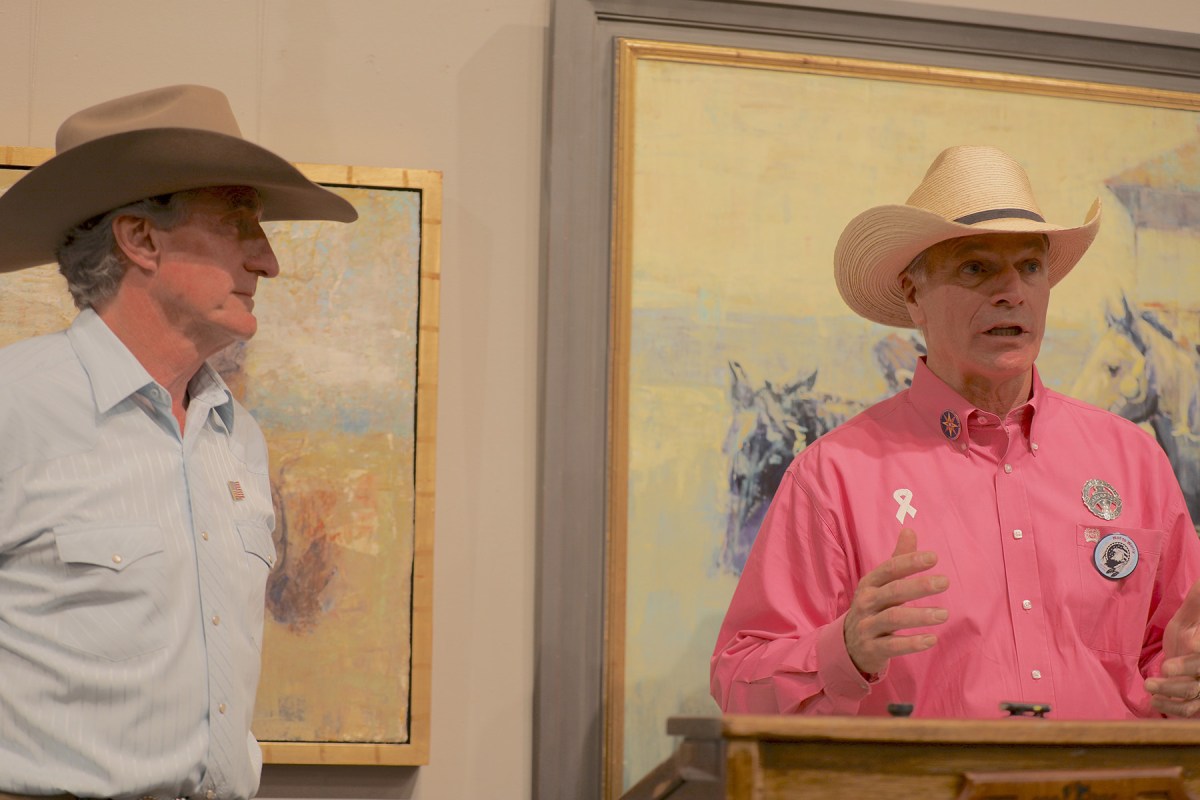
CHEYENNE—Gov. Mark Gordon welcomed members of President Donald Trump’s Cabinet to Cheyenne Frontier Days on Thursday as they took part in the Western-themed parade through downtown.
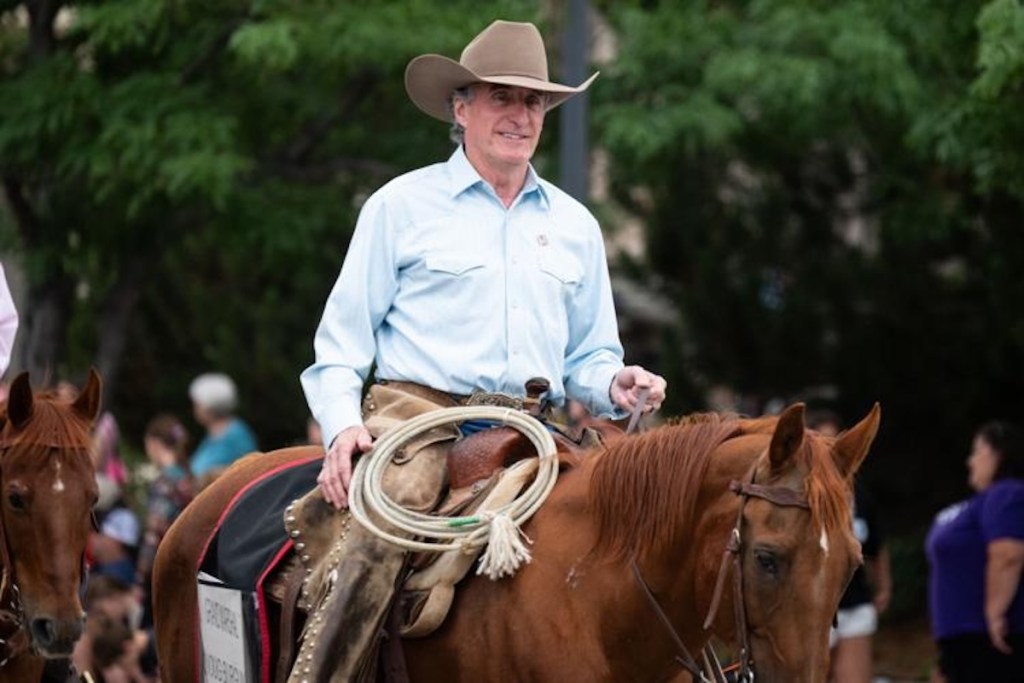
Gordon, Secretary of the Interior Doug Burgum and Acting U.S. Attorney General Todd Blanche all rode on horseback through the parade.
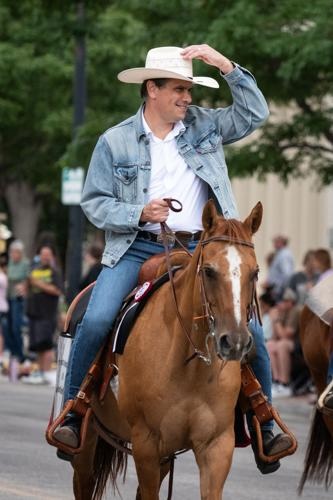
Cheyenne Frontier Days declared Thursday the “Day of the American West” in coordination with a formal order Burgum issued last August to honor and celebrate America’s 250th anniversary. The day is meant to highlight the important tradition and cultural history of the West, specifically rodeo, Native American dance and culture and Western art.
Both Gordon and Burgum spent time recognizing and appreciating Western values. Burgum stressed the “values that exist in the West around hard work, around self-reliance, around living off the land, and the stewardship of that land for multiple generations.”
Gordon and Burgum spoke of other issues, as well, such as mineral rights, water rights and energy development during a media event at the Cheyenne Frontier Days Old West Museum. Gordon’s opening remarks highlighted the importance of an open line of communication between the Department of Interior and Wyoming due to the responsibility the federal government has related to the state’s mineral rights, land and water distribution.
Burgum credited his department and the Trump administration’s focus on meeting people where they are.
“Meet with these working families and get ideas about how we can make life easier for them and how we can work better to protect the land and the wildlife,” Burgam said when asked why it is important to have an understanding of these issues and not make arbitrary decisions that impact people’s lives from an office in Washington.
Burgum’s own experience as governor of North Dakota shaped his current philosophy.
“You can’t make a decision unless you talk to the people, the communities, the companies, the people that are working on that,” he said.
This outlook has led to him viewing the people who have grazing leases and are building energy infrastructure as “our customers. They’re someone that we serve. And we have got to do everything to help them.”
Both Burgum and Gordon spoke about how federal and state governments are working in tandem to help Wyoming ranchers and farmers. First, they must ensure they have the support they need and are not hamstrung by high-priced grazing leases, Burgum said. Gordon added that they also need to lower the price of beef to allow them to grow their herds.
Gordon also touched on his Cowboy State Agriculture Initiative, which helps ensure “families are able to transfer (their ranches) from one generation to the next.”
Burgum addressed concerns surrounding the potential restrictions and issues Wyoming and other states face with the Colorado River Basin. As Wyoming is one of seven states involved in the Bureau of Reclamation water agreement, due to the current drought, ranchers and agriculture could suffer. All seven states have convened in an attempt to solve the problem, but no consensus has been reached, causing the federal government to step in.
Burgum was emphatic that all seven states must work with one another and the federal government and not begin suing one another.
If they do, that could lead to “a judge that has not spent a lifetime in hydrology, has not spent the last 18 months in negotiation, and has not listened to user groups across seven states, having to make a decision on how you operate, meaning how much water is released and where it goes.”
The better alternative is finding consensus among all seven states, he said, acknowledging, “If we come up with a plan that nobody likes, we probably have the right plan.”
This water shortage has only been compounded by the growing population in the region.
“We have one-fourth of the water and four times the people,” Burgum said of the states in the Colorado River Basin.
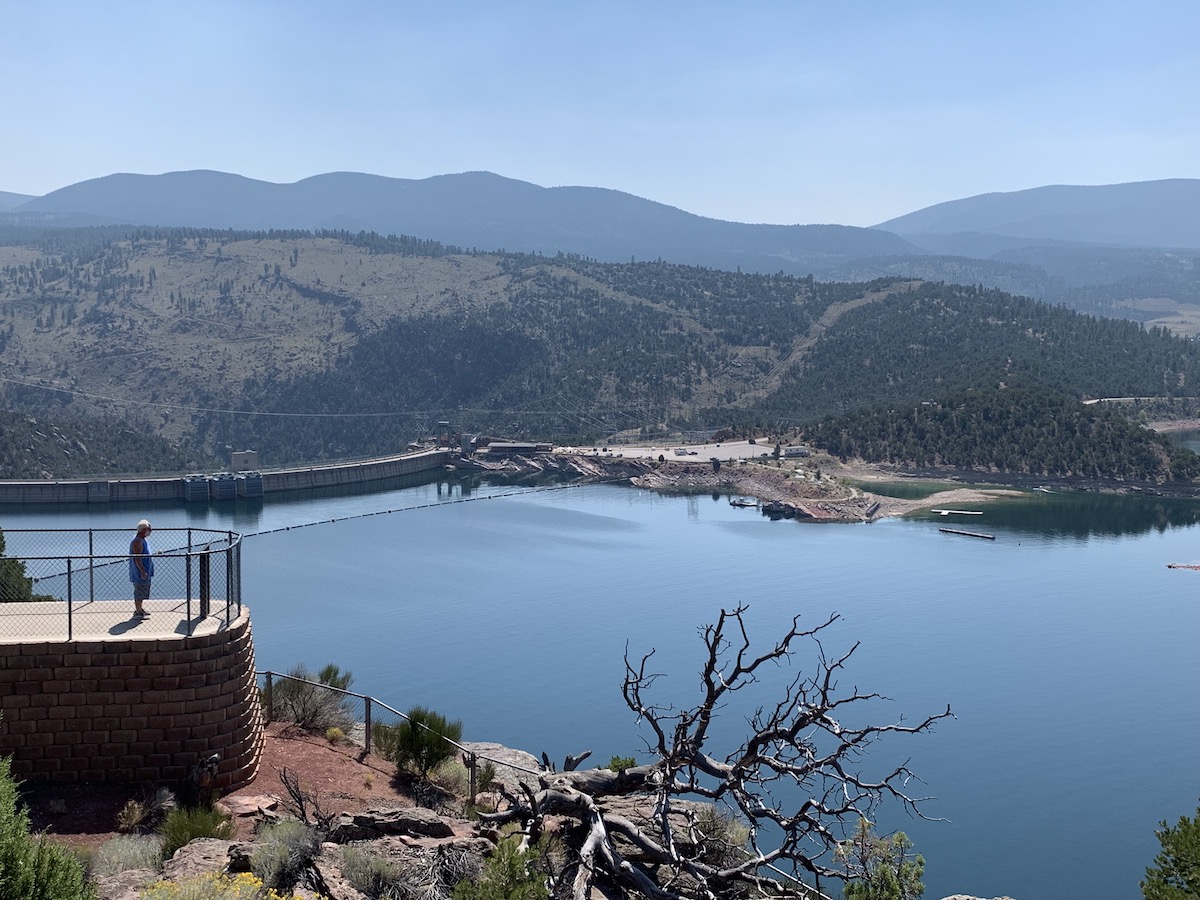
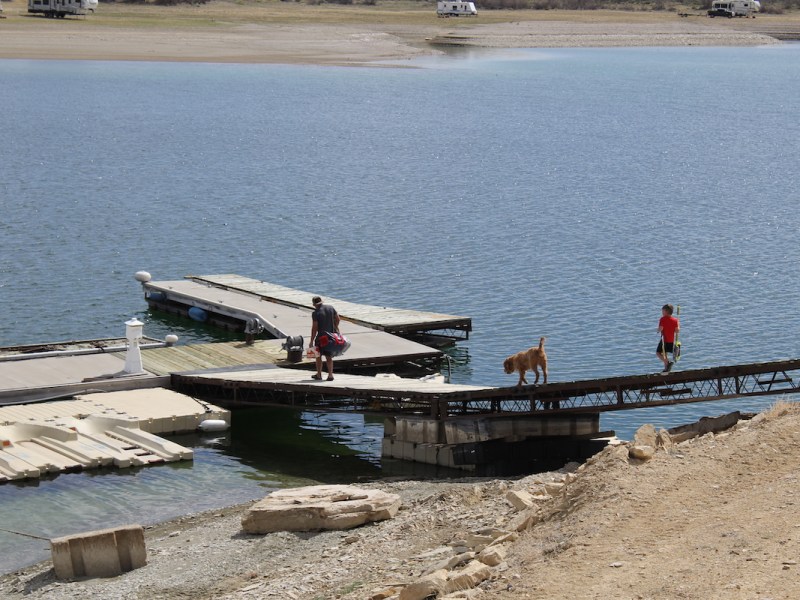
All of the states impacted have been working on potential solutions because “there’s an idea that everybody wants their appropriated share,” but “the water just isn’t there,” Burgum said.
If no consensus can be reached, the buck will stop with the “Department of Interior and the Secretary, specifically, to step in as the water master and release a plan.”
But the goal of “moving toward something that’s optimal for all the seven states” remains, he said.

The Agriculture Initiative was a start.
Now foster the conditions to expand agriculture /ranching in Wyoming for future generations.
Atom Trap Trace Analysis is a laser based system that can track the flows of water underground, and determine how long it has been stored. This inconvenient truth will provide unwanted information, but it will be true. Why are the government lawyers so afraid of justice?
Do you think these two ‘play’ cowboys would allow a data center or gravel pit next to their house? I don’t think so.
7 u.s.states,30 indian reservations & 2 states in Mexico,
Sharing a water supply that at most can support 10 million people ?
Prepare those involved for really bad news !