


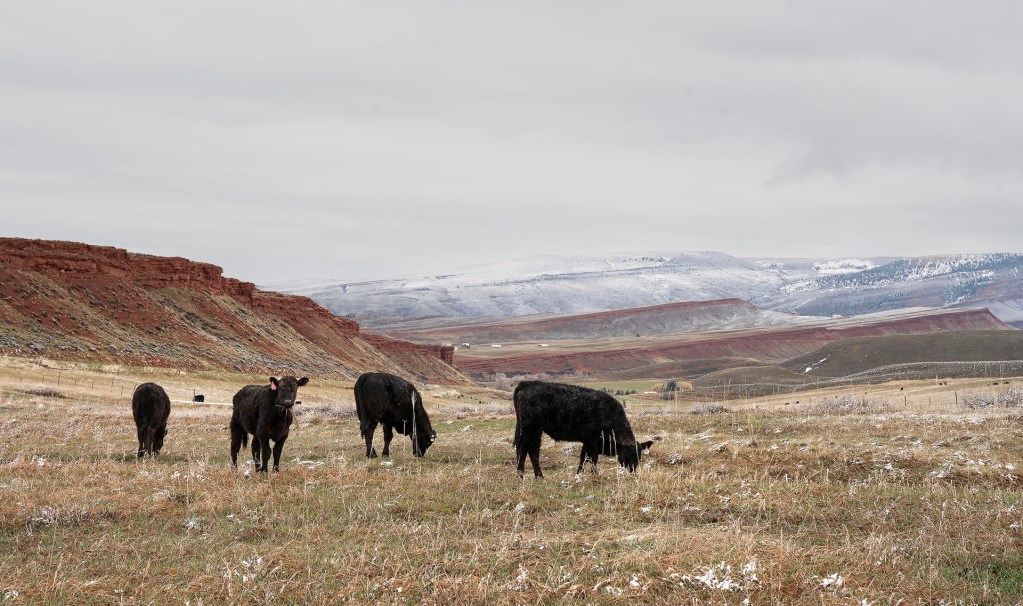
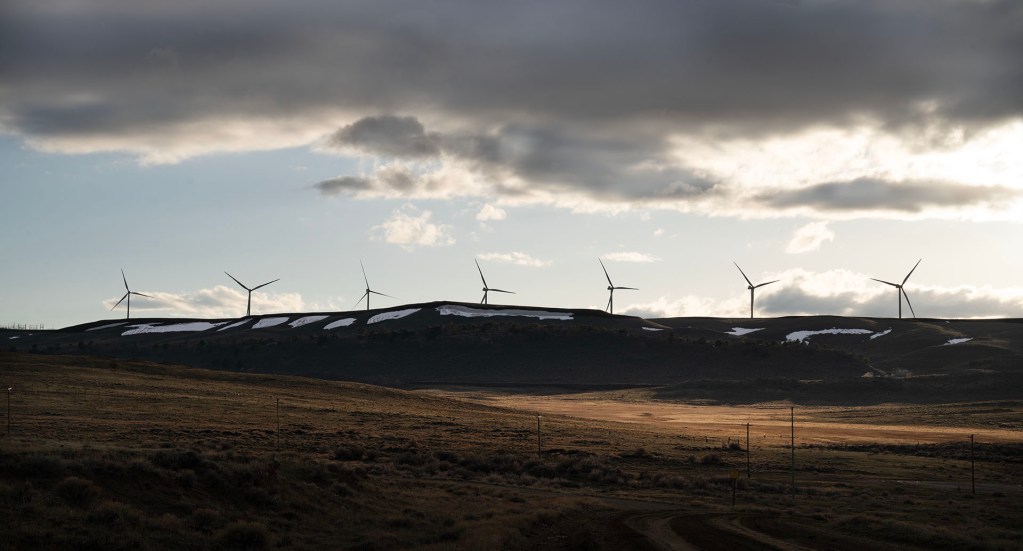
Just outside the tiny Carbon County town of Mcfadden, a dirt road winds its way to an uneven grassy pasture. The herd from Sim’s Cattle Company stops here to graze for a week or two each year. In the north end of the pasture, a pumpjack drums up a steady flow of oil for Rock River Operating. Four miles to the east, 66 wind turbines pump out electricity for the behemoth electric utility PacifiCorp.
All three operations — the cattle herd, the petroleum pumpjack and the wind turbines — operate on state land. These parcels, and many others around the state, are held in a trust that benefits the University of Wyoming. Upwards of $1 million per year in lease payments are funneled through the Office of State Lands and Investments and into the school’s coffers.

It’s a key revenue stream for the state’s only public four-year university, but it flows from a checkered history.
Between 1851 and 1868, the United States took ownership of large swaths of what is now Wyoming from eight tribes, including the Eastern Shoshone and Northern Arapaho tribes of the Wind River Reservation.
“It was stolen in light of treaty obligations,” in the words of Northern Arapaho Director of Education Sergio Maldonado.
When Wyoming joined the Union in 1890, the federal government gave the new state nearly 3.5 million acres of this land to fund public schools. The vast majority went to a trust for K-12 education, but a smaller portion — 219,000 acres, an area slightly larger than New York City — was set aside for UW.
According to data obtained by Grist and shared with WyoFile, the U.S. paid tribes $682.84 for the UW state trust parcels, or around $20,000 in today’s dollars. In many cases, it paid nothing. Yet, 150 years later, the university is still profiting. Over the past five years, the trust has generated an average of $1.1 million per year from leases like the ones in Mcfadden.
This land is separate from the 90,000 acres that the federal government granted UW through the Morrill Land Grant College Act of 1862, which provided start-up capital for the school. Recent interest in the Morrill Act, both in academic circles and in the news, has sparked conversation about the university’s ethical obligations to the state’s Native American residents. Meanwhile, the university is still benefiting from an even broader land gift.
The above map shows state trust lands that benefit the University of Wyoming, the location of the university and the location of the Wind River Reservation. Click on elements for more information. Map by Gabe Allen. Data provided by Grist’s Misplaced Trust investigation.
Tuition waivers
In recent years, the University of Wyoming has made some effort to give back to tribes. The school established the Native American Education, Research and Cultural Center in 2017 under then-President Laurie Nichols. The center provides Indigenous students with a place to gather and learn.
“A lot of our students have a culture shock when they go away from the reservation to school,” Eastern Shoshone Education Director Harmony Spoonhunter told WyoFile. “It’s really helping our students succeed and helping them have a comfort zone.”
The same year that the center was established, the university also started the Native American Summer Institute. The program brings high school students from the Wind River Reservation to UW to experience campus life for six days each summer.
But the school has thus far stopped short of offering one fundamental benefit: a tuition waiver. The Northern Arapaho Business Council first asked for a waiver back in 2018. Since then, both tribes have lobbied the university’s leadership and board of trustees to consider covering costs for Eastern Shoshone and Northern Arapaho students.
Many other state schools, including the University of Montana and the University of Minnesota, now offer full tuition waivers for some Indigenous students. But, so far the conversation in Wyoming has only yielded vague commitments to further discussion.
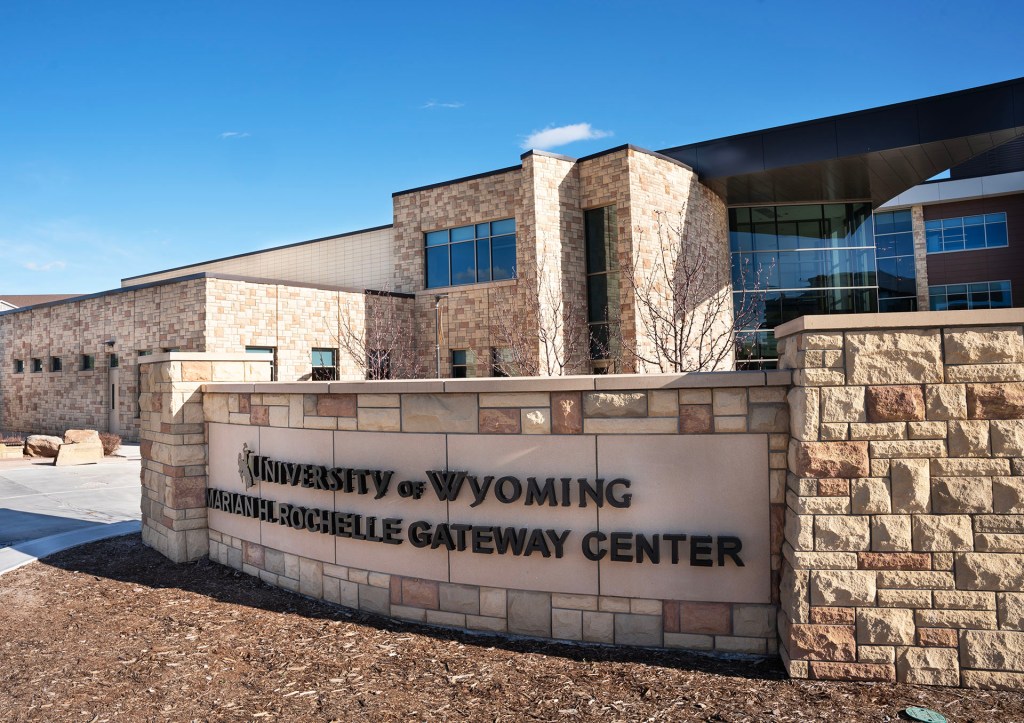
Last Thursday, tribes brought the conversation to the Wyoming Legislature’s Select Committee on Tribal Relations at its annual interim meeting. Sen. Affie Ellis (R-Cheyenne) acknowledged that the committee needs to respond to tribes’ requests, but warned against viewing a tuition waiver as a silver bullet.
“Native Americans are underrepresented in higher education, and tuition is one piece of that conversation,” Ellis, who is Navajo, told WyoFile. “There’s a lot of information we need to sort through as we continue this conversation about increasing the ability for Native students to attend college.”
Meanwhile, Indigenous attendance at the University of Wyoming remains low. This year, only 307 out of more than 8,250 undergraduate students, or less than 4%, identified as American Indian or Alaskan Native.
Patchwork
Back in 2010, Victoria Capitan-Posey graduated from Wind River High School and received a grant from the Eastern Shoshone Education Department to attend Central Wyoming College. It was plenty to cover tuition, but she still had to work to make ends meet. Later that school year, Capitan-Posey got pregnant for the first time. It was no longer feasible to work and attend school at the same time. She moved home and focused on making enough money to support the baby on the way.
“The funding helped a lot. I got to live my college life, but I never got to finish,” she said.
Fourteen years later, Capitan-Posey helps oversee scholarships as Eastern Shoshone Education’s administrative assistant. She encourages students to stay in school and get a degree, something she still hopes to do. The department gives out $7,500 per semester to undergraduate students, but the agency doesn’t have enough to fund every applicant.
“We have to send denial letters out,” education coordinator Trish Hill said.

There are three main scholarship funds that benefit Native American students from the Wind River Reservation. The Chief Washakie Memorial Endowment funds Eastern Shoshone students, while the Northern Arapaho Endowment and Sky People Higher Education, were established by the Northern Arapaho Tribe for Northern Arapaho students. This year, around half of the students that applied for these scholarships received funding. According to independent research that University of Wyoming College of Law student Alyson White Eagle presented to the Select Committee on Tribal Relations this week, the scholarships only covered 43% of the recipient’s total need.
Following White Eagle’s presentation, UW assistant professor and High Plains American Indian Research Institute Director Tarissa Spoonhunter spoke briefly. She shared the stories of two highly motivated Indigenous students struggling to make ends meet at UW. One student, who received some funding from the Chief Washakie Memorial Endowment, is finishing up a degree in Kinesiology while working 40-hour weeks.
“She works all night at a nursing home, comes to classes, goes home and sleeps a little bit, and then goes back to work,” she said.

Financial hardship remains the biggest obstacle to a higher education for students from the Wind River Reservation, according to White Eagle’s research. Some students, of course, successfully piece together the money for college between scholarships, work and family support.
Back in the ‘70s, Maldonado earned a bachelor’s degree, completing half at Central Wyoming College and then finishing at Brigham Young University. As a star student, he received mentorship from older academically minded members of the Northern Arapaho tribe.
“They had housing set up and my tuition and books were covered,” he said. “People facilitated the creation of a safe environment that would be positive for me.”
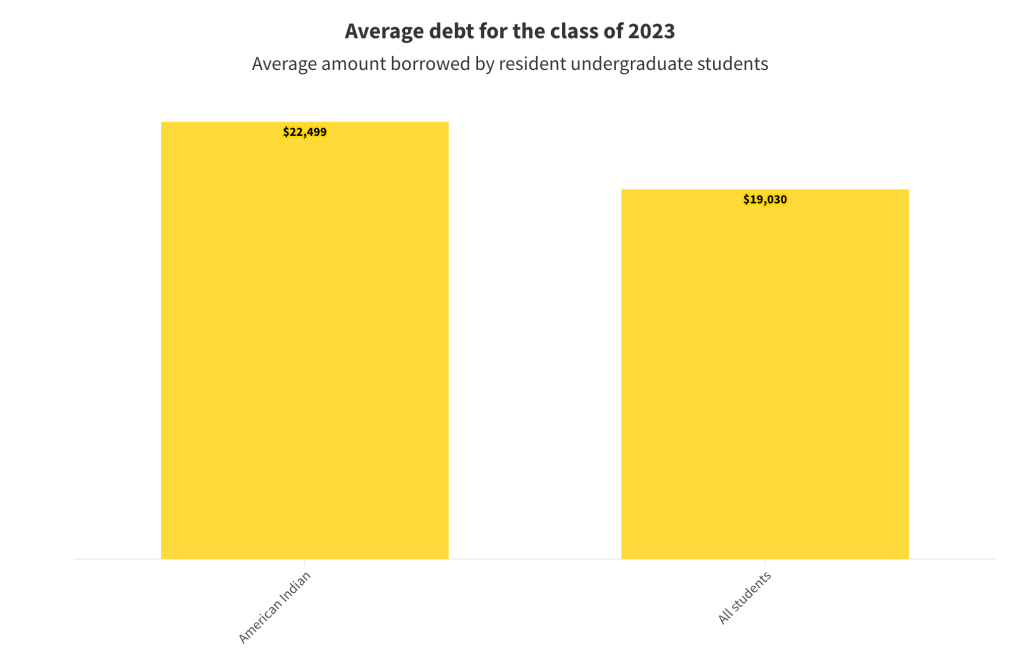
Now, Maldonado holds a Master’s of Arts in education from Arizona State University and is finishing up a Ph.D. at the University of Wyoming. He has passed his work ethic and love for learning on to his kids as well. His youngest daughter received funding from the tribe to earn a bachelor’s at Idaho State and is now in a graduate program at the University of California, Berkeley.
But Maldonado’s story is one of both exceptional academic motivation and an exceptional level of community and family support.
“How many students have that kind of relationship?,” Maldonado asked rhetorically, referring to his daughter. “How many have that role model from the time they’re in elementary all the way through high school.”
“As a native student myself, I can say it’s difficult to be here on my own,” White Eagle told the select committee on Thursday. “Oftentimes we’re first-generation students. Our parents and grandparents haven’t had a higher education, and they don’t know how to navigate the financial aid system and often cannot financially support us while we’re at school.”
Students on the Wind River Reservation face disproportionate obstacles to academic success long before they are old enough to apply to college. A 2023 report by the Wyoming Legislative Service Office found that K-12 students on the reservation experienced homelessness, foster care and poverty at much higher rates than the rest of the state. They also scored lower on state standardized tests and the ACT college admissions test.

The reasons behind these differences are hard to parse out, but many can be traced back in time. From the late 19th century on, tribal students in America, including those of the Wind River Reservation, were subjected to an education that displaced them from their homes and systematically stripped them of their cultural heritage. Though modern reforms have come a long way, the scars still remain.
“You don’t have many people who trust American education,” Maldonado explained. “Arapaho people and tribal people remember what this country has done.”
Drawing lines
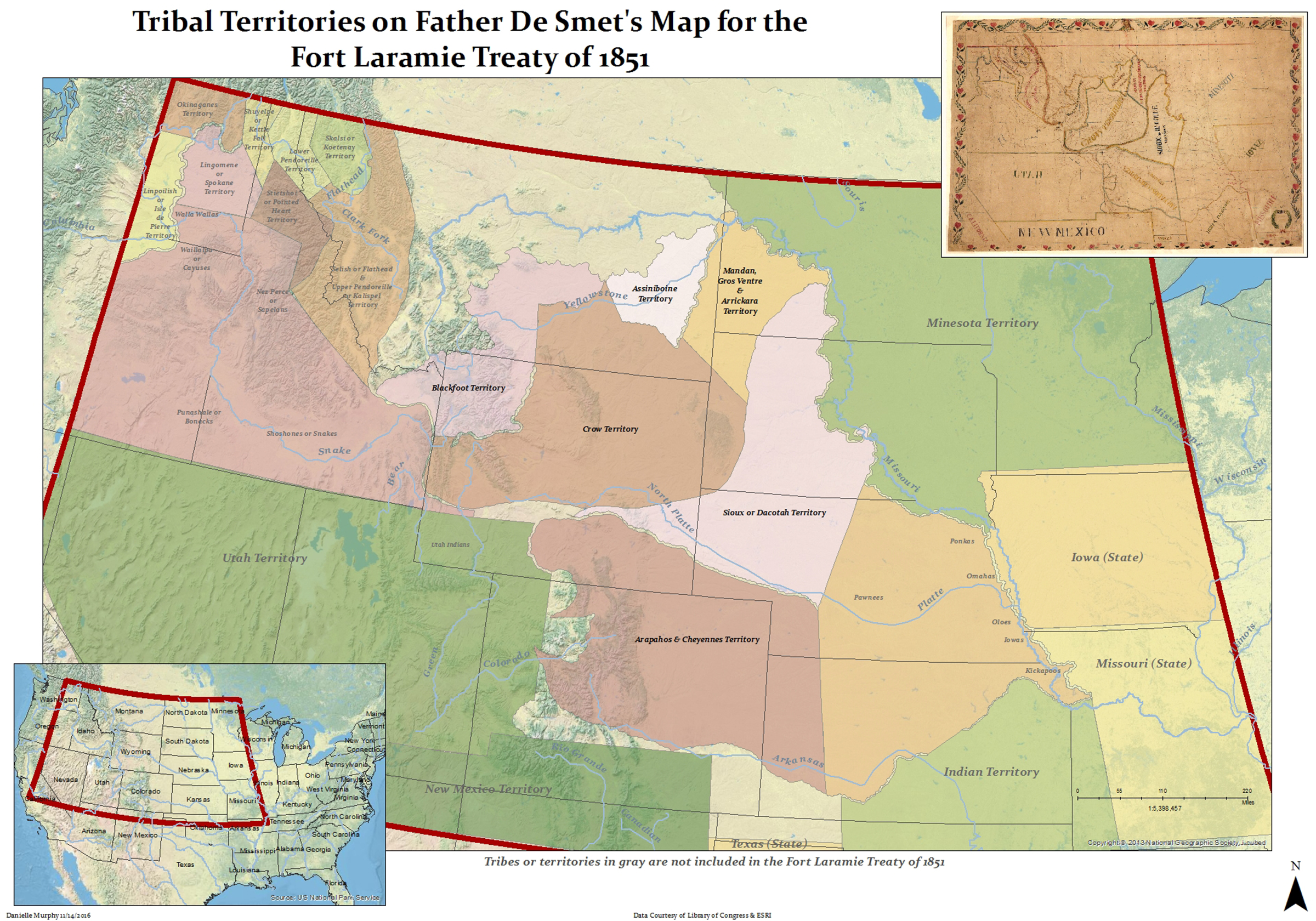
On Sept. 17, 1851, a consortium of tribal leaders and representatives from the U.S. government gathered on the banks of the North Platte River near Fort Laramie to sign the Horse Creek Treaty. The document divided present-day Wyoming into separate territories for white settlers and travelers, the Cheyenne and Arapaho, the Shoshone, the Blackfoot, the Crow, the Sioux and the “Utah Indians.” It was the first time that the tribes agreed to a document assigning land ownership. Under the treaty, most of Wyoming’s present-day state trust lands were designated as tribal territory.
One of the parties who witnessed the Horse Creek Treaty negotiations was Chief Washakie, the storied late-19th century leader of the Eastern Shoshone tribe. Today, sculptures, statues and plaques of the chief guard many buildings around Fort Washakie, the seat of the Eastern Shoshone tribal government. During an interview with WyoFile, Harmony Spoonhunter referenced a quote.
“Chief Washakie of the Eastern Shoshone Tribe once said, ‘I fought to keep our land, our water and our hunting grounds. Today, education is the weapon my people will need to protect them,’” Spoonhunter recited.
Seventeen years later, in 1868, the Eastern Shoshone’s territory was overrun by ranchers, gold miners and immigrants moving westward. That year, Chief Washakie signed the Fort Bridger treaty, which ceded most of the tribe’s land to the United States in exchange for the first, much larger, iteration of the Wind River Reservation. In the treaty, he included a provision that funded a school for Shoshone girls. The institution was ahead of its time — it included traditional practices and native language in its curriculum.
The 1868 treaty also signed away ownership of lands that would go on to fund Wyoming’s public education system. So, in a sense, Washakie’s decision created two educational legacies: one that directly benefited his tribe and one that benefited all Wyomingites.

“People have to remember that all students receive a healthy financial piece of those trust land monies,” Maldonado said. “It’s not about ethnicity, it’s not about race, it’s not about tribal or non-tribal.”
It’s true that the revenue generated by state trust lands is distributed relatively equitably between K-12 institutions around the state, including those serving Indigenous students. Yet, at the university level, tribes are not receiving the same benefit — for the simple reason that they aren’t enrolled in the same proportions.
To Capitan-Posey, the answer is clear. A tuition waiver would encourage students to enroll and free up tribal funds to support students in other ways — food, housing and transportation.
“It’s hard, as a parent, seeing your child wanting more, but they can’t reach it because they have to worry about getting the money just to survive in college,” she said.
Looking forward
Though the University of Wyoming does not offer a Native-student-specific tuition waiver, some college attendees, both Indigenous and non-Indigenous, do get a state-funded full ride. In 2005, the state established the Hathaway scholarship. Like the University’s state trust lands, the scholarship also depends on Wyoming’s natural resources — it relies on a trust fund that generates revenue from taxes on oil and gas operations.
“States that have this offer of free tuition, I don’t think they have comparable scholarship programs offered to all of their high school students, let alone Native students,” Ellis said. “The bigger question to me is how many of our Indigenous students in Wyoming are qualifying for certain levels of the Hathaway Scholarship?”
To qualify for the maximum amount, students must demonstrate need through a FAFSA application, score a 25 or above on the ACT and complete a curriculum of advanced prerequisites in high school. These requirements are a barrier to entry for many Indigenous college students — only 33% of Indigenous students at UW qualified last year. Both tribes of the Wind River Reservation and the school districts that serve them are working to bring that number up, but it’s a slow process.
“It’s a work in progress and we’ve got a long way to go,” Northern Arapaho Business Council member Lee Spoonhunter testified Thursday. “What we’ve heard from the legislative body for years now is that if there’s no tuition waiver, you guys still have the Hathaway scholarship. A lot of our students don’t qualify for that.”
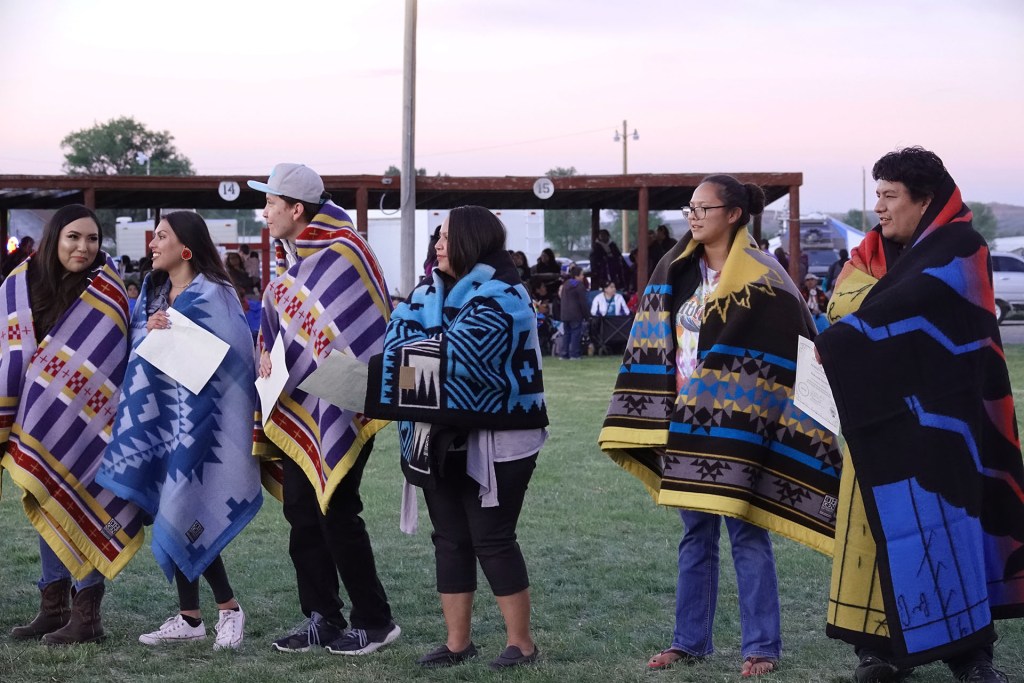
Tribes have now lobbied three separate decision-making bodies on the idea of a tuition waiver, but it’s still unclear which one is in charge. University leadership and the UW Board of Trustees have repeatedly stated that the Legislature has the power to decide the issue, including in response to interview requests for this article. Yet, on Thursday, members of the select committee seemed surprised by this assertion.
“If that’s the ask — for the Legislature to take this on — then we need to know that. And, I don’t know that I’ve ever received that message,” Ellis said.
At the end of the morning session, the committee passed a unanimous motion to send its co-chairs to a UW Board of Trustees meeting in the hopes of reaching clarity on this point. Committee members stopped short of endorsing a tuition waiver, but some did speculate about how it might be funded.
“If we were to take our colleagues a bill that said we are creating a new endowment, I just want to be very clear that that is a difficult thing to do,” Ellis said.
Both Ellis and Rep. Ken Chestek (D-Laramie) speculated that one path forward might be for the state to offer matching funds toward a UW endowment.
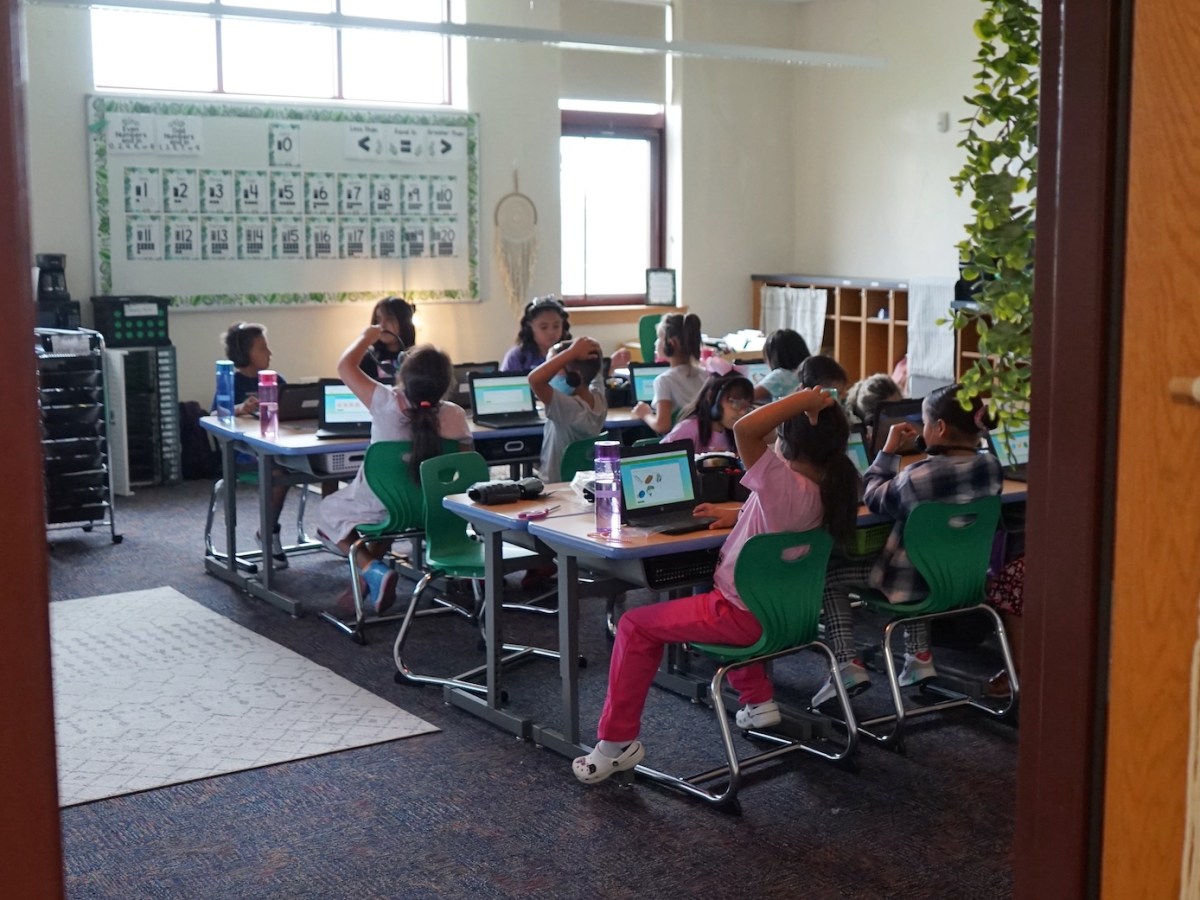
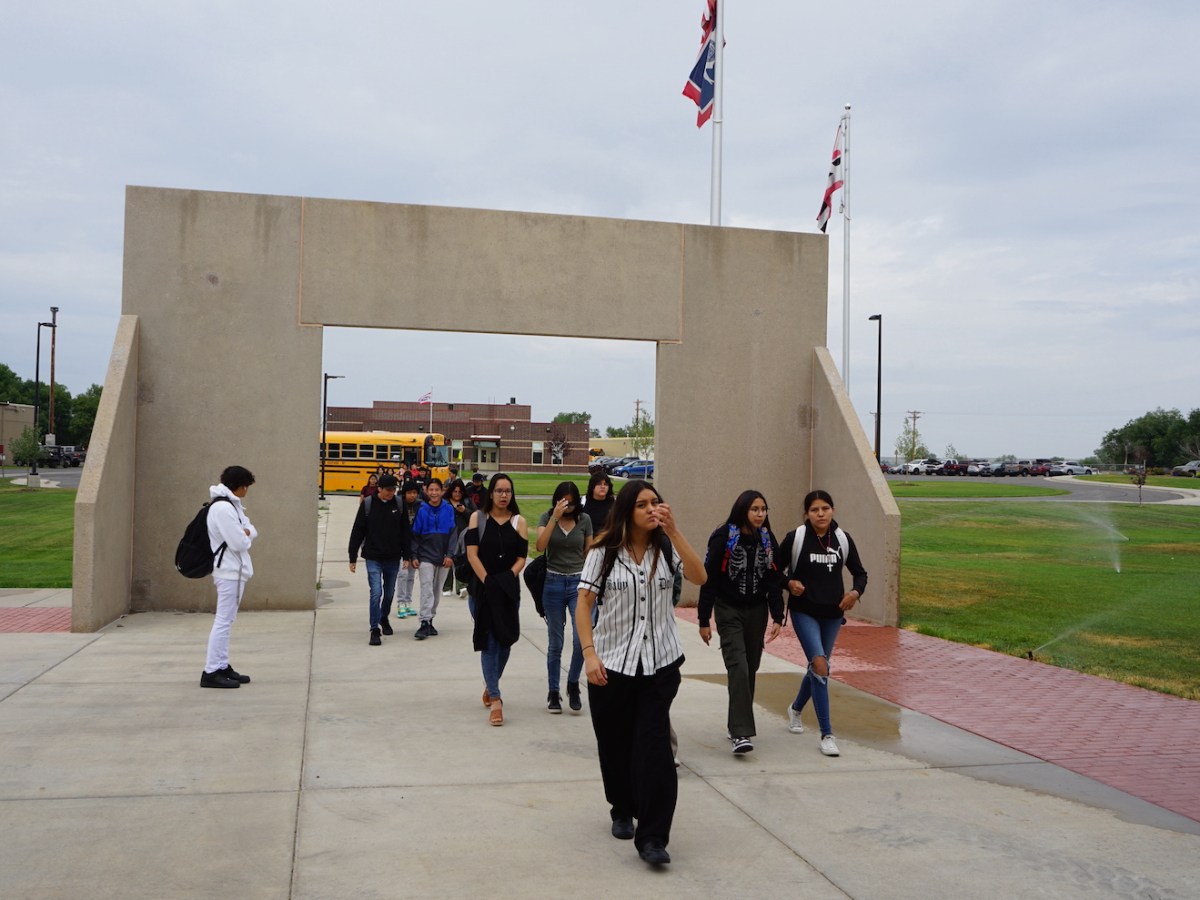
Tribes still don’t have a clear answer to their request for a tuition waiver, but Thursday’s meeting represented the clearest movement on the issue in years. While the state and the university figure out who is in charge, Northern Arapaho and Eastern Shoshone leaders will continue advocating for their students. One day, they hope to see a return-on-investment from the cession of some of their ancestral lands.
During his testimony, Lee Spoonhunter spoke about his aspiration to provide future generations with the opportunity to succeed.
“When I’m long gone and we’re all long gone, the University of Wyoming can be the greatest avenue for Northern Arapaho and Eastern Shoshone students,” he said. “We can’t do that until we are committed to provide a quality education and the best opportunities for tribal members that, at one time, lived on the land where the University of Wyoming sits.”
Clarification: The University of Wyoming trust lands cited in this story include both subsurface and surface property rights, which are leased out separately. Some surface and subsurface rights overlap each other or occupy the same physical area. —Ed.
Correction: This story has been updated to correct information about the Chief Washakie Memorial Endowment. —Ed.

To diverge slightly let me say it is a shame Wyoming only has one 4-year university. There is no competition for one thing. Competition breeds excellence. I attended UW for years and it is a good school but if there was another 4-year school in Wyoming it would help UW hone its edge and also help Wyoming’s students have more choices. For instance, both North and South Dakota have two leading and comparable state universities but not Wyoming. When you compare Wyoming to the neighboring states with state colleges/ universities, Montana (6), Colorado (13), Utah (9), Idaho (4) and Nebraska (7). Future Wyoming college students still have options that are nearby but why should our students be forced to leave the state? And why has Wyoming education not evolved and grown to the point of having at least two good 4-year schools? We have a huge amount of mineral wealth so money cannot or should not be the reason. The I-80 – Union Pacific corridor has dominated the state since the 1800’s and it is time for that to change. Having another 4-year school would give students more options and would actually UW become even better. Educational monopolies are really not to the benefit of all of Wyoming’s residents. It is kind of odd and a bit embarrassing we are the only state with one 4-year school. Isn’t it 2024 and time for a change?
Well organized, articulate and to the point. The tribal perspective must be heard yet the burden of responsibility lies with the people, the Northern Arapaho and the Eastern Shoshone. We must continue to succeed in the educational world. “To qualify for the maximum amount, students must demonstrate need through a FAFSA application, only 33% of Indigenous students qualified last year.” This speaks volumes about a deficiency of academic success at the reservation level. Yet, I know that our students can succeed.
I’m OK with it as long as the admitted Native Americans are held to the same admission and academic standards as the rest of the students.
87% of Indians don’t live on reservations, perhaps because they are turned off by the constant lamentations about the cruel past and stolen lands, and perpetual complaints about colonialism. Sorry but its time to move on and live life in the present. I believe the reservation system – and the welfare-in-perpetuity must end. Sure, retain your culture, as i do my Irish heritage, but we really are all one people.
There are several things that require context to the recent piece by Gabe Allen.
First, like most pieces about tribal lands, the author starts out with a shifting baseline. In other words, what date you use as a starting point changes the asumptions.
Typically the tribes that happened to occupy any territory at the time of a treaty are considered the “owners” of that landscape. Yet, nearly all the tribes in Wyoming were relatively recent colonists of the state, and one can assume the land was not vacant. Thus, they took over the land from other people (tribes). Whose land is it really? In many instances, we don’t know which tribes occupied the land prior to historic contact, but we do know something about tribal movements.
For instance, the Arapahoe moved into Wyoming sometime in the 1700s from the Great Lakes region. Are they the “owners” of this land? They certainly did not pay for it.
At around the same time, the Crow who originated in Ohio, had moved from the Missouri River country of North Dakota into eastern Montana and Wyoming.
The eastern Shoshone lived in Wyoming in the 1700s as well, but their origins are in Mexico. They gradually colonized the Great Basin and eventually moved into Wyoming. So, are they the “owners” of these lands?
The land that was ceded by treaties was not “stolen,” as suggested in the article. In almost every instance, the US government has paid for land. We may quibble about whether it was a fair price, or whether all terms were fulfilled which are legitimate points for discussion, but in many cases, the tribes did not live up to their treaty obligations either (again this is history often ignored).
When the first treaties were signed in 1851, the tribes involved voluntarily agreed to the terms. There were essentially no white people in Wyoming in 1851 save a few traders and trappers, and travelers on the Oregon Trail. Fort Laramie was originally a trading post purchased by the US Government in 1849 to protect Oregon Trail travelers. But the US government and settler influence was minimal. There was no gun to the head of tribal people. Why did they voluntarily gather and sign the treaties? Primarily because they were given “goodies” by the government–things like guns, ammo, metal pots, etc. and also they were promised protection from other tribes (intratribal warfare had a major impact on tribal populations–something never acknowledged).
I happen to support education and free tuition for all students. Education has been and still is the best way for any disadvantaged person to improve their overall health, economic prospects, and quality of life. However, I am opposed to racially based programs. I believe this identity politics is ultimately racist especially when you consider that many tribal members are only part Indian. How much “Indianess” is sufficient?
For example, Sec. Interior Haaland claims to be Indian when she is as much white as she is Indian. Her father was of Norwegian descent. And given that nearly all tribal people have some European genetics, it’s possible that Hasland is genetically more white than Indian. Whatever the genetic breakdown, it is obvious she exploits the tribal heritage.
So why should a part-tribal person get special treatment for school? There are as many other ethnic and racial groups that are disadvantaged. Shouldn’t we base tuition needs on one’s economic situation rather than race?
The school trust lands benefit all Wyoming citizens equally. And that should be the standard.
I would argue that the indigenous people weren’t “recent colonists of the state” since, in those days, western “states” didn’t exist. And indigenous people didn’t create “states,” although the U.S. Senate initially pretended they were treating with elected governing bodies every time they came across a “chief.” (They dropped the pretense by the time they got around to moving the Utes.) But, of course, ALL of the indigenous people’s ancestors migrated to the North and South American Continent over many thousands of years, developing many hundreds of cultures and languages. And yes, many an indigenous people were pushed west off their eastern lands by European colonization of the east coast, and so forth. The Government of the United States bought its western lands from foreign governments located in Europe, at least the largest part not taken from foreign governments by conquest. That’s akin to my neighbor selling YOUR house to me, or I TAKING it from YOU just because I was better armed. The simple point is, when whites wanted to take land for any purpose or use whatever, they took it with absolutely no regard for the people who were already present; it was “move out” or “die,” with with whites preferring the latter. In fact, some native peoples, like the Cherokee, embraced the euro-agrarian lifestyle, living in framed houses on farms; but it didn’t spare them the grief of displacement.
The more we know, the better we can understand how to make amends to our amazing fellow citizens. I met many amazing people when I ran for Governor in 2022. Many of those outstanding people were from the Reservation. They were running for office because they wanted to make Wyoming a better place to live. Now, they are working to make their land a better place for their people. I often give thanks for all the knowledge Serigo, Andrea, & Lynn shared with me.
Great article with adequate historical background to bring us all up to date on the ethical opportunity we have. Previous generations did not push the option to connect the value gained by the University when Indigenous lands were stripped from Indigenous inheritance. We can push that option now.
Time for UW to give land back to tribe. Just as it time for South Dakota to honor the broken treaty on Black Hills. After all they already lost court battle over it. Turn it back over.
An excellent and much needed article. Thanks. Yes a tuition waiver and support services for indians run by tribal members employed by the University is definitely needed.
The 1851 treaty was the initial treaty signed by the plains Indians and promised much, but never delivered to those tribes. Of course, the plains Indians outnumbered the white population when this treaty was signed. When the Wind River Reservation was finalized in 1868, the Federal Government had the upper hand after decimation of the needs of all of the plains tribes, and placed the Shoshone and the Arapaho, on the same reservation! No insight of understanding that those tribes were enemies. This action was like a sharp stick in the eyes of both tribes. Since then, there has been little change of understanding on the Wind River Reservation due to the lack of trust concerning, the welfare of the those who share this Reservation.
“… No insight of understanding that those Tribes were enemies.” WRONG! It was exactly that reason the Northern Arapaho were “placed” on the Wind River Reservation. The “hope” was they would “decimate” each other into extinction. And it’s almost worked. There is no Joint Business Council (Shoshone and Arapaho) to form a unified approach or file lawsuits in federal court to demand their Treaty rights.
And as far as free tuition goes, Oregon has granted comprehensive free tuition for ALL levels of higher eduaction – Associates degrees/Certificates through PhD – to all enrolled Tribal members in the state. Now THAT is compensation for past Treaty transgressions.
Very informative. I have also read about the fracking fluids that have contaminated water in Wind River. That and all the obstacles described make higher education only a dream for many indiginous people. Hoping University of Wyoming finally steps up and creates full scholorship programs the way University of Montana has done.
There’s no doubt that historic Indigenous peoples were abused and treated as sub-human beings when the United States government failed to enforce and abide by the treaties it made with those same people. Every effort should be made by contemporary non-Indigenous Americans to allow Native Americans to benefit from the resources extracted from the lands stolen from their ancestors.
Fantastic story. Thank you for the reporting. Shining such a needed light.
Excellent article. Full UW tuition would greatly assist Native students to achieve the necessary education necessary for success.