

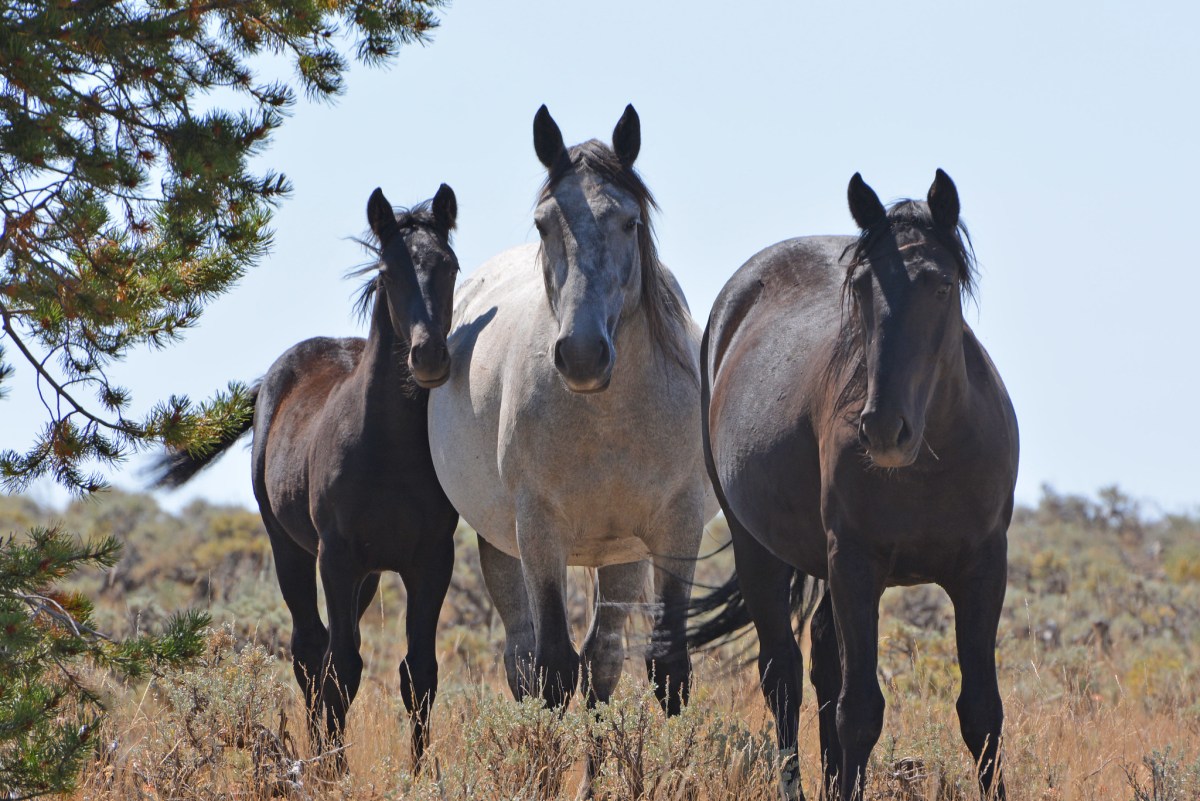
The vast majority of free-roaming horses occupying a vast swath of Wyoming’s Red Desert could be rounded up and trailered away to long-term pastures if Bureau of Land Management plans now being reviewed come to pass.
Potential roundups could target thousands of animals in the Green Mountain, Stewart Creek, Antelope Hills, Crooks Mountain and Lost Creek herds, which dwell on approximately 753,000 acres north of Interstate 80. Collectively known as the “Red Desert complex,” the herds are separate from three other herds roaming the public-private “checkerboard” portion of the Red Desert. BLM has long sought to entirely remove the three herds in the checkerboard but that plan is tied up in litigation and on hold until at least October.
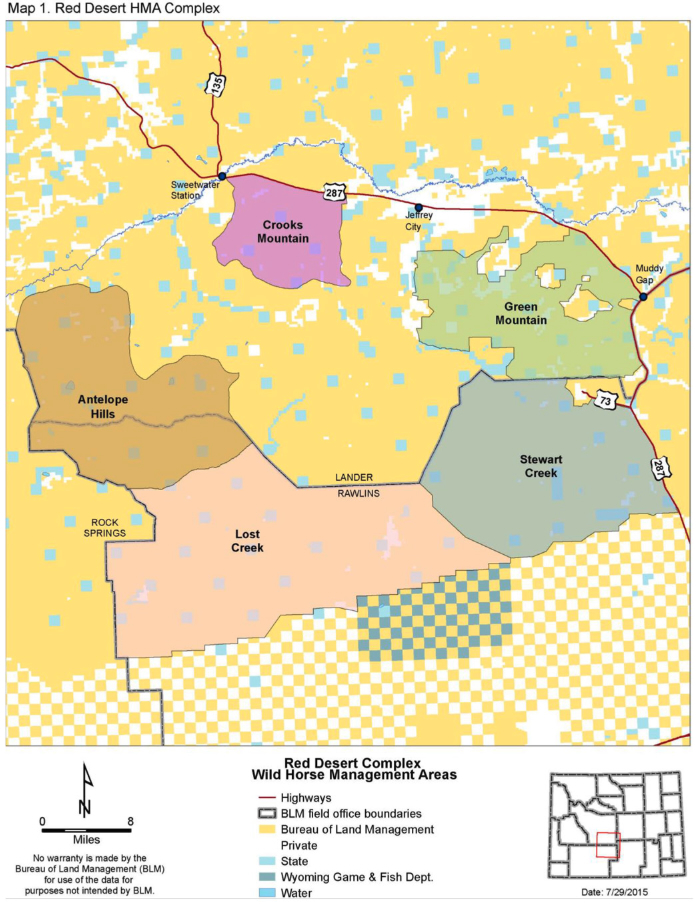
Instead of eliminating the Red Desert complex herds, the BLM seeks to knock down numbers to an “appropriate management level” to balance the “the needs of wildlife, livestock, recreation and the long‑term health of the range,” an agency spokesperson told WyoFile in an emailed statement. BLM personnel declined a verbal interview for this story.
Documents accompanying BLM’s proposal contend that the nonnative free-roaming horses have impacted the Red Desert’s ecological health.
“Rangeland resources within the complex have experienced adverse effects as a result of wild horse overpopulation,” states the evaluation report for the Stewart and Lost Creek herds. “Monitoring data specific to this area indicated that past excessive wild horse populations were linked to historical riparian degradation.”
University of Wyoming-led research that included three of the at-issue herds — Crooks Mountain, Green Mountain and Stewart Creek — shows that overpopulated horses are correlated with declining juvenile sage grouse survival rates.
Other monitoring data from the BLM’s evaluations show long-term improvements in Red Desert rangeland conditions. Bare ground in the Lost Creek and Stewart Creek herds has decreased over the last four decades, while biomass has increased. The evaluation for the Antelope Hills, Crooks Mountain and Green Mountain herds says “wild horse habitat is similar or possibly slightly improved” since the last assessment, though it adds a caveat.
“[W]ild horses are still contributing to impacts on certain rangeland resources especially when the population exceeds the [goal],” the document states.
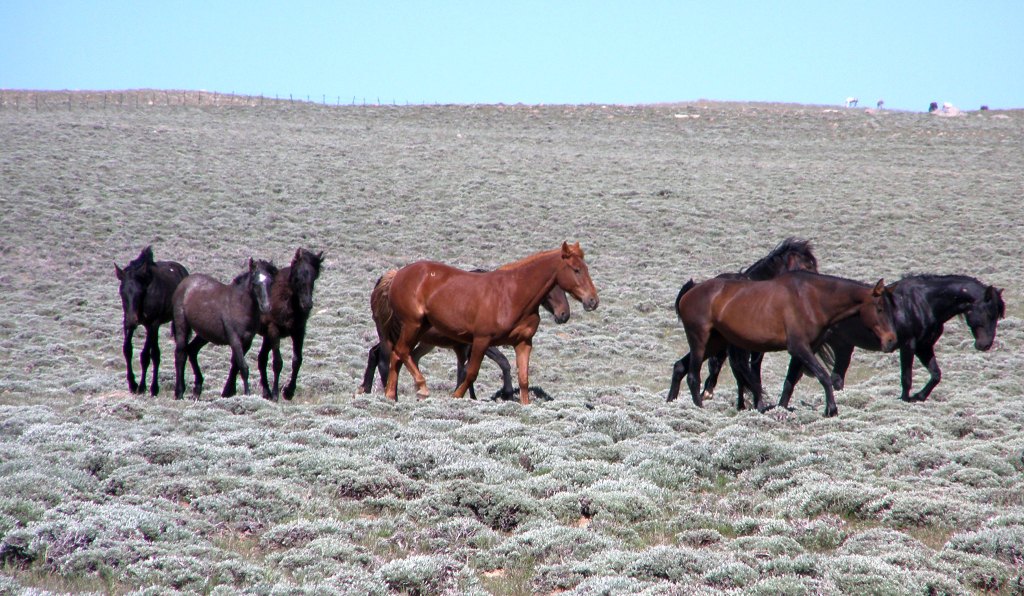
The Red Desert complex herds are overpopulated, at least based on the “appropriate management levels” established in the early 1990s. The goal is for the herds to include somewhere between 480 and 724 total animals, but as of early March the population was estimated at 1,970 horses and expected to grow to 2,300 by the time the herds are surveyed in the fall.
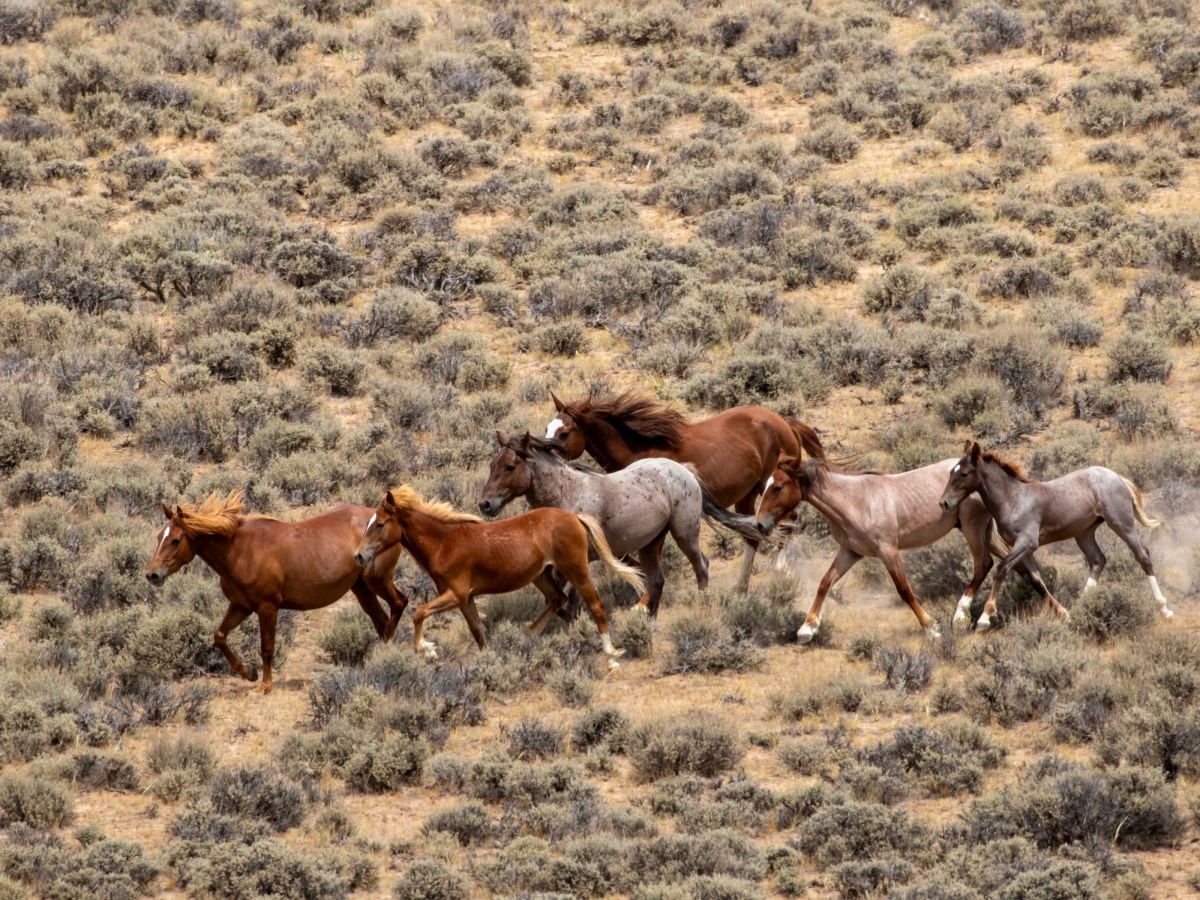
Free-roaming horses face little natural predation and have high survival rates. The herds can grow by about 20% annually — a clip that enables them to double every five years or so. Data included in the evaluation report for the Green Mountain, Antelope Hills and Crooks Mountain herds shows that the Red Desert complex populations have largely followed that trend. Roundups in 2018 and 2020 knocked numbers in those three herds down to about 900 in 2021. By 2027, however, projections are for more than double that many horses.
BLM is in the early “scoping” phase of its plans, and federal land managers have not divulged what exactly they’re proposing. The public notice only states that herd evaluations are more than 30 years old, need to be revised, and the agency’s Lander and Rawlins field offices “intend to gather excess wild horses” from the herds. Presumably, the roundups could target between 1,576 and 1,820 horses, which is the gap between the “appropriate management level” and the estimated fall 2026 population.
Herd plan updates will address the “appropriate management levels,” rangeland health, population suppression methods, genetic diversity and sage grouse habitat, according to the evaluation reports.
Roundups to reduce wild horse numbers from public lands are routine business. This fiscal year, BLM is planning to gather up and trailer away more than 15,000 animals, according to the agency’s most recent gather and fertility control schedule. Planned activities in Wyoming are minimal: They include fertility control on 95 horses in the Stewart Creek and McCullough Peaks herds, and a “drive trap” roundup targeting removal of 286 animals from the Fifteenmile Herd.

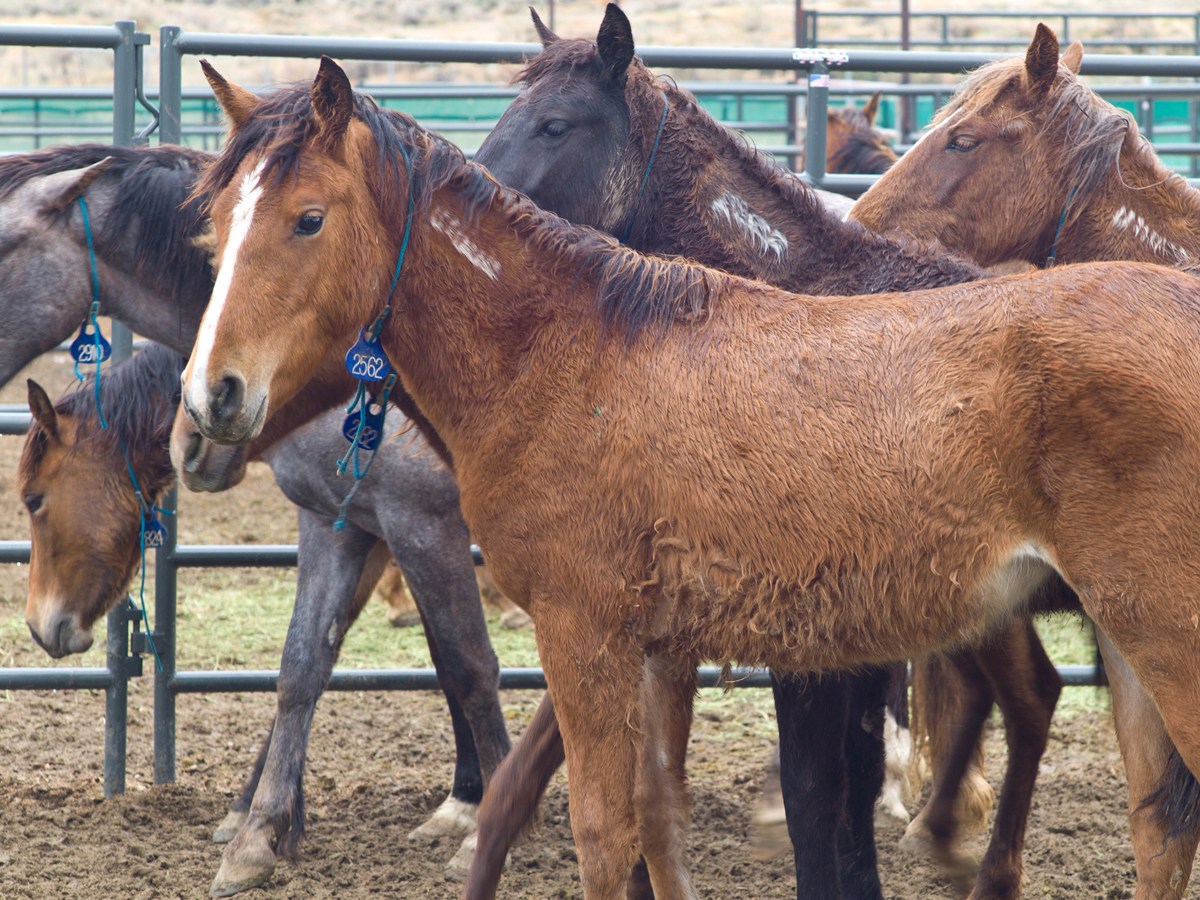
The rounded-up equines cannot be intentionally killed because of protections afforded by the Wild Free-Roaming Horses and Burros Act. Some horses find new homes through adoption programs, but most mustangs live out their days at private and government-run pastures, corrals and holding facilities.
BLM is accepting public comment on its proposal through May 4. To submit remarks go to eplanning.blm.gov and search for “DOI-BLM-WY-R050-2026-0012-EA.”
Wild horse advocates are encouraging the public to get involved. Carol Walker, writing in her Wild Hoofbeats blog, urged the BLM to consider restoring an old herd — Arapahoe Creek — that’s now managed for zero horses right in the middle of where the five existing herds roam.
“It should be changed back to a Herd Management Area, recognizing that it is central to all the HMAs and an integral part of the Complex,” Walker wrote.
Correction: This story’s subhead has been updated to remove a suggestion that rangeland conditions have degraded over the past five years. Information has also been added showing some rangeland improvements in the Red Desert. -Eds.

Sad situation. Life in a holding facility does not appear to be desirable
This is so crazy. We care about the small population of over populated horses but we don’t care about how over populated we are. We are over populated. We just keep squeezing the animals out and now we are going to capture more mustangs. Stop lying that the mustangs picked up in the round up go to green pastures. Almost all mustangs collected for round up go straight to shipping loads to slaughter and strouds is a great example. In fact they picked up two protected prezwalskis released by the lady who started the captive Prezwalskis revival from near extinction and got enough numbers to release a small herd into the USA , but two were collected in the Mustang round up for slaughter.
I have the photo of one of the Prezwalskis . No one was held accountable and illegal horse to harm was collected. I will not support more slaughter bound horses. I will not stand for more removal of animals if we don’t control our own population and we just destroy more and more land, more animals suffer every day. This country makes progress then goes back to its ways. No, I won’t support more round ups for slaughter and stop lying to the donators who believe their captive mustangs are in green pastures as they said above.
After all over population hurts us . Not the plants and not the other animals are hurt by horses, we already made these hurting species leave. We are such a warped society. Never will I support horse slaughter and never will I support the live stock industry who finds more reasons to make a quota. I’d rather be 2,000 horses than one trillion humans . All humans do is destroy and lie, cheat. We are the invasive species.
My mare was bought against rotz a real shipper as a saddlebred cross. Rotz really ships and there isn’t enough adopters for all the mustangs they want. More doomed to slaughter. We messed up the ego system. We ruined the planet and we blame it all on the tiny amount of animals we have. Absolutely no reason after banning slaughter that I’ll promote more slaughter.
Animals deserve a lot better and the world don’t need us controlling it where humans don’t exist. All the areas where no humans exist is the healthiest ego system on earth. We they allow this the next thing that will be legalized is slaughter and we know it’s what they want. More animals to die so we can have a convienent happy life without them getting in our way.
Humanity is disgusting and no I won’t support slaughter. Where else will they go? The auctions , you mean the kill buyers who run the auctions. Yes it’s all a lie right that’s what they’ll tell you and there’s kill pen scams out there I get it but there is real shippers Rotz takes 30 Standardbreds every three weeks in PA for a shipping load and some are saddlebreds. I think standardbred breeders would be sick to know where all their offspring are going.
I agree there’s too many people on planet Earth. Let’s get rid of some. Any volunteers? Brittany??
Removal of some horses seems more palatable.
Are there not other productive uses for these animals than to be penned for the rest of their lives? Can they be removed to my State Calif. and be used for Fire Prevention? This cycle of constant death for our friends in all our history seems irresponsible and so un American to me. Horses Wild or not have value. End this cycle with fresh idea’s. Please.
Dave Loucks, exactly—this is the kind of thinking we need. It’s time for an ‘aha’ moment that values these animals beyond holding pens.
Horse meat is popular in Europe. It could catch on here. Or use it for dog food.
Horse meat is not popular in Europe. It was just banned in Italy. The biggest use of horse meat is as an illegal substitute for beef. There are grave food safety issues due to the drugs banned in food livestock that are common in the riding, racing, working, and breeding stock that end up in slaughter pipeline. Wild horses are also full of banned drugs once they’re taken by BLM off the range and put into holding. Slaughter is illegal in the US due to the food safety issues; horse slaughter plants have v. low margins and do not have the funds to adequately regulate against humane and environmental violations that were endemic to the industry when it was legal in the U.S. it is no longer. Also, horse meat not used in dog food since the 70’s due to drug issues that are fatal to certain breeds of dogs.
I have written extensively on this issue for Forbes and other US pubs. This is a lawless industry that destroyed the infrastructure of the small towns where it once existed and did not pay taxes.
The whole fire prevention thing is bogus lie in the sky. And CA had more than enough wild horses as it is. Several hundred starved to death in Mongomery Pass last winter and more died when do gooders brought hay which is not proper redeeming program for starved horses. Killed them with kindness, ignorance and arrogance.
How many nonnative cattle and sheep are out there? Seems like a giant omission to make given that BLM’s own data shows they vastly outnumber the wild horses. Also, BLM rangeland health data for Red Desert shows that all rangeland health conditions are being met. Sure looks like BLM isn’t feeding you the big picture, Mike, only that which provides an economic benefit to the cattle ranchers who are already getting big subsidies paid by taxpayers. Maybe go find the livestock numbers and take a look at BLM’s rangeland health data for yourself and report back? It’s all online. Not hard to find. I did.
We’re not allowed to eat horses. But we are allowed to eat beef and sheep. Does that make any difference? Yes, most assuredly so.
It’s not an omission. Those numbers are in the very same NEPA document that they are quoting. Those rangeland health conditions are being met because of these gathers. These gathers help maintain those conditions by stopping the herd from getting to that size to begin with.
Less cattle, more horses. I believe they had range eminence long before hefers.
PZP (Porcine Zona Pellucida) is a fertility vaccine administered to female horses, and it works. It has been around for years and was approved by the National Academy of Science in 2015. Its inexpensive and is the SOLUTION for keeping the wild horse population at a manageable level. Is this being used, I never see it mentioned.
This is the fertility control mentioned as being used for the McCullough Peaks mustangs. It does require that records be kept of which mare is which, how many foals she’s had, and so on, besides the manpower to administer the vaccines by dart.
Yes, there has been a PZP darting program in Stewart Creek for the last two years. It is not a solution. It only slows the rate of herd growth.
It’s not the horses…try getting rid of so many cattle and energy installations who do the
real damage.
The cattle numbers stay the same year after year. The horse herd doubles in size every 4-7 years. You could eliminate all the cattle and sheep use in the allotments and in less than a decade there would be 10,000 horses and not a shred of riparian habitat left.
The roundups traumatize the wild horses and the people that love them. The heard dynamics are altered and it’s damaging to the horses. It’s cruel to separate the family bands. Helicopters, gas, pilots, horse hauling, feeding and vet care are all taxpayer expense but they cost nothing in the wild. Roundups cause compensatory reaction. Use them for fire prevention or tourism. Get rid of the cattle grazing leases. Please stop the gathers
Getting rid of cattle grazing would not change the rate of growth of the horse herds at all. You could eliminate all the cattle use. The horse herd would still double in size every 4-7 years and you would still need to have a gather to control it. All you would accomplish is creating a bigger problem. It would mean larger gathers and more horses in adoption facilities. A bigger population of horses doesn’t increase the amount of people that are willing/able to adopt them.
This article highlights exactly where the system is breaking down. The solution being proposed is mass removal, yet the data it’s based on is rooted in “appropriate management levels” set more than 30 years ago. We’re making 2026 decisions using 1990s benchmarks—while ignoring how the land itself has changed due to livestock grazing, climate shifts, and water access.
The BLM continues to frame wild horses as the primary driver of ecological damage, but this article also quietly acknowledges overlapping pressures—livestock, recreation, and land use. Horses are being singled out while other impacts remain largely unaddressed.
Removing 1,500–1,800 horses from a 750,000-acre ecosystem doesn’t solve the problem—it displaces it. Most of these animals will spend their lives in holding facilities at taxpayer expense, while the underlying land management issues remain unchanged.
And perhaps most concerning: fertility control—one of the few humane, science-backed tools available—is barely being used here. Instead, we’re defaulting to roundups as “routine business.”
If we’re serious about rangeland health, then we need updated data, transparent methodology, and management that reflects all uses of the land—not just the easiest population to remove.
Wild horses are part of this ecosystem. Managing them responsibly should not mean removing them almost entirely.
Changing the baseline, changing the allowable herd size, changing the amount of cattle; these do absolutely nothing to change the rate of growth of the horse herds. The cattle and sheep numbers stay the same from year to year. There is no population control for the wild horses. PZP darting for fertility control helps, but it only slows that herd growth, it is not a solution. They imply horses are the primary driver of ecological damage because the horse population doubles every 4-7 years while the cattle and sheep numbers do not.
“Monitoring data specific to this area indicated that past excessive horse populations were linked to historical riparian degradation.” I believe the same can be said for livestock grazing, past and present.
Astute and observant.
In response to Tom, we eat livestock, most do not eat horses.
Chancy Brown.
My wife and I eat beef, but less so since the prices are so high at our local grocery story and we are retired, living on our fixed incomes.
Limiting damage to riparian areas and over grazing on public lands should be a high priority. I observed a long time ago that most BLM employees ride around in the hip pockets of ranchers. Why do the BLM employees wear cowboy boots and hats?
Would it be too much to expect the ranchers to pay for fencing off the riparian areas for the benefit of numerous species? After all, they are getting record prices for their cattle sent to slaughter.
Sage grouse should have received an ESA during the Obama era. If so, I believe, sage grouse populations wouldn’t be in such dire trouble. The Obama Admin caved into special interests.
SO what.
Please clarify that Statement. Do you mean to say, because we do not eat horses, which by the way are Native Wildlife and Federally Protected on these our Public Lands by an Act of Congress and the will of the people, should be removed at taxpayers expense, over non native livestock who way outnumber wild horses and causing the damage to the land by BLM’s own data, because we eat them…or some do.
Yep, but cattle are useful – they taste good. Horses are nice to look at and nothing else, apparently. Otherwise, why haven’t all the penned ones been bought up?