

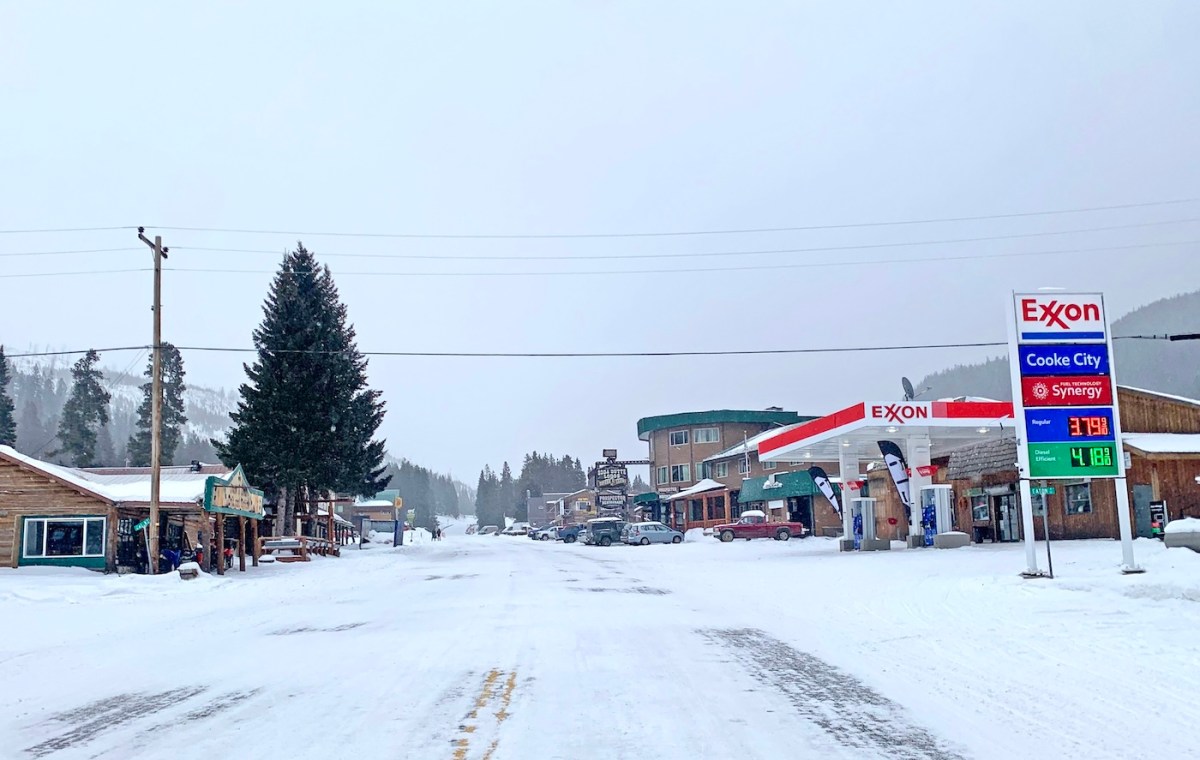
CODY—A newly released public opinion study suggests a potential thaw in a long-frozen disagreement over winter access to the vast snowy playground around the Northeast Entrance to Yellowstone National Park. But working out a long-term compromise is likely to be difficult, time-consuming and costly.
A series of surveys commissioned by local tourism boards in Park County, Wyoming and southern Montana conducted over the last two years shows that a majority of residents would like to see an 8-mile section of U.S. Highway 212 plowed. Plowing it while adding improvements for snow-machine travel could entice significant numbers of new winter visitors, the survey showed, with only a minimal drop in snowmobile riders, who make up the current majority of winter users.
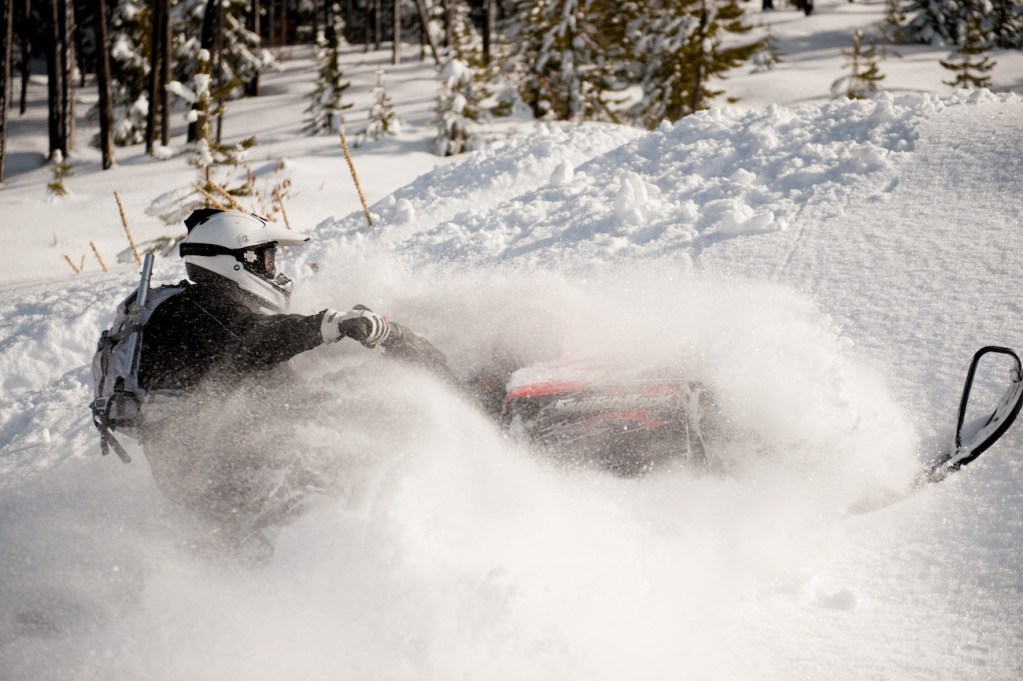
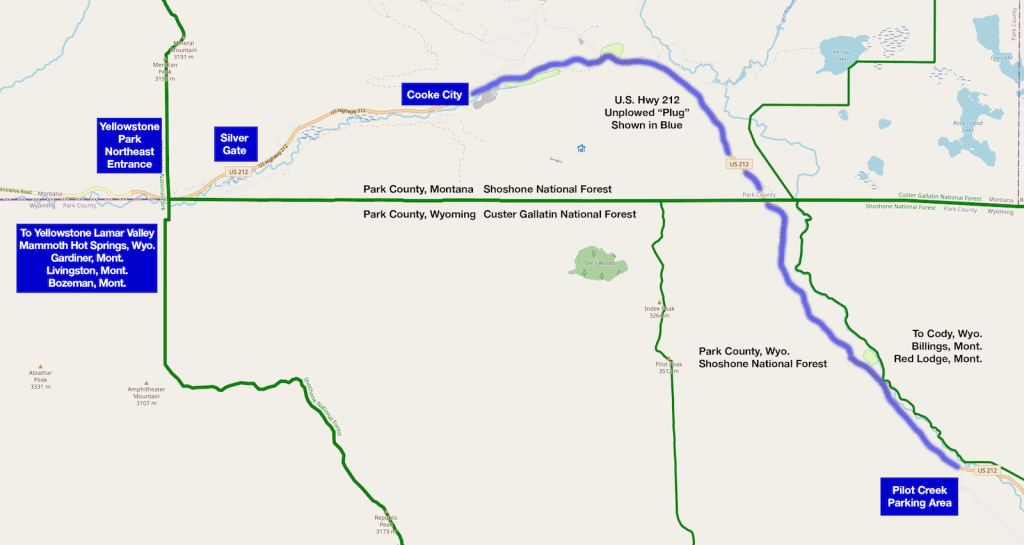
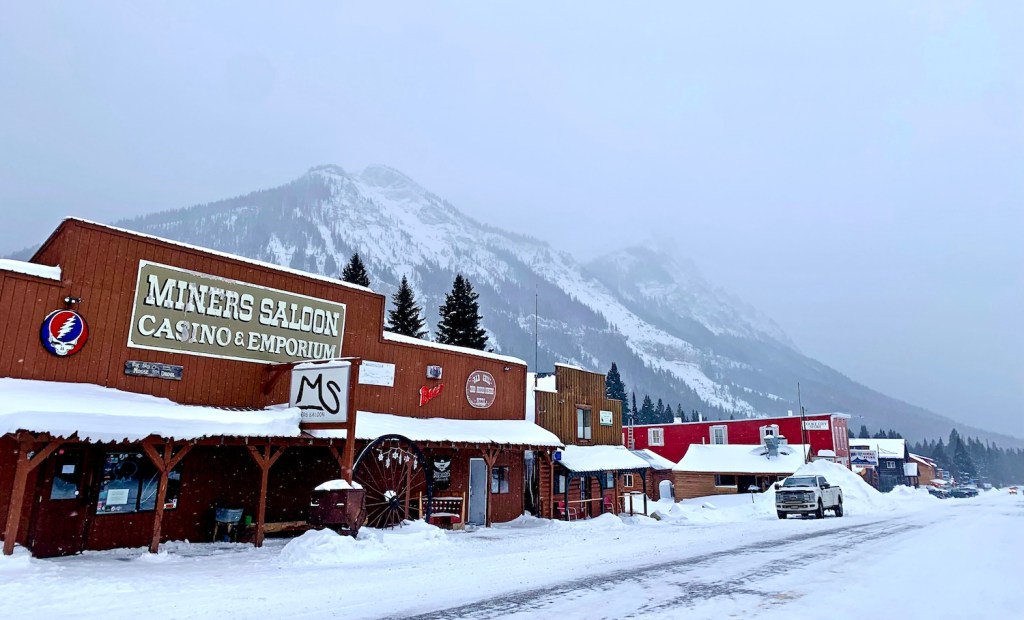
“The plug,” as the segment is known, has traditionally been left snow-covered for use by snowmobile riders as a connector route to access a huge swath of backcountry powder and trails. The route straddles the Montana/Wyoming border, with approximately four miles lying in each state.
The only road in Yellowstone open to cars during the winter leads from Gardiner, Montana through the park’s northern range to a dead end at the plug, just east of Cooke City, Montana. Plowing the plug would allow winter auto access for the first time in decades through the entire Northeast Entrance Road from both sides of the park.
But one caveat, cited by Jake Jorgenson of RRC Associates, the Colorado-based research firm that conducted the surveys, is that the clear majority in favor of plowing includes a combination of respondents who want to plow with no additional accommodations, as well as those who favor plowing only after additional parking areas and an alternate connector trail for over-snow travel are built.
“I think this topic, as we all know, has been a difficult topic for years. But I think what we’ve seen is there is room for compromise, and there’s not only two options,” Jorgenson said during an online presentation last week to members of the Park County Travel Council in Cody, and Yellowstone Country, the tourism board covering a five-county region in Montana that includes Cooke City, Gardiner, Livingston, Bozeman, Red Lodge and West Yellowstone.

A compromise did not seem not out of the question to Bert Miller, a member of the Cody Country Snowmobile Association, and also of Protect Our Plug, a group formed to counter the growing efforts of plowing advocates in Cooke City and Cody.
“It looks like there’s a reasonable way to start looking at this. I’m not saying it’s something we can flip a switch on, but to promote snowmobiling and other industries — it’s very interesting,” Miller said.
Working together
Tim Weamer, who handles marketing for the Red Lodge Chamber of Commerce and whose son owns a gas station in Cooke City, said there was “no reason not to” work together to develop parking and a new snowmobile trail.

“I think that would go a long way to reducing the animosity in the town, as well as people working together to an end goal that has positive outcomes,” said Weamer, who has been active on the Park Access Recommendation Committee, a pro-plowing group.
Both Weamer and Miller agreed that maintaining a steering committee of local residents formed to guide the study would be a positive step toward reaching a compromise.
Jorgenson said survey results show 89% of regional residents in Wyoming would be as likely or more likely to travel to the Northeast Entrance to visit Yellowstone in the winter after plowing and improvements.
But only approximately 10% or fewer of regional residents from both states would be less likely to visit or recreate there after plowing.
“They’re still going to come, because, honestly, the area has such great riding and snow, it’s still an amazing area,” Jorgenson said.
The idea of plowing the plug has come up every few years for decades, said Cody tour guide Bob Richard, a former Yellowstone Park ranger who has advocated plowing since the 1980s.
Richard and other proponents say thousands of new visitors would travel through the picturesque Lamar Valley to watch bison, wolves and other wildlife. They also say public safety is a factor, citing a shorter distance to Cody for emergency care. And they say a range of other winter recreation besides snowmobiling would see a boost if visitors could reach the area from the east by car.
Opponents of plowing have maintained that it would hamper snowmobile access to world-class trails and drastically change the character of Cooke City and Silver Gate, which are small, isolated, unincorporated mountain towns where some winter residents prize the solitude that comes with being at the literal end of the trail.
Others have worried that if U.S. Highway 212 is open to cars in the winter, the National Park Service might stop plowing from Gardiner to the Northeast Gate, which lies just west of Silver Gate.
Yellowstone Superintendent Cam Sholly has given multiple assurances in public forums that he would continue to plow that section of the park’s roads. But he has also said he will not plow the plug, citing the lack of a federal mandate or the budget to support it. A decision by local and state agencies to plow would be unlikely to affect winter management policies inside the park, Sholly has said.
Ruins the vibe
Aaron Mulkey, a professional ice climber who lives in Cody and has property in Cooke City, was among the minority of those who oppose plowing regardless of changes or improvements.
“I truly believe it ruins the experience and vibe of the town,” he said. “Cooke City in the winter is a unique destination. Plow the road, and it’s just like any other mountain town in the winter.”
An economic analysis by Jorgenson projected that plowing the road with improvements would amount to a drop of less than 1% in total winter tourism revenue, he said. That’s assuming no new visitors would be attracted as a result of plowing, he said, ignoring new auto traffic likely to be drawn to Yellowstone.
Ted Blair, CEO of Blair Hotels in Cody, said that “opening the Northeast entrance to Yellowstone in the winter would be enormous for Park County.”
“The opportunity to drive through the Lamar Valley from Cody during the winter would offer unprecedented opportunities for wildlife viewing and photography,” said Blair, whose company is the town’s largest lodging partner for group tours and bus travel to Yellowstone. “It is something many of our tour clients have expressed interest in over the last few years.”
But moving forward with a plan to create a new snowmobile trail that runs parallel to the plug, as well as developing the necessary additional parking areas needed to accommodate more vehicles stopping at different spots, will be a complex and lengthy process. It will require an extensive environmental review process mandated by federal regulations.
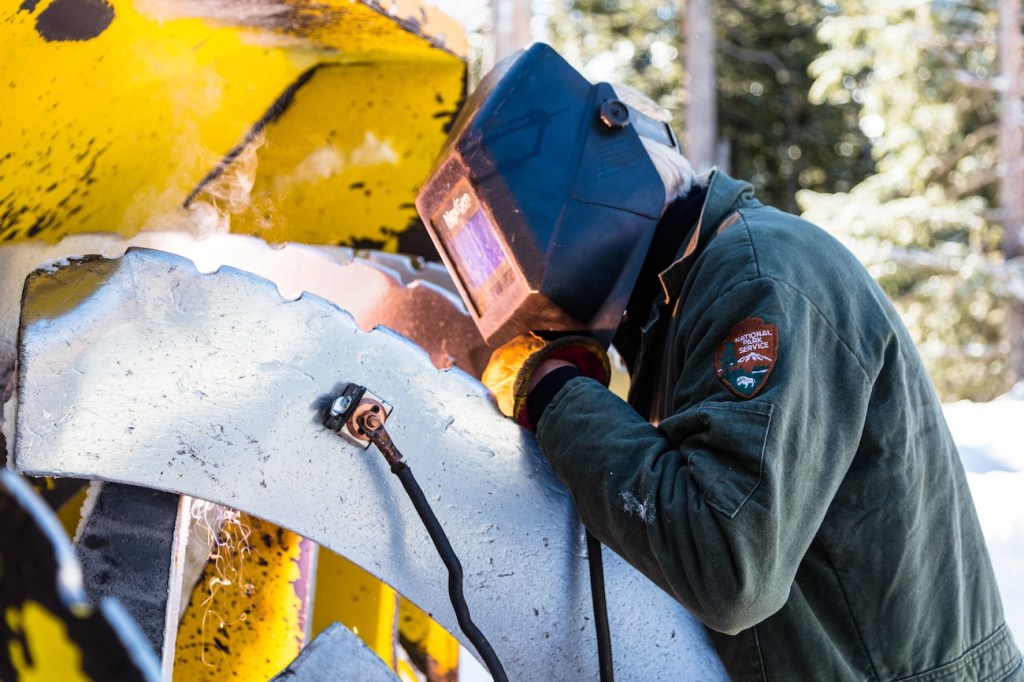
An alphabet soup of agencies have jurisdictional control or considerable input over the matter, including two state transportation departments, two national forests, two counties in separate states, two governors’ offices, and the National Park Service.
The high-altitude hillsides along the highway are home to a range of sensitive species, including grizzly bears, gray wolves and Canada lynx. Construction there would be costly, logistically difficult and environmentally challenging.
Equally thorny would be the expenses and responsibilities for plowing the plug. No agency has produced a solid estimate of the likely annual cost.
Directors of both states’ local tourism boards said they plan to remain involved in further discussions about a potential compromise, and that the survey offers a chance to find common ground on changes that could help communities across the region.
Shaleas Harrison, a Wyomingite who has worked to organize Montana plowing advocates, acknowledged the complexity of finding a compromise, but said the survey offered solid data to build on.
“Maybe for the first time, there can be some productive dialogue from the community members as a result of the information presented here,” she said.
Disclosure: Ruffin Prevost serves on the Park County Travel Council. The group does not have a position on plowing. —Ed.

I am on the steering committee and there has been some very good dialog. In the study 68% of the folks who visit Cooke City and Crandal WY in the winter would prefer the road not opened. (Question Hypothetical asked): What would you prefer? #1- Open the road and relocate the snowmobile trail- new parking area for Cooke City approx. 44% – #2- Do Not open the road leave as is for winter recreation approx. 36% #3- Open the road without relocating the trails and Parking lot 14% #4 6% Did not know.
One thing Cooke City really needs is an additional parking area to handle trucks and trailer parking for all seasons. An EIS can take 2 years, respectively or an EA. Other input would need to be gathered like Emergency Services. Hwy 212 and 296 in the winter can be a challenge, I drive this area a lot in the winter.
Overall, the study offers a lot more information than just the Hwy closed or open in the winter. Hopefully we can captivate this information and increase Summer and Winter fun. The complete survey should be on PCTC’s website now or soon.
Respectfully, Thank you.
I received a copy of the “Survey” in the mail. It was biased towards “Plowing the Plug”. I got an MBA from the University of Wyoming. In one Marketing class, we learned how to design surveys that aren’t biased because a biased survey in the business world can cause you to make the wrong decision and lose money. The survey that was sent out was biased. Don’t believe me? Ask they to send you a copy of the survey or have them post it online and make up your own mind.
Second, do you really think the NPS will continue to plow the road from Mammoth to Cooke City through Lamar Valley after the Plug is routinely plowed? My money is on the NSP deciding to STOP plowing the Mammoth to Cooke City road as soon as the Plug is routinely plowed. The only reason the NPS currently plows the road from Mammoth to Cooke City is because without plowing the Park road, Cooke City would be cutoff from civilization. Did anyone behind “Plow the Plug” effort ask the NPS if they would continue to plow the road from Mammoth to Cooke City through Lamar Valley if the Plug was routinely plowed? Will the NPS commit to continuing to plow from Mammoth to Cooke City if the Plug is routinely plowed? To my knowledge, no one has asked the NPS this question and so this story is only being half told – the other half of the story, whether the NPS will continue plowing the road from Mammoth to Cooke City after the Plug is routinely plowed was conveniently left out.
If you think the NPS will continue to plow the Mammoth to Cooke City road after the PLUG is routinely plowed, I would say you are pretty gullible. The NPS will cut costs as soon as they can. The NPS is not your friend – it is a giant bureaucracy that behaves like a bureaucracy. If it is in the NPS best interest to stop plowing from Mammoth to Cooke City, they will stop plowing it in a heartbeat.
Personally, I think a lot of people behind “Plow the Plug” want to benefit economically while the tax payers pay for it. That’s the most obvious bias behind this survey. They want more of my taxpayer dollars and I don’t have any left to give them!
Hi Jeff,
Regarding your comments about bias in the survey design, my story references “a steering committee of local residents formed to guide the study.” That steering committee included individuals form the local area who helped guide how the survey was created and worded, with pro-plow and anti-plow people on the committee. I have not heard from anyone on that committee who felt it was biased. The survey cmopany has been fairly transparent with the details/wording of what they sent out, and you can view highlights of it at the link below:
https://www.yellowstonegate.com/wp-content/uploads/2024/08/2023-2024-Cooke-City-Outdoor-Recreation-Research-Final-Presentation-1.pdf
Some of the steering committee members (from both sides of the issue) have already said they’d like to keep the group together moving forward, so I don’t get the idea that those involved are upset with issues of bias.
You also said that “To my knowledge, no one has asked the NPS this question and so this story is only being half told – the other half of the story, whether the NPS will continue plowing the road from Mammoth to Cooke City after the Plug is routinely plowed was conveniently left out.”
Maybe you missed it, but this is actually addressed in the story: “Yellowstone Superintendent Cam Sholly has given multiple assurances in public forums that he would continue to plow that section of the park’s roads.”
Sholly has told me this in an on-the-record interview for publication, and he told the communities of Cooke City and Silver Gate the same thing on a conference call following the 2022 floods that washed out sections of the Northeast Entrance road. He has stated that the Park Service has a long history of plowing, and a commitment to continue doing that. He has cited the need to get Montana school kids in Cooke City access to Montana schools in Gardiner as one of many reasons NPS will continue plowing regardless of what happens with the plug.
Additionally, the Park Service does a lot of research on wolves and other wildlife/ecology issues in the winter, and one of the primary places where this work is done is along the park’s Norther Range, accessible via the plowed road between Cooke City and Gardiner. Xanterra, the primary concessioner, has stated that they would prefer the road plowed so the Mammoth Hotel can draw more visitors in the winter.
I would not dispute your comment that “a lot of people behind ‘Plow the Plug’ want to benefit economically while the tax payers pay for it.” Many in the tourist industry, at least in Cody, are relatively transparent about this. Their explanation for their position is that: 1) it’s a public (automobile) highway that they say should not be restricted to the exclusive use of snowmobiles; 2) the additional winter regional tourism revenue will, they say, more than make up for the expense of plowing; and 3) people in cars should have the same access to their national parks as people in snowmobiles.
Thanks for reading and sharing your viewpoint.
Hi Larry S. — Residents and non-residents both already pay $35 annually to Wyoming to operate a snowmobile anywhere in the state. The money goes toward a state trails office. And in this case, not plowing the plug saves money, while plowing the plug would cost more for auto access, not snowomobiles. So I doubt that a snowmobile fee would be seen as a fair or appropriate solution for this situation.
But one option I have heard of on the Wyoming side is a resort tax—an optional tax on travel expenses and other non-essential goods and services—that some communities in Montana can choose to adopt. Cooke City/Silver Gate does this and has been putting the funds toward water/sewer infrastructure. Wyoming does not have this option, but I have heard some discussion of it in Park and Teton counties as a way to cover costs (like road plowing) associated with facilitating tourism or paying for the effects of heavy tourism in small towns.
That sir is a license for snowmobile. Just as boats have license. Raise it to cover plowing the plug. Likely be in the $5-$10,000 per machine license. But look. Snowmobilers. Pay $15-25,000 a machine. Have deluxe $20,000 trailer to haul them hooked on to $80,000 pickup. Pay $200 night motel fee. Plus food and booze. So that extra fee on tag for machine will be minimal. You want the plug plowed you pay for it. Just cost of having fun.
Simple solution. Add a “fee” on to each snowmobile to pay for the expensive plowing. That way it not passed on to others.