

Though there were some instances of incomplete, misclassified reporting and mathematical errors, an audit of the Wyoming Business Council shows the agency generally operates within a complex set of state and federal laws for how it spends tens of millions of dollars annually to advance economic development in the state, the Wyoming Department of Audit concluded.
The agency examined the council’s books from July 2019 through March 2026, according to the department’s report. The audit is the result of a legislative mandate that was modified via a line-item veto by Gov. Mark Gordon earlier this year after the economic development shop narrowly avoided a Wyoming Freedom Caucus-led effort to defund and dismantle the agency. The council also undergoes annual third-party audits.
The Legislature ultimately reduced the council’s budget for the next two years from the governor’s recommended $54.6 million to about $15 million — enough to sustain the agency as lawmakers reexamine its role and contemplate potential reforms.
“We hold the Business Council to high standards of fiscal responsibility and accountability, and we welcome independent oversight,” Business Council Board Chairman Derek Smith said in a prepared statement. “This audit affirms that the agency is operating responsibly while identifying a limited number of opportunities to further strengthen our documentation practices.”
Some critics of the business council, however, question the quality of the audit. Gillette Republican Rep. John Bear, a member of the Freedom Caucus and chairman of the House Appropriations Committee, said more examination is needed.
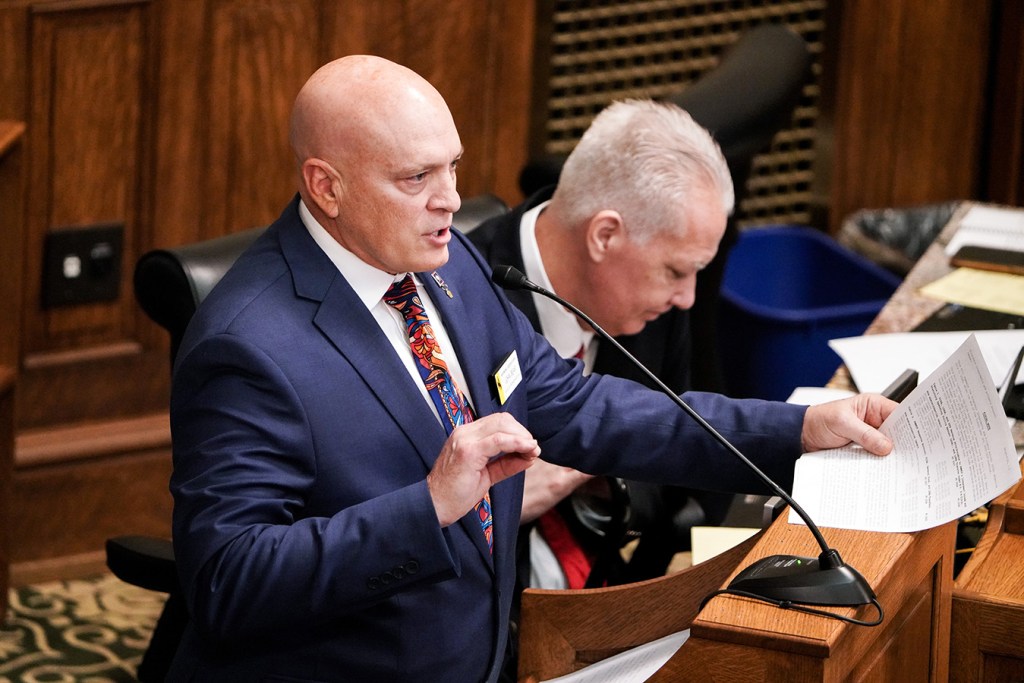
“When a bloated state agency touts its own surface-level audit after the governor vetoed an outside forensic audit, you know there’s a need to pop the hood — especially when that agency spends 16% of its costs on administration,” Bear told WyoFile.
Audit report
The audit examined 222 of about 8,904 financial transactions through the 2019-2026 period. Of those, one included an invoice lacking supporting documentation specified under state guidelines, according to the report. The error amounted to $316. That’s not money unaccounted for, but simply misreported, according to the business council.
Similarly, according to council staff, nine of the transactions, totaling $520, lacked supporting documentation. Though the expenditures are accounted for, similar mistakes could represent a larger miscalculation — $20,880.68 — across the entire 8,904 transactions during the 2019-2026 period, according to the Department of Audit.
The state’s audit included a review of recent annual audits.
“Based on that review, we found the [business council] ultimately accounted for and expended funds in conformity with generally accepted accounting principles, receiving unmodified audit opinions,” the Department of Audit said. “However, these clean opinions were only achieved after private auditors identified material misstatements requiring significant audit adjustments.”

For example, past independent audits identified the need to correct how millions of dollars were reported due, in part, to delayed reimbursement tracking and “improperly recognized” revenue, according to the state.
“Prior to this audit intervention, management’s financial reporting failed to adhere to specific provisions of the [business council] policy manual.”
Reformation
While the audit recommends some procedural adjustments, it found no misuse of public money, Smith said. He noted that weaknesses revealed in the audit will likely be used to advance a negative “political narrative” about the council.
“After examining nearly seven years of operations, the auditors found no improper spending, no violations of law and only a small number of minor documentation-related findings,” Smith said. “That’s a strong outcome by any reasonable standard.”
Since its inception in 1997, the business council has overseen some $1.5 billion in economic development money appropriated by the Legislature, according to the Legislative Service Office. Yet many critics have lamented that the state is dealing with many of the same issues that led to the formation of the business council in the 1990s: lack of municipal infrastructure to support new businesses, gaps in a skilled workforce exacerbated by a youth exodus and an economy that lags behind surrounding states.
Several critics have questioned whether it’s appropriate for the state to spend public money on economic development.
“The concept, the underlying idea behind this, is to get government out of the way and allow businesses to find their own way and work for themselves, to survive on their own,” Sheridan Republican Rep. Ken Pendergraft said in January while speaking in favor of dismantling the agency.

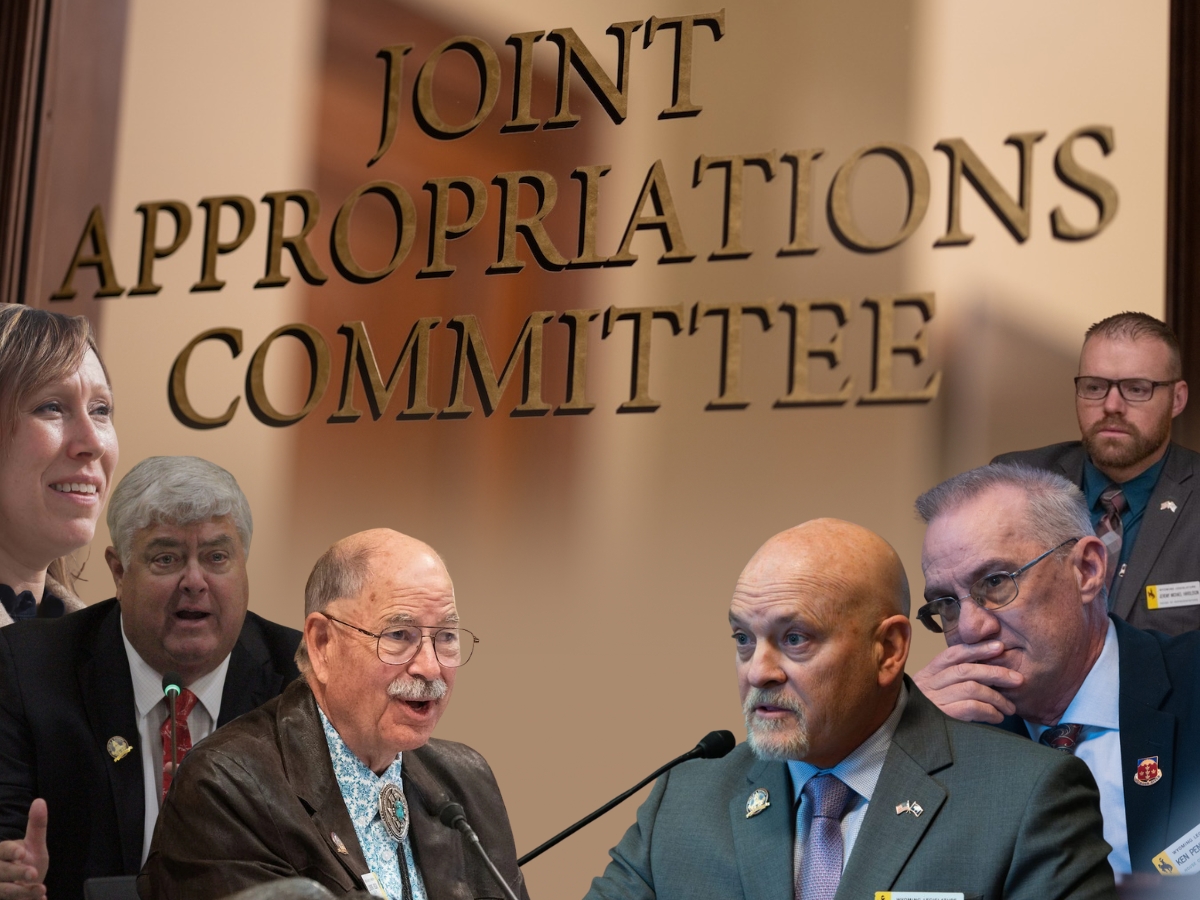
Meanwhile, efforts to examine and reform the business council are underway, both in the Legislature’s Joint Appropriations Committee and the Joint Minerals, Business and Economic Development Committee. So far, the Minerals Committee has focused on the business council’s structure and guiding principles. The JAC has focused on the agency’s budget matters, including its management of vast federal and state grant and loan programs.
The committees will hold a rare joint hearing in August to mull potential legislation reforming the agency.
