


Do you have questions about this story? Or information to share? Reach out to Maya Shimizu Harris at maya@wyofile.com.
After more than two years of litigation, the first trial concerning alleged abuse at the Wyoming Boys’ School begins today.
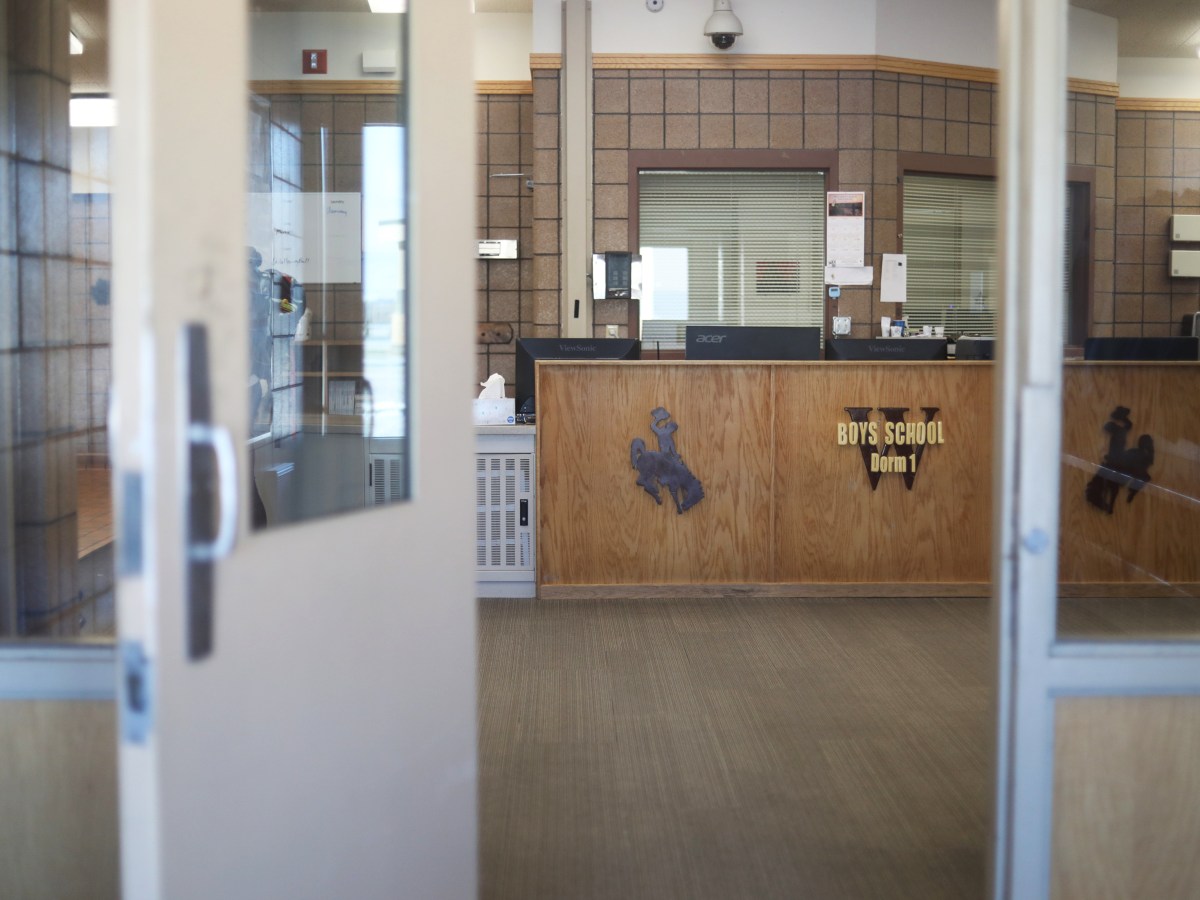
This trial concerns the case of Blaise Chivers-King, who is one of six former boys’ school residents who lodged complaints against the facility in 2024, accusing staff of physical and psychological abuse. The school, which detains delinquent boys ages 12 to 21, is a 38-acre residential facility near Worland that’s overseen by the Wyoming Department of Family Services.
Chivers-King, who served two stints of roughly 11 months each at the Boys’ School between the ages of 15 and 17, alleged Wyoming Boys’ School staff violated his 14th Amendment rights by placing him in isolation, using excessive force and infringing on due process. U.S. District Judge Scott Skavdahl ruled in October that some, but not all of his claims, could go to trial.
The defendants, which include the Wyoming Boys’ School, the Wyoming Department of Family Services and individual boys’ school staff members, argued that “every instance of claimed ‘isolation’ served a legitimate purpose and was not excessive in relation to that purpose.” Staff who placed Chivers-King in isolation assert they should be protected by qualified immunity — a type of legal immunity that protects government officials from lawsuits under some circumstances.
Skavdahl disagreed, pointing to evidence that some uses of isolation “were, or became, simply punishment or unrelated to management of a safety threat.” He emphasized how staff placed Chivers-King “in isolation for predetermined amounts of time, which is at least arguably unrelated to the legitimate purpose of managing a child who is physically violent or attempting suicide.” That Chivers-King remained in isolation even after he changed his behavior, Skavdahl noted, could raise questions for a jury about its use for a legitimate purpose.
Last month, Skavdahl denied the defendants’ request to bar the term “solitary confinement” during trial, though he said he would “listen carefully” to ensure the term isn’t used to “inflame the jury.”
The defendants will also be required to bring physical examples of items related to former resident Blaise Chivers-King’s claims of excessive force and isolation, including a “spit mask,” mechanical restraints and riot gear, as well as a mattress and magnets used in the school’s detention rooms.
Skavdahl ruled Wednesday that some of the claims of improper isolation by another former resident, Dylan Tolar, can go to trial. While Tolar alleged four boys’ school staff members violated his 14th Amendment rights by putting him in isolation, the claims against just two of those staffers — Elsa Olson and John Schwalbe — will go to trial. Although Olson and Schwalbe never placed Tolar on detention status, which is the facility’s “most restrictive disciplinary status,” “whether conditions constitute impermissible isolation is based on facts, not a facility’s (or an expert’s) labels,” Skavdahl wrote in his order.
The judge wrote that “a rational jury could conclude Olson and Schwalbe impermissibility placed Mr. Tolar in punitive isolation” because that isolation was similar to what’s described in other juvenile isolation cases: “a long stretch of time in which a child is not allowed out of his room and may be restricted in other ways as to entertainment, exercise, and the like.”
Tolar’s trial is scheduled to start Nov. 30.
I’ll be at the U.S. District Court of Wyoming in Casper this week keeping you up to date on what’s happening with the Chivers-King trial. You can follow my coverage here at WyoFile.