


The Bureau of Land Management is moving to modernize federal bonding requirements meant to ensure the cleanup of abandoned oil and gas wells. The reforms come more than 60 years after the agency last updated the minimum bond amounts companies must pay before they can drill on BLM leases, Biden administration officials announced Thursday.
If finalized, the rule would put companies under more pressure to see their drilling projects through — a notable change to a federal program that has struggled to prevent wells from being abandoned in the past.
Under the existing rule, the bonds no longer come close to covering what the BLM has to spend on reclamation. Operators have been able to choose between $10,000 per lease, $25,000 per state where they operate or $150,000 for all their wells on federal lands nationwide. But a single lease often contains multiple wells, and the agency estimates that it costs between $35,000 and $200,000 just to plug one.
The proposal unveiled this week would eliminate the federal blanket bond and raise the remaining minimum bond amounts to $150,000 per lease and $500,000 per state. It would set new constraints on the types of land offered for leasing, stop allowing companies to renew inactive drilling permits, curtail lease suspensions and ensure lease transfers are scrutinized more closely. It would also preserve the higher royalties, rents, bids and fees put in place temporarily by the Inflation Reduction Act.
Environmental and taxpayer advocacy groups say the changes to bonding outlined in the draft rule are years — if not decades — overdue.
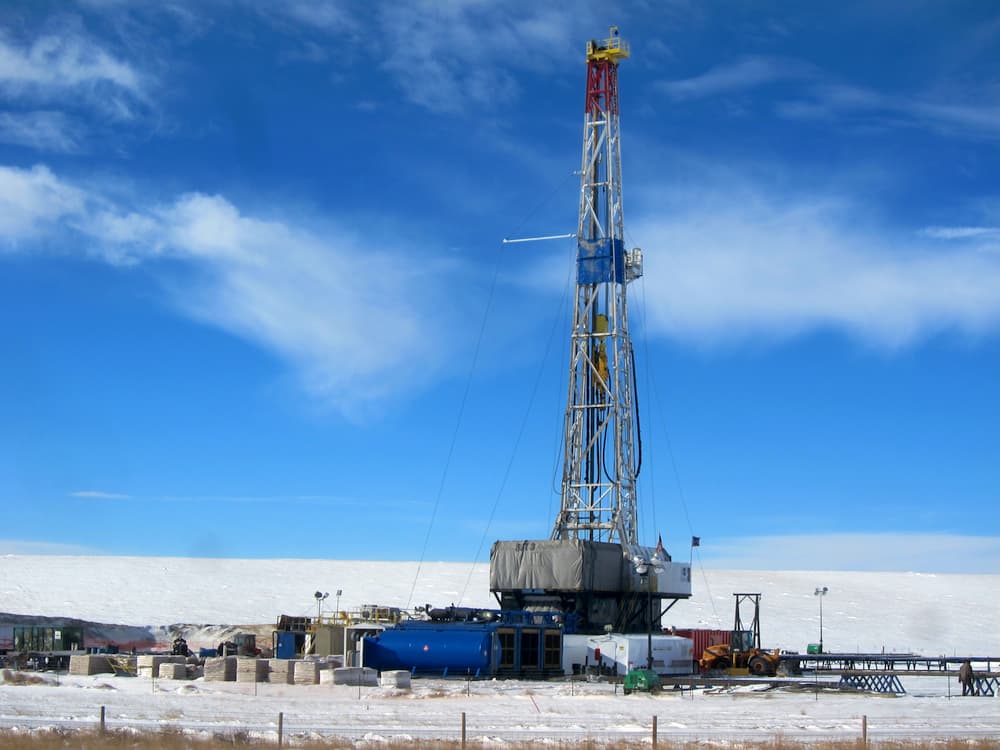
Upwards of 2,700 oil and gas wells sat idle on federal land in Wyoming alone as of 2022, according to the state BLM office. Only 15 of those wells have been left unplugged, unowned and under-bonded long enough to be considered orphaned, making them the agency’s job to fix. Many more are waiting on one list or another for the BLM to determine whether they qualify as orphaned, too.
Last year’s Inflation Reduction Act dedicated $250 million to support the BLM’s efforts to stop out-of-operation wells from leaking methane, a potent greenhouse gas, and other harmful pollutants into the air. The agency needed the additional tax dollars to fund its reclamation work “because our bonding framework is not sufficient,” Shannon Anderson, an attorney for the Powder River Basin Resource Council, told WyoFile.
The Western Organization of Resource Councils — which includes the PRBRC — joined the Natural Resources Defense Council and Taxpayers for Common Sense on a petition last fall asking the BLM to follow through on bonding reforms it had promised in the past. The petition called for the agency to shift the burden of cleanup to the oil and gas industry, rather than the taxpayer, by eliminating blanket bonds and instead requiring that bonds cover the full cost of reclamation.
Thursday’s proposed rule doesn’t do everything the groups asked for. But it comes much closer than the regulations now in place — close enough that many of those urging reform have declared it a victory.
“It’s common sense,” Anderson said. “It’s not doing anything revolutionary regarding bonding. … It’s important that we don’t have any loopholes that are going to leave the taxpayer holding the bag, and that’s what these rules are going to try and do.”
Industry pushback
The groups behind the petition see reclamation bonds as a safeguard meant to protect the public when a company fails to meet its cleanup obligations. But with nearly half of Wyoming’s land and closer to 70% of its minerals owned by the federal government, members of the oil and gas industry fear that setting those bonds too high could force small companies out of the market completely.
“While we understand the importance of environmental protection and financial assurances, this one-size-fits-all approach fails to account for the vast variations in well depths and sizes across our diverse industry,” Ryan McConnaughey, vice president of the Petroleum Association of Wyoming, said in a statement.
Mandating full-cost bonding, like the petitioners wanted, would have been even tougher on companies, because it would have required them “to put up the entire amount for reclamation before they’ve even sold the product,” McConnaughey told WyoFile. “There can certainly be some discussion about how that plays out,” he added, “but asking for the full price of reclamation of a well before a single drop of oil has been paid for I think can often be cost-prohibitive for those organizations.”
Wyoming’s oil and gas companies have said repeatedly over the last several years that they feel targeted by Biden administration policies, including the slowdown in federal oil and gas lease sales since 2021. Wyoming’s lease sale this June was the first the BLM has held in the state since the Inflation Reduction Act hiked operating costs and only the second since President Joe Biden took office. It generated almost $15 million, outperforming the roughly $13 million earned in June 2022, even though companies bid on a lower share of parcels available at the 2023 sale.
“It’s important to not look at the bonding requirements in a vacuum,” McConnaughey said. “All of these are just more burdens on the industry.”
Gov. Mark Gordon echoed those concerns and underscored the importance of oil and gas money to state services in a statement released Thursday. “Unnecessary costs to producers will result in less oil and gas for consumers across the nation and less revenue for Wyoming and her citizens,” he said.
A tentative middle ground
McConnaughey pointed to Wyoming’s oil and gas conservation tax, a production tax the state uses to fund the remediation of orphaned wells, as an example of a program that helps keep taxpayers off the hook without requiring companies to have all the money ready up front.
Not everyone thinks supporting small oil and gas companies should be an important consideration — “If you can’t post this kind of bond, you frankly shouldn’t be in business,” Anderson said — but environmental groups generally agree that Wyoming has been doing some things right.
Wyoming overhauled its bonding regulations, which apply to oil and gas wells drilled on state and private lands, close to a decade ago, soon after the coalbed methane bust left the Powder River Basin littered with abandoned wells. The state gave companies the option to bond each of their wells at $10 per foot or put up a blanket bond of $100,000. It also imposed an additional $10-per-foot bond on idle wells and established the conservation tax to pay for the cleanup of orphaned ones.
Those state standards are much stronger than the present BLM requirements — and are still stronger than parts of the draft rule. The agency’s proposal includes new requirements for idle wells, but it doesn’t go as far as additional bonding. And it lacks a source of reclamation funding comparable to Wyoming’s conservation tax.
A 60-day public comment period will open once the proposal is published in the Federal Register, and some of the details could change in the months before the rule is finalized. If it goes into effect as written, however, its backers are confident — in spite of its limitations — that far fewer companies will quietly disappear at the end of their wells’ useful lives.
“The problem with the low bonds is people just would do the rational economic thing for them. They’d just forfeit the bonds and go away, because plugging and reclamation would cost four or five times what their bond was,” said Bob LeResche, chairman of the WORC board. LeResche is confident that the updates to reclamation bonding will do a better job of keeping companies on the hook.
“It’s been so long where it’s been useless,” he said. “And it’s less useless now.”


“ but environmental groups generally agree that Wyoming has been doing some things right.”
I’m curious what groups this quote is referring to?
Bonding, that is, adequate bonding, should always be an ordinary cost of doing business, like insurance. Companies who lack enough capital to post adequate bonds should neither drill wells nor buy producing wells. BLM has failed, perhaps due to lack of appropriate legislation, to require adequate bonding. Consequently there are abandoned wells, some leaking, some with iron junk strewn about, all over private and public lands. The proposed reform is too little. BLM can meet PAW’s complaint about different types and locations of wells by simply requiring $10 per foot for every well.
Finally, there should be no difference than what we require from the solid mineral operators. Also if a larger bond is required at the time of the lease sale then you wouldn’t have so many fly-by-night prospectors with no intentions of producing
the resource or cleaning up their mess.
Don’t blame the oil companies for the orphan well issues. That rests solely with the feds/states that are in charge of the policy’s/rules regulation. Joe Biden himself has been in Congress since 1974! What in Heck has he been doing all this time? But he is not only long time congress person sleeping at the wheel. Why are we always in crisis management?
so you are saying that without intense and specific regulations, private industry will never actually do anything beneficial if it doesnt make profit? I agree! We need to regulate the oil and gas industry way more.
What? Who do you think has been bribing politicians with campaign contributions to keep adequate mining and drilling regulations off the table?
What would happen if to get a permit to build or re-model; homebuilders or homeowners had to pay in advance for the cost of tearing down and completely re-surfacing and re-planting a homesite and government estimated disposal of all the old lumber, concrete, nails. carpet, laminate floors plastic plumbing etc. you planned to use. It would double the cost of your garage, barn, greenhouse, home, office building and you would end construction except for the very wealthy. Only Exxon could drill wells. My heating bills would become impossible to pay.
The bottom line is the taxpayer picks up the cost, if they are abandoned we pick up the cost, if the new fees are implemented we pick up the cost in the price of fuel.
The real reason this is being proposed is to deter any drilling on federal ground, so if that happens and we get more of our oil from overseas, again we the taxpayer pick up the cost in higher fuel prices.
The administration should just be honest, its another move to shutdown energy development here in the U.S on federal surfaces period!
You may be correct. Biden’s election-time promise was the elimination of fossil fuels, and this could well be his approach; environmental concerns be damned but used as an attention-getting and convenient ploy to achieve this goal.
Again, massive subsidies for the oil and gas industry. The most profitable industry on the planet. If you drill you have to clean it up and reclaim the site. Period. The only way to do this is with mandatory full-cost bonding. Anything else and they just walk away like they have been doing since the 1950’s. 2700 abandoned wells in WY alone. What the heck!
Why just single out oil gas for your subsidiaries. How about Ag/ranching. How about all the old abandoned buildings that sit in every town loaded with lead pipes/asbestos/other haz mar materials. Virtually every Ranch or farm has a dump site loaded with pesticides/haz mat material. How about all the old wind turbines that don’t spin and make electricity any more?
Concur!
Much of this is a result of the coal bed methane fiasco which allowed too many startups to jump aboard a hot play in a production zone which was rapidly depleted. Reminds me of the penny stock promotions on the Vancouver and Denver markets. So yes, the new requirements will force out quite a few small operators at the same time it buffers us from the promotional plays – thus, oil and gas development will become more and more a business for well funded established energy companies and there’s pluses and minuses to that approach,
but the environment must be protected. I’m still amazed at how the BLM and State of Wyoming facilitated the rush into coal bed methane when its short comings were so obvious – and they allowed the CBM aquifer to be dewatered even though holders of groundwater appropriation permits were dried up. Difficult to fathom in this day and age. There have to be consequences to such unbridled energy plays and now we are seeing them. And, its happening again as we rush into wind turbine and solar both of which will hammer the environment in the west. What safe guards if any are being employed to protect the environment from large solar farms in fragile desert ecosystems?? Solar is another unbridled energy play just like CBM – we never learn.
Mr. Campbell. That issue didn’t start with CBM wells. Oil/Gas industry has always been that way. Lot of it has to do with IRS tax laws. Real estate booms operate same way. It a shame people are put in position of making money then either invest in high risk ventures or pay the money to government to waste on wars or sending it overseas to be skimmed off. IRS can only enforce or collect taxes Congress enacts on us as penalties for doing well. Hey? Any one really believe they will collect taxes on this $17 million of “mysterious” money the Biden Bunch somehow fell into”
About 70 years too late but better late than never.
Mandating full-cost bonding, like the petitioners wanted, would have been even tougher on companies, because it would have required them “to put up the entire amount for reclamation before they’ve even sold the product,” McConnaughey told WyoFile. “There can certainly be some discussion about how that plays out,” he added, “but asking for the full price of reclamation of a well before a single drop of oil has been paid for I think can often be cost-prohibitive for those organizations.”
In the hard Rock mining industry its called being fully bonded for exploration work.