

The federal Bureau of Land Management issued Wyoming a reality check last month and Gov. Mark Gordon’s reaction would put Chicken Little to shame. An “outraged” Gordon claimed the BLM’s decision was merely part of an “ongoing attack on Wyoming’s coal country and all who depend upon it,” and issued his usual threat to sue over “federal overreach.” Ignoring that BLM leadership hails from our neighboring Western states, he expressed his “profound disappointment that our nation’s highest executive leadership has chosen […] to grovel at the feet of coastal elites.”
Opinion
What grave threat caused such gubernatorial angst? Nothing more, really, than a land use plan that acknowledges the realities of coal market trends. BLM published a resource management plan with a “preferred alternative” that includes no future coal leasing in the Powder River Basin. Sounds bad, eh? But the reality tells a different story. Let’s step back from the political rhetoric and look at what BLM’s decision really means.
Since Clean Air Act amendments in 1990 moved the epicenter of federal coal mining to Wyoming, our state has enjoyed the huge benefits of jobs and revenues from mines that at their peak produced half of America’s coal and generated over 25% of America’s electricity. In 2008, almost 7,000 Wyoming miners produced 468 million tons of coal. But a lot has changed since those peak employment and production days. For many reasons, including primarily low natural gas prices, the bottom has fallen out of the market for Wyoming coal.
Every big coal company in Wyoming has experienced bankruptcy in the last decade, fewer than 5,000 miners still have jobs, and production has been cut roughly in half from the top years to under 250 million tons in 2022. Although Wyoming still produces more coal than any other state, as more coal power plants are being retired and competing energy sources like natural gas and renewable energy are more affordable for utility customers, coal’s share of the electricity market continues to shrink even faster. Just this year, coal production is down 20% because natural gas prices stayed low during our warmer winter.
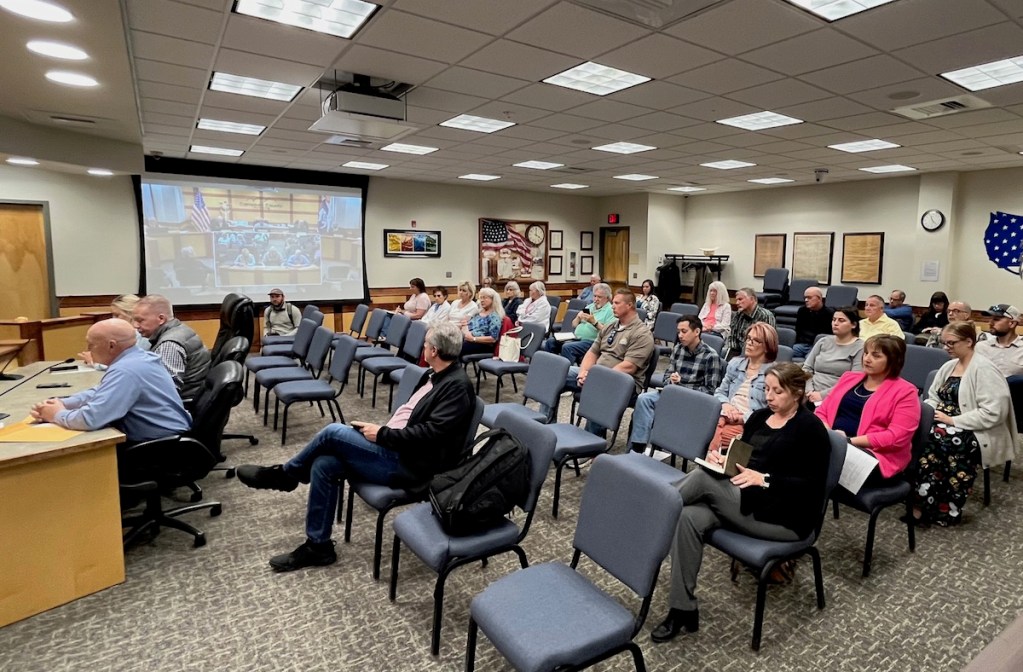
No company has bought a federal coal lease in the last 12 years. Why would they? BLM’s records show a trend of lease applications being voluntarily withdrawn by the companies that originally wanted them. All the BLM plan does is recognize reality — why should the agency make coal available for leasing when no company is asking for a lease? There is enough federal coal under lease now to last through 2041 at today’s production rate, which continues to shrink. The companies know BLM’s decision doesn’t threaten their industry. This lack of concern about BLM’s realistic resource plan was obvious when, as WyoFile reported, not one coal mining company bothered to attend a Campbell County Commission meeting held to rally opposition to the BLM plan.
Public and political outrage is even more baffling when we look at what the recent resource management plan really means. It is just that — a plan. It’s what the agency intends to do in the future under the laws that guide its mission, given its best estimates of what markets and environmental conditions will be. If carbon capture, the Hail Mary dream of saving the coal industry, does succeed and coal is needed to economically power our electric grid into the future, the resource plan will certainly be amended. If new coal feedstock manufacturing requires more coal, the plan will be amended. The plan is not an eternal prohibition of coal mining, but a logical course of action given market and climate realities.
And yet, our political leaders seem determined to deny what has been obvious to most of us for years. Jobs and revenue from Big Coal will not support our state forever. It’s time to stop whistling past the graveyard and start embracing the future. Our politicians owe us not lawsuits, anger, accusations and despair, but a commonsense plan to deal with realities over which we have no control. BLM’s coal leasing plan should give us the impetus to create another even more valuable plan — one designed to transition into Wyoming’s inevitable economic future.


The fear mongering and paranoia that the new age gullible ol’ party (GOP) subscribes to has seen the sky fall approximately 1,420 times already…. why do ignorant people still listen to what clowns say?
Thank you for an excellent article Mr. LeResche. There are also some wonderful comments here. Thank you folks for posting em.
Wyoming, like many resource-dependent regions, faces a pivotal moment as its prime income source – mineral extraction – comes under increasing scrutiny. To avoid the pitfalls of relying on a single industry, Wyoming can learn from the cautionary tales of other communities, especially those in Appalachia, who have grappled with the boom-and-bust cycles of resource extraction. Fighting environmentalists, the declining demands for sulfur-rich coal, and the federal government did not work.
Appalachia, a region stretching across several states in the eastern U.S., has a long history intertwined with coal mining. While coal once fueled economic growth, many Appalachian communities now face significant challenges due to the industry’s decline. These challenges include high unemployment, poverty, and a lack of economic diversity.
Here’s what Wyoming can learn from Appalachia’s experience:
Diversification is Key: Don’t put all your eggs in one basket. Wyoming must actively pursue economic diversification while resources are available. This can involve investing in renewable energy, tourism, technology, or other sectors that can provide stable jobs and revenue streams.
Self-Reliance is Essential: While external assistance may be available, it’s ultimately up to Wyoming’s leaders to create a sustainable economic future. Relying on outside help is not a long-term solution.
Embrace the Future, Not the Past: Instead of clinging to declining industries, focus on developing new sectors that align with future trends. Embrace innovation and invest in workforce training to prepare for a changing economy.
Unified Leadership is Crucial: Wyoming needs visionary leaders who can guide the state towards a diversified future. These leaders must be able to build consensus, address resistance to change, and implement effective strategies for economic growth.
Avoid the “Resource Curse”: The reliance on a single resource often leads to economic instability and social challenges. Wyoming must break free from this curse by investing in education, infrastructure, and a diverse economic base.
Demand Accountability from Political Leaders: Hold elected officials accountable for presenting concrete plans for economic diversification. Demand transparency and action, not just empty slogans.
By learning from Appalachia’s struggles, Wyoming can forge a path towards a more resilient and sustainable economy. It’s time for the state to invest in its people, diversify its industries, and embrace a future that goes beyond resource extraction.
The upcoming election offers the people of Wyoming a chance to choose leaders who will prioritize economic diversification and create a brighter future for the state. Let’s choose wisely and avoid the mistakes of the past.
Finally someone has written an article explaining this issue. Why our government continues to raise a fuss over this is not immediately clear. Certainly the governor and legislature are not talking about it. My best guess is that money is involved. Perhaps in the selling of leases back and forth. Still I appreciate Wyoming News and would like to see the real reason for the lawsuit. If it’s possible to find.
Reality is scary but inevitable. Wake up Wyoming, coal high ride can’t last forever. Get ready!
Regarding the debate surrounding Coal and the vector of Wyoming continuing to produce the stuff, the business model in every scenario is exactly as you describe it: ” a logical course of action given market and climate realities. ”
The only question is why Wyoming leadership refuses to see those two obvious things . The handwriting was on the wall many years ago.
I think that same message was on the wall of my grandparent’s walls in West Virginia a century ago. Coal mining employment then had peaked at 800,000 jobs when the nation had 1/3rd of today’s population. Coal crashed in the 1920’s; was breiefly revived for WWII industrial production ; crashed for good in the 1950’s when railroads switched to diesel-electric and steel mills went overseas. The coal-fired powerplant boom of the 1970’s was destined to be transitory, with a ” Best if used by… (date, c. 2008) ” . Wyoming will always be able to mine and sell every ton of PBR coal the global market asks of it, under any management scheme we can fortell . Just keep in mind total employment in US coal production is presently 40,000, most of it in underground anthracite mines in Appalachia extracting metalurgical coal. That is 1/20th the gross employment in my grandfather’s days.
When will Wyoming learn ?
Thank you Mr. LeResche for this accurate explanation of this issue. Unfortunately, having failed to look to the future and attract new industries to our state, political dog whistles are all Wyoming politicians have left. Where are the men and women of vision in our state? Obviously not in elected office.