

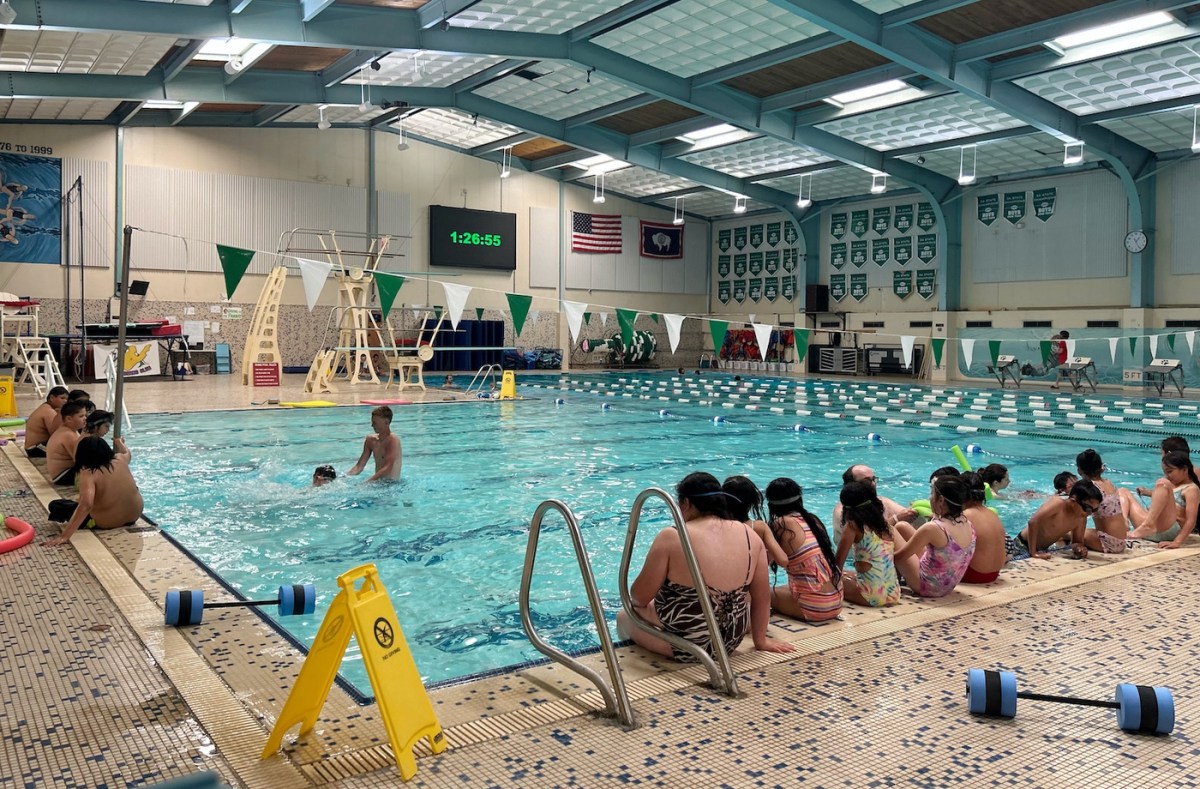
Dawna Hopeman goes to water aerobics class three times a week at Lander’s indoor pool. With a small group of mostly seniors, she spends 75 minutes kicking, jogging in place and pushing foam dumbbells through the water.
It’s a good workout that’s easy on the joints and comes with social benefits, Hopeman said after a recent class. Over the roughly eight years she’s been attending, she’s developed friendships with the other students.
Due to budget challenges at Fremont County School District 1, however, pool administrators recently announced the class is being discontinued. It’s one of a suite of changes that will reduce public access to the beloved aquatic center; managers are also cutting lap and recreational swim periods and doubling the price of everything — swim lessons, family passes and locker fees.

“We’re all pretty bummed that they are doing away with the class,” Hopeman said of her classmates. She is also worried about broader public access to the pool, a facility she and her family have used for 40 years. “It’s a big part of the community.”
What’s happening at the Lander pool is one example of the pain points related to Wyoming’s new school funding bill. The bill, which the Legislature passed in March following an exhaustive “recalibration” process, represents a significant overhaul in how the state pays for public education. It has implications for everything from health insurance benefits to teacher pay to how districts purchase buses, plus new restrictions on where money can be spent.
In the previous block-grant funding model, the Fremont District 1 opted to pay roughly $400,000 a year to support the pool as an operational cost, Superintendent Mike Harris said. In that block grant, he said, “we could use funds however we deemed appropriate as a school board.”
But the new funding model, which relies on “silo” funding, is much more prescriptive.
“So now we do not have as much ability to dedicate that kind of funding for the pool, because it’s not within the model,” Harris said.
The funding model covers everything from teacher salaries to class sizes, and its impacts vary considerably across Wyoming’s 48 school districts. But as administrators and school boards attempt to get their arms around the implications, many face new challenges — including funding activities and sports.
Fremont County School District 1 also anticipates a diminished activities budget, but so far, the pool changes are causing the biggest stir.
Lauren Hendrickson, who spent much of her childhood at the pool, is among those speaking out against the changes.
“The pool is much more than a place to swim,” Hendrickson wrote to WyoFile in an email. It’s an affordable place for the community to learn the life skill of swimming and participate in a healthy pastime. Public reaction to the news, she added, has
“been a mix of frustration, confusion, and genuine heartbreak.”
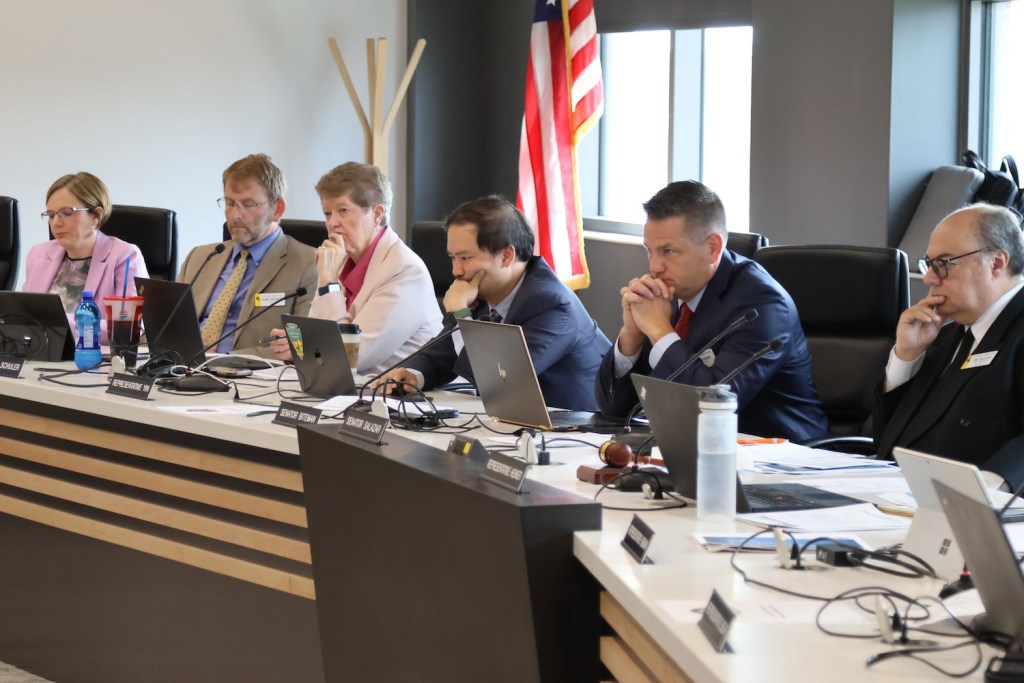
The Legislature’s Select Committee on School Finance Recalibration will gather Wednesday and Thursday in Lander, the committee’s first meeting since the bill passed. The purpose of the meeting is to address areas of school funding the committee didn’t get to over the last year — technology, school safety and school nutrition. Lawmakers also plan to discuss school activities and implementation challenges.
State funding model
The Legislature is constitutionally required to fund Wyoming’s public schools and is tasked every five years with a “recalibration” process. The undertaking involves assessing the state’s school funding model and making necessary updates. Despite the mandate and previous attempts, Wyoming last passed a recalibration bill in 2010.
The latest process came in the wake of a 2025 court decision that Wyoming was violating the state’s constitution by underfunding its public schools and must remedy that. (Wyoming is appealing that decision.)
The Legislature’s recalibration committee worked for much of 2025 to come up with a bill. Though educators and members of the public expressed strong opposition to parts of it, the committee voted unanimously to advance it to the recent session.
There, legislators mulled more than two dozen amendments to the bill. The legislation they ultimately passed added more than $250 million in state education funding to be spread over two years.
While the bill included widely supported raises for teachers, it also restricted funding for instructional purposes, creating a so-called “instructional silo.” For two decades previously, the state allocated district funding via the block-grant model, which allowed districts wider discretion in funding decisions.
The instructional silo method came about after some lawmakers were critical of district spending they believed did not prioritize classroom instruction.
Opponents of the silo method, including Gov. Mark Gordon, argued it would strip local control and could impact non-instructional expenses related to things like activities and nutrition.
“The instructional silo … may so unreasonably restrict school districts that they will be forced into an untenable position of either running the operational aspect of the district at a deficit or severely diminishing the operations,” Gordon wrote in a letter when he let the bill go into law without his signature.
Concerns bubble up
After the bill passed, the timeline for districts to digest its implications and overhaul their budgets was short. Administrators generally make key compensation and spending decisions in the spring as they develop preliminary budgets.
It wasn’t long before major concerns bubbled up about funding shortfalls for student activities and athletics, resulting from the new model.
The Wyoming High School Activities Association Board projected an 8.4% reduction in funding for student activities across Wyoming districts.
“Additionally, the restructuring limits district flexibility by restricting access to approximately $76.2 million in previously more adaptable funding which will result in cuts requiring extreme restructuring of existing activities and athletic offerings,” the activities association stated in a May press release.
Most districts indicated they will rely on carryover funds to support activities in 2026-2027, according to the association, an approach that is “widely viewed as a temporary, one-year solution rather than a sustainable path forward.”
The association identified more long-term options ranging from eliminating regional tournaments to limiting the number of teams that qualify for state events and cutting programs like tennis, alpine skiing, soccer and swimming, the press release said. It also emphasized how critical athletics and activities can be for student success.
The Legislature’s recalibration committee had already planned to convene during the summer months to continue work on several aspects of the model it did not get to in 2025. The agenda for this week’s two-day meeting includes school safety personnel, school nutrition programs, technology and student activities.
Patching up budget holes
When the Fremont County District 1 Board of Trustees held a preliminary budget meeting in early May, Superintendent Harris informed the board that the activities budget is expected to shrink from about $1.3 million to around $900,000. In addition, the district loses the flexibility to fund the pool. Recent enrollment declines have compounded district funding deficits.
“Athletics and activities are things that unite a town, and to see that threatened in any way, I think people get really worried and nervous.”
Fremont County School District 1 Superintendent Mike Harris.
Because families and communities are so involved with activities, Harris told WyoFile, those pinch points have received the most public attention. But there are others, such as meeting new mandates regarding staffing levels.
“We’re trying to abide by what the Legislature said, but that adjustment right now is a little abrupt and a little tough, because we’re not going to have that flexibility that the state used to give the school boards to allocate those funds as they saw fit,” Harris said.
To balance the athletics and activities cuts, Harris said, the district plans to reduce travel expenses and will likely reduce its coaching staff, among other things.
Separately, the district is dipping into an old legacy fund to help support student meals and to fund the pool. That represents a one-year patch, and the district is working with town leaders and other stakeholders to devise more permanent solutions.

“We’re going to use this next 12 months … to try to figure out how to fund the pool long term,” Harris said.
So far, the district is not planning to cut any programs, but that hasn’t stopped rumors from popping up. “Athletics and activities are things that unite a town, and to see that threatened in any way, I think people get really worried and nervous,” he said.
Pool panic
The Bruce Gresly Aquatic Center is a 50-year-old brick facility located a couple blocks off of Lander’s Main Street.
It is best known as the home of the Lander Tiger swim team, a dynasty with an incredible winning streak. The boys’ squad won its 30th consecutive 3A state championship in February. The Lander Swim Club, which funnels many young swimmers into competition, plays a major role in the town’s swimming scene.
But the pool is more than a place for swim meets. Local children splash around during recreational swim periods, adults swim laps and regional schools use it for PE classes. Traditionally, fees have been exceedingly affordable, which supporters say contributes to its welcoming spirit.
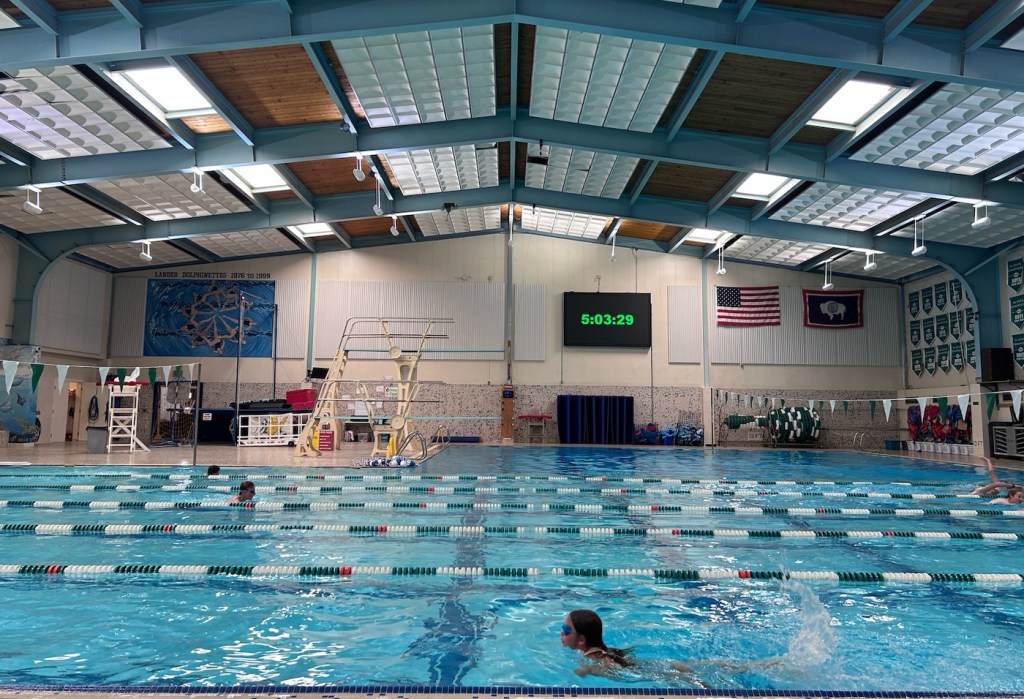
Now, however, pool supporters and community leaders are scrambling for solutions to keep the aging pool open and vibrant. The city of Lander recently announced it will pony up $25,000. At a school board meeting last week, community members batted around fundraising ideas like grants, an endowment fund or mill levy.
The reduced schedule and increased fees, meanwhile, are expected to go into effect July 1, meaning Hopeman and her classmates have less than two weeks left to gather at the pool for water aerobics.


Hmmm…. Seems the school district is funding a community pool with $400,000. Why doesn’t the city of Lander fund the community recreational facility like other cities? Does the school district own the facility?
Weird how the “pro-life, pro-family” party seems to excell at screwing up the few good things we have for our kids here. Then they lament that Wyoming is becoming a gray haired state with no young people staying. Why the hell would they?
You’re right Sage. The freedom caucus is continuing to do what it does best…instead of solving problems, they create them.
My grand-daughter is one of the top track athletes in the state and I’ve heard that they are considering dropping the indoor track program during the winter months because of lack of funding from the state. I don’t know how these “legislators” consider this to be good policy when you first deprive these young people of a winter activity and then let the facilities that were built especially for a specific purpose, costing millions to build, set idle. This is like the Lander pool. It’s pure idiocy to build something using tax money then abandon it while trying to pinch pennies in the name of “fiscal responsibility”. These ultra right wing freedom caucus people need to be replaced with some folks that still possess a sense of decency and common sense.
This is indicative of a general trend in Wyoming unfortunately. I went to school for grade, part of high school, and college at Wyoming, all provided a great instructional basis and activities to offset the remote settings for my pre college days. Reductions of mineral severance taxes coupled with a short sighted legislature, will drive this state into the same category as many southern states – educationally bereft, economically inadequate to meet the needs of those who live there, accelerated youth departures. The old guard radical conservatives will get what they want for their lifetimes, but leave slender pickings for their undereducated children and families.
WHAT THE WYOMING STATE LEGISLATURE DID IS FLAT WRONG.
SCHOOL BOARDS, KNOW EXACTLY HOW TO MOVE MONEY AROUND, TO GET THE MOST BENEFIT, FOR THEIR STUDENTS AND COMMUNITY. THE ENTIRE STATE OF WYOMING’S STUDENT BODY. IS GOING TO PAY A HEAVY PRICE ‼️ FOR THIS ‼️ BUT THE REPUBLICANS IN CONTROL, WILL BLOW MONEY 🤑💵💰, FOR STUPID PET PROJECTS ‼️. YET STUDENTS ACTIVITIES AND COMMUNITY SUPPORT, IS NOT A PRIORITY ‼️ RESPECTFULLY, THIS IS 🐂💩 ‼️. 🤠❤️😺💜LANDER, WYOMING 🏞️🏔️🌄🇺🇸🦅🔵💞
Education occurs many places, not just in the classroom. These legislators are short-sighted. Schools serve the entire community, not just the students enrolled in classes.
This is what you voted for, keep electing the Chemtrail Caucus so it can get worse.
A non student is frustrated education funding is no longer diverted for their use is my take away from the article.
Education funding for educational purposes is a good idea.
A user fee from non students to help Fremont County schools off set fixed costs of pool maintence while still giving them access sounds like a possible win win.
Yep. Community values abound in the Wyoming state legislature! Keep up the good work!