
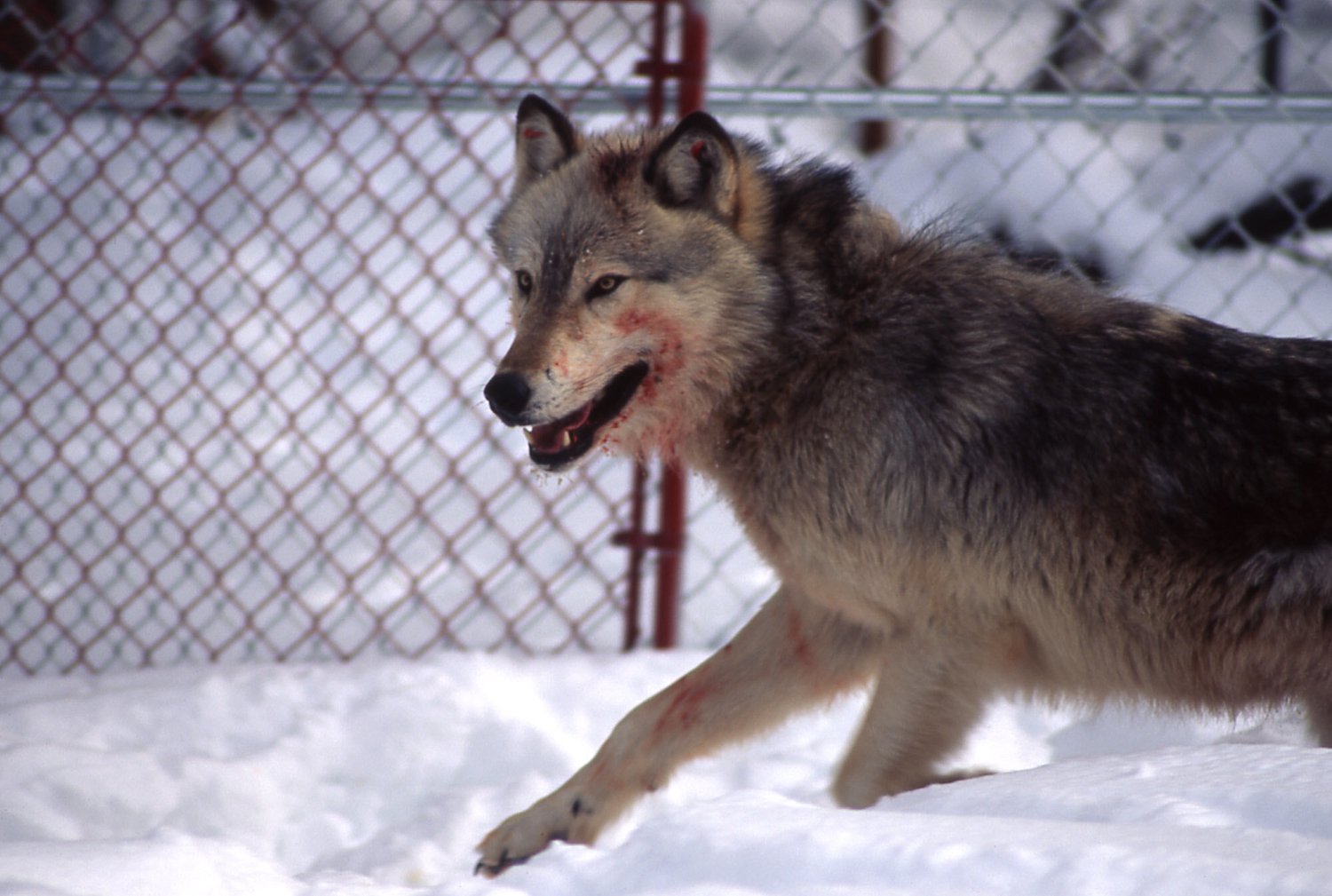

Wyoming wolves are stout compared to some other Lower 48 subpopulations, and the reason why they tend to run hefty is complicated.
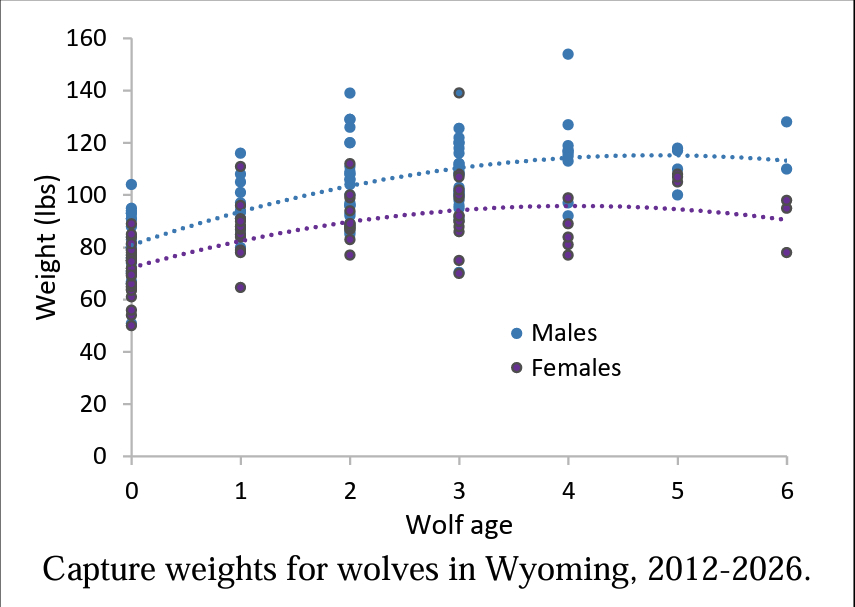
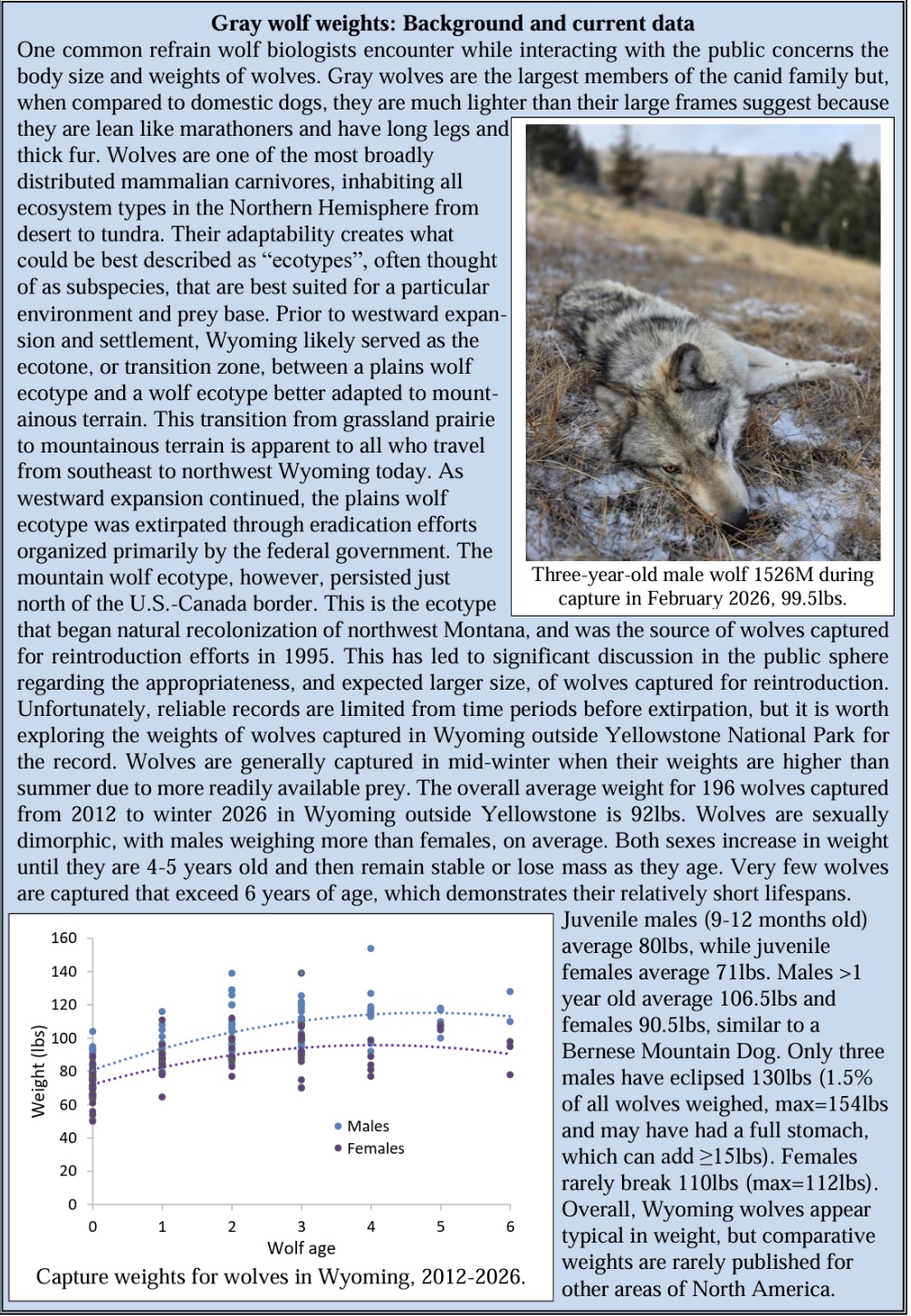
In May, biologist Ken Mills published an annual report of Wyoming wolves that included an analysis of their weights in the southern Greater Yellowstone Ecosystem.
Crunching data from 196 wolves that were captured and slung from a scale over the last 15 years, the large carnivore biologist reported that the average wolf weighs 92 pounds. Males were roughly 10-15 pounds heavier than females, topping out at 154 pounds.
The average Wyoming wolf is about the size of a Bernese mountain dog, the Wyoming Game and Fish Department biologist wrote. That’s a big wolf.
A breakdown of what wolves weigh in the area around Voyageurs National Park region in Minnesota shows that they’re significantly smaller. Wolves roaming the ecosystem near the Ontario border average 61-62 pounds, with males at 68 pounds and females at 55 pounds.
The size difference is stark enough that the largest animal the Voyageurs Wolf Project has ever handled, a 91-pound male, is a touch lighter than the average Wyoming wolf out on the landscape. Moreover, wolves roaming south and east of Yellowstone National Park are a full 50% heavier, on average, than wolves that dwell in Minnesota’s northwoods.
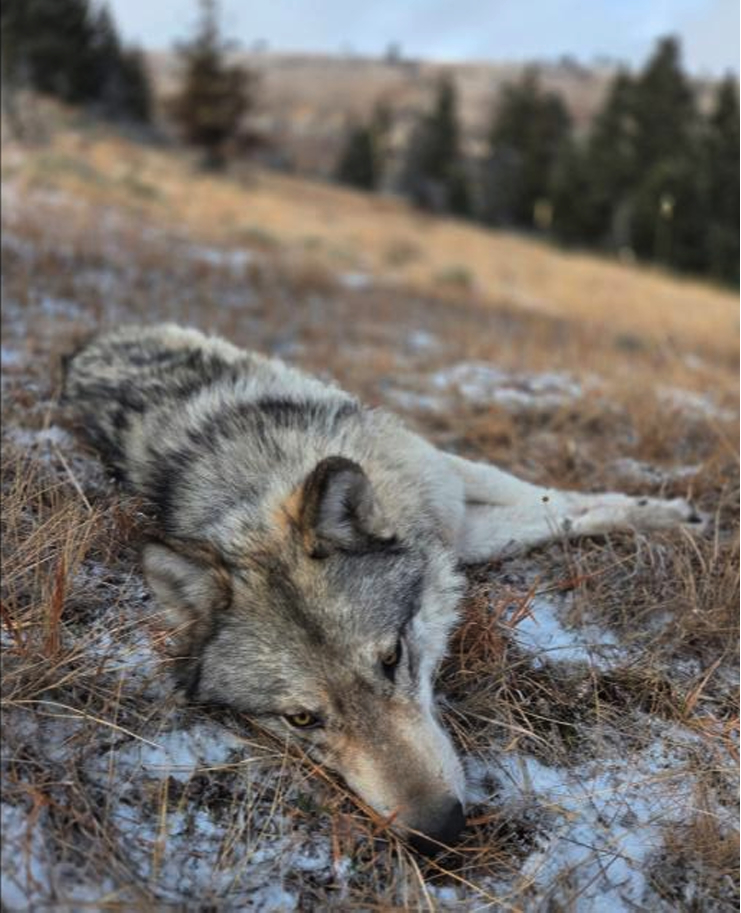
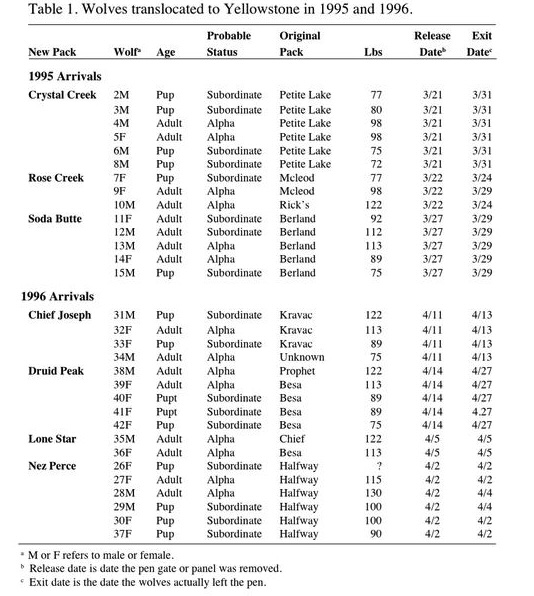
It’s a large enough size gap that barroom and comment board banter about the mythical Canadian superwolf might come to mind for some readers. Ever since Canis lupus was reintroduced into the Rocky Mountains some 31 years ago, western residents who weren’t happy about the return of a long-absent species have peddled a theory that the Alberta and British Columbia wolves imported into Yellowstone and the central Idaho wilderness were a larger, invasive species that’s far different than those exterminated during the settlement era.
Wolf experts say that’s simply not true. Then why the clear disparity between the size of a Wyoming wolf and a northern Minnesota wolf? WyoFile spoke to a handful of biologists and geneticists and discovered that there’s no single straightforward reason for the body-size gap. Factors that explain wolf size are complex and include their key prey species, adaptations to environmental conditions and the percentage of coyote genetics in the population. The degree north is another consideration: There’s a biological principle, Bergmann’s Rule, that holds that the colder the climate, the larger the mammal, even within the same species.
“It’s probably a little of all of the above, the factors that drive body size,” Mills said.
Below, wolf experts weigh in on some of the reasons why Rocky Mountain wolves are significantly larger than their upper Midwestern counterparts. There’s some disagreement about the underlying causes, and no clear consensus.
It’s all about food
Tom Gable, longtime leader of the University of Minnesota’s Voyageurs Wolf Project, believes wolves are smaller in the ecosystem where he studies the species largely because of diet.
“I think it all comes down to body size of prey,” Gable said. “Wolves in our system, and a lot of the Great Lakes region, are killing deer. And deer are considerably smaller than elk and moose.”
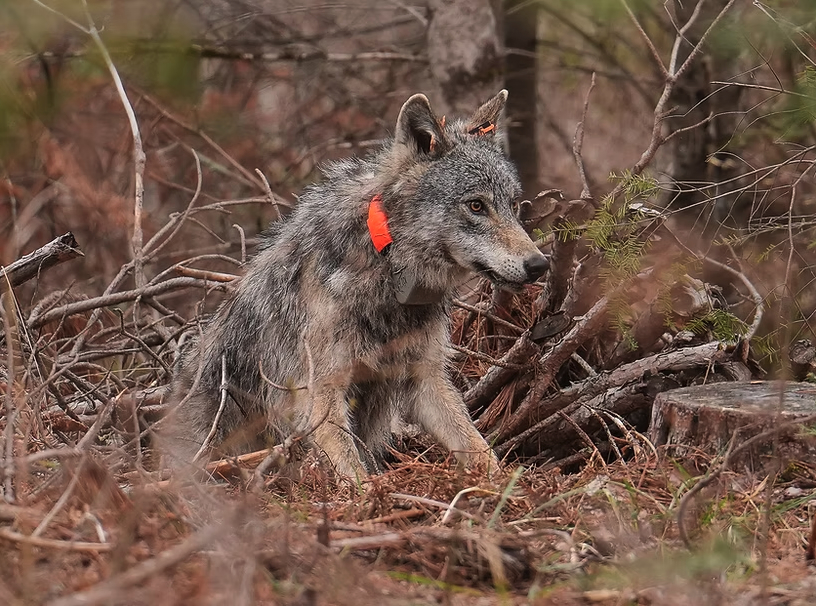
There’s a cost-benefit tradeoff to being large, Gable said. The larger the wolf’s body size, the more calories and food it will require to survive.
“You don’t want to be any bigger than you need to be to kill your prey,” Gable said. “You don’t need to be 100 pounds to kill a whitetail deer, whereas that might be very advantageous when you’re killing elk or taking down a moose.”
Research in Minnesota and in Yellowstone National Park supports the idea of a connection between body size and prey base. When pioneering wolf biologist Dave Mech analyzed the weight of wolves farther east in Minnesota’s arrowhead region, he found slightly larger animals, according to Gable.
“They have wolves that prey a bit more heavily on moose,” he said. “Wolves in [Mech’s] study area are bigger than ours are, even though we’re like 80, 100 miles apart.”
In Yellowstone, where wolves often prey on elk and even bison, researchers have also found that wolves benefit from being large. Nearly two decades ago, Utah State University professor Dan MacNulty studied this dynamic for his dissertation and found that larger wolves fared better overall when going after prey.
“What I found was that the effect of body mass on hunting success varied depending upon which stage of the hunt the wolf was in,” MacNulty said. “This all has to do with the effects of body mass on locomotion.”
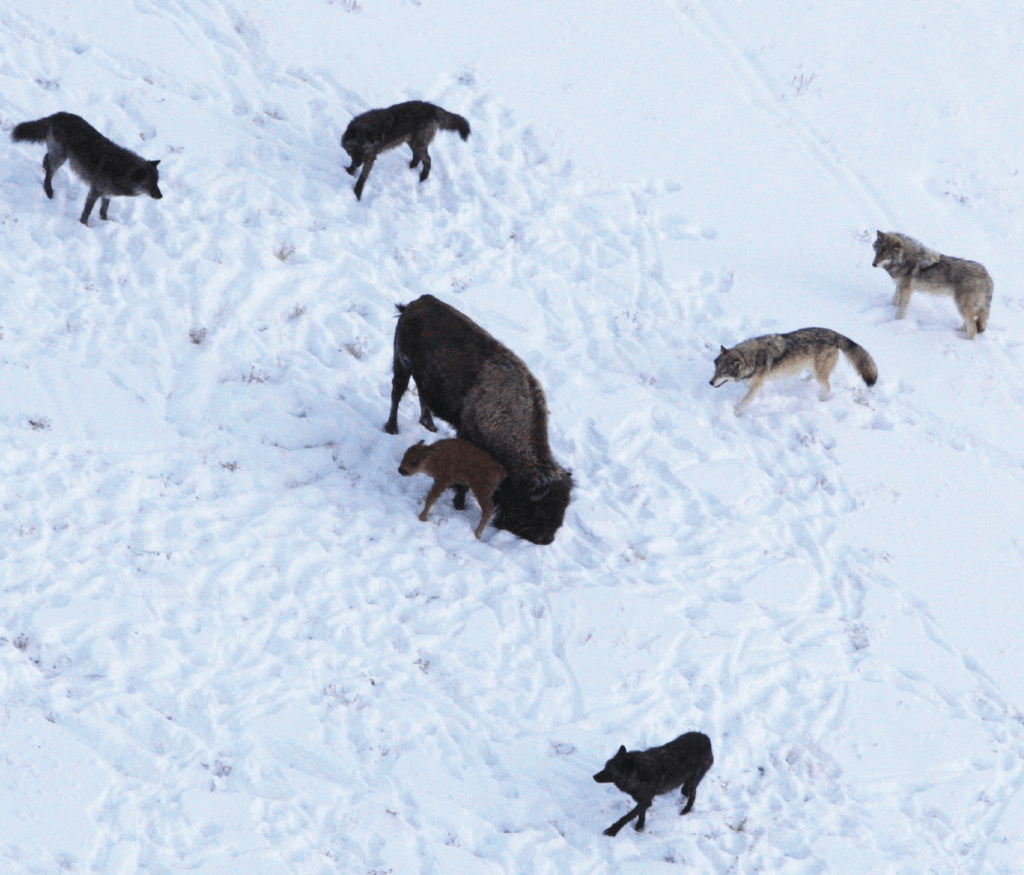
MacNulty looked at three phases of wolves hunting elk: Giving chase to a herd, singling out an animal and then taking it down. Large wolves, he said, were slower and had no advantage at singling out elk, which requires speed — their body size even hurt their cause.
“But when it comes time to grab ahold of the individual elk, being bigger is definitely better,” MacNulty said. “Across the different phases, there is a net benefit of being bigger when it comes to hunting success.”
What about genetics?
For retired Yellowstone Wolf Project leader Doug Smith, the first factor that came to mind explaining why wolves in the Northern Rockies are larger is historical intermixing between coyotes and Midwestern wolves.

“They are mostly wolf, but they’ve hybridized in the past,” Smith told WyoFile. “That’s kind of bringing their sizes down.”
In modern times, the Voyageurs Wolf Project has not documented any coyote-wolf litters, Gable said.
Historically, it’s a different story. Great Lakes wolves’ genetic ancestry is mixed, not unlike the mixed ancestry of Eastern coyotes, which one study showed have an average genetic fingerprint of 64% coyote, 13% gray wolf, 13% eastern wolf and 10% domestic dog.
Princeton University geneticist Bridgett vonHoldt said that her measurements have found 10-20% coyote genetic ancestry in Great Lakes wolves. But genes that she’s tested from Rocky Mountain wolves and those farther west have never shown the signatures of any coyote ancestry, she said.
“That can really have a long-term influence on how those animals are shaped, and what their size is,” vonHoldt told WyoFile.
Additionally, vonHoldt said, Great Lakes wolves have adapted to their modern environment and prey base. The combination, she said, helps explain the size difference, even though it’s the “same subspecies” as those in the mountain West.

That subspecies is Canis lupus nubilus, or the Great Plains wolf. Although there were once roughly 30 subspecies of gray wolves recognized, in modern times the count is down to about five, vonHoldt said. Taxonomists currently recognize the Arctic wolf, Mexican gray wolf, Eastern wolf, Great Plains wolf (nubilus) and Canadian timber wolf (occidentalis).
All the lines are blurred by the fact that wolves disperse long distances and the different subspecies — and even coyotes — can breed with each other, vonHoldt said. There are even significant physiological and genetic differences within individual subspecies.
“There’s also a large amount of variation just among gray wolves in the western part of North America,” vanHoldt said.
Mills, the Wyoming Game and Fish biologist, sees differences in “ecotype”— wolves adaptation to climate and habitat — as a notable part of the body size equation. Before Wyoming wolves were wiped out in the settlement era, the state likely served as a “transition zone” between a “plains wolf ecotype” and a wolf ecotype better suited to the mountains, he wrote in his analysis.
The mountain wolf “ecotype” persisted in the Canadian Rockies, and it was those animals that were naturally recolonizing the western United States before the 1995-96 reintroduction, which successfully facilitated their establishment.
Bergmann’s Rule and other complexities
Another wrinkle in the wolf body-size equation is the age of the animal — and average age within a population.
Wyoming wolves typically don’t reach their peak weight until they are about 5 years old, according to Mills’ analysis. Juvenile male wolves (9-12 months old) had an average weight of 80 pounds, but that increased to an average of 107 pounds for males a year or older.
Where wolves are hunted, like in Wyoming, the average age tends to be lower (and thus wolves are smaller) than where hunting isn’t allowed, such as the Great Lakes or Yellowstone National Park.
That’s a nuance that would help bridge, rather than widen, the body-size gap between Wyoming and Minnesota wolves.
Mech, the Minnesota researcher who’s studied wolves for a half century, told WyoFile in an email that he’d be “very surprised” if wolves in the Yellowstone region are truly 50% heavier than those that dwell around Voyageurs National Park. Wyoming wolves were captured and weighed in the winter, he pointed out, whereas the Minnesota research specimens were trapped later in the year, at a time when they tend to be slimmer.
Gable, at the Voyageurs Wolf Project, didn’t think that the seasonality of captures explained too much of the size differences. A majority of their research wolves are captured in May, when they “should be in really good body condition” coming out of winter, he said. The average weight in their records from spring and summer captures is also similar to that of wolves captured in February through April.
Mech’s take is that latitude, and Bergmann’s Rule (the colder the climate, the larger the average individual), is the best explanation for why Wyoming’s wolves are heavier.
“Of course, Wyoming wolves are those from Alberta and [British Columbia], which are larger than those from Minnesota,” Mech wrote. “I do think Bergmann’s Rule dominates, and I say that because the weight trend seems to apply in Eurasia as well, despite the wide variety of other conditions, including prey species across all of circumpolar wolf range.”

Other biologists WyoFile interviewed perceived the influence of Bergmann’s Rule quite differently.
“I would say Bergmann’s Rule does apply, but it’s not that significant,” said Smith, the retired Yellowstone Wolf Project leader. “The biggest wolves historically in North America were buffalo wolves. They’re gone, but they were in the middle of the continent eating bison.”
Mills, the Game and Fish biologist, also sees Wyoming wolves’ far-north Canadian origins as being a small part of the body-size equation.
“I think that’s the simplest explanation, but it explains the least amount of the [size] variation,” Mills said. “Yeah, I think Bergmann’s Rule has an impact, but it’s not the be-all, end-all.”

I don’t know how I came across this article but I found it very interesting. 150 lb wolves! I live in Penfield, NY which is a suburb of Rochester. My yard borders a large very steep ravine which wildlife travel and often come through my yard to then cross over the street to the more large wooded areas. I have seen and photographed a few coyotes, some that are very large. Deer with fawns are seen daily now. About 30 years ago I was in a tree stand bow hunting near the PA border and observed a pack of 7 wolves on what appeared to be a sweep of the wooded hillside. They were spread out like on a search and destroy mission. They were definitely not coyotes. No camera but I remember it clearly. Time to head west for more photos!
Look around the entire world at every Dog you can find. From 2lb. pocket yapper Chihuahuas and 3 lb. Dachshund lightweights all the way up to massive 200 lb. Newfoundland Mastifs and St. Bernards— the full spectrum — know they are ALL members of a single Genus-specie-suspecie. Canis lupus familaris. And every single type and specimen of a domestic Dog is also a Wolf. So there.
Next question.
Wow, chihuahuas and mastiffs are the same and domesticated dogs are wolves.
Like I said, Science deniers.
But you have taken it to a whole new level, Dewey.
You want to start undoing scientific classification protocols that have existed for nearly 300 years. Forget Linnaeus, now we use the a dog is a dog is a dog method.
Pro predator team will say anything to defend a crime against nature.
We better start protecting the lake trout in Yellowstone Lake from the slaughter they have been enduring for over a decade now.
Thank you for your irremotus—exceuse me , irrelevant – comments, Mr. C. ‘Science Denier’ Guenter
Where do you live and write from ? Wyoming , or not ??
Canis lupus irremotus is generally no longer considered a scientifically valid distinct subspecies. It is now recognized by biologists as part of the broader Great Plains wolf subspecies (Canis lupus nubilus).
The truth does have a geographic location, Dewey.
I could live on Mars and it wouldnt change the irrebuttable fact that Canis Lupus Occidentalis was NEVER Native to most of the areas it inhabits now until it was unnaturally transplanted by man.
Chad- maybe you can find a high school somewhere that offers summer remediation classes. You need a refresher of your sophomore Biology class. Pay attention to the section on Genus and specie taxonomy. Basic stuff, I know, but somehow you missed it…
Well written piece of journalism here. If you were to condense the whole thing into one sentence: Great Lake wolves have coyote genetics and that’s why they’re smaller.
It’s the food. Compare it to older Mexican parents to their children’s size. Parents small and children big.
Good article, it does not say specifically that the wolves in Wyoming are much larger than what their preys ancestors had eating them. Which is a point to note. Elk, deer, moose and bison 100 years ago in Wyoming did not have this large of a canine preying on them. It certainly does change the ecosystem.
Someday we’ll just divide the canis family into 3 subspecies. Wild, feral, and domestic. Since they can all interbreed, the current splitting seems to not make too much sense.
The answer is simple: diet. Yellowstone’s wolves have large herds of bison, elk, and the occasional moose to dine on. The wolves of the Great Lakes region depend on smaller whitetail deer as their main source of fat and protein.
“So then why are Yellowstone wolves 50% heavier than Great Lakes wolves?”
Because they are a different subspecies, unnaturally relocated in the Rocky mountain west.
Canis Lupus Occidentalis NEVER existed in Wyoming, Oregon, Colorado, and California. The instances of their existence in MT, ID and WA were rare and never permanent. Canis lupus nubilus should have been the wolf of choice for relocation from MN where nearly 3000 exist.
But they didnt do that did they? They took a subspecies that never had been in the GYE and released them there. This was an action that should completely discredit the biologists this article heralds. Maybe Mike should write an article about the wonderful scientists that released lake trout into Yellowstone Lake, same thing, a trout is a trout, just bigger, Right?
They are not a “superwolf”, anymore than Ursus Arctos Middendorfi is a “superbear”, but it would be just as UNnatural to release Kodiak browns in the lower 48 or GYE simply because they are Ursus Arctos, a brown bear is a brown bear would not be parroted by the pro predator people the same way they ignorantly parrot “a wolf is a wolf”. Many Kodiaks are about 50% bigger, how many readers support releasing kodiak browns for genetic diversity in the GYE, because Ursus Arctos, of course.
Bergmann’s Rule…
Whitetail deer are frequently moved from northern to southern states to increase population body sizes. Just as UNnatural.
Defend the wolves all you want, but you can never change the fact that they are UNnaturally here. They were moved by man to a place they never existed. “who’s the “science deniers”?
A crime against nature was committed by the likes of “Scientists” Doug Smith and Ken Mills.
Well said Chad!
They’re bigger because they’re not part coyote.
A wolf is a wolf is a wolf.
1st grade answer Gordon.
Canis lupus occidentalis
Canis lupus nubilus
Canis lupus baileyi
Canis lupus arctos
Canis lupus lycaon
These wolves are all different, and they all live in North America.
Would you support a Mexican wolf (baileyi) transplanted to the GYE from New Mexico or Arizona? That would actually be a closer geographic relocation than from Northern Alberta where the 95-96 wolves came from.
Unless you’ve been around for thousands of years, you don’t know what wolves were here. It’s very likely that some did move down to the Yellowstone area. Wolves move long distances. You might want to listen to experts, something that you are not.
I knew you would be in the audience so I kept it simple.
Where do you live and write from , Chad ?
From the delusions in his mind….
I admire your support for the legal protection of subspecies.
Judge, jury and executioner based upon walking along, tripping over the information you have been presented with over the years, including this piece, getting up, dusting yourself off and continue on your myopic walk as if nothing happened.