

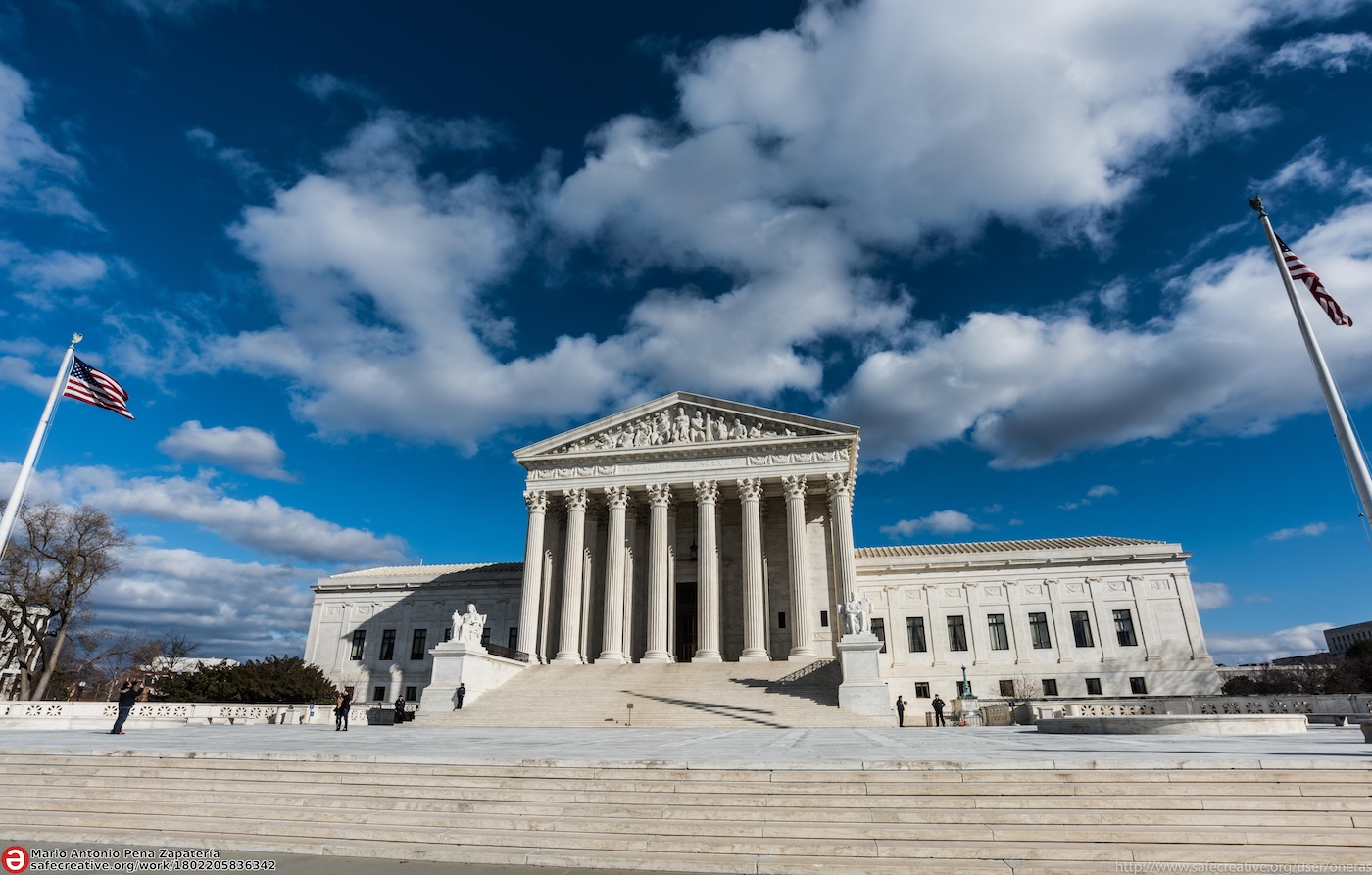
I appreciate WyoFile’s insightful article on the U.S. Supreme Court’s Loper Bright decision that overturned the 1984 Chevron case. The article, along with published opinions in WyoFile and elsewhere, make clear that some are hailing the decision as a victory for conservatives and the business community, and a defeat for environmental groups. But I’m not so sure.
Opinion
The reality is that business has been on both sides of the Chevron divide. In some cases, those of us who represented business interests challenged regulatory decisions and, in other cases, we defended pro-business, regulatory decisions. So, for example, I found myself defending various decisions from federal agencies that supported business efforts in the natural resources area. In these cases, we usually argued that Chevron required that the court defer to the agency’s decision. In other cases, our clients challenged federal regulations arguing that the government agency violated the statute and no ambiguity existed. Indeed, a future, pro-business Republican administration would have leaned heavily on the Chevron crutch in its arguments to reviewing courts. Hence, at least in that setting, business litigants will undoubtedly miss the Chevron deference.
Similarly, environmental advocacy groups shouldn’t be tearful about the Loper Bright decision. They too were on both sides of Chevron. In some cases, they challenge administrative decisions; in others, they defend the decisions. For the moment, in the current administration, environmental groups mostly perceive Loper Bright as a hindrance. But this administration has made decisions that environmental groups contest and environmental groups have filed challenges to Biden agency decisions.
For example, in 2023, a number of groups challenged the Bureau of Ocean Energy Management’s decision to conduct oil and gas lease sales in the Gulf of Mexico. The groups contend that the Bureau violated a wide array of environmental statutes. Loper Bright certainly won’t hurt environmental groups in these and other challenges to Biden administration decisions.
The problem with Chevron, in my view, is that it really did shift authority from the courts to the executive branch. Once a court found an “ambiguity” or silence on an issue in a particular statute, the courts would say it is for the agency to resolve the uncertainty or to fill in the blank spots of the statute. This was almost always outcome determinative; in practice, it was code for “agency wins.” And, in years past, many lower courts took full advantage of this framework and did not analyze the statute at issue — beyond finding the requisite “ambiguity” to defer to agency decisions.
The recent Loper Bright decision will not necessarily change the outcome of challenges to agency action. To some degree, the case will simply change the battle’s location: Courts will continue to defer to agency expertise and their fact-finding. They will also defer whenever Congress actually delegates authority to the agency. But they will not defer to the agencies’ legal determinations. For judges, this will necessitate line-drawing that may prove difficult. (What’s legal as opposed to technical or factual?) Frankly, judges will have to make tougher decisions that may or may not support the agency decision-making.
This shift to judicial authority may also give rise to what traditional conservatives have labeled “judicial activism.” Courts will “interfere” with the policy judgments made by the executive branch acting through the agencies. In fact, the background of the Chevron case itself may illustrate the point. In 1981, regulations from the Reagan administration’s Environmental Protection Agency changed a definition used to administer the Clean Air Act. Not surprisingly, the Republican EPA changed to a more business-friendly definition. This prompted environmental groups to challenge the regulations and, in a decision authored by then-Judge Ruth Bader Ginsburg, the new regulation was overturned. Undoubtedly, the business community saw Ginsburg’s decision as just another example of judicial activism that impeded the pro-business agenda of the Reagan administration. EPA then appealed to the Supreme Court. There the Court overturned Ginsburg, ushering in the Chevron rule that many conservatives now find so troubling.
My personal view is that Loper Bright properly moves legal decision-making back to the courts. Courts should decide what statutes mean. Judges are much better at interpreting statutory language than professional regulators or election-driven political appointees. But the effect of this decision remains to be seen, and I don’t expect Loper Bright will uniformly benefit business or harm environmental advocates.


Loper Bright didn’t shift power to the judiciary; the judiciary is still bound by the law. But the decision DID shift power away from unelected bureaucrats, and this is a good thing. The decision in Chevron said that if a law was deemed to be “ambiguous” (and have you ever known a lawyer who couldn’t come up with ten possible interpretations of a statute whose intent is obvious?), an Executive Branch agency could just MAKE UP LAW to resolve the “ambiguity.” This even if the bureaucrats’ motivations had nothing to do with “expertise” but were purely political, as in the original Chevron case.
Now, thanks to Loper Bright, BOTH SIDES are able to bring experts to the table, without favoritism toward government bureaucrats OR those whom they regulate. The judges need not be experts in the field; just experts in the law. And they can fairly weigh the credibility and legality of each side’s position. And if bureaucrats have flip-flopped over time due to politics (for example, FCCs with different partisan majorities reversing one another on Internet regulation), courts can now view this as evidence that an agency’s “expertise” in a particular field wasn’t really what was at issue but rather just politics, favoritism, or an agency’s lust for power. All of this is good. Congress will write better and more detailed laws, agencies won’t be able to define the scope of their own power without input from Congress, and people and businesses will get a fair shake.
It seems to me the recent Supreme Court decision will result in a “reset” period during which time the full implications of the court decision will be sorted out. While the dust is settling, we don’t need Donald Trump sticking his political nose into the rule making process. The next year or so calls for a steady hand at the helm, not the heavy hand of Trump.
So SCOTUS acquired more power to the judiciary. This is the same court that is comprised of members that lied about stare decisis and respecting precedent to get their lifetime appointments? Is this the Court of which you speak?
At least the medical profession offers the fig leaf of “Do No Harm” which seemed to me to equate to respecting precedent, but hey the people in the black robes have a higher calling and cannot be bothered with the chaos they unleash when making these decisions.