

This story was produced by High Country News, in partnership with The Water Desk at the University of Colorado Boulder.
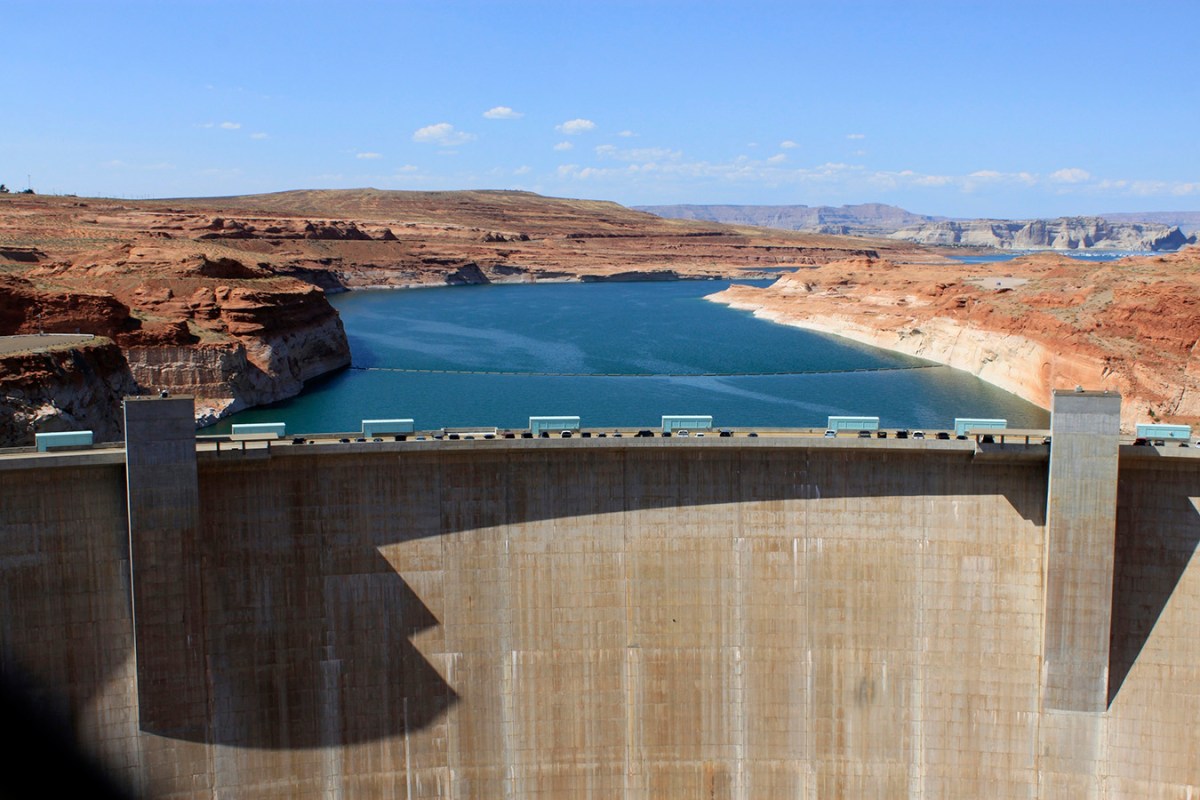
On April 17, the federal government ordered emergency measures to prevent water levels at Lake Powell from falling so low that Glen Canyon Dam, which created the reservoir, could no longer generate power or deliver water downstream. Without this intervention, models showed that the reservoir could drop below safe operating levels in August, meaning that the river would not have a reliable way to flow past the dam. This would threaten water and power supplies for millions of people across the Southwest, as well as the flow of water through the Grand Canyon.
Across the Colorado River Basin, an extremely low snowpack combined with a record-shattering March heat wave have left water managers with few other options. The region’s reservoirs were already depleted from years of relying on wet winters to balance the growing demand with the ongoing drought.
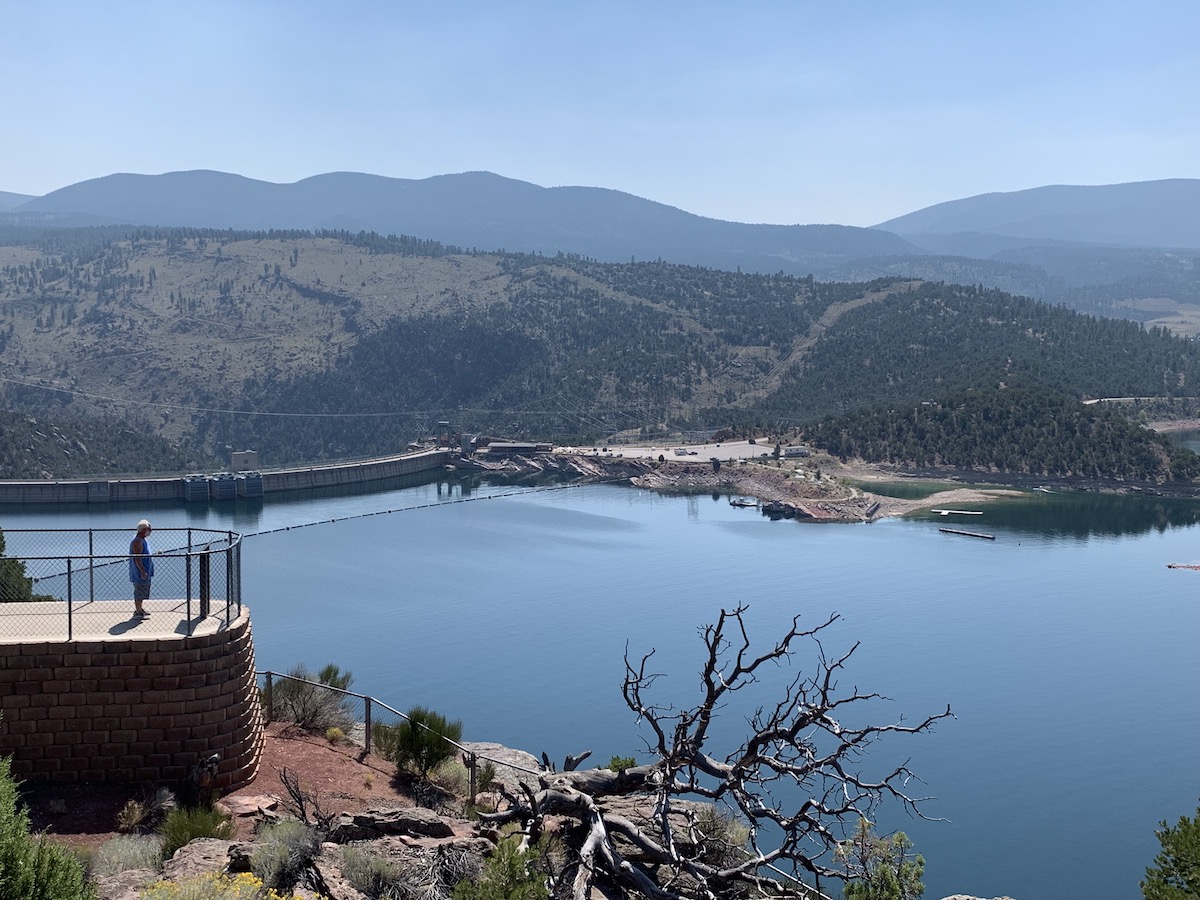
The Bureau of Reclamation ordered releases from Flaming Gorge Reservoir, which straddles the Utah-Wyoming border, to bolster Lake Powell’s water levels. At the same time, the amount of water delivered from Lake Powell to downstream users will be significantly reduced.
“This is a short-term solution,” said Jenny Dumas, water attorney for the Jicarilla Apache Nation, which sits near the border of Colorado and New Mexico. “It’s going to take time to recover these reservoirs before we can do this again. So while we can exhaust our reserves to avoid system collapse this year, it means reserves won’t be there next year.”
This is not the first time water managers have turned to Flaming Gorge to stabilize the larger river system. In 2022, the federal government ordered the reservoir to release 550,000 acre-feet to stabilize the downstream river system, which disrupted recreation and rattled upstream communities. This time, Reclamation has authorized releases of up to 1 million acre-feet. Over the next year, a third of the reservoir’s storage is expected to be gradually released. By September, water levels are projected to drop about 12 feet.
“This is an unprecedented release volume — more than double the last time,” said Amy Haas, executive director of the Colorado River Authority of Utah, who briefed communities bracing for the releases at Flaming Gorge Reservoir. “We really just don’t know the actual impacts of these releases to surrounding communities, and our water users are struggling. My goodness, we are on target to become one of the worst water years on record. The forecasts are stunning to all of us.”
“We recognize what we are approving today will have significant negative impacts on our water resources, local economies and recreation.”
Brandon Gebhardt
The amount of water projected to flow into the river from snowmelt is rapidly declining. Over the first two weeks of April, forecasts for Lake Powell fell by 500,000 acre-feet. The spring forecast is shifting so quickly that some experts believe the releases from Flaming Gorge may need to increase.
“I think it’s a target, and they’re going to have to revise it,” said veteran water manager and researcher Eric Kuhn, who co-authored a paper last September predicting this kind of shortage and calling for action. “It’s many river miles from Flaming Gorge to Lake Powell. What are the transit losses?”
“Also, when March looked like June, what are June and July going to look like?” he added. “I could easily see that 1 million becomes 1.5 million acre-feet by March of 2027.”
Kuhn sees the emergency actions as a sign of broader failure to address the underlying issues that led to the current situation. “The Department of Interior no longer acknowledges that the fundamental problem is climate change. We’re dealing with the symptoms of the disease. We’re not dealing with the underlying problem,” he said. “The law of the river was written for a river that no longer exists from a hydrologic standpoint.”
In an April 21 meeting, Upper Basin state commissioners acknowledged the need for emergency action but warned that this was not a long-term solution.
“I want to make darn sure people understand … the incredibly difficult, heartbreaking decisions that are having to be made with the lives of generations of cattle production, and farming communities in the Upper Basin states,” particularly in Utah, said Gene Shawcroft, Utah’s Colorado River commissioner.
Wyoming Commissioner Brandon Gebhardt reported that 13,000 acres of agricultural land in the South Piney drainage on the eastern slopes of the Wyoming Range had been cut off from water, adding that even some of the state’s oldest and most senior water rights — some dating to 1898 — will likely be impacted.
“We expect three of the five Flaming Gorge boat ramps in Wyoming will be rendered unusable, and low reservoir levels will have long-lasting negative impacts on reservoir fisheries,” said Gebhardt. “We recognize what we are approving today will have significant negative impacts on our water resources, local economies and recreation.”
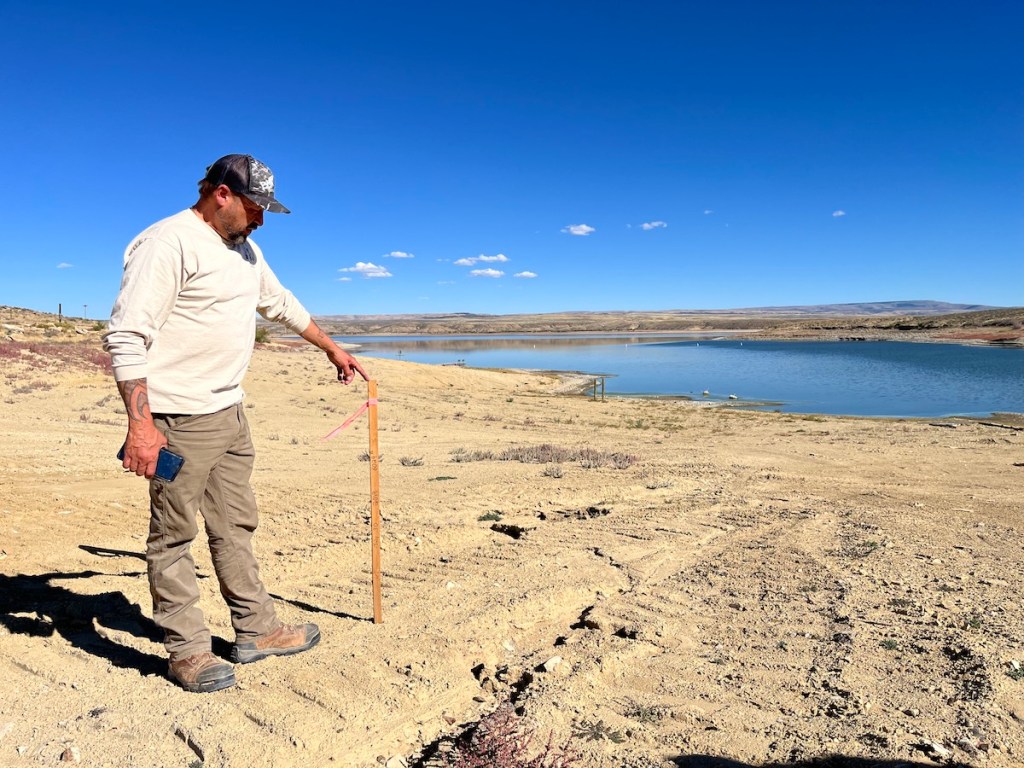
Shortage is affecting more than agriculture and recreation. The Ute Mountain Ute Tribe, for example, reported its sacred springs going dry, affecting ceremonies, and the tribal farm will have to operate with just 14% of its normal water supply. Meanwhile, the Jicarilla Apache Nation said it received just 25% to 35% of its contracted water allocation, leaving tribal leaders uncertain about whether they can divert enough water from the Navajo River to meet the community’s domestic needs.
With no sign of long-term agreement on how to manage the river past September, legal tensions among the basin states remain high.
Arizona’s Department of Water Resources released a statement agreeing with plans to order upstream releases to stabilize Lake Powell but also warning that the revised downstream releases were “substantially less than required under the 1922 Colorado River Compact,” referencing the foundational legal document dividing the river. “Failure to comply,” the release stated, “is itself a serious development that Arizona will assess and respond to accordingly.”
Upper Basin state commissioners plan to hold a special meeting to revisit the issue and vote on whether to continue emergency actions past August after assessing water levels and determining whether or not the releases are working.
Regardless of the possible legal battles, the reduced water in the river, infrastructure limits and political gridlock have left basin communities feeling uncertain about their future water security. After the planned releases from Flaming Gorge, if next winter brings another dry year, it is unlikely that upstream reservoirs will have enough water to stabilize Lake Powell.
The basin needs more than emergency actions, Dumas said. “We really want to emphasize the need for serious and permanent changes in how we use and manage the river to adjust to current and future hydrology.”

The real root cause is Western Water Law and an outdated Colorado River Compact.
It’s unfortunately going to take western states to literally start turning on the tap and nothing comes out before there is meaningful change, and then it will be too late.
70-80% of California’s allocation of Colorado River water is supposed to go to the 20 extended farming families of the Imperial Valley that control almost all California’s farming today. Overwhelmingly, the Imperial Valley only grows hay that is not for local use.
In 2022, the Metropolitan Water District of Southern California took all its water from the Colorado River. In the five years prior, they had only taken between five and twenty percent of their total water per year from the Colorado River. Furthermore, the Imperial Irrigation District received the same amount of water from the Metropolitan Water District of Southern California during all those years. Almost all the Imperial Irrigation District’s water comes from the Metropolitan Water District of Southern California. The Imperial Irrigation District received the same amount of water in 2022 as it had in each of the five years prior.
There is an extremely large disparity between how much water was taken from the Colorado River in those years and how much was received by the Imperial Irrigation District which is the primary source of the Imperial Valley’s hay-farming monopoly’s irrigation water. In the past two years, there has been dramatically less water in the Colorado River than in the twenty years before.
Perhaps, these extra multiple illegal allocations of water from the Colorado River were dumped out into the ocean, seeing as California can store little of its rain water. If this is true, the farmers of the Imperial Valley, the Imperial Irrigation District, the Metropolitan Water District of Southern California and the Bureau of Reclamation are draining the Colorado River.
Or perhaps, the water that was drained from the Colorado River is in California. California’s reservoirs hold 50 million acre feet of water and they are nearly all full after a so-called mega drought.
If everyone has to be moved out of the Southwestern US because of no electricity or running water, it will be ripe for the Chinese to move right in once they pump the water from California’s reservoirs back into Lake Mead and Lake Powell, turning the electricity back on. The British Military is predicting a war between NATO and Russia, China, Iran, and North Korea in 2027 when China has promised to invade Taiwan!
The Republican “conservative” denial of climate change will continue to wreak havoc with our environment, and may even lead to “water wars” in the Western US before long. And, yet, Wyoming’s 3 federal representatives continue to support destruction of our environment and support vulture capitalism to the max.
It’s all the Republicans fault….
For the last 50+ years of Doomsday predictions Democrats have been in complete power multiple times and nothing changed. Democrats are as beholden to the Banks\Corporations as the Republicans.
You want to change the direction of alleged human caused climate change, getting rid of republicans won’t do it, you will have to get rid of about 6-7 billion human beings along with them.
In the meantime HOAs across 4 Southern California counties water their lawns EVERY DAY. They have their sprinklers set up with automatic timers that run every morning. It’s essentially a leak in the dam.Until something is done about that we will never catch up.
Root Causes… Who does that sound like? Then a column is written which doesn’t mention or approach them again. It’s pretty simple. There was a mistake made in assuming that the survey taken in the early part of the 20th century represented normal flow volumes for the Colorado River. As a result, even though it became obvious that the survey was flawed, no corrections in demand were made. We are paying the price for not facing reality.
We often read “permanent management changes are needed” and “the need for serious and permanent changes in how we use and manage the river”. What changes specifically? Any examples?
The 1922 compact is outdated & not reasonable.
A new compact is the only way forward.