

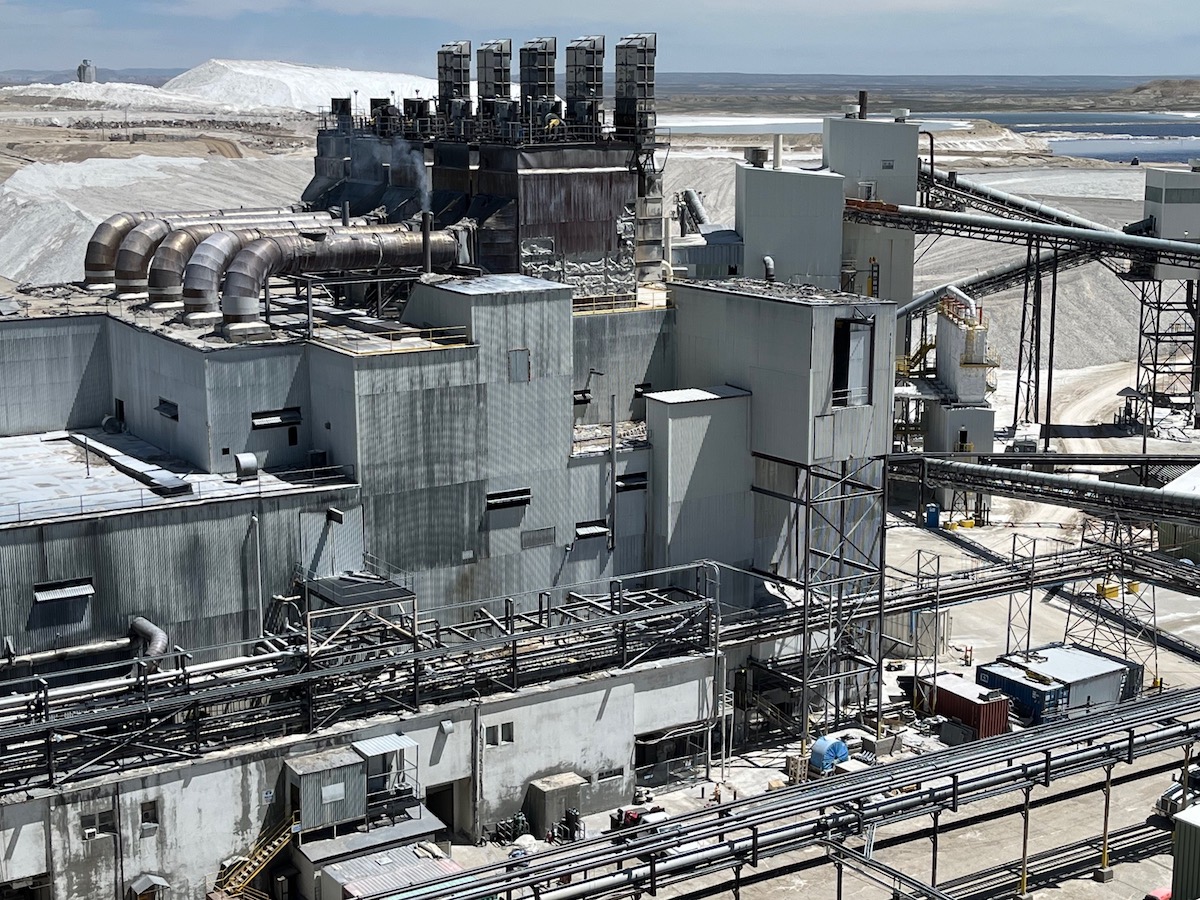
Wyoming’s trona and soda ash industry accounts for more than half the state’s global commodity exports, with a whopping $1.3 billion worth of shipments annually.
The industry says it could have an even bigger, more stable economic footprint, but not without access to more megawatts of electricity — a resource that’s under increasing demand from data center projects across Wyoming. When expansion opportunities have come knocking in recent years, Wyoming’s trona industry said it couldn’t access the necessary power to meet the moment. Because of constraints on the system, it could take utilities seven years to meet the demand, trona industry representative Jody Levin told a panel of lawmakers on Thursday.
“Seven years is a de facto no,” Levin said. “That isn’t a reasonable timeframe.”
Power interruptions are a growing hindrance, too. Last fall, Levin said, two brief power outages within 24 hours resulted in gummed-up pipes and machinery, taking a soda ash processing facility offline for three months.
“Our issues have been on the forefront for a number of years,” Levin told the Legislature’s Joint Corporations, Elections and Political Subdivisions Committee, “and these are issues before we even begin to consider what it looks like to bring those mega [data center] loads online.”
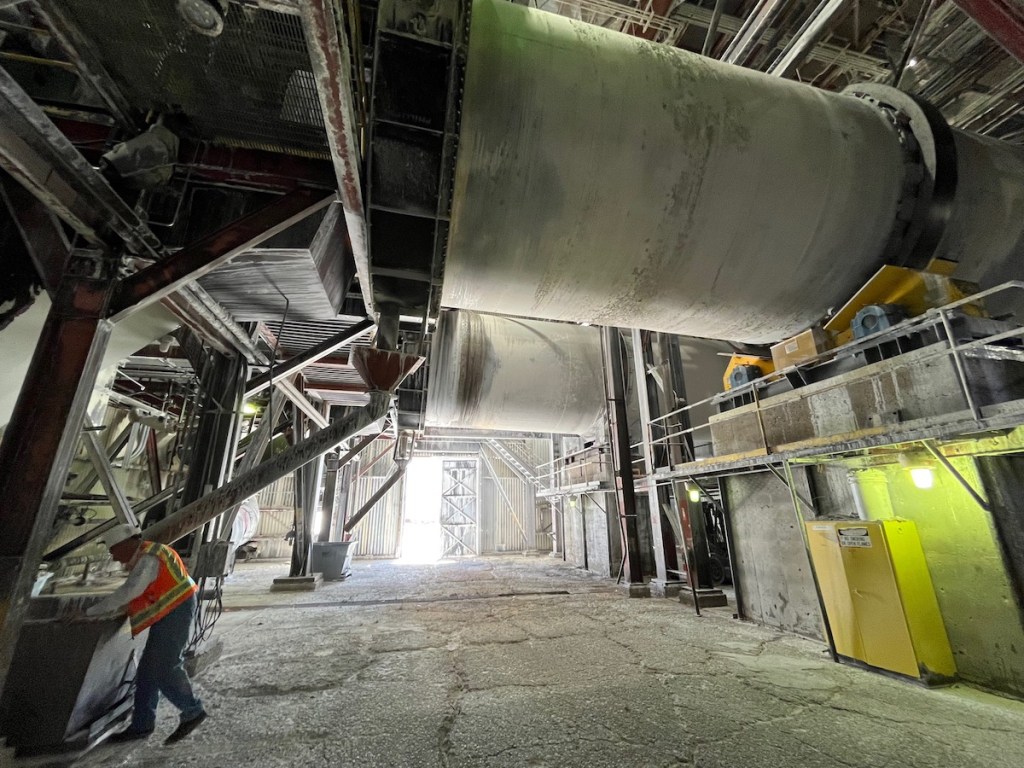
Mining and oil and gas industry representatives say part of the solution is to loosen utility industry regulations to allow for third-party electrical generation. A cluster of oil and gas companies, or a collection of trona patch operators, could form or solicit a new company — apart from an existing utility — to generate electrical power dedicated to their operations, according to descriptions of the idea. That way, they could power up much faster than a slow-moving, regulated utility, and it wouldn’t affect regular utility customers, advocates say.
“We’d like there to be some consideration of when it would be appropriate to allow for these other arrangements. We’re not asking for widespread deregulation,” Levin said. “Everyone is looking at electricity policy today and realizing the way it has been done for 100 years isn’t going to work going forward.”
Case in point: Data centers accounted for about 4.4% of electrical use in the U.S. in 2023 and that figure could grow to 12% by 2028, according to the Department of Energy. Closer to home, some estimate that data centers in Wyoming could double or triple the amount of electricity consumed in the state.
Sticky issues
Several lawmakers on the panel indicated they’re eager to accommodate growing demand for more electrical power — some said more so for Wyoming’s existing industries like trona than for AI data center developers.
But it’s tricky.
The utility industry is fraught with complex, multi-jurisdictional regulations built on the concept of service territories that oblige providers to deliver reliable, lowest-cost electricity. That includes wrapping in small businesses and homes with large industrial customers — a situation that creates economies of scale and helps keep rates lower for smaller customers, utility and state officials agree.
While third-party generation to handle large new electrical loads, might in concept create a cottage industry apart from existing utilities, nothing can truly be carved out of the interconnected system. Lander Republican Sen. Cale Case, who co-chairs the committee, said it’s likely that if Wyoming’s trona and soda ash operators, for example, moved to third-party generation, they’d still want to rely on the local utility as a backup.
And, Case noted, if the trona patch was allowed to remove itself from the local electricity provider, it would spike rates for all the other customers.
“You’d drive costs up for the other customers on the system, and that’s a true fact,” Case said.
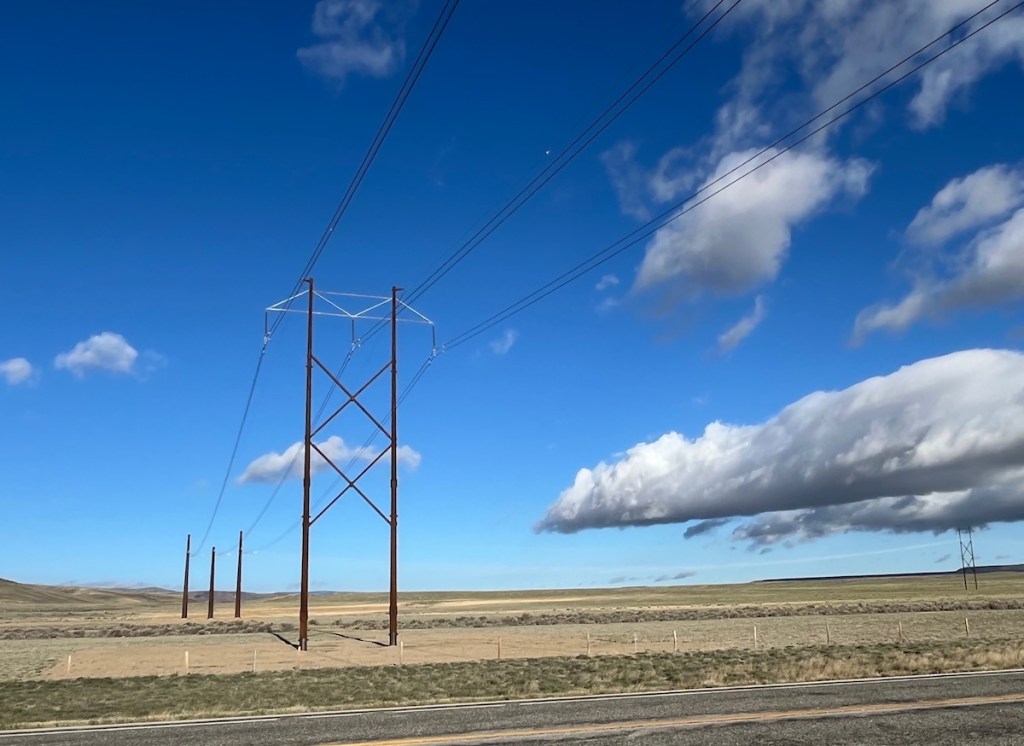
Rocky Mountain Power President Dick Garlish cautioned that operating a power plant isn’t easy. Coal-fired power plants, for example, require routine maintenance that temporarily takes them offline and, he added, any type of power plant can unexpectedly break down or incur unexpected costs. It’s why utilities build redundancies within their own systems and still rely on power trades throughout the grid.
“So when they knock on the door and say, ‘Yeah, it didn’t work out,’ you know, for whatever reason; ‘Coal is expensive, [natural] gas is expensive, it’s harder to run a power plant than I thought. I want back in,'” Garlish explained, urging the committee to consider the consequences. “If I don’t have some kind of regulatory, statutory protection, then my existing customers and the existing system is at risk of absorbing the cost of that reentry. That has upward pressure on rates.”
Stakeholders also discussed expanding or modifying Wyoming’s “large customer” tariff — a tool that’s already being used to accommodate data centers in the state. Essentially, it holds average customers harmless by contracting directly with data centers and other new “large load” customers instead of folding their rates into the larger service territory.
Customer-owned rural electric co-ops are also contemplating potential solutions. The Wyoming Rural Electric Association submitted a white paper to the committee describing various “customer allocation agreements” and “high-impact load” arrangements.
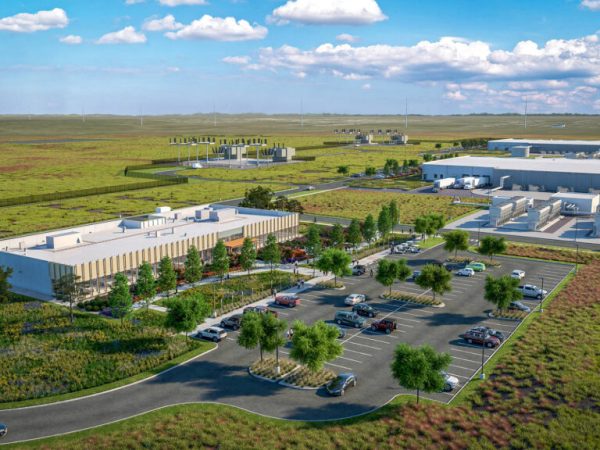
Whatever policy changes lawmakers might inch toward, committee members agreed that new customers with high demands on the electrical system must not raise rates for average customers. It was a sentiment shared among utility officials and state regulators alike.
“What we don’t want is regular customers of the utility suffering” higher rates, Wyoming Public Service Commission Deputy Chairman Chris Petrie said.
Meanwhile, Garlish noted that the utility industry is proceeding cautiously when it comes to astronomical estimates for data center power demand.
“Yes, they need power. Yes, they’re well capitalized. But they have risks on chips and technology and how they change,” Garlish said. “Nobody wants to make a 20, 40, 50-year commitment and $8 billion to build out 7 gigawatts [of electrical generation] if they think that the chips are going to change and become more efficient.”
The corporations committee meets again in September.


Uh… the sun shines and the wind blows freely. Turbines and Panels are quite economical these days, and non-Lithium battery storage is ramping up exponentially.
Check out Peak Energy’s sodium-ion phosphate battery installations. Gigawatt capacity for the grid, and passively cooled . Sodium ion does not catch fire like Lithium batteries, nor do they require vast amounts of coolant water. Always on with little or no downtime. The renewable energy cycle is nonpolluting by definition . The future will be here before you know it.
Too bad Wyoming never really learned to intellectually manage coal power after a century of trying. Expecting the Cowboy State to wake up , get smart, throw down the fossil fuel dogma , banish the robber barons and embrace alternative energy is the stuff of dreams . Time to go woke, people.
Planet of the Humans (2019), Dewey. Watch it if you have a chance.
“Clean alternative energy” isnt as clean as we have been led to believe. It makes for a nice get rich quick scheme for Venture Capitalists though, considering all of it is heavily subsidized by Tax payers.
Like oil
Yes, like oil, Gordon. If you watch the Documentary you will find out that BP, Shell, Chevron, ETC. area all in on profiting from “Alternative Energy” and financing much of it’s not so clean development.
Solar, wind and batteries are not the pristine answer so many have been led to believe.
Planet of the Humans, watch it if you seek the truth.
Is it like 2000 mules.
Five years ago in Alternative Energy years is antediluvian , Chad. Never mind you refuse to take off your old fashioned blinders and earplugs. Fossil fuel, fossil thinking…you are afflicted with arrested devlopment . Also factually challenged…the oil gas and coal industries are heavily subsidized since forever thanks to robber barons , and Trump has all but eliminated subsidies for alternative energy which he , like you , hates without good reason. But I’m wasting my words.
p.s.- it doesn’t matter what the present source of public energy might be, we always follow the money regardless. It’s whatw atchdogs and eagle eyes do. Robber baron —> venture capitalist = same same , just different centuries. Get current if you intend to comment further on contemporary energy.
The Tech Bro Billionaires, Big Oil(now alternatives), etc. thank you for your support.
Saying that solar/wind/electric dont degrade the environment on massive scales doesnt make it true Dewey.
“Contemporary Energy” still has dirty hands, ask a 12 year old mining cobalt in an African mud pit, or take a look at abandoned solar and wind farms across the west that have passed life expectancy after 20-30 years.
So, we are creating significantly more pollution, for what? AI? Good luck future generations. This is stupid.
Wow, is Wyoming cannibalizing itself from Data Centers?
Hmm…. it would seem Wyoming has been “cannibalizing” itself for extractive industry for more than decades! It’s the way it works in a “fly over” state. A reasonable solution will not present until we stop electing unreasonable representation.