

Hopes to forge a plan to reduce Colorado River Basin water use by 15% to 25% this year disintegrated this week with dueling proposals that pit California against Arizona and other basin states, including Wyoming.
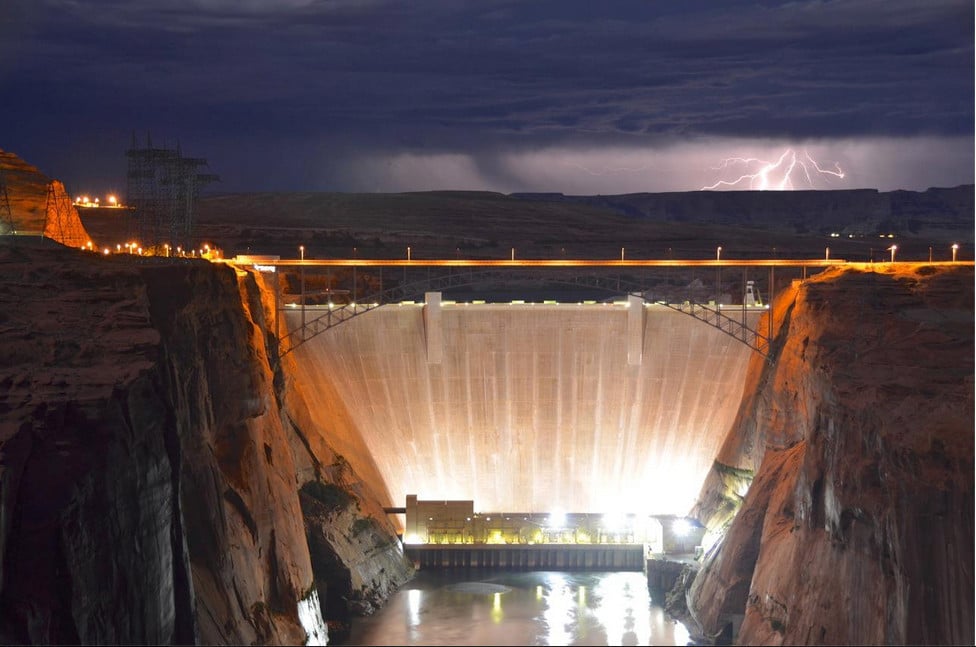
That leaves the U.S. Department of the Interior and Bureau of Reclamation, which issued the water-savings challenge in June 2022, to potentially impose their own plan to cut releases from Lake Powell and Lake Mead to maintain hydropower generation.
“Given the magnitude of water-use reductions that are being considered, talks between the Basin States have been very difficult at times,” Wyoming State Engineer Brandon Gebhart said in an email to WyoFile.
Dueling proposals
Responding to a Jan. 31 deadline, Wyoming joined fellow Upper Colorado River Basin states — as well as Nevada and Arizona in the Lower Basin — in supporting a proposed “consensus-based” model for better accounting of actual water supplies, including water losses due to evaporation and seepage at Lake Mead. That framework, if implemented, should result in a water savings of 1.5 million acre-feet to 3.3 million acre-feet of water, according to a letter signed by water officials representing the six states.

But those proposed water savings may not be fully realized this year. Plus, the six-state proposal leaves open the prospect for major water cuts this year to the Lower Basin states, particularly California — the largest consumer of Colorado River water in the system. California countered this week with its own proposal for short-term water savings that would maintain the state’s bargaining power rooted in its senior water rights. That plan would shift the burden of water cuts to Arizona, which has water rights that are junior to California’s.
“I think that’s why Arizona was quick to jump on the letter with the other six states,” Great Basin Water Network Executive Director Kyle Roerink said.
Arizona prefers the consensus-building approach to sharing the pain of water-use reductions, Roerink said, over a strict adherence to the legal framework to restrict water use among those with the most junior water rights.
“In both letters, you have some serious shots across the bow as it relates to litigation and political posturing,” Roerink said. “And no one is calling on the Congress to fix this.”
Although the six-state proposal that Wyoming signed on to doesn’t commit specific, voluntary water-use reductions, it’s a necessary “next step toward a consensus solution,” Gebhart said.
“As we continue the process, we try to understand and respect the very difficult realities being faced by California and the other Basin States,” he said. “We remain committed to working with the other Basin States and impacted water users to find consensus solutions.”
Despite varying legal positions and dire circumstances faced by each Colorado River stakeholder, some observers say Wyoming and the other Upper Basin states have offered up too little to help address the immediate problem that threatens some 40 million people who rely on the river.
“The Upper Basin is getting off scot-free,” Roerink said. “Plus, there’s no prohibitions put forth on potentially new development of Upper Basin water, like the West Fork of Battle Creek, for example.”
Wyoming’s role
Regardless of what new actions the federal government may take in coming months, the Bureau of Reclamation will continue to rely on releasing extra volumes of water from Flaming Gorge Reservoir on the Wyoming-Utah border to help balance levels at downstream reservoirs, according to those close to the issue.
“Given the magnitude of water-use reductions that are being considered, talks between the Basin States have been very difficult at times.”
Brandon Gebhart, Wyoming State Engineer
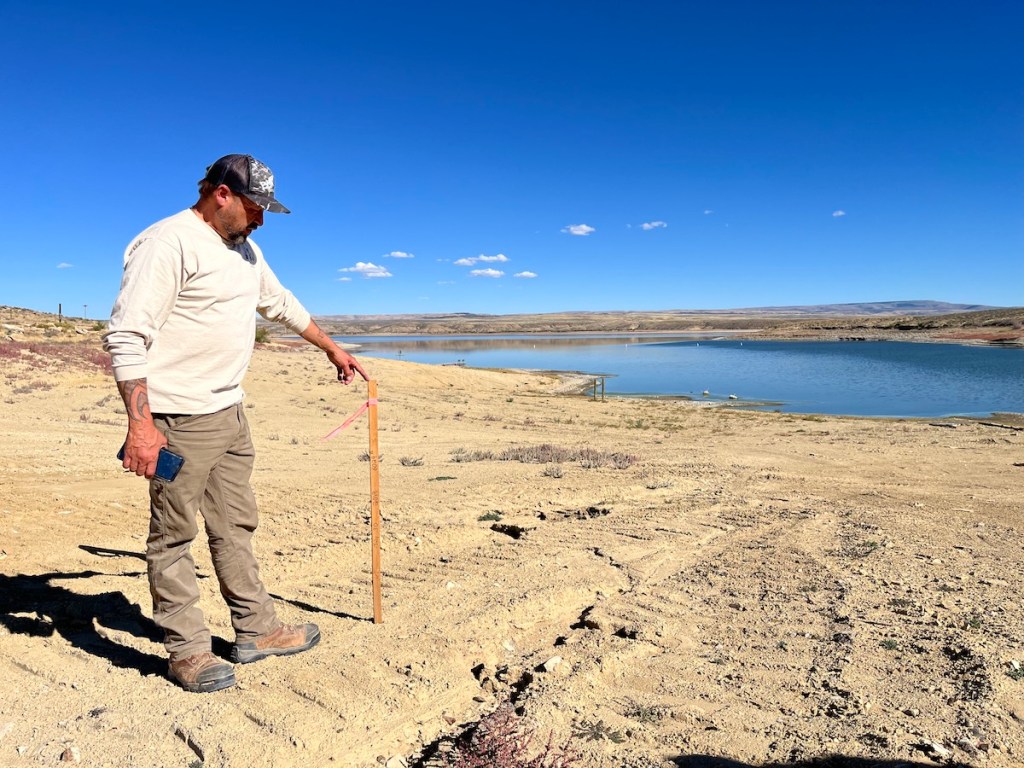
The bureau enacted extra releases totaling 625,000 acre-feet of water from the reservoir since 2021, and is expected to announce additional releases in April or May. Flaming Gorge was at 69% capacity in January, according to the bureau. If that continues into the summer, many boat ramps will be left high and dry threatening the local recreation economy.
Meantime, Wyoming and the Upper Colorado River Commission are encouraging voluntary water conservation, soliciting interest in a program that pays irrigators, municipalities and industrial facilities to leave water in streams that flow to the Colorado River.
This week, the UCRC extended the application deadline for the System Conservation Pilot Program to March 1. Wyoming officials expect to receive 15 to 20 proposals from individual water users in coming weeks, according to the state engineer’s office.
For more information about the SCPP, visit the UCRC’s website.

I still don’t see any evidence that California is willing to help in this issue. Once again they have a whole ocean of water, take the salt out and sell it and use the water. We have all seen the floods out there on the coast for months. Did they save any of that flood water? Did they just let it run to the ocean? They have feet of snow in their mountains, are they going to try and save some of that water? It’s not that hard to build holding facilities catch it and use it. We are not talking about disturbing fish or other river critters, just catching some of the flood waters and snow melt. Doing something to help themselves would make the rest of us more sympatric. Instead of them just demanding what we have and then we go without.
California has desalt access to an entire ocean but wants to grab Arizona water.
I’m not completely sure about this but didn’t a previous WYOFILE article disclose that Wyoming’s allocated share of the Colorado River water was set at 500,000 acre feet in 1922 but we’ve only been using about 340,000 acre feet. I’d like to see figures for the other Colorado compact states to see if they are over their allocated withdraws from the available Colorado River flow. I suspect Wyoming has generously been allowing our unused allocation to flow downstream to the southern most states in the compact including Las Vegas as the main user in Nevada. I just don’t see why Wyoming has to make an concessions at this point if we’re not using our allocated flow. Let’s stand firm since we are a minimal user and not the source of the problem.
Thank you for your coverage on this important issue!
It would be fantastic if management of the river as a life-giving resource could be included in larger watershed / ecosystem management, especially in relation to energy policy and human waste. It’s all connected, and we can do better. Restoring the “riparian sponge” is a start. Bring back beavers and buffalo.
the blue states are now fighting over wyomings water.
the hoover dam is no longer able to provide electricity,
the compact signed in 1922 is no longer viable.
time for each state to figure out their own water needs.
thankfully wyoming has not outstripped it’s resources,having the fewest people per mile in the country has a up side !