


Wyoming lawmakers are mulling whether to apply a tax on entities that generate electricity, including owners of yet-to-be-built facilities to power data centers, as a way to ease monthly electric bills for average customers and to potentially create a revenue windfall for the state to spend where needed.
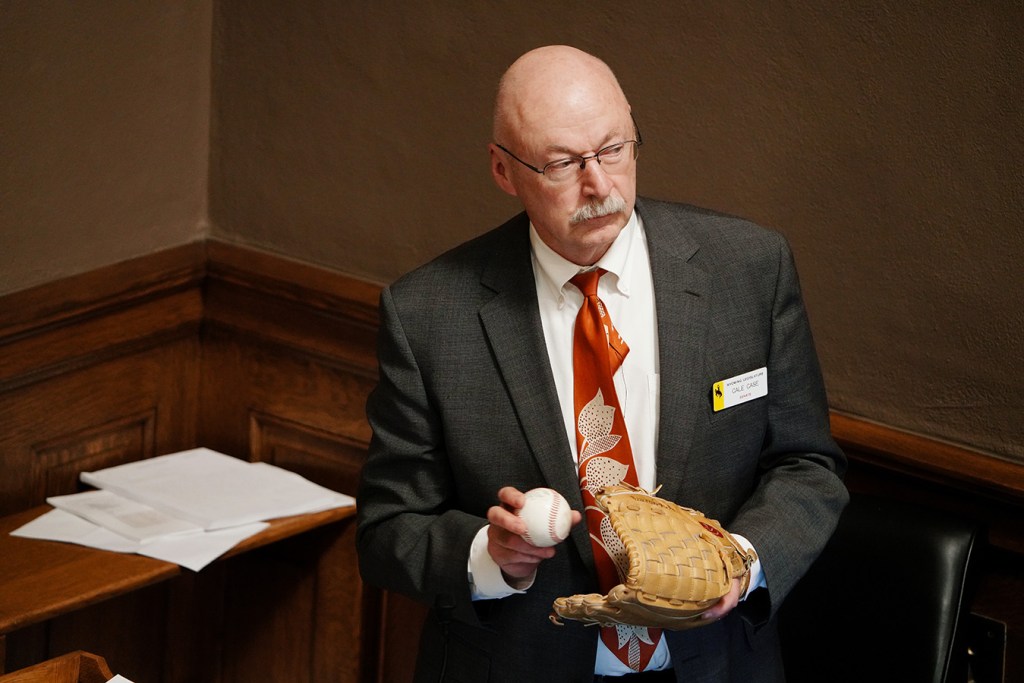
Lander Republican Sen. Cale Case pitched the ideas to the Legislature’s Revenue Committee last week, noting that a range of Wyoming customers — from homeowners and businesses to industries like trona mines — are suffering continual rate hikes. Some industries and municipalities can’t get extra power in a timely fashion, Case added, while many others worry about the sprawl of wind turbines.
“These are all kind of connected, and taxation policy is a tool that we could use to address some of these issues.”
Tax burden shift
The first of two potential bill drafts, Case suggested, could create a tax paid by utility companies that generate electricity while eliminating or reducing a retail sales tax that their customers already pay. Plus, lawmakers can discriminate. “Taxes on electricity [producers] don’t have to be equal,” Case said, adding that the Legislature could favor nuclear or fossil fuels over wind energy, for example.
“It’s a policy tool that will moderate the growth of renewables in Wyoming. It is a policy tool that could potentially moderate the rapid growth of data centers.”
Lawmakers have kicked the idea around for a couple of years, following public outcry over rising electric bills and declarations by elected officials to do something about it. But legal concerns stymied past legislative efforts.
Wyoming exports about 65% of the electricity generated in the state, according to the Legislative Service Office. While it’s tantalizing to tap companies that also serve out-of-state customers for revenue that would stay in Wyoming, there are legal considerations, Cale conceded. The federal Dormant Commerce Clause outlaws “excessive burdens” on interstate trade.
Case invited Sterlington Law attorney Robert Kantowitz to opine on the legal minefield. If a tax is narrowly applied to electrical generation in Wyoming, Kantowitz said, it should withstand legal challenges.
“Our feeling is that it’s pretty clear it’s not a discriminatory tax,” he said. “Basically, if you come into Wyoming and you produce electricity in Wyoming, you pay a tax on that — the same as if you come into Wyoming and you extract minerals from the state; you pay a severance tax.”
An attorney representing the Wyoming Industrial Energy Consumers group — a powerful collection of companies with coal mines and oil and gas refineries — told the legislative panel he believes such a tax scheme might be legal. However, Nikolas Stoffel of the Holland and Hart law firm cautioned against it.
Though the intent is to shift a tax burden from customers to their electricity provider, “It’s going to impact their provider’s creditworthiness and ability to attract capital and ability to provide service at the lowest possible cost over the long term,” Stoffel said, adding that those factors will ultimately result in higher rates for customers.
Others cautioned against using such a tax scheme to disadvantage certain types of electrical generation, like wind energy.
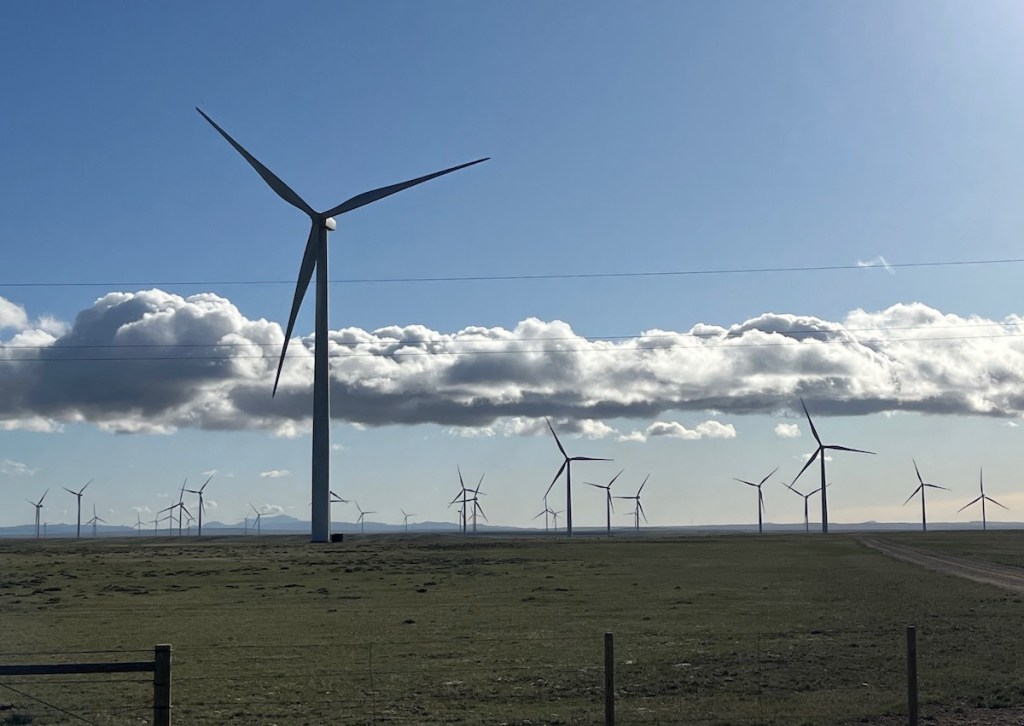
Despite public perception, wind energy companies in Wyoming contribute more to public coffers than most people realize, and it’s an industry that many local communities are increasingly relying on for revenue, according to Power Company of Wyoming Vice President of Communications Kara Choquette. The company is developing the massive $5 billion, 3,550-megawatt Chokecherry and Sierra Madre Wind Energy Project in Carbon County.
Wyoming already has an electric generation tax, Choquette noted — a $1 per-megawatt-hour charge on wind energy generation that was instituted in 2012. Since then, the tax has contributed more than $66 million in revenue, according to state data.
Wind energy also provides significant sales-and-use and property taxes, Choquette said. Property taxes are based on an annual “assessed valuation,” and the assessment for all electric generation and transmission facilities has risen to $750.2 million in recent years — second only to oil and natural gas facilities in the state.

Plus, she noted, the “Big, Beautiful” budget reconciliation bill in 2025 enacted a measure to send tax revenue derived from wind development on federal lands back to the state and county of origin. The federal “revenue sharing” is split 25% to the state and 25% to the county.
The federal program is something that Power Company of Wyoming and state lawmakers started lobbying for more than 10 years, Choquette said. “So we’re so pleased that that will now be happening, starting this year. That’s really good news.”
‘Mega’ energy producers, consumers
Case proposed the panel consider drafting a second measure regarding taxing the electrical generation for “large load” producers and/or customers, noting that data center developers envision a buildout so large their facilities could demand triple the amount of electricity now consumed in the state.
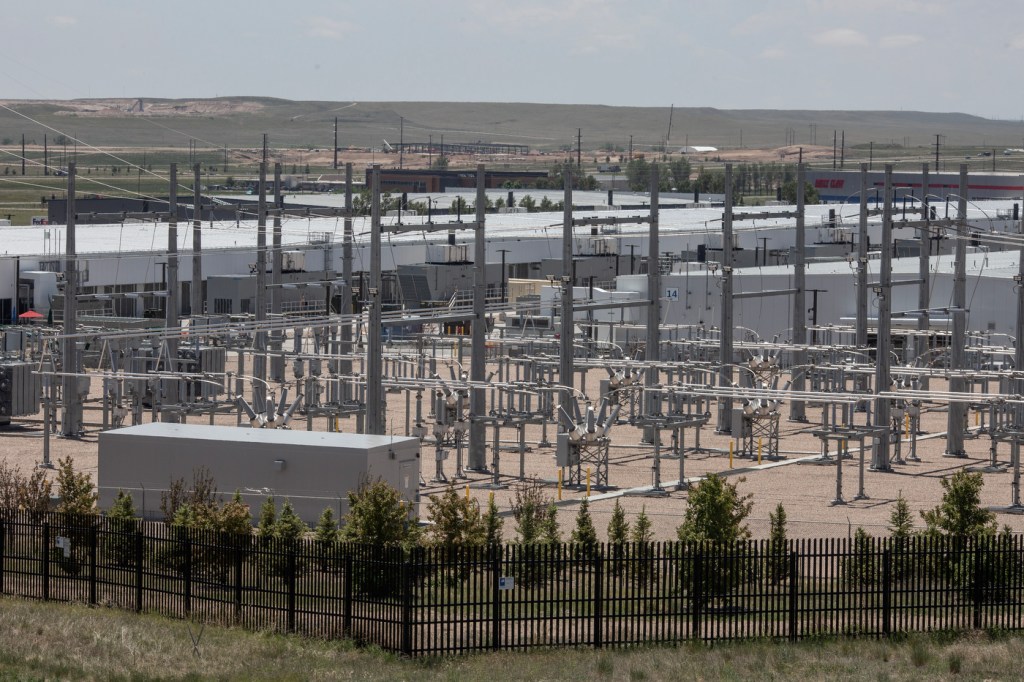
The counties hosting data center construction — almost exclusively Laramie County so far — earn significant revenue from the state’s existing tax structure while other communities do not. But a tax on that “large load” and “dedicated customer” power generation could create a huge new revenue stream to be distributed throughout the state, Case says.
“It’s totally up to us to decide [where to spend the new revenue],” Case told the panel. “But we need stable funding for local governments around the state. It’s not really fair that [revenue] windfalls accumulate in one area.”
Committee members directed staff to draft a pair of bills. The Revenue Committee meets next in August.


One of the best ways to reduce homeowner electricity bills is net-metered rooftop solar. Our existing State Statutes need to be tweaked to make this accessible and incentivized for more homeowners, as well as for businesses and flat-roofed warehouses and shopping malls. Wyoming needs to raise its cap on the maximum number of KWH that can be net metered. This would make it possible for community owned solar panel installations, on the sites of landfills, brownfields, parking structures, and sewer lagoons. Rooftops and industrial land are already degraded, and will not cause the harm to the environment and wildlife posed by utility-scaled solar installations.
Meanwhile , in it’s never ending ploy of robbing Peter to pay Paul to produce more tax revenue, the Wyoming legislature looks past the uncounted billion$ of dollar$ in external wealth hidden in all those 3×5 post office boxes as though it weren’t there. Foreign Oligarchs, domestic Robber Barons , slithering cold-blooded lawyers, mercenary soldiers of financial fortune calling themselves ” Personal Representatives”, and various forms of flim flammers come from all around the planet to sequester wealth in Wyoming .
Forget about trainloads of coal , millions of barrels of crude oil , billions of cubic feet of natural gas , bins of trona, even truckloads of swinging beef or pallets of beet sugar … the real money is in PAPER [ or zeros and ones ]. All those trusts, LLCs , shell companies, Smurfs, crypto coins blockchains and NFTs , cardboard real estate, phantom digital-only assets… Wyoming is a preferred habitat for money moguls these days. A Cayman Islands financial haven in a Sagebrush Sea . Our Legislature and Wyoming leadership ever beholden to skyscraper bankers and the 1 Percenters will guarantee your wealth remains invisible here , and ask almost nothing in return. What has the McMansion billionaire class done for the rest of us in Wyoming lately ?
Taxing electrons. Shazam ! Why didn’t I think of that ? Too busy scraping the peanut butter jar , maybe.
I think we should tax lawmakers. How daft does one have to be to think that taxing electricity generation will ease the cost to rate payers?
I can’t help but wonder where Cale Case got the idea that taxes applied to energy producers won’t ultimately be passed on to the consumers. So, we will pay higher utility rates to cover the generation tax on the producers instead retail sales taxes on the electricity we use, makes perfect sense to me.
I also wonder why Mr. Case hates renewable energy so much, I remember some years back when he was trying to tax the wind energy industry out of the state. Is he so foolish that he believes opposing non-carbon burning electricity generation will insure the eternal survival of Wyoming’s coal industry?
As does any other sane, sensible Wyomingite, I have always been extremely grateful for and appreciative of the low tax burden I enjoy as a result of the severance taxes paid by our extractive minerals industries, but I also realize that some day carbon consuming elactricity generation will be a relic of the past. Even though that day may be many decades down the road, intellectually refusing to accept that it eventually will happen is delusional at best. Wyoming has been uniquely blessed with an embarrassment of riches when it comes to energy, not maximizing the value of ALL of them in the present would be inexcusably stupid.
EVERY tax paid by a company is passed through to the next purchaser by being built into the cost of the product. Look at California. That state has implemented carbon taxes, etc, then the consumers complain about the cost of fuel, NG and electricity.