

A coalition of conservation groups filed a motion in federal court Friday to intervene in Wyoming and Utah’s lawsuit against the Bureau of Land Management’s Public Lands Rule, becoming the latest entrant to the legal melee over the controversial policy.
The motion, which the Southern Utah Wilderness Alliance, the Wilderness Society and the Conservation Lands Foundation filed, comes as a rejoinder to Wyoming and Utah’s June motion that seeks to prevent the agency from implementing the Biden administration’s Public Land Rule, also known as the Conservation and Landscape Health Rule.
The rule, which was released in April, categorizes “conservation” as a use within the BLM’s multi-use framework for the landscapes it manages. It also revises regulations to reflect the agency’s prioritization of designating and protecting so-called Areas of Critical Environmental Concern.
Wyoming and Utah’s suit claims the BLM sidestepped the National Environmental Policy Act at the peril of economies and landscape health when it finalized the rule. Supporters of the rule say it just reinforces the directive Congress gave the BLM decades ago.
“The lawsuit and preliminary injunction request by Utah and Wyoming constitute a vote to let big fossil fuel and development interests keep pulling the strings and set the agenda for how we use our natural resources,” Alison Flint, senior legal director at the Wilderness Society, said in a statement. “The BLM public lands rule, meanwhile, seeks the balanced approach prescribed for the agency by Congress almost a half-century ago.”
Friday’s motion is the latest shot in the rule battle, and part of a broader tension over the BLM’s management of more than 18 million acres of public land in Wyoming.
Elevating conservation
The Public Lands Rule advances the BLM’s multiple-use and sustained-yield mission by addressing the health and resilience of public lands, according to the agency.
“Conservation is a use of public lands on equal footing with other uses and is necessary for the protection and restoration of important resources,” the BLM states. “The Public Lands Rule will help safeguard the health of our public lands for current and future generations by ensuring we: protect the most intact, functioning landscapes; restore degraded habitat and ecosystems; and use science and data, including Indigenous Knowledge, as the foundation for management decisions across all plans and programs.”
The rule establishes two new categories of leases for land use — mitigation leases and restoration leases — as well as a process for entities seeking to restore public lands or to offset impacts to secure them.
The finalized rule, released in April, followed a year-long process and what the agency described as “the longest comment period on a rulemaking in recent history.” During that period, more than 200,000 comments poured in.
But Wyoming and Utah’s lawsuit argues the process was insufficient. Because the rule overhauls BLM’s priorities under the Federal Land and Policy Management Act, representing a “sea change” in how the agency will carry out its mission, the rule should have been subject to more scrutiny, the states’ suit alleges.
“NEPA demands that a Rule of such significance be subject to careful environmental study,” the suit reads. Both states, along with many others, “entreated BLM to take a ‘hard look’ that NEPA requires before pushing through a Rule that could harm the environment. BLM brushed all these objections aside,” the suit reads.
The suit asks the court to vacate the rule.
A broad coalition of energy, mining, ranching and farming groups — including Wyoming Farm Bureau Association, American Petroleum Institute and Western Energy Alliance — also challenged the rule in a suit filed July 12 in the U.S. District Court for Wyoming. That suit accuses the agency of overstepping its authority, particularly when it comes to the two new lease categories.
“These are leases for conservation and no more, and they are flatly inconsistent with the statutory scheme that BLM is tasked with implementing,” that suit reads. “The Rule is plainly unlawful and must be set aside.”
Conservation groups responded last week by requesting they be party to the states’ case. They want to defend the agency’s rule, which they say is above board and will be crucial to meeting new challenges related to climate change and the health of western landscapes.
Who is saying what
Many Wyoming elected officials met the rule with scathing criticism when it was announced. The state’s U.S. Sens. John Barrasso and Cynthia Lummis were among federal lawmakers who introduced legislation to block the rule.
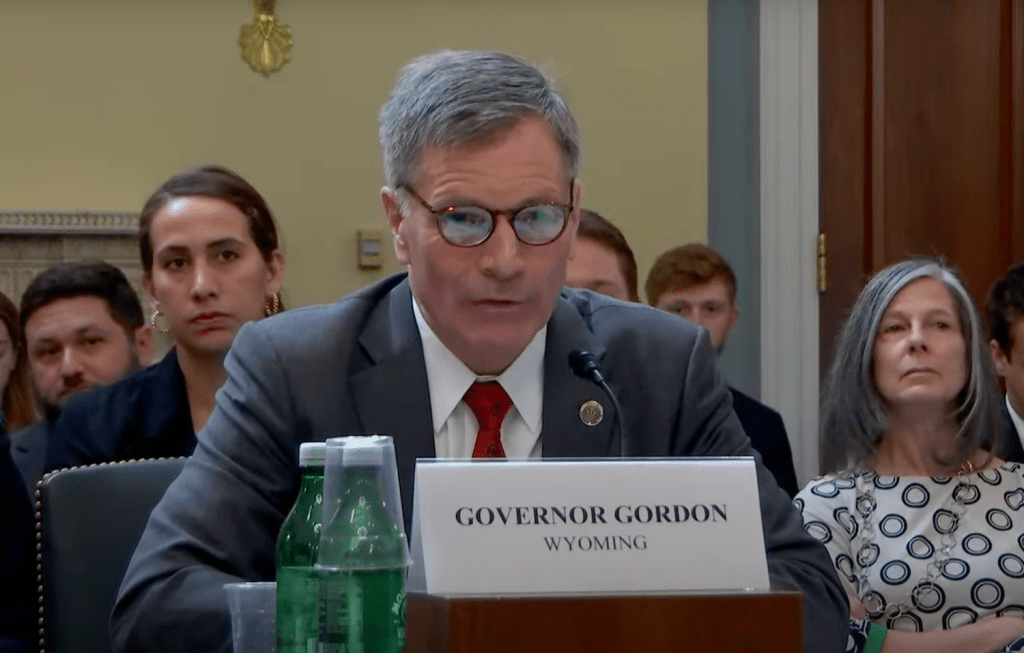
Gov. Mark Gordon, who testified on the draft rule before the U.S. House Committee on Natural Resources in 2023 and submitted lengthy written comments, also had harsh words for it.
“It appears that Wyoming’s comments — and those from our people who depend on public lands for their livelihoods — were completely overlooked,” Gordon said in a statement.
The “contorted interpretation” of multiple use, Gordon contended, “will completely upend economies across the West — including grazing, recreation, and energy.”
But representatives of the conservation coalition maintain Wyoming, Utah and other critics are making much ado over something that’s already law.
“What we find most disappointing and puzzling about Utah and Wyoming’s lawsuit against the Rule is that it appears to be motivated by their fear of implementing existing law — the Federal Land Policy and Management Act — and the will of the people,” Charlotte Overby, vice president of conservation field programs at the Conservation Lands Foundation, said in a statement.

Multiple use. Except when all uses except “conservation” are excluded. The definition of “conservation ” will be a playground for environ mentalists.
I am more than a little annoyed that Governor Gordon is using my tax dollars to contest the Public Lands Rule. Judging from the public comments, the vast majority of responders support the rule. He should listen to those opinions…many of which are from Wyoming citizens like me!
Where does this leave sage grouse migratory bird studies?
Governor Gordon claims the rule wasn’t subject to the careful environmental study demanded by NEPA. I want to see the careful study supporting his assertion that placing conservation on equal footing with other uses of public lands “. . . will completely upend economies across the West.”
Wyoming’s elected officials are quick to deride as welfare programs designed to help people in need: examples include expanded Medicaid, summer lunches for kids and student loan forgiveness. But it’s not welfare to expect Federal subsidies for ranchers and mining interests on public lands. What’s the difference?
“It appears that Wyoming’s comments — and those from our people who depend on public lands for their livelihoods — were completely overlooked,” Gordon said in a statement.
No one is ENTITLED to make their livelihood from public lands, without paying a fair market price for that opportunity. Grazing leases, mineral extraction leases are all priced at ridiculously low, giveaway rates, which cheat the American public of revenue while despoiling land we all own.
Comments from Utah and Wyoming, comments from ranchers, comments from petro companies and mining companies were NOT overlooked. They were simply not allowed to dominate as they always have.
If you are a rancher who cannot make a living without a subsidy from the American public, you need to find a new vocation. If you are a mining company owner or oil/gas producer who cannot afford to pay a fair price to the American people, get out of the business.