
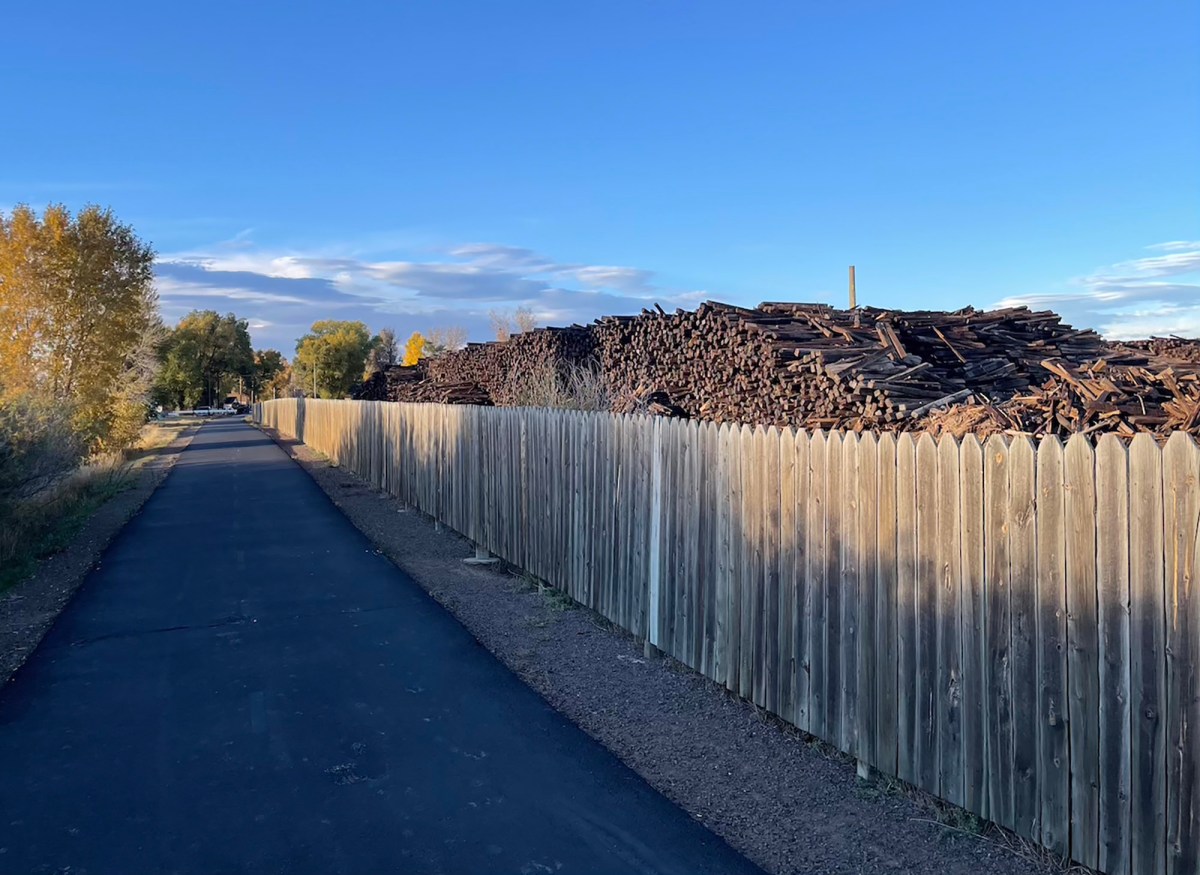
LARAMIE—The piles of creosote-soaked railroad ties that raised public health and safety concerns among West Side residents and local officials starting this summer will soon be moved elsewhere, according to Democratic Rep. Karlee Provenza. 

“I got a phone call from the legal counsel for Omaha Track, who oversees the storage of the ties, and they told me last night that they were moving the tracks out of the area starting on Monday,” Provenza told WyoFile on Friday. 

Union Pacific began stacking the ties this summer on its property adjacent to the Laramie River and the West Side, a historic, working-class neighborhood sandwiched between the train tracks and Interstate 80. 

As WyoFile previously reported, neighboring residents say the pungent smell of the creosote — a preservative long used to protect wooden ties from natural decay and pests — quickly fouled up the area. 

The preservative is a mixture of polycyclic aromatic hydrocarbons “derived from the distillation of tar from wood or coal,” according to the U.S. Environmental Protection Agency. Depending on exposure levels, it poses health risks, including cancer, and can linger in soils and pollute water. 

Provenza, whose House district encompasses the West Side, said it’s her understanding that the ties are being moved out of state, but those details remain unclear. Omaha Track and its legal counsel did not respond to WyoFile’s request by publishing time. 

“I won’t celebrate until the ties are gone, and I hope they’re not being sent to someone else’s backyard,” she said. “But it’s a big deal that the people that live at the end of Cedar Street and near that area aren’t going to be breathing in creosote and aren’t going to have to worry about their homes burning down.”
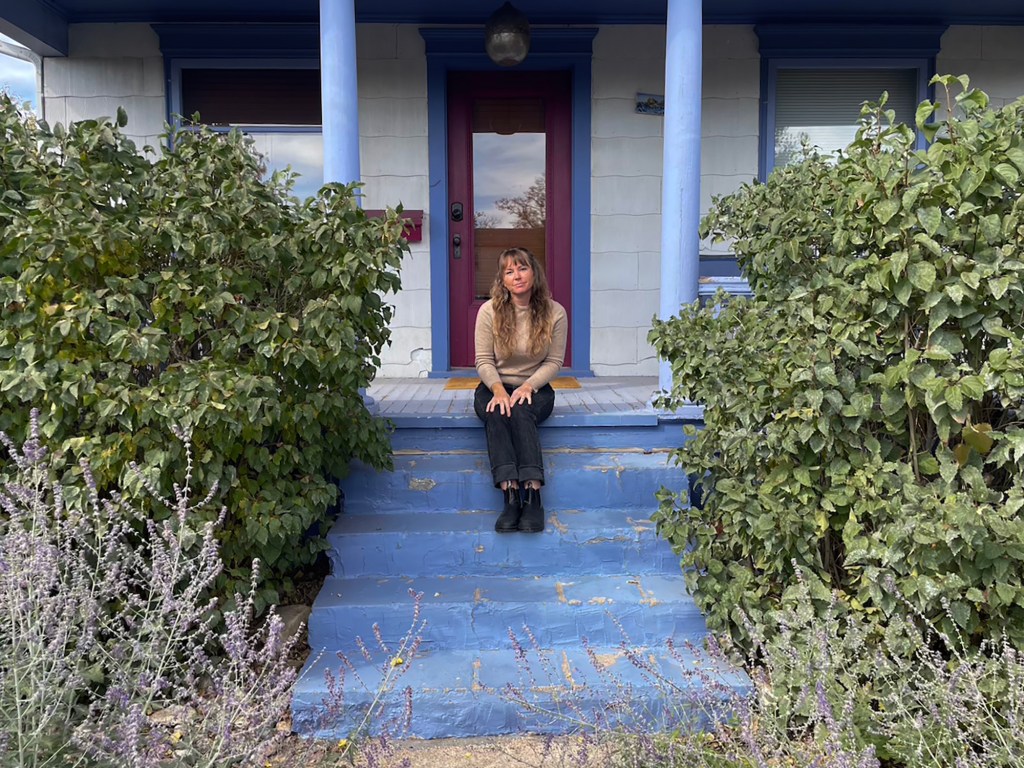
Martha Jenkins sits on her front porch in Laramie’s West Side. (Maggie Mullen/WyoFile)

Soon after the ties appeared, a handful of West Side residents formed a nonprofit, Healthy Neighborhoods, and threatened to sue Union Pacific and Omaha Track if the companies didn’t remove the ties. They felt legal action might be necessary after initial responses from local and state authorities were tepid. 

Martha and Mark Jenkins, two of the nonprofit’s founders, told WyoFile on Friday they were “delighted” at the news. 

“To prevail in this kind of local battle, I think it’s very meaningful,” Mark said. “I think it shows that people can pull together if they feel like something is actually wrong and make a difference for each other.”

Maggie Mullen reports on state government and politics. Before joining WyoFile in 2022, she spent five years at Wyoming Public Radio.

Leave a comment

WyoFile's goal is to provide readers with information and ideas that foster constructive conversations about the issues and opportunities our communities face. One small piece of how we do that is by offering a space below each story for readers to share perspectives, experiences and insights. For this to work, we need your help.

What we're looking for: 

  • Your real name — first and last. 
  • Direct responses to the article. Tell us how your experience relates to the story.
  • The truth. Share factual information that adds context to the reporting.
  • Thoughtful answers to questions raised by the reporting or other commenters.
  • Tips that could advance our reporting on the topic.
  • No more than three comments per story, including replies. 

What we block from our comments section, when we see it:

  • Pseudonyms. WyoFile stands behind everything we publish, and we expect commenters to do the same by using their real name.
  • Comments that are not directly relevant to the article. 
  • Demonstrably false claims, what-about-isms, references to debunked lines of rhetoric, professional political talking points or links to sites trafficking in misinformation.
  • Personal attacks, profanity, discriminatory language or threats.
  • Arguments with other commenters.

Other important things to know: 

  • Appearing in WyoFile’s comments section is a privilege, not a right or entitlement. 
  • We’re a small team and our first priority is reporting. Depending on what’s going on, comments may be moderated 24 to 48 hours from when they’re submitted — or even later. If you comment in the evening or on the weekend, please be patient. We’ll get to it when we’re back in the office.
  • We’re not interested in managing squeaky wheels, and even if we wanted to, we don't have time to address every single commenter’s grievance. 
  • Try as we might, we will make mistakes. We’ll fail to catch aliases, mistakenly allow folks to exceed the comment limit and occasionally miss false statements. If that’s going to upset you, it’s probably best to just stick with our journalism and avoid the comments section.
  • We don’t mediate disputes between commenters. If you have concerns about another commenter, please don’t bring them to us.

The bottom line:

If you repeatedly push the boundaries, make unreasonable demands, get caught lying or generally cause trouble, we will stop approving your comments — maybe forever. Such moderation decisions are not negotiable or subject to explanation. If civil and constructive conversation is not your goal, then our comments section is not for you. 

Your email address will not be published. Required fields are marked *