


Two bills that challenged a key energy goal shared by past legislatures and Gov. Mark Gordon — to capture, store and commercialize carbon dioxide — failed to advance out of legislative committees.
The measures spurred robust public comment but almost no committee discussion. Both died when no lawmaker proposed advancing them.
House Bill 209, “Reliable and dispatchable low-carbon standards-repeal,” died in the House Minerals, Business and Economic Development Committee on Friday, and Senate File 92, “Make carbon dioxide great again-no net zero,” met its demise in the Senate Minerals Committee on Monday.
Lead sponsors of the bills, Gillette Rep. Christopher Knapp on HB 209 and Torrington Sen. Cheri Steinmetz on SF 92, are Republicans who align with the far-right Freedom Caucus. The group has challenged portions of Gordon’s “all-of-the-above” energy policies that encourage lower carbon dioxide emissions and commercialization of the greenhouse gas — the primary driver of the planet’s climate crisis, according to the world’s top scientists. Advocates saw the bills as a way to unshackle the Equality State’s fossil fuel industries from carbon dioxide-reduction policies by dismissing the urgency to address the planet-warming effects of carbon dioxide emissions and highlighting the costs tied to such efforts.
But many stakeholders — including coal and trona mining representatives, as well as some agricultural producers — noted that they, and the state, have already spent years investing in the potential economic upsides of so-called carbon capture, use and sequestration.
“I don’t think that carbon dioxide is necessarily a horrible thing for our world,” Albin area rancher Ron Rabou said Friday while testifying against SF 92. He and many of his neighbors have inked potentially ranch-saving deals to allow for permanent, underground carbon dioxide storage, Rabou noted. Ag producers in the region stand to earn a combined $125 million from a single storage project proposed by Meriden Carbon, according to Conner Nicklas of the Budd-Falen Law Offices in Cheyenne, who represents the ranchers.
“I think it’s very important to understand that whether you agree or disagree with the fact that climate change is real, it’s [market implications are] here to stay,” Rabou said. “So we can either embrace that as a state, and we can monetize that. We can capitalize on it, just like what I’ve done in my business. Or we can say the principles that we stand on are more important than propping our economy up.”
At least five other southern Wyoming ranchers testified against SF 92 for the same reasons.
Fossil fuel and mining industry representatives said that, while they don’t like climate policies and mounting market demands for renewable energy, their constituents understand that their livelihoods depend on providing their commodities under the flag of lower carbon emissions.
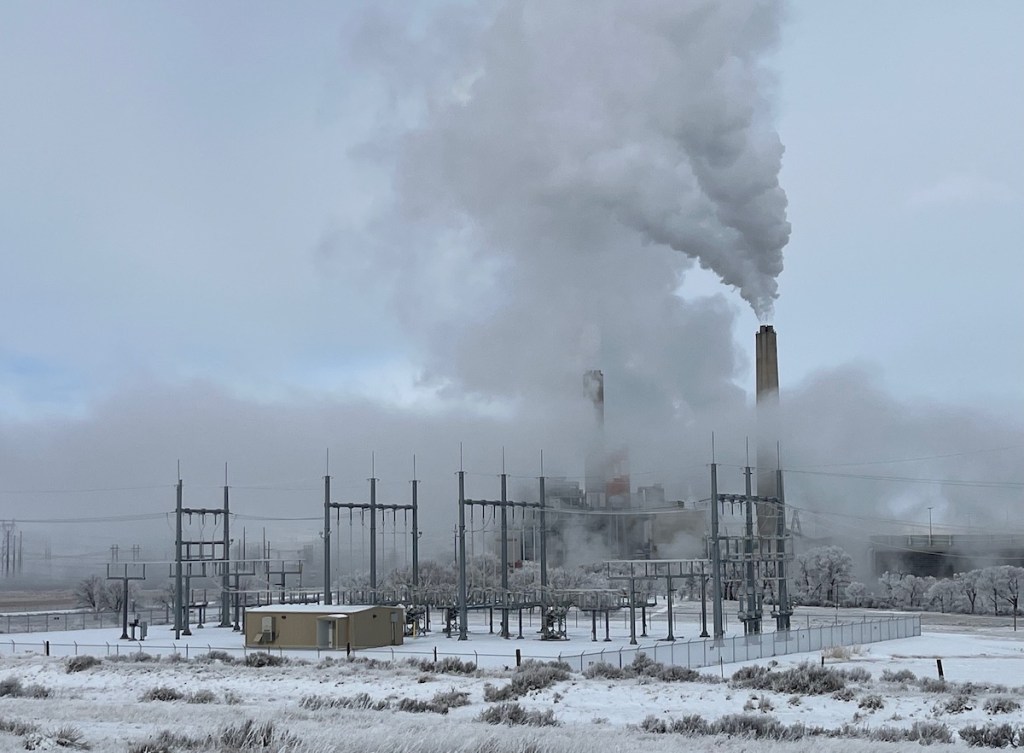
“The coal industry supports carbon capture for emissions,” Wyoming Mining Association Executive Director Travis Deti told the House Minerals, Business and Economic Development Committee on Friday regarding HB 209. “We feel that’s the way forward if we’re going to go, as was alluded to earlier, our customers in other states — they’re demanding cleaner emissions. That’s just the card we’ve been dealt.”
What was in the bills
House Bill 209 sought to repeal many aspects of at least seven bills passed during Gordon’s tenure to mandate that utilities study the feasibility of retrofitting coal-fired power plants in the state with carbon capture technology.
Despite past legislative support for the mandate, Freedom Caucus members and their allies — who took key legislative leadership positions after the past election — have taken direct aim at Gordon’s energy policies they claim are “capitulant” to outsiders who don’t understand the value of Wyoming’s fossil fuels. Now that President Donald Trump has returned to the White House, the state has an opportunity to realign with an administration that seeks to overturn policies directed at reducing carbon dioxide emissions, according to Knapp.
“I think Wyoming has a unique opportunity to take what has been placed before us in battle to shore up our position,” he said.
“We have enough carbon dioxide for our plants. It’s not that we don’t, and it’s not that we’re reducing it. We’re increasing it. So I stand firmly against this bill.”
Katheryne Earl, Goshen County
Gordon policy director Randall Luthi didn’t directly oppose HB 209, but insisted the state’s mandate, primarily via the 2020 House Bill 200, “Reliable and dispatchable low-carbon energy standards,” is still necessary because “we’ve got to respond to that out-of-state market,” he said.
“We’re selling [Wyoming coal] to states that have renewable portfolio standards — that want lower CO2,” Luthi added. “If we’re going to remain in the business, we’ve got to figure out a way to meet their standards.”
Luthi suggested that rather than repeal the mandate, the Legislature might consider attaching a sunset date to it. The committee did not entertain amendments before the bill died.
Senate File 92, in addition to also repealing the carbon capture mandate for coal-fired power plants, would have codified throughout Wyoming statute that “carbon dioxide is not a pollutant and is a beneficial substance.”
Bill sponsor Steinmetz acknowledged widespread concern that the measure might jeopardize Wyoming’s years-long effort to win primacy over a federal permitting program for carbon dioxide injection wells, as well as the state’s primacy over aspects of the Clean Air Act, by offering to remove those permitting programs from the Make Carbon Dioxide Great Again bill. But her amendment offer didn’t appear to fully assuage those concerns.


A spokesperson for Wyoming’s trona industry, which uses coal boilers in refining processes, argued against the bill, noting that if Wyoming were to lose its primacy over federal emissions programs, trona miners would have to obtain smokestack emission permits from both the state of Wyoming and the U.S. Environmental Protection Agency.
“We certainly don’t want to have to go to the EPA for those permits,” trona industry representative Jody Levin told the committee. “We would strongly urge the committee to ensure that the primacy for the state over the Clean Air Act remains.”
Goshen County resident Katheryne Earl said she sympathizes with those who work in Wyoming’s fossil fuel industries — including several family members. She opposed the bill, however, based on the fact that human-caused carbon dioxide emissions are a significant driver in climate change.
“The endeavor of fossil fuels, from the industrial revolution on, we have been pumping carbon dioxide into the air,” Earl said. “We have enough carbon dioxide for our plants. It’s not that we don’t, and it’s not that we’re reducing it. We’re increasing it. So I stand firmly against this bill.”
Both bills, according to their sponsors, would have preserved the use of carbon dioxide for enhanced oil recovery, as well as honored the state’s existing grants to support low-carbon energy endeavors.
Both the Senate and House mineral committees suggested they may take up the topics in the legislative off-season, also known as the interim.


A clarification: Senator Steinmetz has always claimed Lingle as her home (she lives 3 miles from Lingle; 13 from Torrington).
Our Wyoming small towns should not be overlooked for political purposes.
There are many of us in her district who are embarrassed that she is our senator because of her apparent imperviousness to facts. This bill deserved to die.
Has anyone noticed that any bill that’s touched by Cherie Steinmetz turns into rancid manure?
Emotional victimhood over good science. Way to go not-so-free freedom caucus. You all should start to work for Wyoming and NOT the elite in DC.
after that completely ridiculous and draconian “Wyomingites need to show proof of U.S. citizenship or be detained” bill, Steinmetz has lost all creditability moving forward, even amongst the other unfreedom caucus loons. My oh my we send some stupid ones down to ole’ Cheyenne…
Glad this failed!
Swiss physician and chemist Paracelsus expressed the basic principle of toxicology: “All things are poison and nothing is without poison; only the dose makes a thing not a poison.”
Or, more simply put, poison is always about dosage.
In other words, the harmful aspect of CO2 in our atmosphere is the AMOUNT. When in balance with other substances (oxygen, nitrogen, etc.) CO2 is fine. But it is a product of combustion and there is a superabundance due to combustion and this is the problem.
I am an engineer, and this line of reasoning defies even a basic understanding of chemistry. It is offensive and quite frankly pretty stupid.