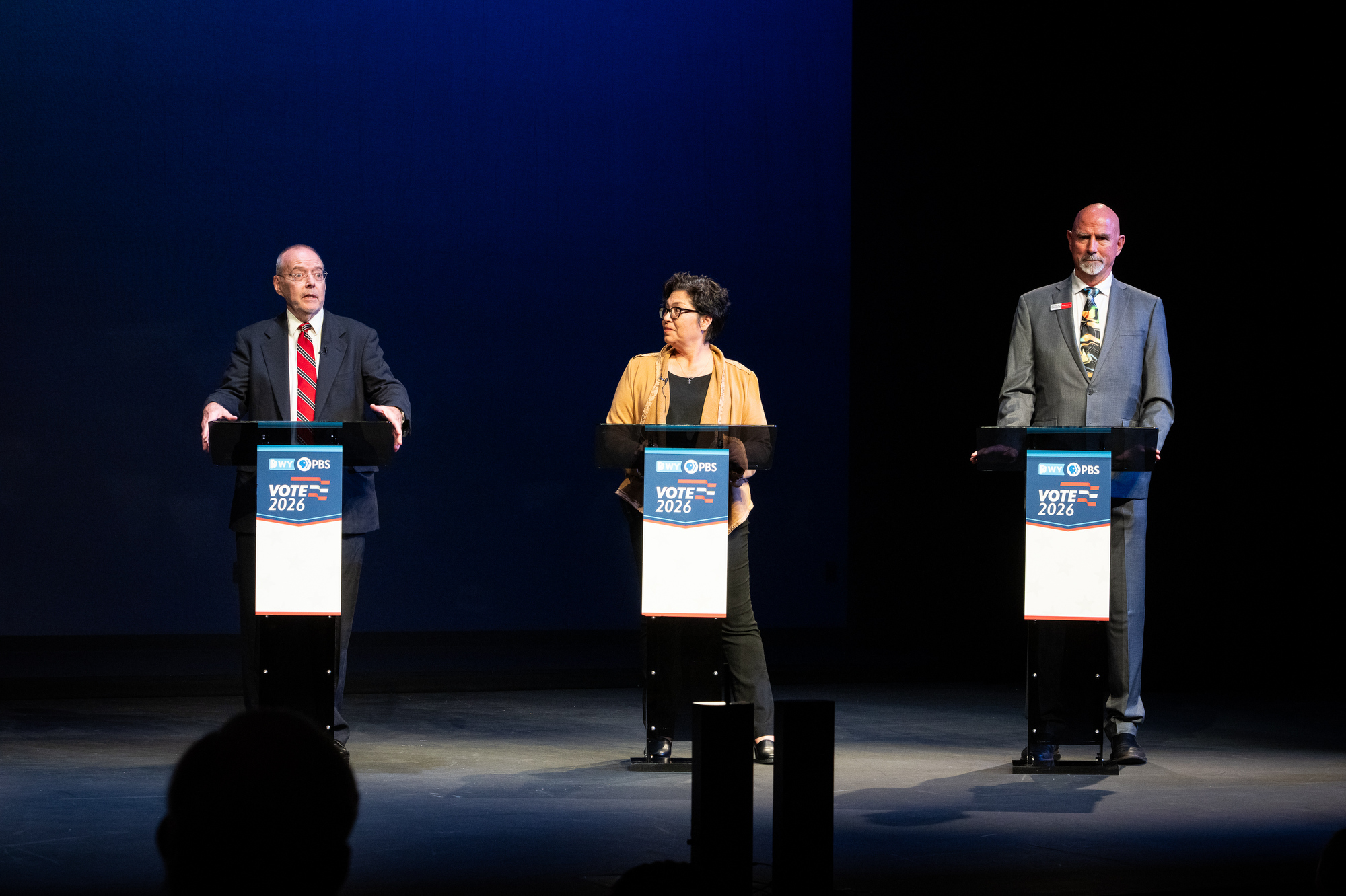

The secretary of state race is down to three candidates. At a Thursday debate, the remaining contenders shared their thoughts about elections, data centers, court battles and more.
Republican Robert Short, a Converse County commissioner who sported a Jerry Garcia-inspired necktie at the debate, beat out three Republican candidates in the primary election, including Rep. Rachel Williams. Tamara Trujillo, a former Republican state representative, entered the general race as a Constitution Party candidate. Worland Democrat Bryan McCarty was unopposed in the primary election.
Wyoming’s secretary of state post has risen in prominence in recent years as concerns about elections and shady corporations have intensified. The executive official’s responsibilities include overseeing elections and registering and authorizing businesses in the state. The secretary also serves on various boards.
Here are three takeaways from the debate hosted by Wyoming PBS, Wyoming Public Media and Cowboy State Daily.
Trujillo defends election monitors, giving voter data to feds
During the state’s primary elections, two U.S. Department of Justice attorneys were dispatched to Laramie County to monitor polling places. Gov. Mark Gordon described the monitors’ conduct as “aggressive” and “irregular.”
In 2025, current Secretary of State Chuck Gray gave the department the driver’s license numbers and partial Social Security numbers of every registered Wyoming voter. The move prompted a legal complaint, but Attorney General Keith Kautz declined to bring charges.
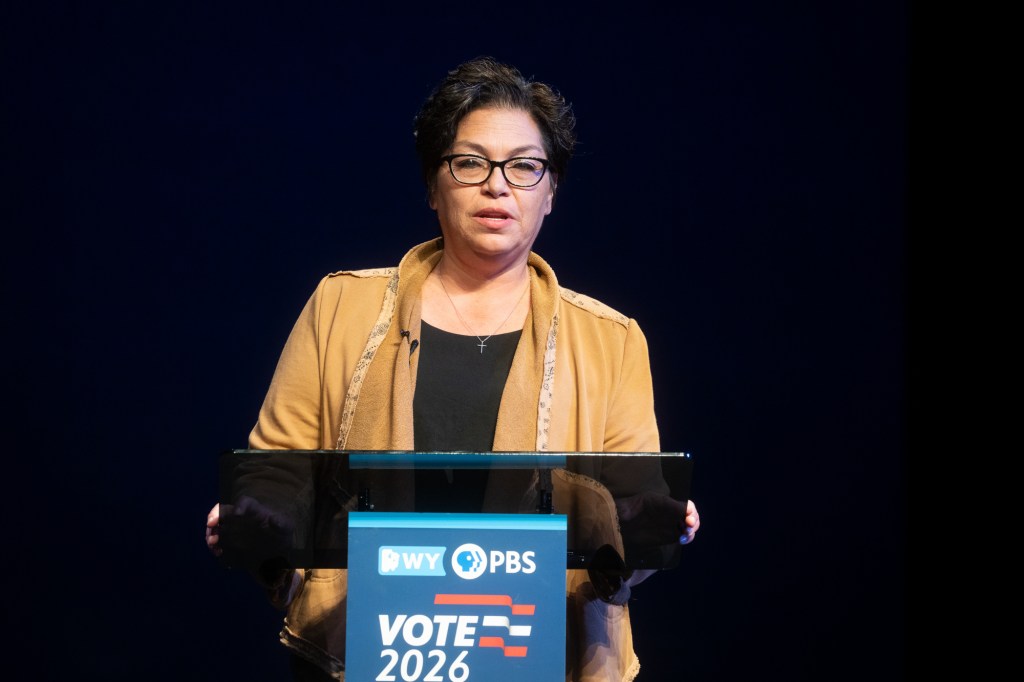
Asked about federal election monitors, Trujillo said she believes Wyoming is capable of running elections, but doesn’t see “anything wrong with a little bit of oversight.” “There’s nothing wrong with being a witness to something as long as you’re not overstepping and getting into the wrong lane,” she said.
And while she doesn’t “really believe in helping the federal government more than it needs to be,” Trujillo defended Gray’s decision to hand over voter data to feds. “I’m not exactly sure what law he broke or what he did wrong if the courts didn’t find nothing to bring forth.”
Meanwhile, Short and McCarty said that elections should be in state hands. And they both criticized handing over voter records.
Short says data ‘has to go somewhere’
As data centers flood Wyoming, the public has raised increased concern about these facilities’ environmental and economic impact.
“There’s been a lot of disinformation spread about data centers,” Short said.

“If somebody wants to build something on their private property, it’s very difficult to tell them no. However, if they’re going to do something that takes away your right to water or electricity, that’s another conversation.”
He added, “in the next five years, we will double all of the data ever created in the history of the world.”
“It has to go somewhere,” he said.
Candidates diverged on fighting out-of-state court cases
In 2024, Gray and two other Republican secretaries of state filed an amicus brief advocating to overturn a Colorado court’s decision to remove Donald Trump from that state’s ballot because of his role in the Jan. 6, 2021, riots at the U.S. Capitol. (The U.S. Supreme Court restored him to the ballot.)
Short and McCarty opposed using Wyoming tax dollars to fight such court cases.
“I think it’s imperative that the secretary of state stay focused on the great state of Wyoming and what we do in Wyoming to help benefit the people of Wyoming,” Short said.
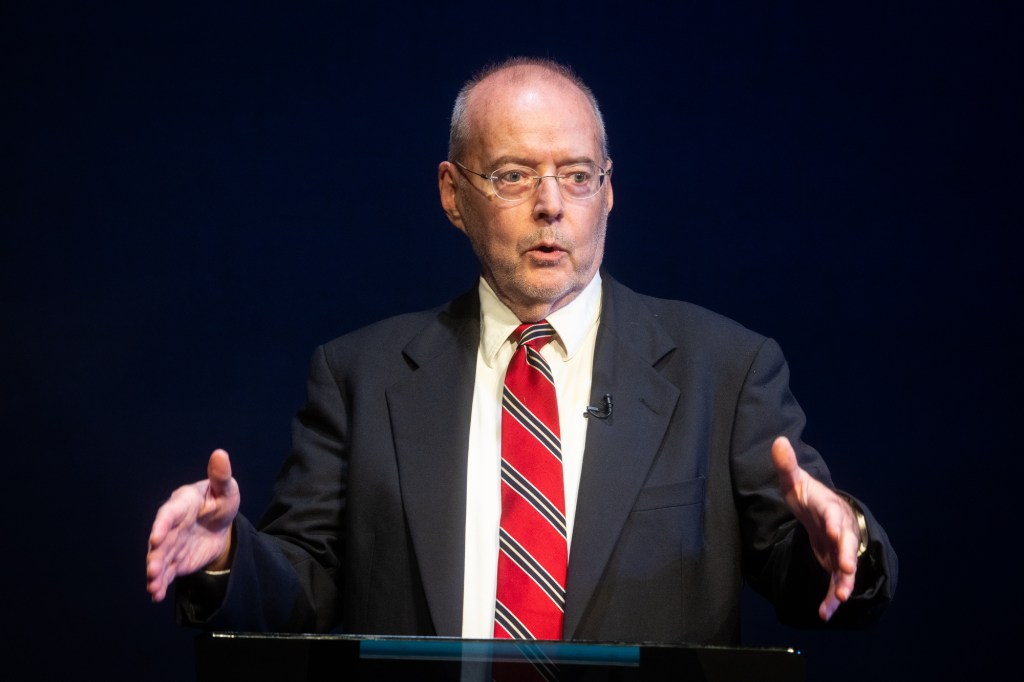
McCarty put his thoughts in harsher terms, asking the audience how it feels about the secretary of state using tax money to “carry water for … a puppet of our most capable and consistent adversary on a global scale?”
Meanwhile, Trujillo said that this is “a really tough decision.”
“At the end of the day, I believe that in order to have a successful federal government, you have to have states unite.”