


The National Elk Refuge has received a diesel-fueled crematory in which it plans to incinerate the carcasses of elk possibly infected with chronic wasting disease.
Officials at the U.S. Fish and Wildlife Service reserve in Jackson have applied for a permit from the Wyoming Department of Environmental Quality to operate the “mobile crematory for ungulates.” The state agency regulates emissions from engines like the one to be used in the crematory and is scrutinizing the application.
The crematory recently arrived at the 24,700-acre reserve on a semi-trailer. It will be installed at a maintenance facility at the north end of the refuge, a site generally off-limits to the public.
The DEQ permit would allow emissions from the crematory chimney, none of which are expected to include the CWD infecting agent — malformed proteins called prions. Incineration is one of the few known methods of eliminating the prions, which can otherwise linger in the environment, including in plants and soil, for years.
CWD is a nervous system disorder similar to mad cow disease that withers animals before their inevitable death. Infected animals shed the misshapen proteins through bodily fluids, feces and decomposing tissue.
“Euthanizing animals exhibiting CWD symptoms is an important way to reduce disease transmission to other animals and help ensure the health of the Jackson Elk Herd.”
National Elk Refuge Senior Wildlife Biologist Eric Cole
Infected elk usually don’t show symptoms during the first year of infection and can spread prions during that time. They usually die within two years of infection, according to refuge documents.
Any infection would threaten the refuge and the 11,000 or so elk in the Jackson Elk Herd, part of which inhabits the reserve in winter.
“Based on the contract standards, it’s not possible for those prions to go airborne,” Eric Cole, senior wildlife biologist at the refuge, said. No smoke will be visible from the incinerator chimney, according to the refuge’s application to the DEQ.
The crematory will reduce a carcass weight by 95% and ashes “will be sterile and biologically inert,” the DEQ application states.
“Carcass incineration is part of the approved CWD response strategy,” signed in April 2021, Cole said. “Any elk exhibiting CWD symptoms will be euthanized, sampled and the carcass will be incinerated.”
Plans to prevent spread
A hunter in Grand Teton National Park’s elk reduction program in 2020 killed a cow elk just north of the refuge that tested positive for CWD. With that, the Jackson Elk Herd was officially deemed infected.
Although CWD has not been detected within the refuge itself, wildlife managers are fearful it will arrive there and spread among animals concentrated on supplemental feed doled out in the winter.
“Somewhat surprisingly,” there have been no discoveries of CWD-infected elk in the Jackson herd since the one found in 2020, Cole said.
“Most likely CWD is only at trace levels within the bounds of the Jackson Elk Herd,” he said.
That’s based on a robust sampling of elk that die on the refuge during winter, elk killed by hunters on the refuge, elk that are killed or die in Grand Teton National Park and hunter-killed elk sampled by Wyoming Game and Fish Department in other parts of the herd’s habitat. About 7,000 elk spend time on the refuge during the winter while the rest of the 11,000-strong herd winters on a couple of Wyoming Game and Fish feedgrounds in the Gros Ventre River drainage or on other lands, mostly north of Jackson.
Each year the agencies — Park Service, Fish and Wildlife Service and Game and Fish Department — collect between 300-400 lymph node samples from dead elk to analyze. That collection allows biologists to surmise, with 95% confidence, that the infection rate in the herd hovers at or below 1%, Cole said.
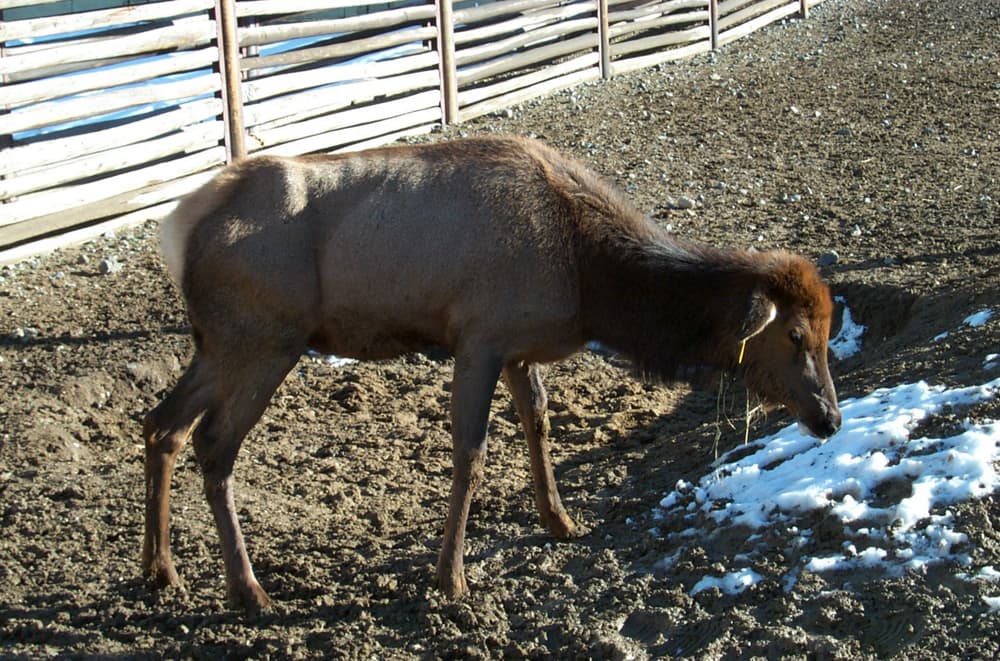
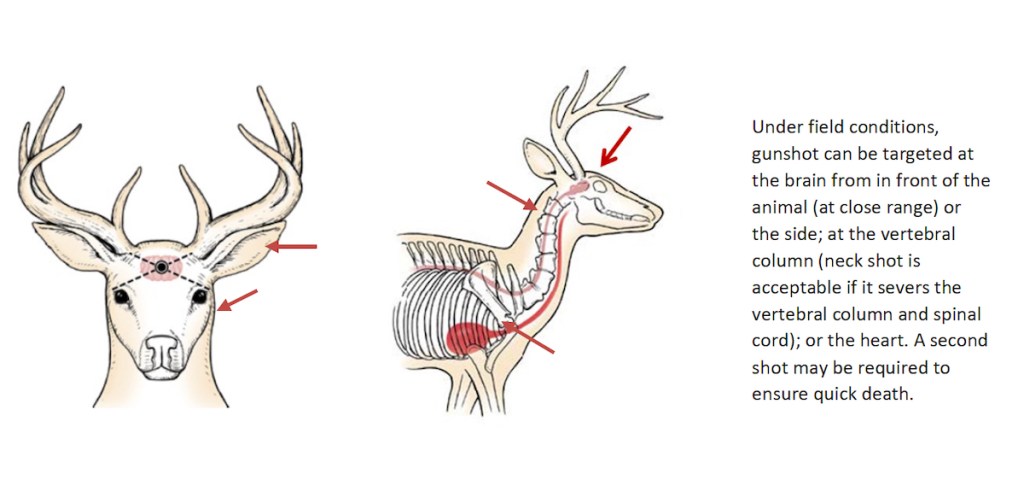
Under the CWD strategy, refuge workers will kill elk that look to be infected and dying of CWD. Symptoms include lethargy, excessive salivation, a drooped head and other similar signs of a deteriorating central nervous system.
There’s no practical way to test a living elk for CWD.
“Based on past experience, any elk that is exhibiting CWD symptoms is unlikely to survive for long,” Cole wrote in an email. “Euthanizing animals exhibiting CWD symptoms is an important way to reduce disease transmission to other animals and help ensure the health of the Jackson Elk Herd.”
“This [euthanasia and incineration] is likely one of the most effective ways we can do that,” he said of maintaining herd health. “This is the strategy we’re committed to.”

Refuge workers will incinerate all suspect carcasses, he said, without waiting for the results of CWD tests, which can take weeks to receive.
Elk that die for reasons other than suspected CWD — those that are killed by predators, for example — will be left for a period for scavengers to exploit. “After they are scavenged, the remaining bones will be collected and incinerated,” Cole said.
Annual elk antler collection by Boy Scouts would not be affected unless science emerges that shows antlers can transmit the disease, Elk Refuge Manager Frank Durbian said.
Crematory specs
The plan calls for incinerating only elk carcasses from the refuge. Even though it is called a mobile crematory, it will be used in one location only, under current plans. Once the crematory is operating, suspect carcasses will be moved directly to the incinerator using a front-end loader or other dedicated machine.
Carcasses will be loaded through a door at the top of the incineration chamber. They will burn at between 1,600-1,800 degrees Fahrenheit.
The crematory and trailer weigh about 33 tons. The assembly cost $486,526, not including the air permit and consultant support, refuge officials said.
The crematory could be used up to 500 hours a year and can incinerate up to 1,000 pounds of carcass an hour, according to its specifications. An average mature elk weighs between 700 and 1,100 pounds, according to the Rocky Mountain Elk Foundation, suggesting that the crematory could incinerate up to about 550 elk a year.
There is no firm evidence that CWD prions can infect people. But experiments show the cousin of the human Creutzfeldt-Jakob disease can move from ungulates to primates — specifically macaque monkeys — even through the ingestion of muscle meat.The Centers for Disease Control and other agencies recommend not consuming meat from an animal infected with CWD.

Can you point out a study that says this is effective or is it based on a good guess?
Wisconsin residents have been consuming CWD infected deer for a long time.???
Hurray for science! Save the elk!
Well, this approach is not as efficient as the tongue in cheek solution I offered nearly 20 years ago to bring in a battalion of Army Rangers to slaughter the entire Jackson Elk Herd with machine guns, bulldoze the carcasses, and incinerate them.
Here, what we see is that once an infected elk is noted, it’s euthanized and incinerated in a half million dollar firebox. Of course, said elk was itself probably infected a year or two before, and so before it begins to show symptoms of CWD and dies, it’s already been shedding the disease into the environment, where it will remain for the foreseeable future.
So what’s going to be achieved by Refuge’s new firebox? Not much. The only rational approach to disease on the Refuge and on the Wyoming state elk feedgrounds is to close the feedgrounds. None of the criticisms of closing feedgrounds holds water. None. The refusal to close the feedgrounds constitutes willful negligence. But there won’t be hell to pay until CWD breaks out on all the feedgrounds. And then it’s too late.
“Elk that die for reasons other than suspected CWD — those that are killed by predators, for example — will be left for a period for scavengers to exploit. “After they are scavenged, the remaining bones will be collected and incinerated,” Cole said.”
Wolves are very methodical about the prey they pursue. They take down the old, infirm, and diseased. A study done at the University of Northern Colorado suggested that wolves can play an important role in controlling CWD by culling out the sick animals. Wolves cannot contract CWD. But the article states the prions can remain in the soil and plants for years. So my question is if a wolf pack takes down a CWD infected animal, would the remains still pose a risk and could wolves still physically transmit the prions?
The article states