

Wyoming’s robust walleye population owes its continued existence to a couple of fish hatcheries in North Dakota. The non-native sportfish is largely self-supporting in some fisheries like Glendo Reservoir, but most others rely on regular stocking.
If that hatchery stopped offering walleye because of aquatic invasive diseases, a crash in numbers, or simply because officials didn’t want to send them here anymore, Wyoming’s walleye anglers could be left high and dry, said Guy Campbell, Wyoming Game and Fish Department’s fish culture supervisor.
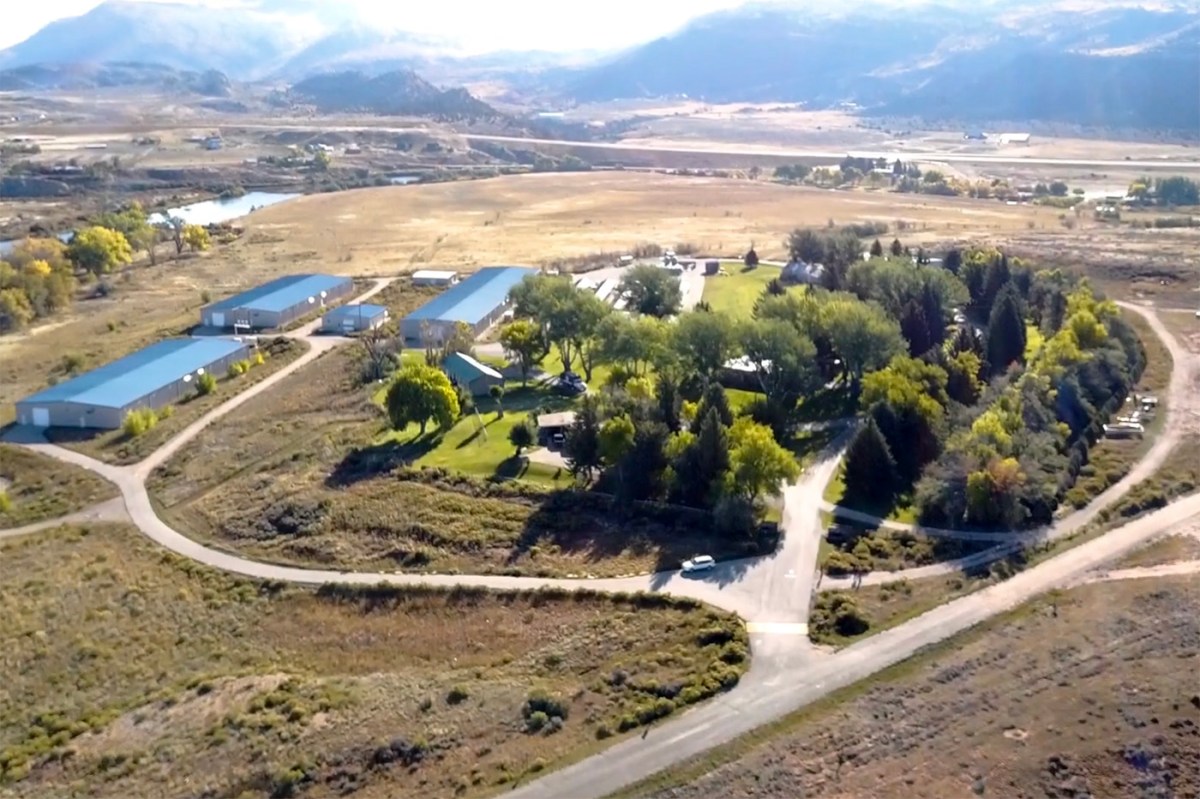
Securing long-term fish stocks is part of the reason the Wyoming Game and Fish Commission recently approved spending nearly $21 million to expand the Dan Speas Fish Hatchery outside Casper. Once completed, the extended hatchery will be able to produce not just trout species, as it has for decades, but also cool- and warm-water sportfish like walleye, crappie, bluegill, largemouth bass and tiger muskie.
“Diversification is stability,” said Brian Woodward, vice president of North Platte Walleyes Unlimited. The group donated just over $30,000 to Game and Fish about five years ago to run an experimental walleye-breeding program. “Most people want to know where to catch a fish and don’t care what fish. Multispecies is great.”
More trout-minded anglers, on the other hand, see the expansion as a reflection of the continued influx of anglers into Wyoming from non-trout-specific states. And for Game and Fish, the new facility will mean not just a long-term, biosecure source of fish, but also a way to meet anglers’ needs as our climate continues to change and waters warm, narrowing the places where cold-water species like trout can thrive.
A history of fish from other places
Few of the species Wyoming’s anglers consider sportfish are native to Wyoming. A scroll through the Wyoming Game and Fish sportfish records page shows dozens of popular species like rainbow, brown, brook and lake trout, walleye, smallmouth bass, crappie and perch, tiger muskie, kokanee and northern pike, none of which evolved here. Cutthroat trout are Wyoming’s only native trout, and they historically existed exclusively in the rivers and lakes of western Wyoming.
While species like channel catfish, sauger and shovelnose sturgeon are native, most were extirpated from their original drainages due to overharvest and water pollution. So in 1883, Wyoming’s first Fish Commission recognized the need for stocked fish: “It is an admitted fact that a majority of our streams are sterile of good food fish, whilst a remainder in many places are nearly exhausted of a once bountiful supply,” the commission wrote at the time.
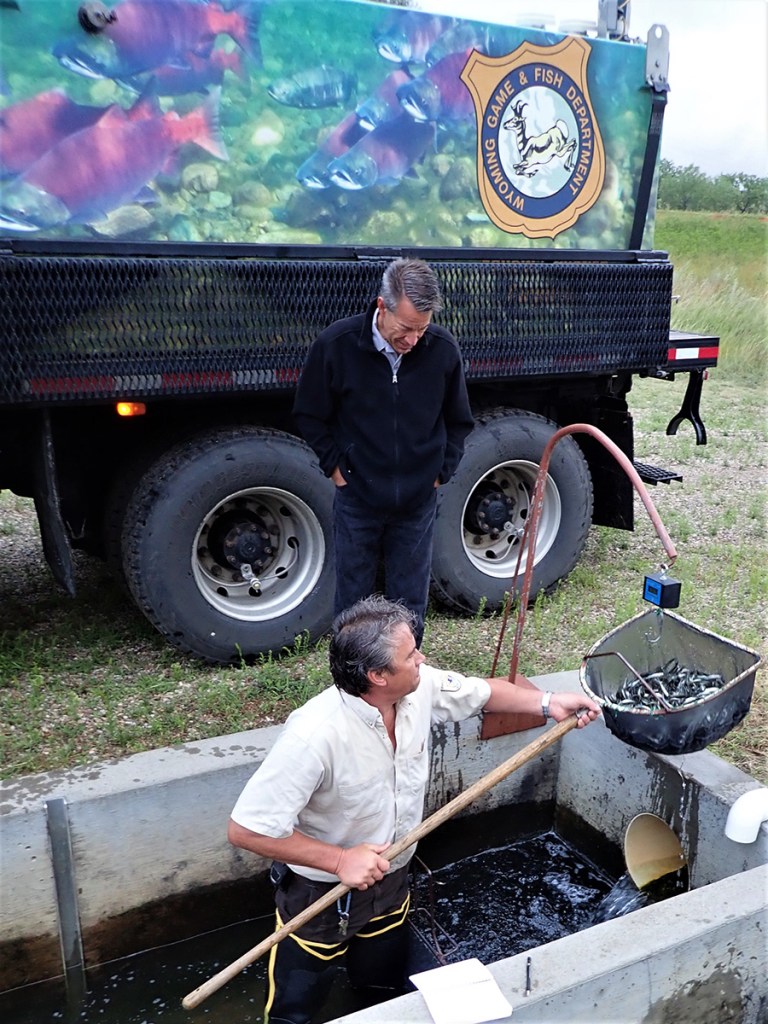
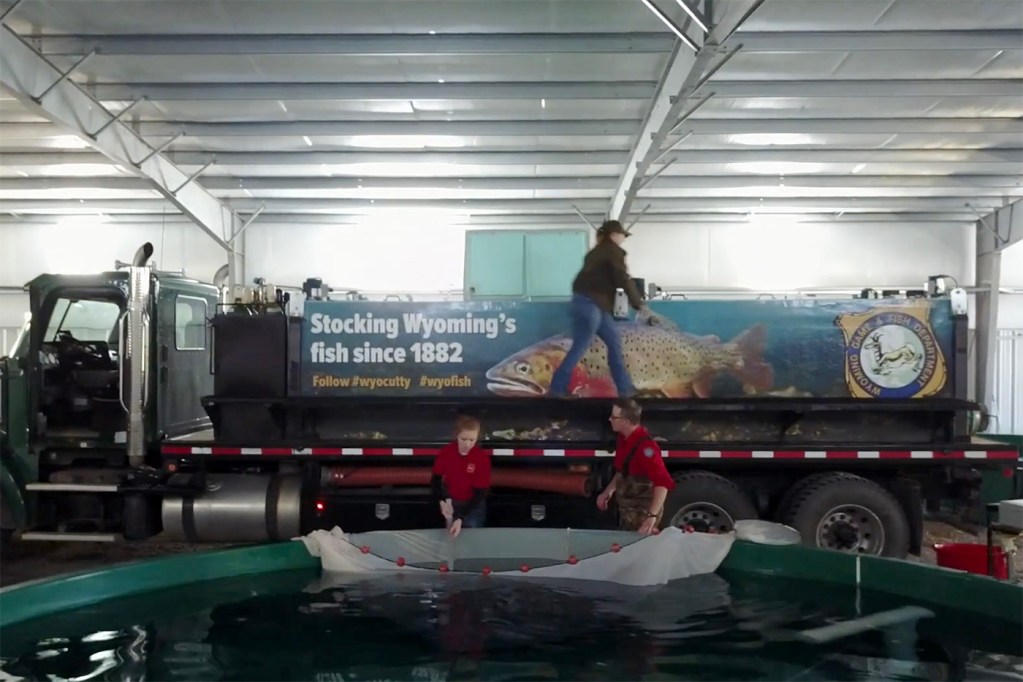
Over the next nearly 150 years, Wyoming’s 10 state hatcheries have raised native and nonnative trout and then shipped them across the state to stock waters from high alpine lakes to low elevation prairie streams, first in buckets by horseback and later by helicopter.
But Wyoming’s facilities were never set up to raise cool- or warm-water species like walleye or perch, so the state largely traded cold-water trout eggs for species from hatcheries in other states. As those trades slowly dwindled, Campbell said, Wyoming became increasingly interested in going it alone.
An at-home solution
Not only has it become more difficult to find cool- and warm-water species, but the timing has also proven tricky. The only black crappie the state can acquire, for example, come from hatcheries in Arkansas and Nebraska and arrive in October. But because of Wyoming’s climate and elevation, Game and Fish would ideally stock crappie in the spring or early summer.
“Raised here, the fish will also be on trucks for much less time to improve survival,” Campbell said.
While imported fish shipments are inspected for aquatic invasive species or fish diseases, the chance exists that an unwanted hitchhiker could arrive, said Casper fisheries supervisor Matt Hahn. A local hatchery lowers that risk.
Hahn also hopes fish culture experts will be able and willing to raise native species like channel catfish.
The big, whiskered fish disappeared nearly a century ago in the North Platte drainage and the robust populations anglers see today come from Arkansas catfish. Those catfish breed and reproduce in Glendo Reservoir and the eggs hatch, but the baby catfish don’t seem to survive to join the overall population. Without stocking, channel catfish in the North Platte River would likely vanish.
Wyoming does, however, still have native channel catfish in the Powder River drainage. It’s possible that if hatchery officials breed Powder River channel catfish, the local fish would successfully reproduce.
Luke Todd with the Sports Lure in Buffalo isn’t concerned about the hatchery’s price tag and hasn’t heard grumblings from customers, either. But he hopes Game and Fish doesn’t lose sight of its ever-popular trout fisheries.
“I just hope we don’t become a Midwestern warm-water fishery state,” he said.
The hatchery expansion comes at a time when some fisheries officials and anglers across the country have questioned the wisdom of stocking fish in perpetuity. Some studies have shown that stocked fish such as salmon don’t survive as well as their wild, reproducing counterparts and can weaken wild strains of fish.
“Hatcheries are a tool in the toolbox,” Campbell said. “Just stocking as many as possible isn’t the answer. If we can stock fish to allow a population to be sustainable, then that’s great, we can put our resources to different waterways.”
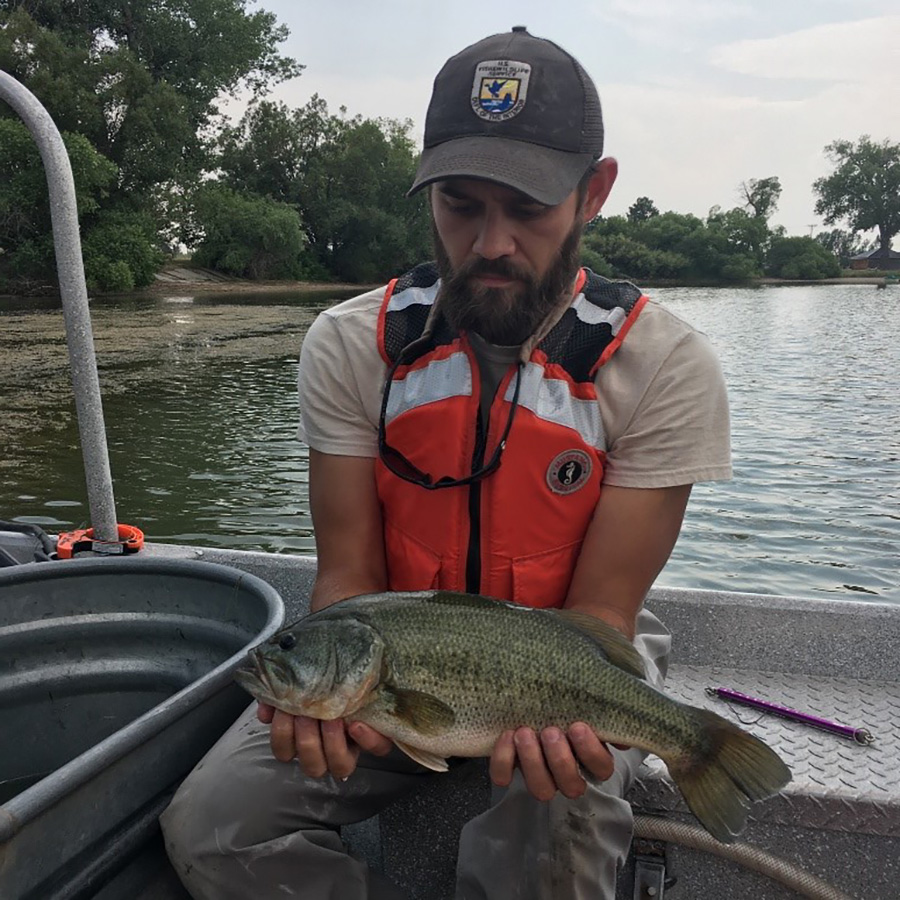
The caption of the USFWS photo of Adam Hundley was changed to correct the type of fish. It is a bass. – Eds.

The Game and Fish does an excellent job with Wyoming fisheries. While anglers will always have something to complain about, certain things that needs to be a little different, overall, we have very good fishing opportunities, and a really good G&F Department. When I look at the G&F Fish Culture Section, it’s remarkable they can fulfill so many different requests from all the different regional fish managers for a bunch of different species. And do it all for the remarkably low cost of a fishing license.
Looks like a smallmouth bass?
Glad to see an increasing commitment to warm water species. Not all waters in Wyoming are trout waters and many of us in the eastern part of the state enjoy our warm water fishing opportunities. I don’t know who identified the “large Walleye” in the photo but I hope they get to spend more time fishing this year!
That is NOT a Walleye in the picture.
Thanks for the catch, Ken. That caption has been corrected.