

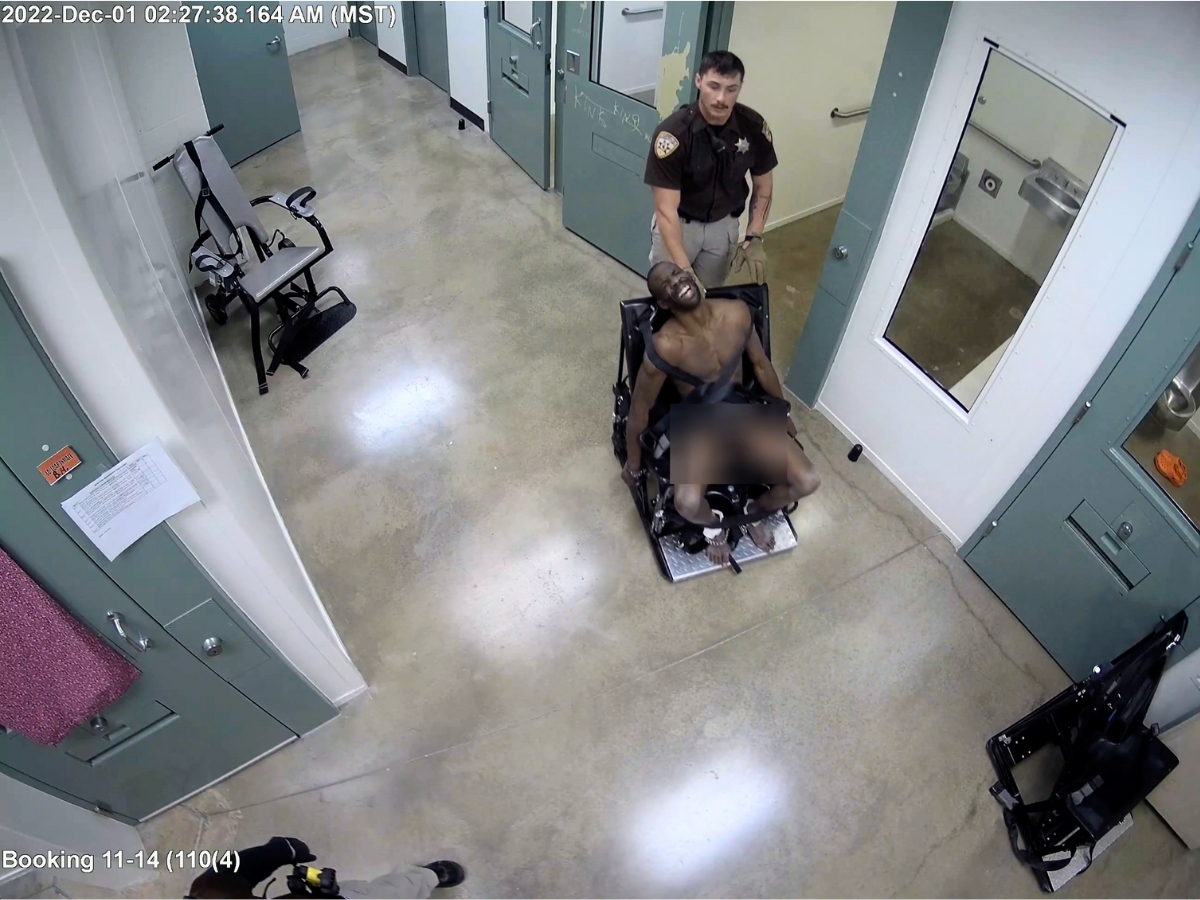
A civil rights lawsuit filed Monday alleges law enforcement used excessive force and showed deliberate indifference to the medical needs of Kenneth Durrah, a prisoner who died naked and strapped to a restraint chair in the Campbell County jail in 2022.
Durrah’s family, represented by Denver attorney Darold Killmer, filed the lawsuit Monday against Campbell County, Sheriff Scott Matheny and several other individuals in the county sheriff’s office.
“They murdered my brother,” Joshua Durrah, the man’s brother, said in a Monday statement. “He needed help and medical treatment. Instead, they crushed the life out of him, stripped him naked, and strapped him in a chair to die. He could not breathe, and he told them so, begging for his life. They ignored his cries for help.”
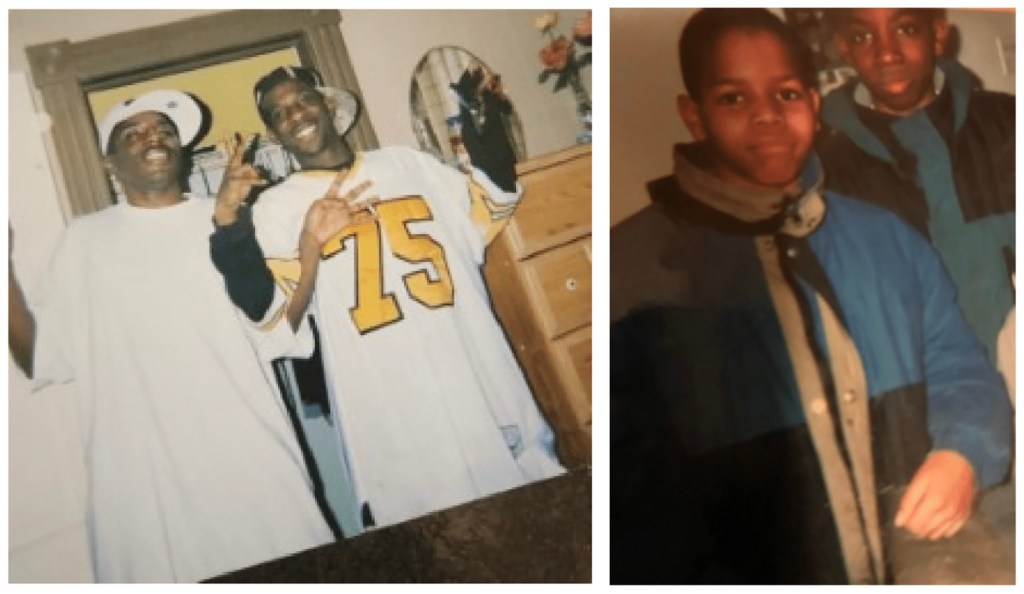
grieve his loss and always will.” (Court record)
In the hours preceding Durrah’s death, he had reported chest pain and trouble breathing. Medics cleared him to remain in jail. Shortly after, detention deputies saw him swallow what appeared to be methamphetamine. They restrained Durrah facedown on the floor and then put him in a restraint chair in a booking area cell where they checked on him periodically.
Video from the jail captured Durrah telling the guards that the restraint chair straps were too tight. “I can’t breathe,” he called out. “I’m dying. Help!” But the deputies told him he was breathing fine and didn’t adjust any straps.
Deputies checked on Durrah several times, but no medical care was provided. They didn’t call for an ambulance until staff discovered the 35-year-old unconscious.
A Wyoming Division of Criminal Investigation report of the incident, which took 15 months to complete, cleared jail staff of criminal wrongdoing.
“To this day, there has been no accountability,” Killmer said in a statement. “Campbell County imposed no discipline against anyone. The Durrah family’s lawsuit aims to force a reckoning, so that the County can no longer sweep Kenneth Durrah’s death under the rug and continue with business as usual.”
The lawsuit recounts the hours and minutes leading to Durrah’s death. It often mirrors jailhouse surveillance videos obtained by WyoFile and the Gillette News Record in 2024.
At about 1:20 a.m., Dec. 1, 2022, inmates on Durrah’s cell block began flickering their lights on and off to attract deputies’ attention in response to Durrah’s complaints that he needed medical attention, the lawsuit recounts. Multiple inmates reported that Durrah had complained of breathing and heart problems and called for a medic.
According to the complaint, Durrah had advised jail medical staff during his medical intake screening that he had a history of asthma.
Deputies Robert Shirley, Mara Madrid, Jonathan Herman and Ryan Wells, as well as Sgt. Mara Donathon — all of whom are named as defendants in the complaint — responded to Durrah’s cell.
Durrah collapsed when deputies opened the door, clutching at his chest and telling them that his “heart hurt.” Shirley observed that Durrah’s “fists were repeatedly clenching and his toes were repeatedly curling,” according to the complaint, which includes images of the unfolding incident. The deputies determined that Durrah had “an elevated [heart rate] and high blood pressure.”
No nurses or other medical staff were working in the jail at the time of this incident, according to the complaint. The county’s “affirmative and conscious decision” not to provide nighttime medical staff puts “inmates at risk of receiving inadequate medical care at night,” the complaint states.
Donathon told deputies to take Durrah to the jail’s booking area and called outside medics to evaluate him. Another defendant, Deputy Stephanie Quinones, was processing an incoming inmate when Durrah arrived. She later told investigators that the man “was so out of breath that it looked like ‘he just ran five miles.’” Durrah vomited while he waited for medical help, the complaint states.
The medics asked Durrah to try to calm down so that he could breathe regularly, and Durrah complied. They confirmed that Durrah’s blood pressure and heart rate were high, and Durrah told them he had a history of asthma. But the medics cleared him to remain in the jail.
“As a matter of consistent practice and policy, Defendant Campbell County did not staff its jail with any medical providers or other medical staff during the relevant timeframe, which was late evening and early morning hours,” the complaint states. “There was not so much as a nurse on duty to observe Mr. Durrah once the medical responders departed.”
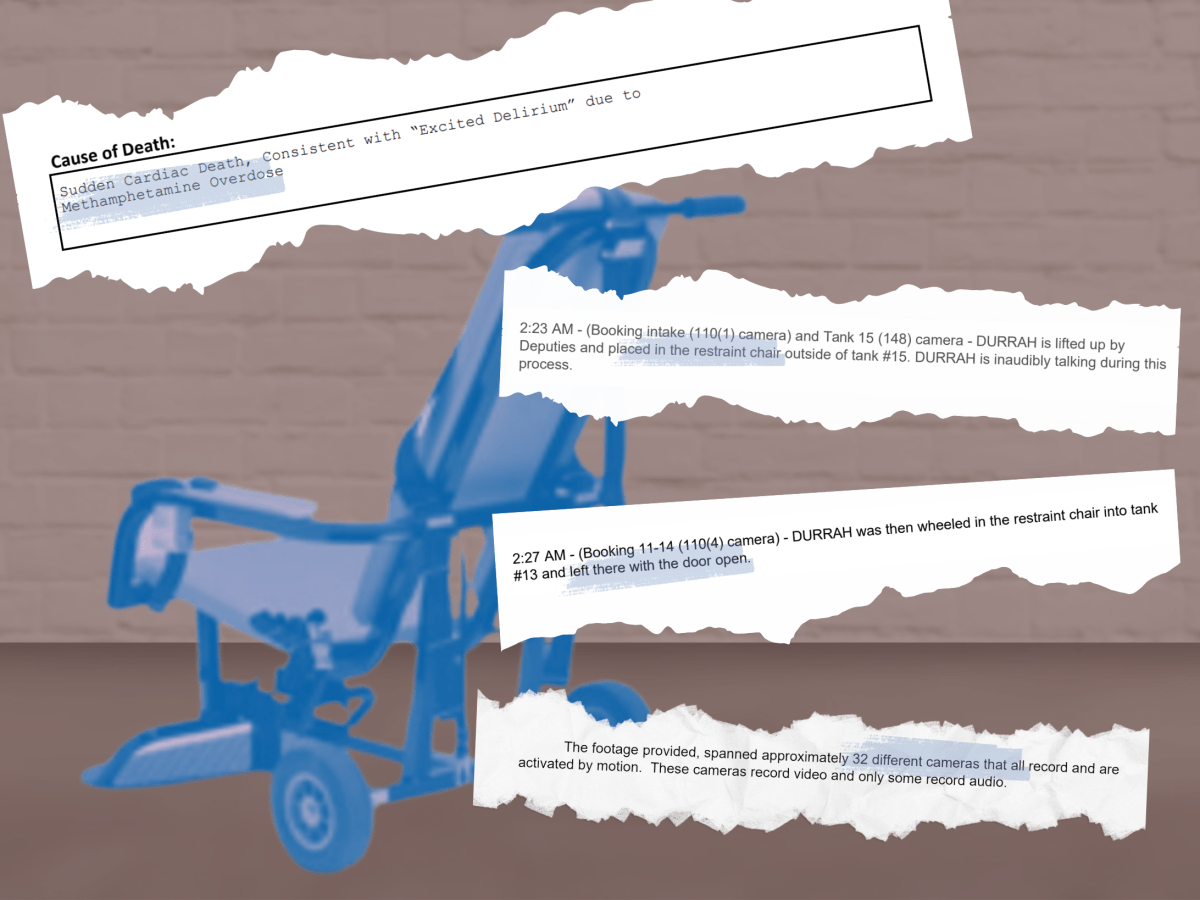

Donathon ordered Durrah to be placed in a holding cell so that deputies could monitor him until nursing staff arrived for work in the morning, according to the complaint. Durrah “continued to report that it was difficult for him to breathe” and “repeatedly requested water.”
Later, Wells and Quinones saw through Durrah’s cell door window “a small white object” in Durrah’s mouth. As Wells watched, Durrah “ripped open the bag with his hands and teeth and began to swallow the contents.” Wells “believed the bag contained drugs,” and Durrah indicated that he had swallowed some of the contents, the suit claims.
The complaint states the bag contained methamphetamine, and that Durrah showed several symptoms of ingesting methamphetamine “over the course of the lengthy uses of force which the CCSO deputies would soon inflict upon him.”
Wells called for Durrah’s cell door to be opened, and Donathon “suggested that the deputies should get Narcan ready.”
“The fact that Defendant Donathon suggested the use of Narcan demonstrates that she was aware of the medical risks attendant to Mr. Durrah’s ingestion of a dangerous quantity of drugs, and that this was a serious medical issue,” the complaint states.
None of the deputies “administered Narcan or took any other action to mitigate the effects of a potential drug overdose,” according to the complaint. Nor did they call for medical help. “Instead, when the cell door opened, Defendant Wells ran into the cell to initiate a violent, reckless, and patently excessive use of force against Mr. Durrah.”
Wells stuck his fingers into Durrah’s mouth “to try to remove the bag of drugs.” Quinones entered after and “also went hands-on” with Durrah. “Terrified and confused, Mr. Durrah first huddled in a corner of the cell, then ran out the cell’s open door into the jail’s booking area,” where Wells tackled him, the complaint states.
Prone restraint
Wells told Durrah to roll over. Durrah complied, turning onto his stomach. The deputies then put their knees on Durrah and leaned their body weight on him, “pushing him to a state of extreme physical exertion while substantially impairing his ability to respirate,” the complaint states.
Deputies “could and should have physically controlled” Durrah without using this “dangerous” prone position, which is known to inhibit breathing, the complaint states. “Because of his known drug ingestion, he obviously needed medical help, rather than additional strain being forced upon him by the Defendants.”
Wells and Quinones used their knees and hands to put pressure on Durrah’s back, leg and arms, the complaint describes. Donathon then “joined in,” putting her knee on Durrah’s “upper back and neck and leaning on him with her full body weight.” As they applied pressure, Durrah “cried out in a choppy, labored voice: ‘I can’t breathe!’” according to the suit. Surveillance video also captured Durrah saying he couldn’t breathe.
Wells then “reinitiated use of force in earnest, clambering onto Mr. Durrah’s back and wrapping a forearm around Mr. Durrah’s neck,” after which he “wrenched” Durrah backward so that he was face-up, the complaint continues. Durrah “screamed in pain and terror” as Wells “applied pressure” to his neck and covered Durrah’s “mouth with his right arm, further impairing his ability to breathe.”
Quinones “climbed on top” of Durrah, according to the complaint. Donathon “stood and moved” to Durrah’s lower body, then took out her Orcutt Police Nunchaku — sticks connected with a cord that can be used for restraint — and used it on Durrah’s right ankle.
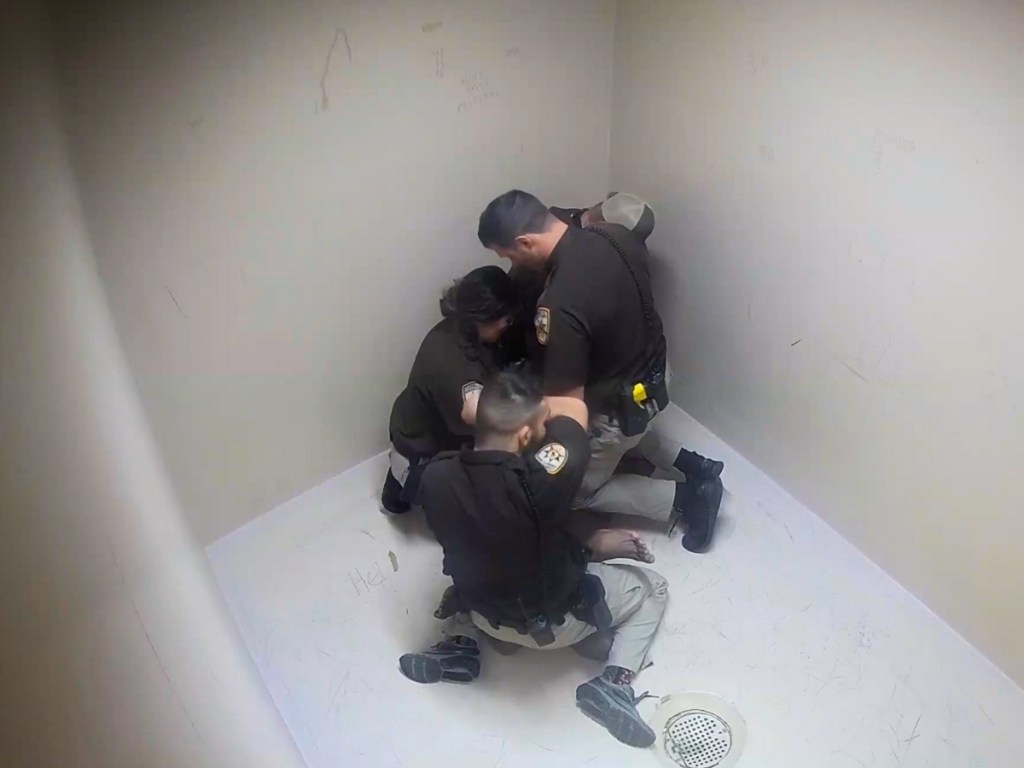
“All of the Defendant law enforcement officers were observing the excessive force applied to Mr. Durrah, and despite a legal obligation to intervene to prevent application of excessive force on a suspect, each of these named defendants failed to intervene to terminate the constitutional violation,” the lawsuit states.
Another deputy, Samuel Boyles, “ran to join the overwhelming concerted use of force.” The deputies and sergeant rolled Durrah to his stomach again. Wells put both his hands on Durrah’s upper back, then put his knee on Durrah’s head, “grinding it into the concrete floor.”
The lawsuit states Quinones held Durrah’s legs down with her body weight. Donathon continued to pin Durrah’s legs. Boyles put both knees on Durrah’s back. They held Durrah in this position for over a minute as they handcuffed him. Shirley arrived and replaced Donathon to pin Durrah’s feet.
“Throughout the great majority of this period, Mr. Durrah was immobile and compliant; at that point, it required no significant exertion by the deputies to hold him,” the complaint states, noting that one of the deputies told Durrah not to move his leg, to which Durrah responded, “Yes, sir.” Durrah also asked the deputies to give him Narcan, according to the complaint. Video footage also shows him asking for Narcan.
“Mr. Durrah was subdued and incapacitated by that time, but the force continued,” the complaint states. “Defendants handcuffed Mr. Durrah
behind his back as they crushed him.”
Rather than putting Durrah in a “recovery position” — a position that allows someone to breathe freely — deputies carried Durrah to another holding cell and cut off his clothes while continuing to put pressure on him in a prone position. Quinones and Shirley crossed Durrah’s legs and “forced them up toward his back,” putting his body into a “dangerous ‘hog-tie’ position by placing increased pressure on his chest, further depriving him of breath.”
Durrah “began to squirm” beneath the deputies in “severe pain and rising panic.” He told the deputies repeatedly that “he was struggling to breathe and begged them to let up the pressure on his back.”
Restraint chair
As the deputies continued to apply pressure to Durrah, Donathon retrieved the restraint chair, which is equipped with straps to prevent the use of limbs.
As the deputies strapped Durrah into the chair, Madrid used a “pain-compliance hold” near Durrah’s jaw, “causing even more pain and placing even greater stress on his already overtaxed system.” Though Durrah was secured in the chair and “offering no resistance whatsoever,” Shirley, Boyles and Wells “aggressively and intentionally overtightened” the straps across Durrah’s chest and waist, the complaint alleges. Wells “yanked hard on the straps until he physically could not make them any tighter.” According to the complaint, Shirley told investigators that it was “the tightest that he had ever seen the straps on the restraint chair.”
Boyles wheeled Durrah, who was “grimacing in agony,” into another holding cell, the complaint describes. He left the door open so that Durrah could be seen and heard by deputies in the booking area. Durrah “repeatedly told the deputies that the restraint chair was too tight and that he could not breathe,” but they “ignored him.” The deputies didn’t call for medical services to assess Durrah.
As Durrah “cried out in pain and begged for help,” Wells, Quinones and Donathon “joked and laughed” with Cpl. Marlene Sharpe “only a few feet away,” according to the complaint. Sharpe said she had heard about “the naked black guy trying to escape.” Wells “put on a high false voice and mocked Mr. Durrah’s pleas for medical help: ‘Give me Narcan!’”
Quinones, the suit alleges, “joined in on the act and mockingly caricatured Mr. Durrah’s desperate explanations that he was struggling to breathe: ‘I can’t breathe, I can’t breathe.’”
According to the lawsuit, Sharpe later told investigators that she told deputies to check Durrah out of concern for his medical condition after learning about the uses of force against him and his ingesting drugs. But Sharpe didn’t tell deputies to check Durrah for “nearly half an hour” after she had learned of this, when Durrah “had already become unresponsive.”
Wells later entered the cell to check Durrah, who was unresponsive. But Wells still didn’t call for medical help, according to the complaint. “Instead, and inexplicably, Defendant Wells gave Defendant Donathon a thumbs-up and reported that Mr. Durrah was breathing.” Wells told Sharpe that Durrah “was asleep.”
When Wells returned later, he “repeatedly called” Durrah’s name “to no response.” Wells told Donathon to call an ambulance. Wells, Boyles and Shirley removed Durrah from the restraint chair and attempted to perform CPR. Boyles and Shirley “were plainly unfamiliar with CPR technique and required direction from Corporal Sharpe to perform CPR after initially bungling their own CPR efforts,” the complaint states. Medics rushed Durrah by ambulance to the Campbell County Memorial Hospital, where he was pronounced dead.
Civil rights
Durrah’s family alleges the deputies and Campbell County violated his Fourth, Eighth and 14th Amendment rights — to be free from excessive force and deliberate indifference to his medical needs, and to receive adequate medical care while in the jail’s custody.
He was “in obvious and serious need of immediate medical care” from the moment he ingested methamphetamine, the complaint states. The force that deputies subsequently used against Durrah was “significantly disproportionate to any legitimate law enforcement need.”

The county’s policy directed employees to notify medical professionals when using the restraint chair, but the deputies didn’t get medical assistance for Durrah after he was put in the device. The policies also tell officers to refrain from putting people in positions that would significantly restrict their breathing and warn that weight “such as officers sitting or kneeling” on someone can cause asphyxia.
“Campbell County and the Sheriff’s Office inadequately trained its detention staff on the meaning and methods of compliance with policies ostensibly designed to protect detainees’ safety and their constitutional rights,” the complaint states. The sheriff’s office didn’t undertake its own investigation into the deputies’ conduct and compliance with jail policies, according to the complaint, and none of the deputies were placed on administrative leave as the department’s policy requires after an officer’s use of force causes death.
Durrah’s family is asking for punitive damages, attorney’s fees and compensation for emotional distress, funeral expenses and “other pain and suffering.”

I hope the Durrah family owns Campbell County once this case is resolved. I am shocked by the lack of training and level of negligence on the part of these deputies. I simply can’t find the words to describe my disgust with the Wyoming DCI.
That DCI cleared these deputies of wrong doing is appalling. There is no objective oversight of jail and prison conditions in this state. DCI investigations are officers investigating their brother officers.
American society has created a prison industrial complex the dwarfs the gulag system of the USSR.
“ A Wyoming Division of Criminal Investigation report of the incident, which took 15 months to complete, cleared jail staff of criminal wrongdoing.”
Of course they did. They are undoubtedly Republicans.
Flippant comment aside, not only are the jail staff’s actions criminal, they are egregious malpractice ànd the plaintiffs should receive compensatory and punitive damages.
Absolutely obvious callous negligence .