


Last fall, Grand Teton National Park employees loaded thousands of whitebark pine seedlings onto the backs of mules, then hiked them up Paintbrush Canyon. There, they dug small holes and planted the young trees in places where they had the best shot at reaching adulthood.
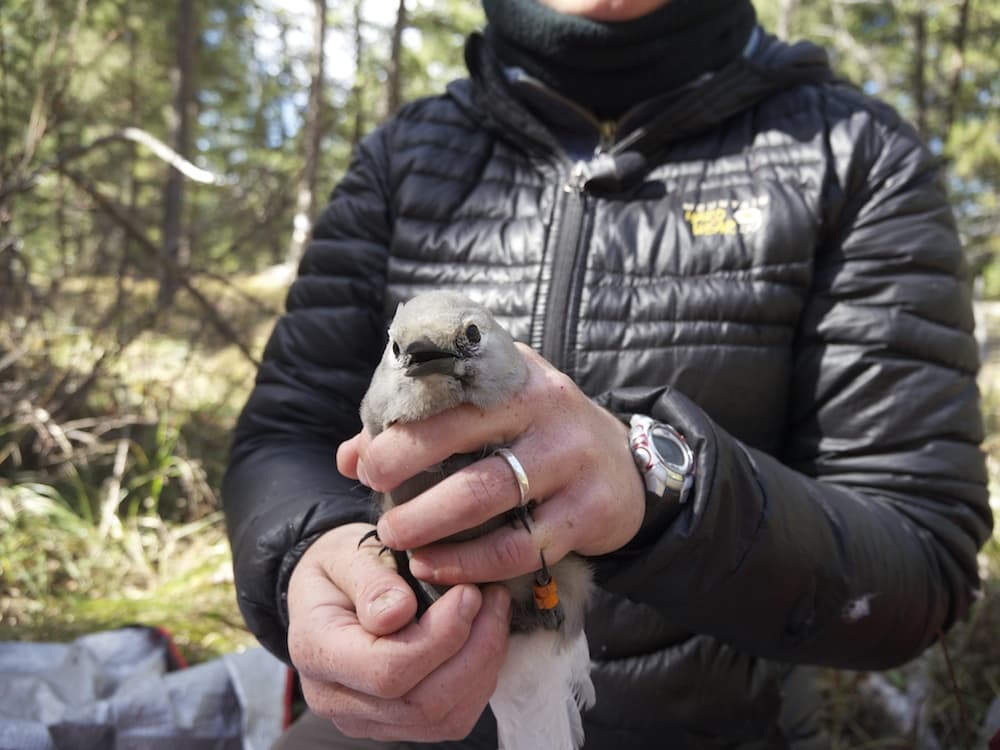
They were not ordinary whitebark pines, whose seeds already travel around Greater Yellowstone in the mouths of Clark’s nutcrackers. Instead, these trees had been carefully selected for their resistance to an introduced disease called white pine blister rust.
Planting these seedlings was part of a massive project beginning in 2013 to plant disease-resistant whitebark pines throughout the Greater Yellowstone Ecosystem. White pine blister rust along with mountain pine beetles have killed large swaths of whitebark forests in recent years, leading the U.S. Fish and Wildlife Service to designate the hardy tree as a federally threatened species in 2022.
To bring back the pine, the U.S. Forest Service, along with nonprofits and other federal agencies, have developed a pipeline to plant thousands of whitebark pines with innate resistance to blister rust in Greater Yellowstone each year. But while the effort to bring rust-resistance to the GYE is well underway, some people wonder if the planned reorganization of Forest Service could put the decades-long project in jeopardy.
“The decline [in whitebark pine] is solvable,” said Libby Pansing, a forest scientist at American Forests, a 151-year-old forest conservation organization. “We have the tools and the ability to solve this problem.”
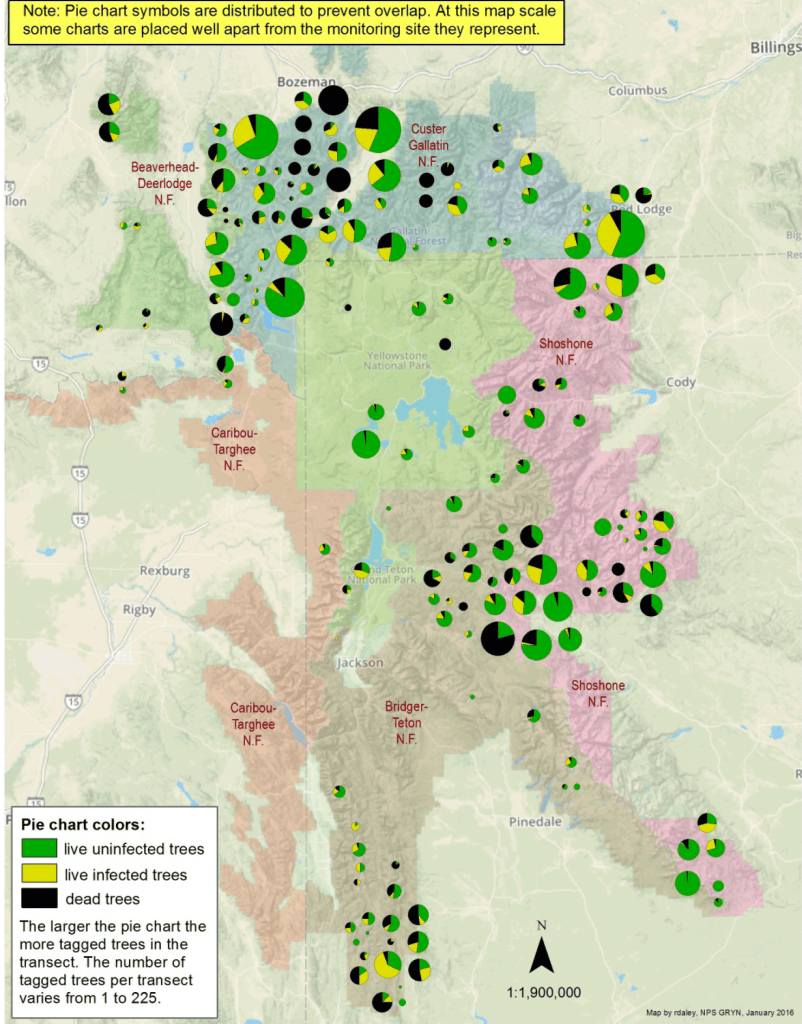
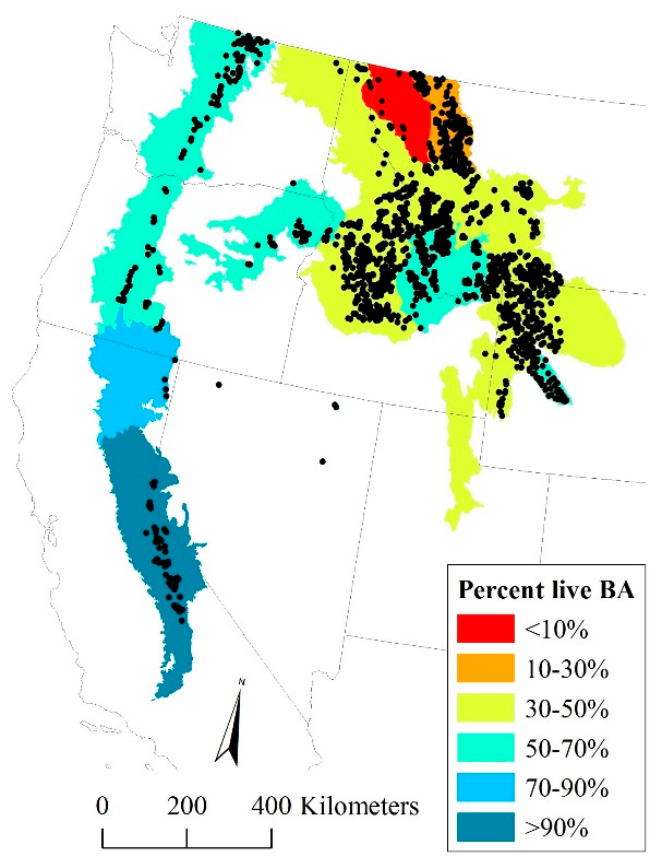
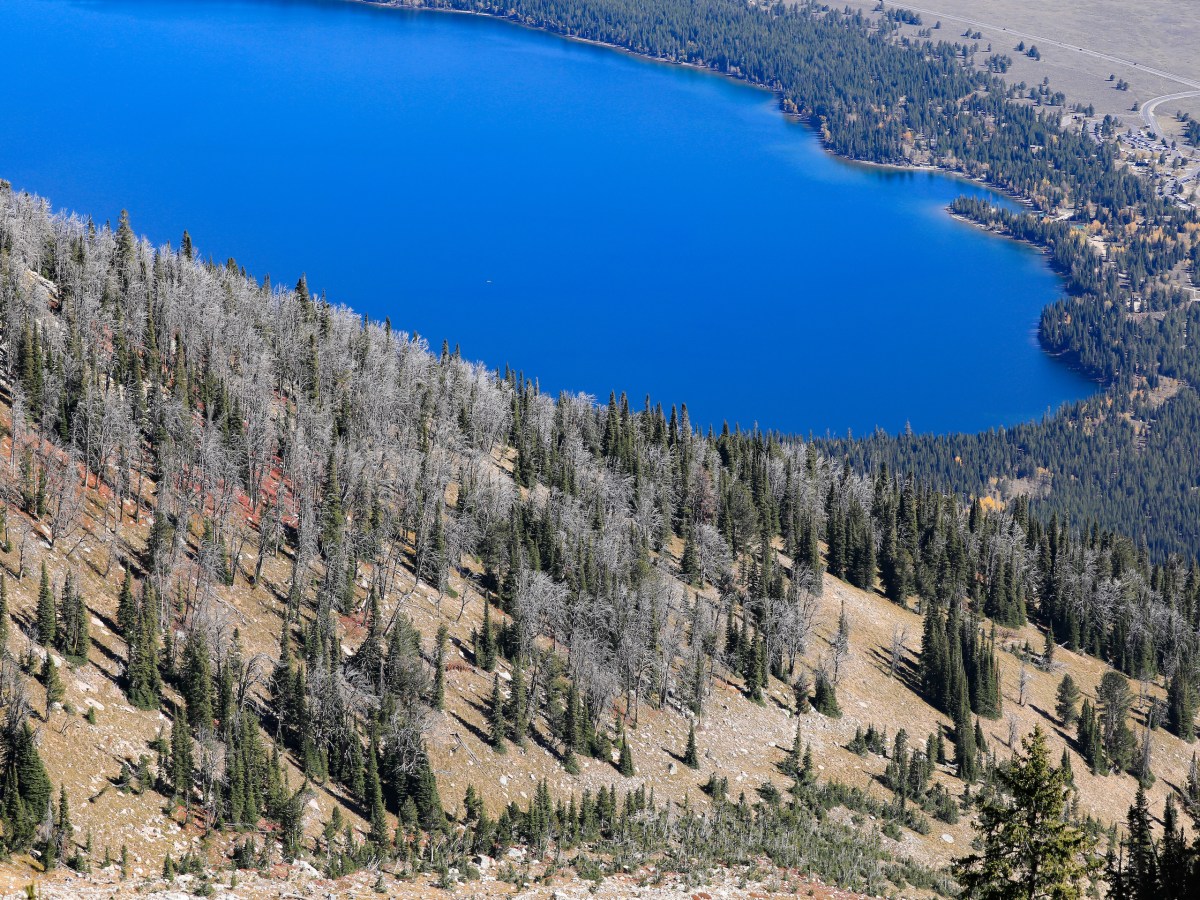
Whitebark pines grow at high elevations throughout the western United States. Each fall, the trees produce a crop of fatty pine nuts that feed bears and birds alike. But throughout the Rocky Mountains, the trees have been dying off en masse, succumbing to white pine blister rust and mountain pine beetle outbreaks that many attribute to climate change. One study found that, as of 2016, the United States contained more dead whitebark pines than live ones.
Diana Tomback, a forest ecologist at the University of Colorado-Denver, has watched the tree’s decline with concern. In 2001, she helped start the Whitebark Pine Ecosystem Foundation, which has funded multiple research and restoration projects.
“The major threat to whitebark pine, if you read the U.S. Fish and Wildlife Service’s species status assessment is white pine blister rust,” Tomback said of the disease that arrived in the U.S. accidentally on infected trees shipped from Europe. “It is a non-native disease that was introduced to the United States.”
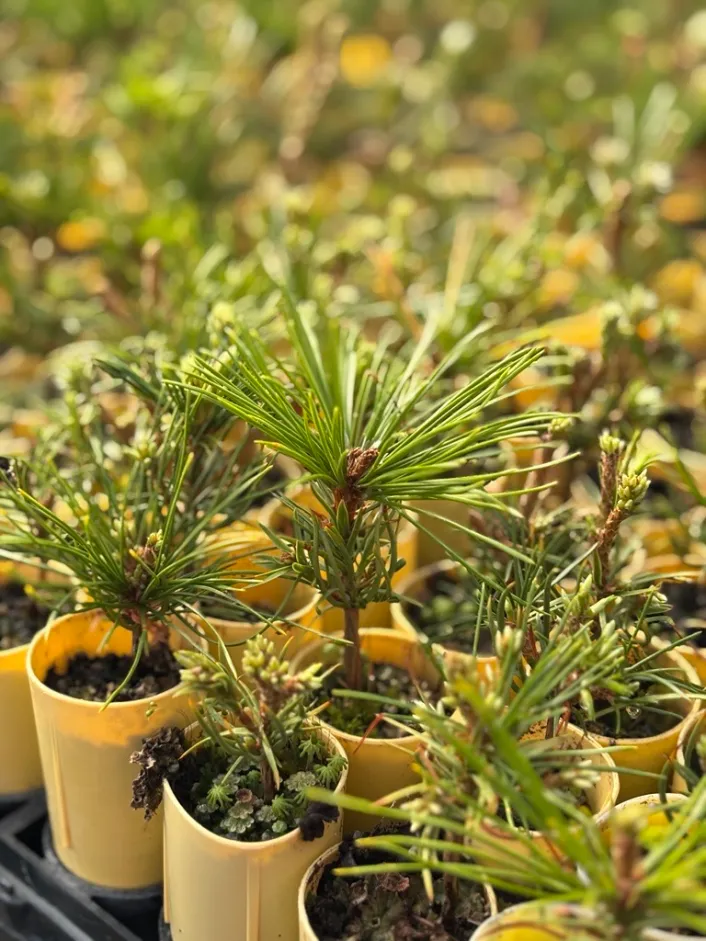
The process for finding trees that are resistant to blister rust, Tomback says, is long. Foresters look for healthy whitebark pines growing areas where the disease is widespread, a sign that the tree might have specific genes that help it fight off a blister rust infection. They then put cages around the tree’s developing pinecones to keep hungry animals out. As the cones ripen, the foresters return to collect the ripe cones and take them to a Forest Service nursery where workers extract the seeds and plant them in tiny pots.
As the seedlings grow, nursery workers deliberately infect the seedlings with blister rust and closely monitor them for any symptoms of the disease. At about 2 years old, if the trees have not shown signs of a blister rust infection, they are ready for planting.
Each year, the Forest Service nursery in Coeur d’Alene, Idaho, sends roughly 5,000 of these disease-resistant seedlings to Yellowstone and Grand Teton national parks, according to Laura Jones, a plant ecologist for Grand Teton. Yet they form just a small fraction of the overall planting operation.
The Coeur d’Alene Nursery shipped nearly 290,000 rust-resistant seedlings to national forests and national parks across Greater Yellowstone between 2021 and 2025, said Chandra Neils, the nursery’s superintendent.
“Our beneficial impact is not in replacing all that is lost, but in conserving the genetics that are needed to help the plants get through recovery and persist.”
Laura Jones, plant ecologist, Grand Teton national park
But even hundreds of thousands of seedlings can only cover a small fraction of the whitebark pine’s range. “It’s too big to replant it all,” Jones said. “Our beneficial impact is not in replacing all that is lost, but in conserving the genetics that are needed to help the plants get through recovery and persist.”
In Greater Yellowstone, blister rust is not the only threat facing whitebark pines. Mountain pine beetles have also killed large numbers of the tree. Unlike blister rust, however, whitebark pines have persisted through mountain pine beetle outbreaks for millenia. Research suggests, however, that the warming climate is increasing the frequency and severity of their assaults.
“We do have historical evidence that says that there have been very large [pine beetle] outbreaks before,” Pansing said. “But there is also some research that suggests that it is tied to climate change, and that we should expect to see more outbreaks because of increasing temperatures.”
A 2025 Forest Service study projected that climate change will shrink whitebark pine habitat 80 percent by 2050.
For his master’s thesis at Montana State University, data scientist Stephen Huysman identified high-elevation spots in Greater Yellowstone where water tends to collect. Not only do the precious rust-resistant seedlings have a higher chance of surviving in these sites, he said, but they are also more likely to continue supporting whitebark pines in a warmer, drier future. Huysman has been using his findings to help Grand Teton and Yellowstone decide where to plant their trees.
While whitebark pine restoration is well underway in the Greater Yellowstone Ecosystem, its continuation is not guaranteed. In March, the Forest Service released details of its restructuring plan, which called for replacing its regional offices with state offices and closing many of its experimental forests. While there are no current plans to shutter the Coeur d’Alene Nursery, some details of the reorganization have not yet been released. The uncertainty has many scientists working with the species nervous.
“The Park Service and the BLM send all of their seeds that they collect from potentially resistant trees to Forest Service nurseries and to Forest Service screening centers,” Pansing said. “If that infrastructure falls, that entire part of our ability to restore whitebark pine fails.”


count on this administration, with barrasso’s help, to do the wrong thing!
Please keep us updated on the fate of this program with the new restructuring program. This is a very important project and I hope it continues.