

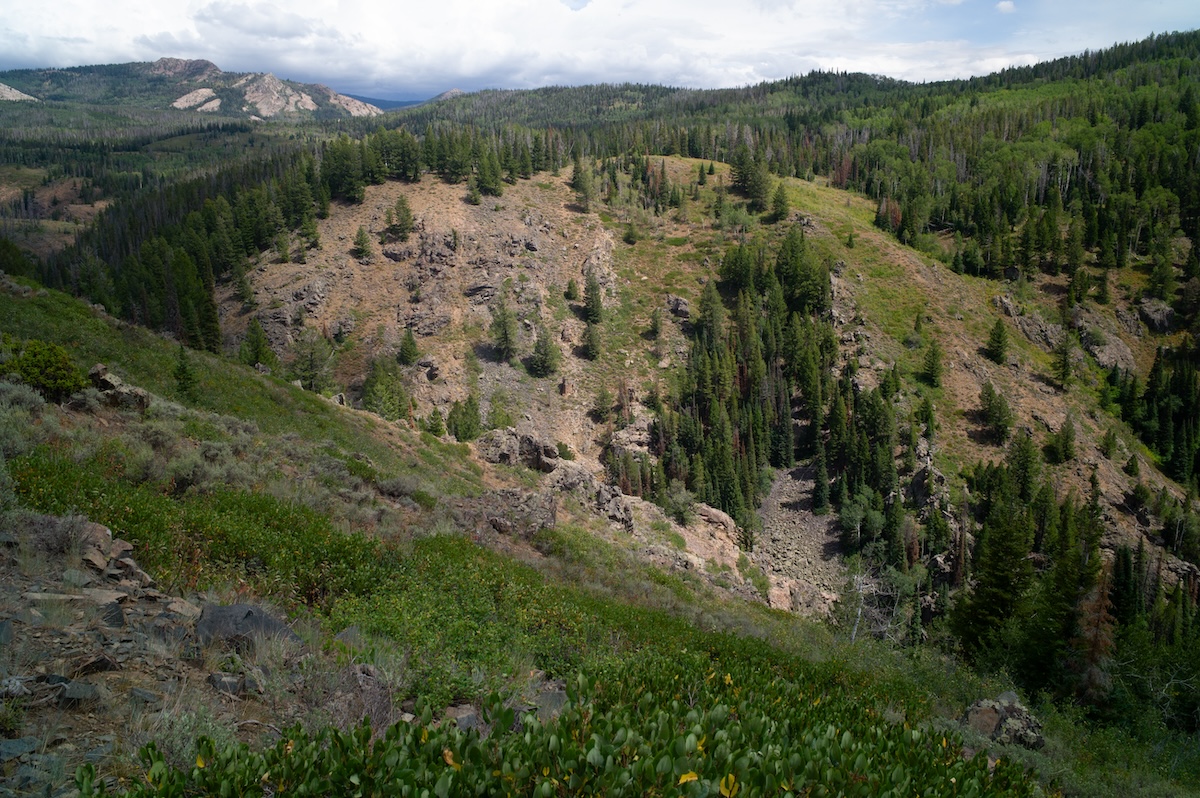
Lawmakers have approved another $200,000 to update cost estimates and environmental impacts of a proposed 264-foot-high concrete dam in Carbon County that engineers estimated in 2017 would cost $80 million.
The money raises the cost of an environmental impact statement to $1.5 million, half of which a federal grant will cover. The Wyoming Water Development Office wants to build the 700-foot long concrete wall across a deep gorge on the West Fork of Battle Creek in the Medicine Bow National Forest upstream of the Little Snake River.
The money for Wyoming’s consultant, Stantec Consulting Services Inc., will also pay for the examination of water quality, stream impacts, wetland mitigation and other issues, according to a contract approved by the Legislature’s Select Water Committee. Environmental reviewers also are reexamining the size of the 130-acre reservoir the dam would impound and whether another site would be more appropriate.
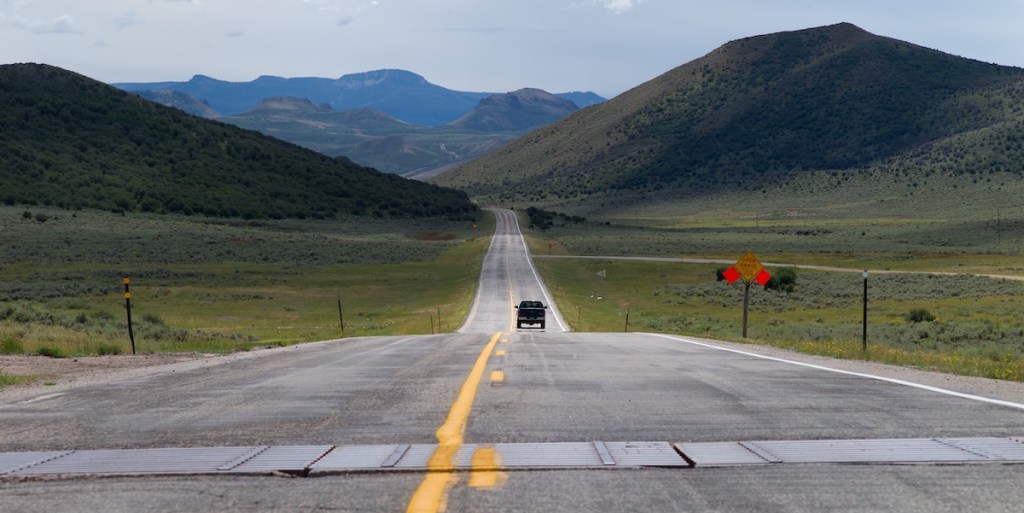
The additional funds are needed because of the “complex nature” of the project and the involvement of numerous federal agencies,” Wyoming Water Development Office Director Jason Mead wrote officials in a memo. The U.S. Natural Resources Conservation Service is spearheading the EIS on a project that proposes to provide late-season irrigation to a few dozen ranchers and farmers in Wyoming and Colorado, along with some environmental benefits.
The environmental review of Wyoming’s plans involves the U.S. Forest Service, Army Corps of Engineers, Environmental Protection Agency, Bureau of Reclamation and state agencies. Wyoming wants to swap state land for federal National Forest property to enable construction.
“It’s been a bit of a challenge to meld all those different ways together,” Mead told lawmakers. Water committee member Rep. Jon Conrad (R-Mountain View) asked whether the money would complete the environmental analysis.
“As we’ve seen,” Conrad said, “projects escalate year after year after year.”
“I would hope so,” Mead said of the current cost of the environmental review, which is scheduled to be completed in 2025. “With the [National Environmental Policy Act] process, it’s a little difficult to predict … the detours you might have to take.”
$80M cost long questioned
Critics have challenged the premise that the impoundment’s public benefits approach the value of its $80 million estimated price tag — a condition that justifies the state paying for almost all of the project. Other assumptions and projections by Wyoming also are under review, including the effects of pollution from the defunct Ferris Haggerty copper mine upstream of the proposed impoundment.
“We had an initial water quality model during the feasibility studies,” Mead told lawmakers. However, agencies involved in the EIS “would like some additional information to be included in the model to get worst-case scenarios.
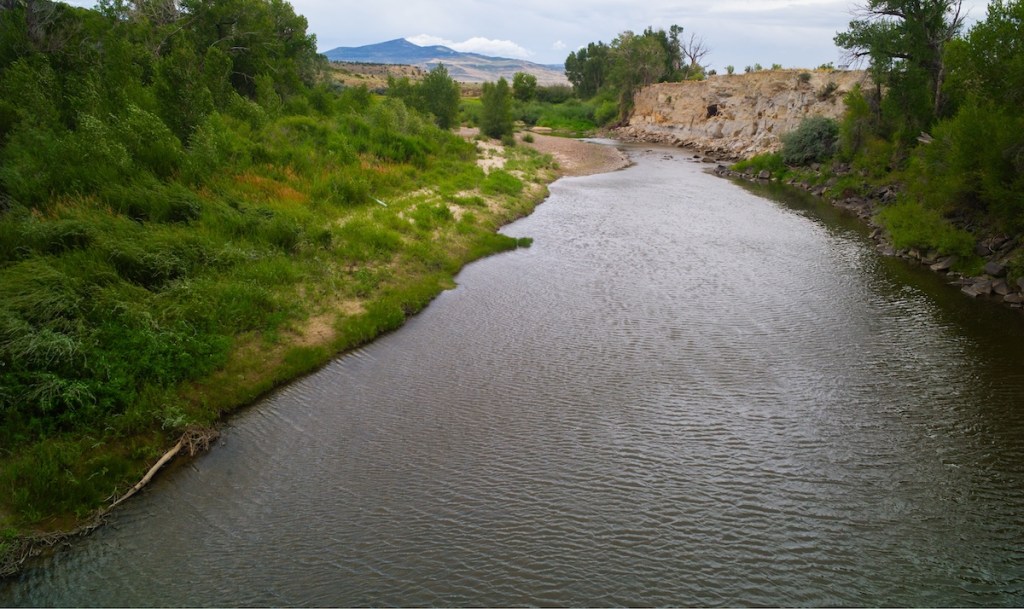
“Is it going to still meet water quality standards for our 401, certification,” Mead asked, referring to the OK from the Army Corps of Engineers that’s required for dam construction.
The proposed reservoir behind the dam would always hold at least 2,000 acre-feet of water, according to plans. It also would provide 1,500 acre-feet to maintain adequate flows for fish between the dam and at least the first irrigation diversion a few miles below.
But the bulk of the stored water — 6,500 acre-feet — would be earmarked for irrigation and diverted from Battle Creek and the Little Snake River below. The drainages are part of the Colorado River Basin, in which actual flows are about 25% below what’s been allocated for use by seven Western states and Mexico.
“It is very tough for us to conserve a large amount of water.”
State Engineer Brandon Gebhart
The over-appropriation of Colorado River water is forcing the federal government, states and Mexico to rethink today’s water shares and conserve what flows they can, flows diminished in part by drought and climate change. The river’s basin supports 40 million people from the Hoback Rim to the Sea of Cortez.
“The hydrology is so poor it’s acknowledged by all seven states, by [the Bureau of] Reclamation, that the … guideline, the Bible for how this is working, doesn’t work anymore,” Brandon Gebhart, Wyoming state engineer and water czar, said at a meeting in Baggs earlier this summer. “The hydrology has declined so bad that if we continue under these [existing] operating guidelines, the system will crack.”
Federal conservation grants
Gebhart was in the Little Snake River Valley town of Baggs to explain a federal grant program that seeks to enable large water conservation efforts — drought mitigation, conservation and environmental restoration projects — in the upper Colorado River Basin. Some $400 million is available through the Inflation Reduction Act to public entities, including irrigation districts, in Wyoming, Utah, Colorado and New Mexico.
The grant program aims to line ditches and canals, among other things, targeting public entities that can undertake projects costing at least $300,000. Whether Wyoming entities will make use of the program to invest in conservation is uncertain.
“We realize, we recognize, that it is very tough for us to conserve a large amount of water,” Gebhart said in Baggs. The state is focused on water storage and protecting its uses, Chris Brown, a Wyoming senior assistant attorney general, said.
The new conservation grant program differs from other recent conservation efforts that paid Wyoming irrigators roughly $500 per acre foot to temporarily fallow their fields. Both programs seek to send more water downstream to Lake Powell and beyond.
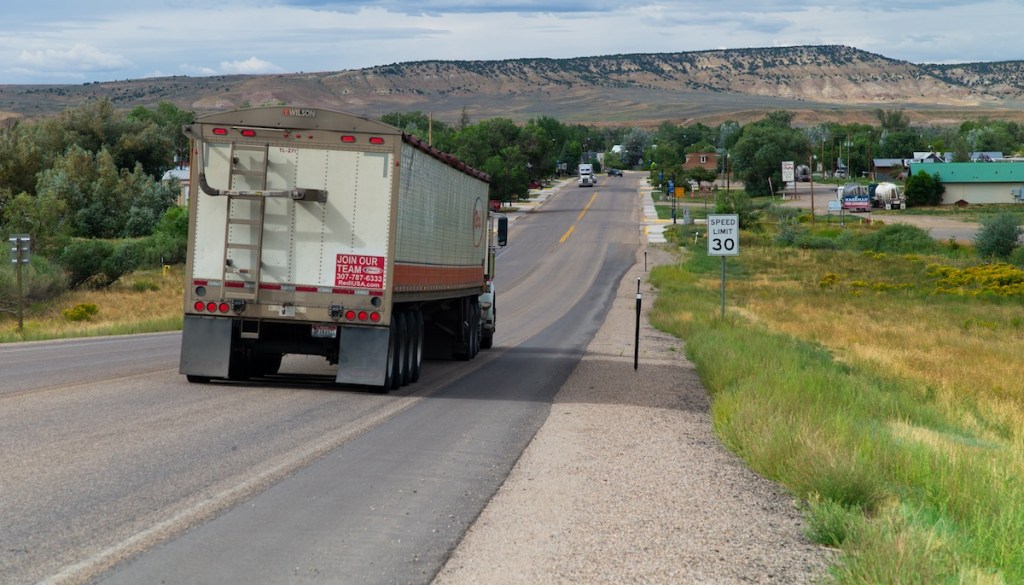
Wyoming is entitled to 1.04 million acre-feet of Colorado River Basin water each year under today’s Colorado River water laws. The state consumes about 600,000 acre-feet a year.
While it is entitled to more, Wyoming also is obligated to help ensure a certain amount of water flows downstream to Arizona, Nevada, California and Mexico.
“Our idea would be to set up a voluntary program that we conserve [water] over time,’ Gebhart said in Baggs. “And then we stash it away in a federal facility with our name on it until it’s needed to maintain our obligations.”
Irrigators divided
Little Snake River Valley irrigators are divided over the benefits, impacts and costs of the proposed dam on the West Fork of Battle Creek. Sharon and the late Pat O’Toole, operators of the Ladder Ranch that would be the first private property below the impoundment, see numerous benefits.
“The West Fork Battle Creek Reservoir will provide an important supplemental water supply to irrigators in the Little Snake Valley,” they wrote in comments regarding the plan. “An environmental benefit would include creating and enhancing wetlands and riparian habitats upstream from the West Fork Reservoir, and improving stream habitat to sequester copper and other metals.
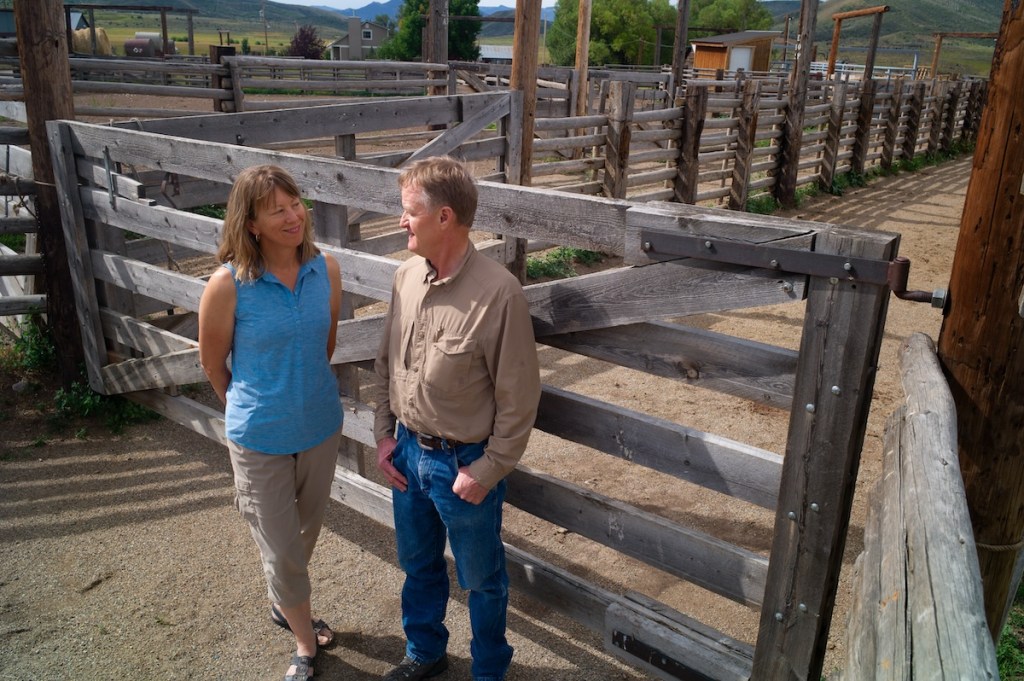
“The created wetlands and improved stream channel could also provide wetland and stream channel mitigation for the project,” the two wrote. “The proposed dam would offer value to the recreating public. It would provide a fishery on Haggarty Creek and downstream that does not presently exist.”
Another family believes, however, its historic ranching practices could be significantly harmed. Cody and Cindy McKee operate C&C Cattle LLC on land that’s had water rights to Haggarty Creek above the proposed dam site since 1916.
The ranch diverts water from Haggarty Creek through the Belvidere Ditch. The ranch has never had to curtail flows through the ditch, but the McKees fear those flows could be regulated if a dam is constructed just downstream of their diversion.
“C&C is the sole active appropriator above the proposed dam site and will be damaged by this proposal,” the couple wrote in comments regarding the dam plan. “We believe that as planned, the construction of a dam below our diversion into the Belvidere Ditch will immediately impose a condition of regulation on us so that the dam can fill.
“A percent of the market value of C&C’s ranch could essentially be extracted from our family and redistributed to others.”
Cody and Cindy McKee
“As far as we know, no one else will experience regulation due specifically to the dam being put where it is proposed,” the comment letter reads.
Despite many requests for more information and answers to key questions, the couple said they remain unsatisfied.
Dam construction and regulation of the Belvidere Ditch “would amount to incalculable financial loss in C&C’s ranching operations,” the two wrote. “A percent of the market value of C&C’s ranch could essentially be extracted from our family and redistributed to others.”

The wyoming representation, who rely on welfare ranchers support, need to just let this die.
Why is Wyoming proposing these projects??? Simply because we are not using our allocated share of the Green River compact water, the flow of the Wind/Big Horn river and others. Currently we are only using about 60% of the Colorado River water allocated to Wyoming an upper Colorado River basin states – as a result we allow our unused water to flow south to the lower basin states – that being Nevada, Arizona, California and Utah to a lesser degree. A previous Wyoming governor set a policy of Wyoming utilizing as much of our allocated share of Colorado River basin water as possible. However, now the harsh realities are coming home and we are learning how difficult it is to accomplish this goal – I mean it costs a fortune to build the reservoirs needed to utilize the water. The basic concept – Wyoming’s big concern – is the age old adage ” use it or lose it “. We have however, been very accommodating to the lower basin states by allowing our excess water to flow south into Flaming Gorge, Lake Powell and Lake Mead. Its a Catch 22 for Wyoming – damned if you do and damned if you don’t.
As is always the case with these kinds of projects: privatize the gains and socialize the cost.
“An environmental benefit would include creating and enhancing wetlands and riparian habitats upstream from the West Fork Reservoir.”
I have never seen such a benefit at any reservoir in Wyoming. I’d be curious to know more about such a claim. One need only look at the nearby High Savery Reservoir to see what happens to riparian habitat on the upstream portion of a reservoir. No more shrubs, perennial grasses, alder or willow.
I find it funny how these “white people welfare” projects are assumed to be viable no matter the cost. Will we ever learn?
Save $200,000 plus $83 million.(probably $ 200 million by the time studies are completed), just forget the West Fork project. It is a, just plain stupid project with negative environmental consequences.
I remain unable to find how any part of this dam benefits the public. A handful of ranchers benefit for sure. But what about the public who are paying for this project? 80 to 120 million is a lot of money, what’s in it for them?
As I recall, the public said no to this project. This dam will never pay for itself, and will cost way over the given price. Environmentally, it’s not as good as a free flowing stream. All of this to support alfalfa? crazy.
In the big picture this is a boondoggle, 10s of millions, perhaps a couple hundred million dollars to benefit fewer than 100 irrigators, most of whom are in Colorado. This really bad idea has been around for a while now. And the State keeps throwing money at it, taxpayer money that could be so better used elsewhere. I’d be chuckling at the irrationality of the idea of funding a second cutting of hay for Colorado ranches with Wyoming money if the irrationality wasn’t so patently visible and real.
Geez, Angus–why don’t you talk to me directly? Your opinion piece is riddled with misinformation and misdirection. Little Snake River irrigators are NOT divided over the proposed West Fork Dam! Only one family, who currently inplement a trans-basin diversion, is opposed. The benefits are many, including to the rights of the state of Wyoming on the Collorado River.
I would support the state not building the dam and using the 80 million for it to buy out the landowners to increase public use lands.