

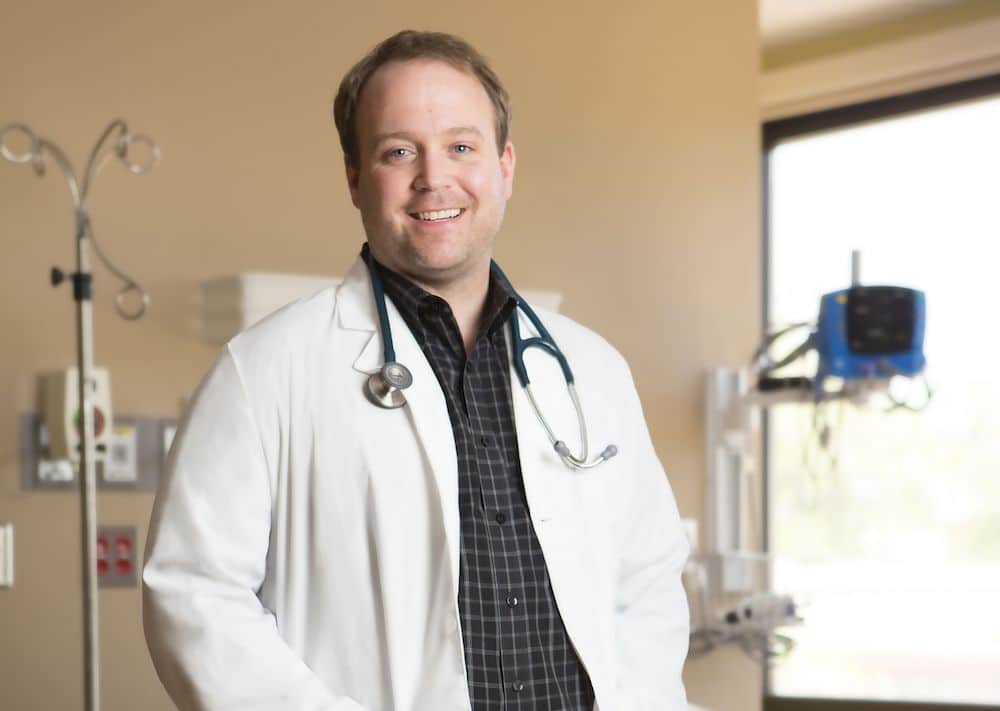
In March, as the COVID-19 outbreak began to ramp up in the United States, Dr. Andy Dunn found himself in conversation with his wife — also a physician — discussing how the disease could overwhelm the healthcare system in their home city of Casper.
She expressed concern about the exposure risk that could accompany a surge of sick people coming into her family practice clinic, he said. “She was worried about all the other patients in the clinic who would potentially be exposed to a pretty virulent transmittable virus,” Dunn said.
Dunn, director of primary care for the Wyoming Medical Center’s outpatient practices group, got to thinking of ways to alleviate the problem.
A few quickly written emails and hastily arranged meetings with WMC administrators later, Dunn had hatched a plan for a new respiratory screening clinic.
“The goal of this clinic to begin with was to offload patient volume and unnecessary exposure for patients and healthcare staff at the hospital,” and other medical facilities, Dunn said — to create a space away from the hospital where people could go to be screened for any respiratory symptom.
In an all-hands-on-deck effort over three days, the WMC moved its existing Endocrine and Diabetes clinic to a new site to make way for the Respiratory Symptom Screening Clinic, which will remain open until the crisis is over.
“Talk about a full team effort,” Dunn said. “We would start at 6 [a.m.] and go home about 10 o’clock at night, and then start over again. I still have bruises on my body from moving all the file cabinets.”

The clinic opened on March 16. It features drive-through screening and 14-16 private exam rooms, and employs social distancing and hygiene precautions. Staff screen temperatures, ask patients to wash hands and dole out masks. Dunn has been there almost every day since.
In the first couple of days, he said, providers fielded a lot of questions. Patients wondered if they had put themselves at risk by standing in lines, or if their relatives needed to take extra precautions due to underlying health conditions like cystic fibrosis. As the days progressed and the disease advanced across the state, more people began to show up with flu- or cold-like symptoms, often accompanied by fevers and GI issues, he said.
Between March 16-26, the clinic saw 1,131 patients in person. Providers completed 60 telehealth calls between March 23-26.
It’s been busy, Dunn said. And like facilities across the state, the clinic hasn’t been testing every patient who presents with COVID-19 symptoms. A short supply of transport medium has limited that capability.
When asked if he thinks there are more cases out there than have been confirmed by tests, Dunn answered “a thousand percent.”
It’s unfortunate, he said, but clinic staff have been very clear about it with patients, directing people who have non-emergency COVID-19-like symptoms and who test negative for strep or the flu to stay home for 14 days.
“We can’t use a scarce resource to prove this,” he said. “We’re having that conversation quite a bit.”
In the meantime, he said, providers have made other important diagnoses. They’ve found pulmonary blot clots and identified coronary conditions patients didn’t know about. “So we’ve done a lot of good.”
They have also kept all those patients from straining the hospital, he said, allowing administrators an important cushion of time to marshal resources and map out a response structure should the outbreak worsen.
“The hospital is business as usual,” Dunn said on March 27. “We’re not in any kind of distress. That’s where this frontline clinic really helps.”
Dunn seems to relish the opportunity to innovate and find solutions in the midst of a crisis. Still, the new normal of being a healthcare provider has its challenges, he says.
“It’s been go go go for all the providers and all staff members,” he said. “It’s been really hard because I think everyone that works here understands the risks, not only to themselves but to their family. When we go home, a lot of us are quarantined.”
Dunn sleeps on an air mattress sequestered from his family, wears a mask and isn’t hugging his two young children, “so it’s a really emotional thing. It’s just a hard thing to bring home and talk to your family about.”
Support community journalism during trying times — donate to WyoFile today.
He works to lift morale at the clinic, he said, and encourages all the staff to “talk about their feelings. I know it sounds kind of corny, but to acknowledge what everyone else is going through as well as the common mission to help people” is a helpful coping mechanism.
“We don’t want people to get burnt out. It’s definitely a thing. It definitely takes a toll.”
One of his major takeaways? A feeling of gratitude to see community members pitch in in so many ways: distilleries making hand sanitizers, seamstresses sewing isolation gowns, contractors donating their N95 masks, people getting creative to tackle the crisis head on.
“I’m overly impressed,” he said. “Everyone just seems to be all-in on the mission. We’re lucky.”

We need more leaders like this-
What a special doc!
This made me cry!
I like it! We need more of these typeS of physicians in Wy!!
Inspiration
I loved this story- it truly gives me hope!
That is amazing! Way to go!!!