


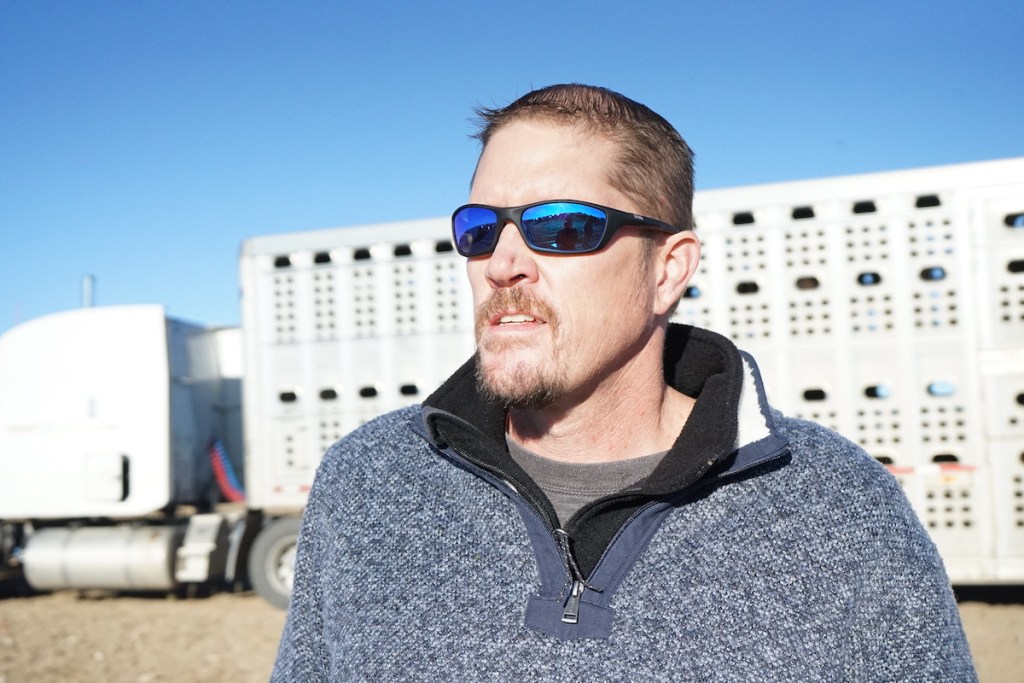
On a clear October morning on the Wind River Indian Reservation, Eastern Shoshone tribal member Jason Baldes stood in front of a semi trailer parked on an expanse of patchy dirt surrounded by agricultural lands, snow-crusted outcroppings and pale blue sky.
Facing a crowd and squinting into the morning sun, Baldes talked of a yearslong effort to restore buffalo to tribal lands. An effort with the ultimate goal, he said, “of thousands of buffalo on thousands or hundreds of thousands of acres.
“These buffalo are very important for our people,” said Baldes, who helped spearhead the effort. “Shoshone and Arapaho people, we’re all here together. For the benefit of our future generations, these children that are here will always have buffalo in their lives now.”

Indicating the trailer behind him, Baldes said, “these animals came from a long trip, 14 hours on the road. So I don’t want to waste any more time. The buffalo speak for themselves.”
As if on cue, a rumbling emanated from the truck as the creatures shifted, their hooves clanging against the trailer floor.
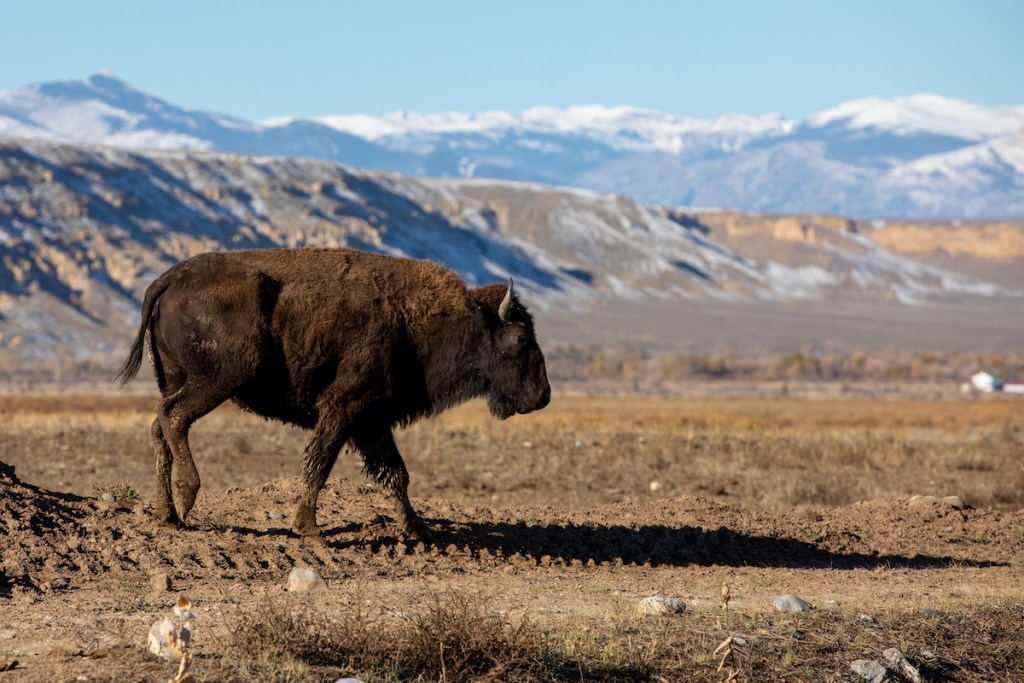
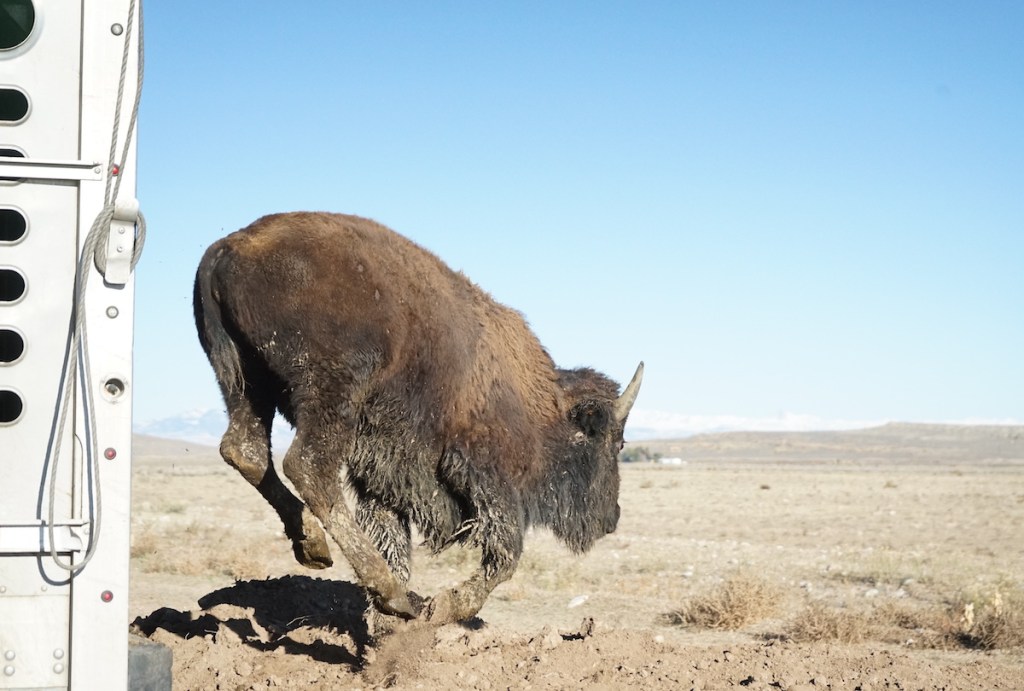
Soon, the back door was pulled open. With the nudging of minders shushing and prodding them, 24 buffalo slowly emerged. After kicking up dirt as they landed in their new home, most took just a moment to look around at the dun-colored surroundings before loping away.
A donation from Missouri
Saturday’s release, which conveyed an additional two dozen animals to a Northern Arapaho buffalo enclosure following the Eastern Shoshone delivery, was the latest chapter of a long-term restoration project on the Wind River Indian Reservation.
Buffalo repopulation officially began in 2016, when 10 genetically pure bison from Iowa were released on 300 acres of Eastern Shoshone land surrounded by wildlife-friendly fencing.
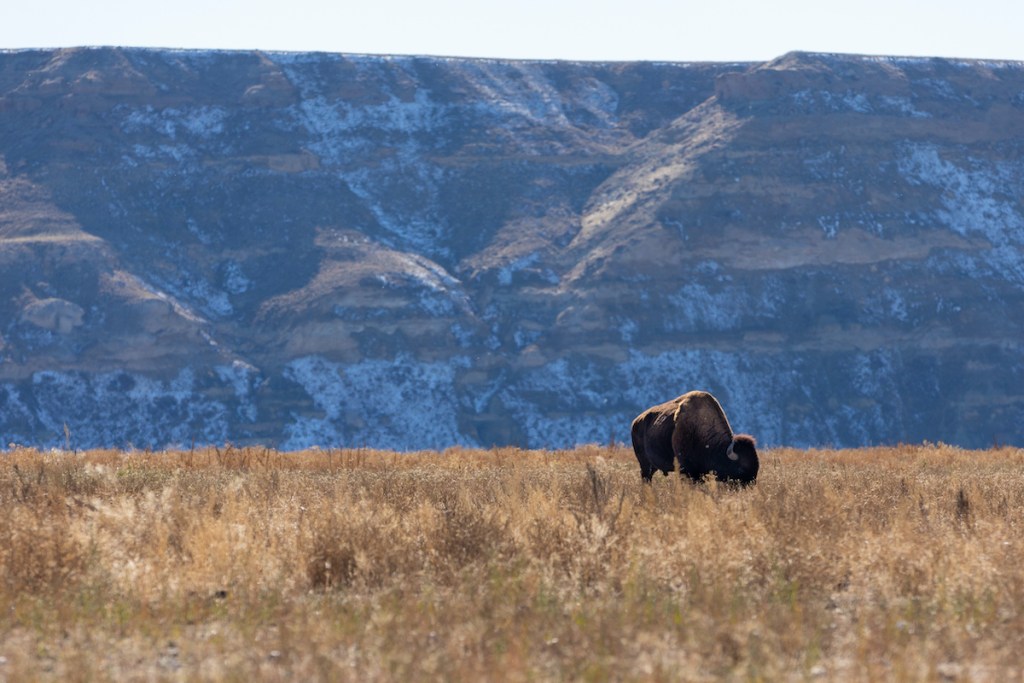
“When they were restored in 2016, they hadn’t been here for 131 years,” said Baldes, who sits on the board of the Intertribal Buffalo Council, a coalition of 69 tribes whose mission is to restore buffalo to Indian Country.
The first release also represented the tangible results of a decades-long conversation involving tribes and partners such as the National Wildlife Federation.
“In fact, the hard part actually isn’t getting the animals,” said NWF Tribal Partnerships Director Garrit Voggesser, who guesses he and Baldes have been working on the issue for 15 years. “It’s actually educating folks and convincing people that it is doable, and it’s important.”
The effort has progressed in fits, with additional releases for the Eastern Shoshone as well as Arapaho tribes, and small triumphs that include the first buffalo born to its new home.
The Nature Conservancy donated the animals for the latest delivery. The buffalo, descendants of the Wind Cave National Park herd, were trucked from TNC’s Dunn Ranch Preserve in Missouri. Additional bison will be conveyed to ITBC member nations and other Indigenous community herds in coming weeks, according to TNC.
“Moving from Wind Cave National Park to the Dunn property to here has taken years of coordination,” Hayley Mortimer, state director of TNC’s Wyoming chapter, said after watching the Eastern Shoshone delivery Oct 16. “So we are so grateful that the bison really returned home.”
“Both of our tribes are buffalo people, so this is foundational to who we are.”
Jason Baldes
TNC is the second-largest private owner of bison in the country after Ted Turner, Mortimer said. A big part of the reason behind that, she said, is that bison “have been a great conservation tool in the sense of the benefits that they bring to the range.”
But after realizing how important the animal is for Indigenous communities, she said, the organization shifted its strategy to meet a second goal. Now, it works with the ITBC to distribute buffalo on tribal lands across the country.

“I see us as just trying to be good partners to the tribes and good conservation partners to the National Wildlife Federation,” she said. “It’s just the right thing to do.”
For State Rep. Andi Clifford (D-Riverton), who attended the Oct. 16 release, watching the buffalo arrive was “very powerful.” The animal’s restoration “is good medicine for the people,” she said.
With the new herd members, the Eastern Shoshone tribe now manages 63 buffalo on roughly 1,200 acres, while the Northern Arapaho manages 35 animals on about 1,000 acres.
A sense of pride
In the 1850s more than 30 million buffalo roamed North America from present day New Mexico to Alaska.
An Episcopal missionary named Reverend John Roberts documented the number of buffalo being taken by the Eastern Shoshone and Arapaho tribes in the late 1800s, Baldes said. “I believe it was 1881 there were 2,000 buffalo taken by the tribes, in 1885 there were 10 and after that there were no more left.”
But Baldes, following the footsteps of his father, has been working for years toward a goal of buffalo rebounding on tribal lands and once again existing as wild animals.
“We’ve successfully managed six of the seven ungulates, including the predators, on this reservation,” Baldes said. “There’s no reason why we can’t manage buffalo in a way that the one above intended, and that’s as wildlife as we describe it today. So we’re working to restore this animal for cultural revitalization, for ecological restoration as a keystone species.”
The vision is to continue growing each tribe’s management area and then combining them for hundreds of thousands of acres.
It’s an incremental process, Baldes said.
“And so it’s starting small, building the capacity, growing the community ownership and creating reconnection for our people with buffalo again,” he said. “Both of our tribes are buffalo people, so this is foundational to who we are … They heal the land, and they’re going to heal us too over time.”

For Dennis O’neal, who manages the Northern Arapaho buffalo herd on sagelands near Ethete, the work has been rewarding. He enjoys the solitude of being out with the animals, he said.
Managing its own buffalo herd also means a great deal for his tribe, he said. It offers “a sense of pride, ownership” to call the herd its own.

Good news ….I donate to Nature Conservancy. I will be sending more donations their way as I consider this transfer of Bison long overdue. I am very pleased to have read this article.
This is amazing! It would be wonderful to see these bison herds roaming free again where they once did by the thousands 😊
This is a day in modern history or people can now relive the dreams of or ancestors and our spirit meat
Jason Baldes and his father Dick have been stalwart in this great act of conservation. Congratulations to them, the tribes, the NWF, The Nature Conservancy, and the IBC.
Terrific coverage. I wish them well.
This goes to show how important “wildlife” are to humans–You won’t see similar feelings expressed about grazing cattle!
Why can places like the park Dept. over the Grand Canyon instead of letting trophy hunters pretend to be in the wild west killing the animals there, instead do something like this?. Likewise what about our wild horses instead of rounding them up and warehousing them.
Our European thinking needs to change. We lose many wild species every year. Then we try to repopulate from elsewhere, and those we bring in may not be pure descendents of the beautiful species we have destroyed.
A feel good story in the midst of the chaos.
Wonderful!!!