

Part of a series on bison, cattle, brucellosis, and the national parks, researched and written with National Parks Traveler — Ed.
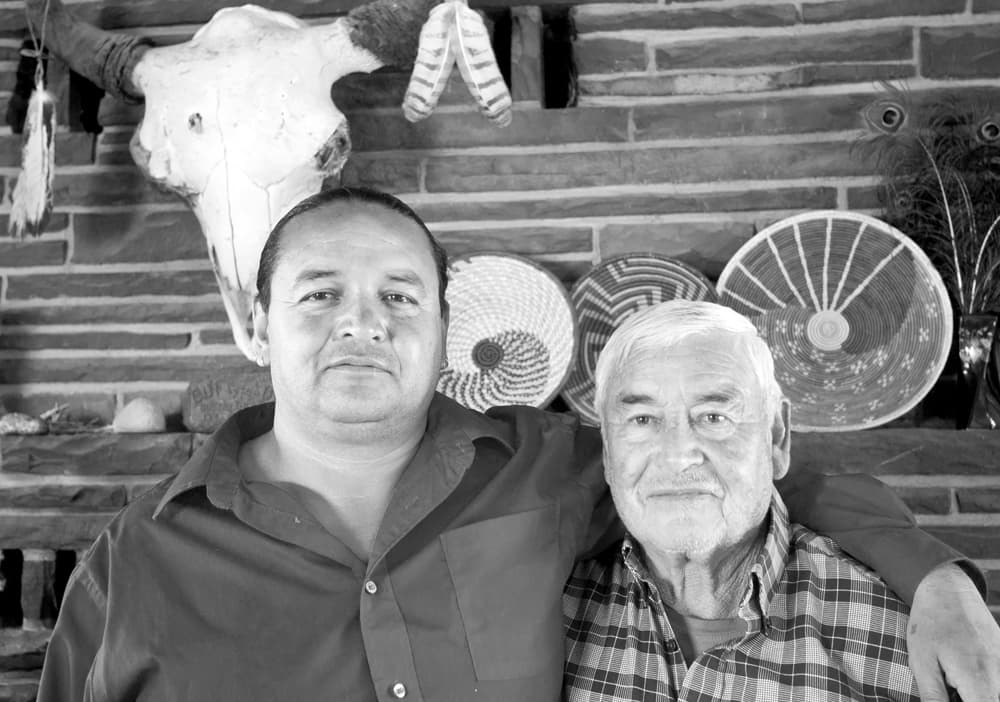
FORT WASHAKIE — When Jason Baldes became the first tribal member to see the new buffalo calf this spring— the first born on the Wind River Indian Reservation in 130 years — many greeted the event as a milestone in the restoration of a long-missing species.
The newborn was the fruit of a return and restoration project that saw 10 buffalo transplanted to a pasture near Fort Washakie last fall, and was for many a salve on the cultural wounds suffered by the Eastern Shoshone and Northern Arapaho people.
The tribes lost access to big game animals and their traditional diets through the persecutions of the 1800s. Pronghorn antelope and bighorn sheep were practically extirpated on the Wind River Indian Reservation. “There were declines in elk and deer, also moose,” Baldes said recently of the state of his homeland.
Some populations have slowly rebounded. With the adoption of game codes in 1984 came “a big increase [in] subsistence and sustenance,” through hunting, he said. By 2016, all the game species on the reservation had made a comeback except one — buffalo. And that happened last year with the transplant of genetically pure animals from the Neal Smith Wildlife Refuge in Iowa.
The Boy-Zhan Bi-Den (buffalo return) movement now has 11 bison roaming a fenced, 300-acre reservation pasture and another eight to 10 due in October. Today, the Wind River Reservation has all seven of the ungulate species, plus predators, that were present “when Lewis and Clark arrived here in 1804,” Baldes said.
In restoring buffalo, as Baldes and others call Bison bison, Eastern Shoshone and Northern Arapaho aren’t just filling an empty environmental niche. Baldes believes Boy-Zhan Bi-Den can improve tribal members’ lives as well. In a land wracked by poverty, poor health, and trauma, restoration of the environment could help resuscitate a community and restore its heritage.
“Reconnecting with this animal is a great cultural endeavor, cultural and spiritual as well as ecological,” he said. “We still have problems with health care, with hunger and food, housing and heat, and the poverty level that is still much [worse] than the rest of Wyoming.
“So the buffalo is seen as a way to provide an ecological improvement, but it’s very important for cultural revitalization — as a way to help heal from atrocities of the past, from genocidal [acts], boarding schools, and the impact of colonization.”
Three times the size of Yellowstone?
Seemingly insurmountable obstacles and the prospect of a long campaign didn’t intimidate Baldes, whose father Richard spent part of his career restoring reservation wildlife with the U.S. Fish and Wildlife Service. Buffalo were on the now-retired biologist’s list when he began advocating for bison reintroduction decades ago, but today that task is in his son’s hands.
The Shoshone tribe’s bison pasture has room for perhaps 25 buffalo. Yet as Jason Baldes surveys the far-reaching tribal land near Fort Washakie, he sees bison country all around.
“In the grand vision, we would manage them as wildlife so we could utilize them as a food source,” he said. “Some day they’ll be up there,” he said, pointing to the Wind River Range, “and over there,” he said of the Owl Creek Mountains. The prospect of a revitalized tribal relationship with its historic commissary is tantalizing.

“This reservation has more habitat available for bison and other wildlife than in Yellowstone,” Baldes said. The park and the reservation are each approximately 2.2 million acres. Eastern Shoshone and Northern Arapaho have a million acres of potential bison habitat on the northern and western boundaries, Baldes said.
Bison range is difficult to quantify in Yellowstone, said Rick Wallen, wildlife biologist and team leader for the park’s bison ecology and management program. “About one million acres can be identified as suitable for bison,” he said in an email. “Yet we only see them occupying about 1/3 to 1/2 of that area,” modeling and surveys show.
So, the only place in the U.S. bison have occupied continuously since prehistoric times — Yellowstone National Park — may have less than a third of the buffalo habitat Baldes believes is available on the reservation. The Yellowstone herd fluctuates between 5,000-5,500 animals, making the prospect of buffalo occupying three times as much ground a stunning picture.
Although classified as livestock in most of Wyoming, buffalo on tribal land in the reservation are owned and managed by the Shoshone Tribe, which hopes to involve the Northern Arapaho in the program. Baldes complained about “great resistance from the agriculture community,” including some tribal livestock producers, because of the threat of brucellosis, among other fears. But he worked with the state veterinarian to accommodate Wyoming’s concerns. Dr. Jim Logan has few worries about the Shoshone program, he told WyoFile in an interview.
When it comes to Baldes’ vision of free-ranging buffalo that could be hunted on the reservation, Logan reviewed the complexities of state and tribal regulations, law, and jurisdiction. “That’s kind of one of those grey areas,” he said.
“They are considered livestock where they are, and that’s because of a joint rule between the Livestock Board and Wyoming Game and Fish,” he said. Game and Fish regulations classify bison as wildlife in the agency’s defined Absaroka wild bison management area and Jackson wild bison herd areas. Those areas exclude Grand Teton and Yellowstone national parks and lands administered by the Wind River Indian Reservation.
“When those bison are on the tribal lands, basically the state veterinary probably doesn’t have a great deal of jurisdiction,” Logan said. “If the bison were to get off the reservation and were wandering, [or on private land in the reservation] then they would be subject to the removal requirement,” and could be killed. “The thing with bison is they’re going to migrate where they want to go.”
Buffalo could boost tribal health
Baldes completed his masters’ theses on bison and their associated plant communities, a paper rich with the history of a beleaguered people. “As bison populations were diminished, this resulted in the removal of one of the most important food sources,” he said. Tribal members were unable to move freely and could not harvest their traditional foods.
Without resources, tribal members became dependent on the government for rations. When meat was provided, “often-times it was rotten,” he said.
Fry bread — essentially a mixture of flour and sugar, became a modern staple. “It’s not a traditional food, it’s a survival food,” he said. “Unfortunately, even though we still utilize it today, it’s not a very healthy food to eat.”
The change in diet, plus a transition to a sedentary lifestyle, had consequences that are easy to understand given today’s common knowledge about diet and health. “That kind of leads up to the health disparities we see,” Baldes said, ticking off statistics.
Infant mortality for Wyoming’s Native Americans is 14.7 per thousand births more than double that of white Wyoming. Native Americans live to an average age of 53 in Wyoming compared to the state’s general population’s 78.
Further, the Indian Health Service “only meets 45 percent of the need,” Baldes said. “When you have an administration that cares very little, then it becomes even more important for the tribes to exercise that self-determination.
Don’t miss a WyoFile story — sign up for our free weekly newsletter
Boy-Zhan Bi-Den could help resolve some of the health problems, Baldes said. “Buffalo meat is higher in protein, lower in cholesterol and higher in essential vitamins than most other meat,” he said. “Integrating that animal back, that’s a way to help people heal.”
While buffalo may be important to the tribes, they remain only an element in what members see as a quest for justice. Baldes pointed to an ongoing lawsuit with Wyoming about tribal boundaries and jurisdiction. “We’re in 2017 and still arguing about what is actually our reservation.”
Find the complete series here
At National Parks Traveler, you can find the series Bison In The West: Yellowstone National Park’s Brucellosis Stigma, including the following stories:
Putting bison back on the landscape.
Yellowstone and Wood Buffalo National Parks Have Much in Common
Though separated by 1,500 miles, Yellowstone and Wood Buffalo national parks have sprawling, rugged landscapes of wildness, which harbors wolves and bears, mountain lions and moose…and bison.
Yellowstone Bison, America’s National Mammal, Stigmatized In Montana
A disease brought to Yellowstone National Park in 1917 by livestock today stands in the way of bison freely roaming out of the park into Montana.
Fort Peck Tribes Blame Montana For Halting Successful Bison Program
Tribes at the Fort Peck Indian Reservation in northeastern Montana stand ready to quarantine Yellowstone National Park bison to ensure they’re free of brucellosis so they can be distributed to other tribes and organizations.
Bison: The Original Ecosystem Engineers
Bison graze landscapes differently that cattle, creating ecosystems that benefit birds and plants.

I so agree with the promotion of more Buffalo for the Indian Nations. We listen to other people moan and groan about how bad they have it, but I believe the people who were here in what is called the United States before we were, have been treated worse by our Government than any other peoples.
Thanks for a great story. When I started hunting near the Reservaton over 50 years ago, I never dreamed I would have the opportunity to hunt with wolves and grizzly bears hunting the same elk as me. Now that I get to enjoy that experience every year, I hope I live long enough to see free roaming bison on all the incredible landscapes on the flanks of the Winds and Absarokas. I thank the Baldes’, the Tribes and the USFWS for making that a possible dream.
I hope the magnificent Buffalo can not only serve to feed and heal our Native neighbors, but can also help to build bridges between the two Tribes on the Wind River Reservation, as well as with the rest of us in the Wind River Basin.
Very good story Jason! Makes me proud to hear of dreams can become a reality. Bringing back what was lost subsistence can one day provide healthy nutrition for the Shoshone people!
So glad this iconic mammal has been restored on the Reservation. Hopefully, this marks a beginning for rewilding all of Wyoming’s public lands.