

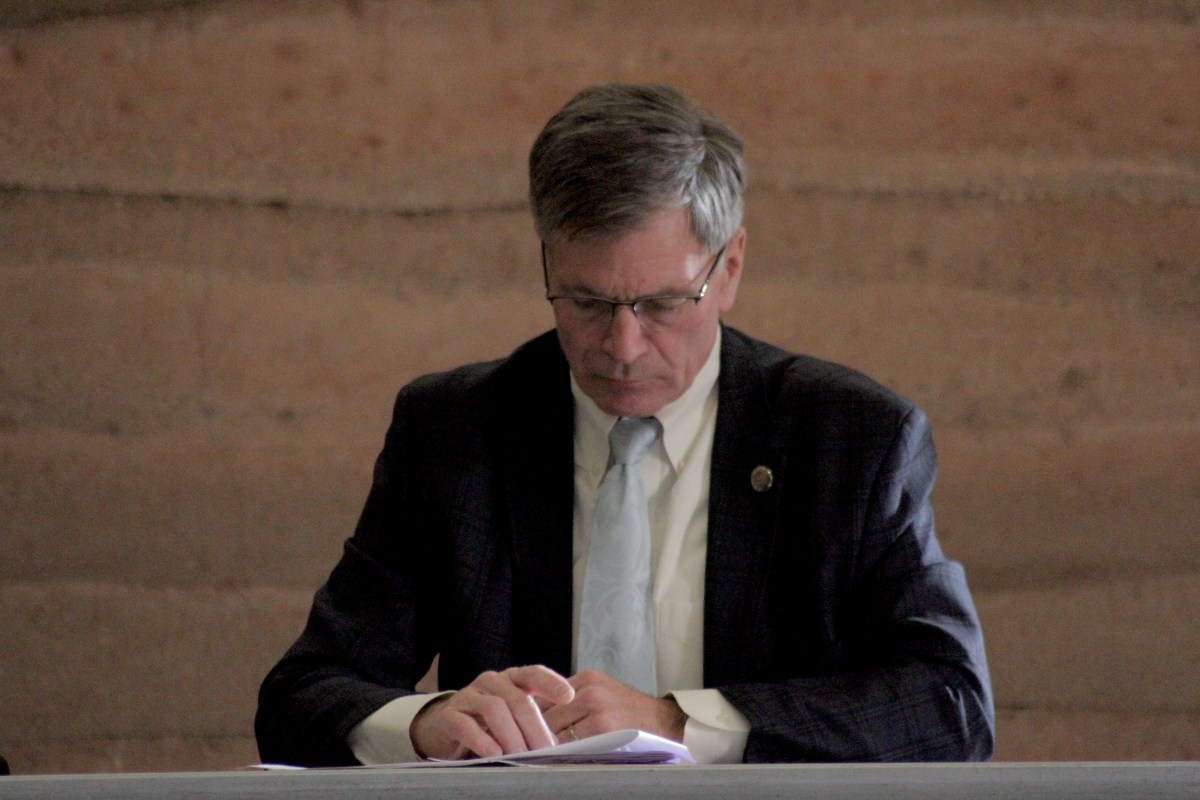
Sublette County Attorney Clayton Melinkovich bemoaned the difficulty of helping “folks that are in the gray” in Wyoming.
On Friday morning at the county library in Pinedale, Melinkovich was addressing Gov. Mark Gordon, Department of Family Services Director Korin Schmidt and Health Department Director Stefan Johannson. The Sublette County staffer was juggling two things at once: attending the mental health-focused town hall meeting convened by the governor, and texting with the Jackson Hole Community Counseling Center to try to determine what to do with a homeless individual.
This person, Melinkovich said, did not meet the standard for admission to the Wyoming State Hospital. Even if they did, they’d face a “detrimental” waiting list to get in — waits that have persisted for years.
“Weeks on end in a county jail for a person who’s in a crisis situation is unacceptable,” Melinkovich said.
In Wyoming, that’s a scenario contributing to one of the nation’s highest rates of jail suicides, according to an October 2023 WyoFile investigation.
Melinkovich told the governor that the homeless person also did not have the social capital, either via family or a church, to get themselves out of their bind. This person was “in the gray,” transient and without resources.
“Where do we put them? How do we help them?” Melinkovich said. “We can’t leave them at the public restroom in Pinedale, which is the only warm place for them to be.”
Instead, the person would probably be escorted by a sheriff’s deputy to services in Worland or Rock Springs. That solution, he said, hints at the need for more “immediate crisis placement.”
“I can’t think of anything that’s more expensive,” the attorney said, “but I also can’t think of anything that’s more necessary.”
The prosecuting attorney’s frustrations were disclosed before state officials who balance the books and are in the position to take action. Besides Gordon, Schmidt and Johannson, four members of the Wyoming Legislature were in the room: Reps. Albert Sommers (R-Pinedale) and Andrew Byron (R-Jackson) and Sens. Fred Baldwin (R-Kemmerer) and John Kolb (R-Rock Springs).
Gordon’s “mental health town halls” — there was another in Gillette on Monday — were billed as an opportunity for local communities to share their firsthand experiences working with the state’s mental health and substance abuse care services. The sessions were a complement to the governor’s Health Task Force, which seeks to identify barriers, opportunities and gaps in those services.
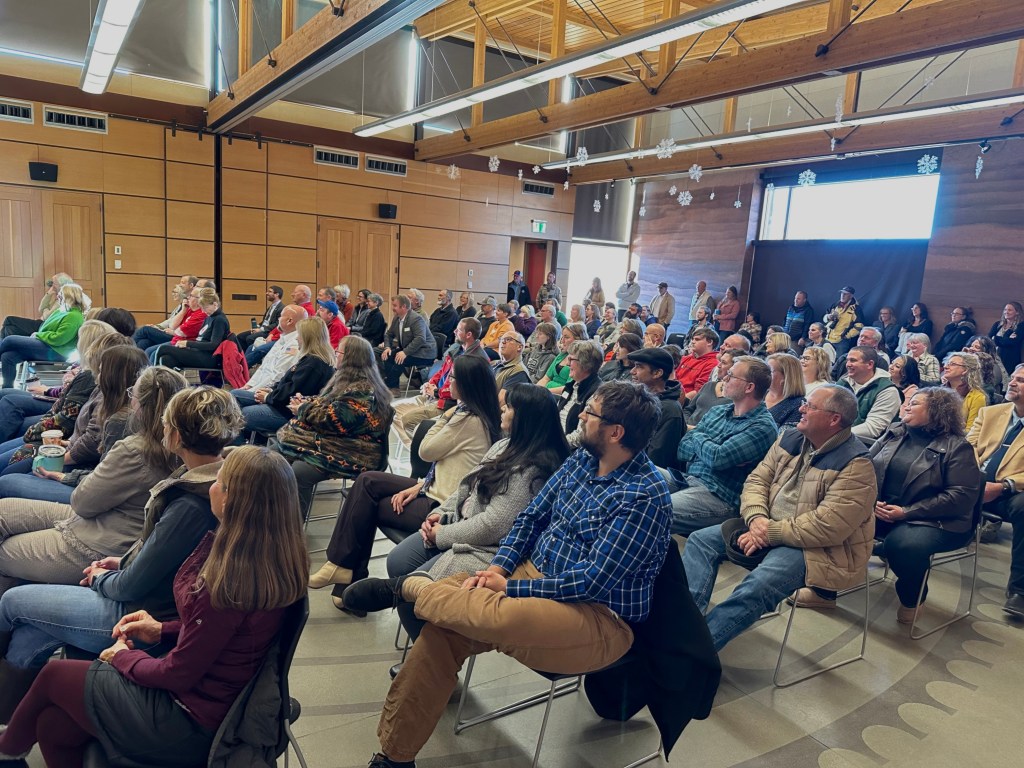
At the onset, Johannson struck a positive tone in his remarks to the packed Sublette County Library auditorium. There are reasons for optimism about the future of behavioral health in Wyoming, he said, like the newfound suicide and crisis hotline. Notably, funding to maintain the call centers is not assured.
“We have some early signs statistically of seeing hopefully — I don’t want to overpromise here — a potential flattening of Wyoming’s suicide trend, which since 2005 has just been a scary linear trend going upwards,” Johannson said.
For the first time since 2017, Wyoming no longer tops the list as the most suicide-prone state. Now it’s the 47th worst out of the 50 states.
Some Sublette County residents expressed gratitude for the currently available services.
One man spoke up in support of the Sublette County Treatment Court, an alternative to the traditional judicial system that helped him get sober and back on track. Through the treatment court curriculum, he came up with a project to better the community: specifically, to get overdose-reversal drugs like Narcan better stocked in patrol vehicles and county buildings.
“That’s just an example of how important it is for our community to have access to mental health [services],” the man told the crowd. “I was able to do all these great things — I’m two years sober now — because I had access to all of these mental health facilities.”
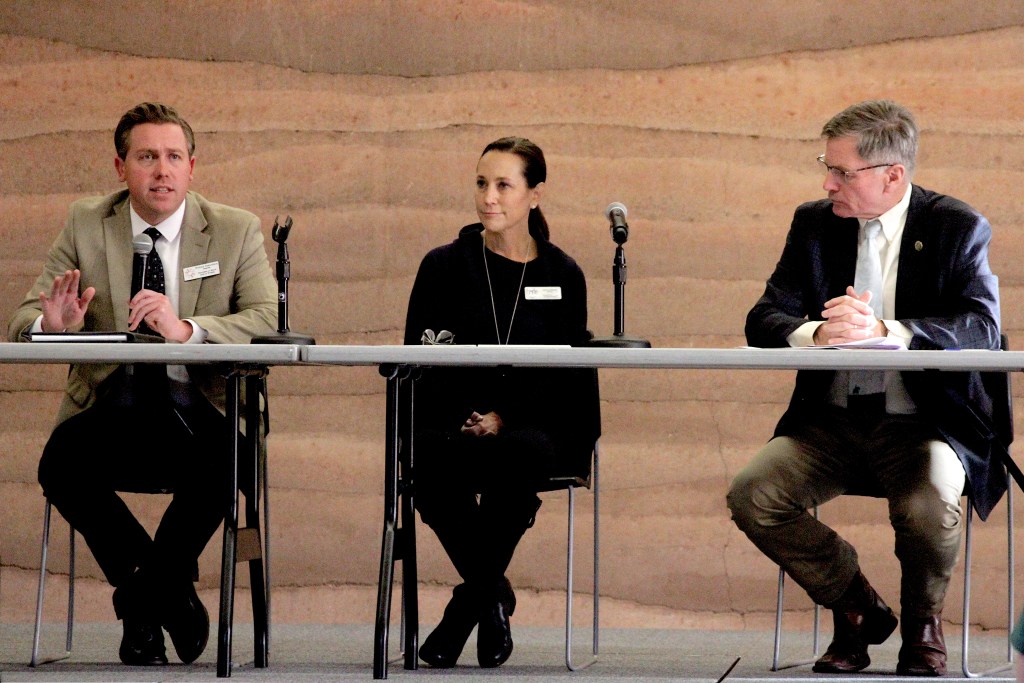
Yet others who shared their views in Pinedale expressed concern for the current state of affairs. One member of the Sublette Prevention Coalition reminded the audience of the stakes.
“We have lost several young guys in the last couple years from alcohol, poisoning, overdose, whatever you want to call it,” she said. “They’re gone. They’re not coming back.”
As the meeting adjourned, Gordon told Sublette County that the solution to Wyoming’s mental health challenges “all starts with community.” The state government, he said, may have to respond with “services and functions,” but has a limited ability to do so.
“We only have a certain amount of resources,” the governor said. “We are trying to recruit more.”
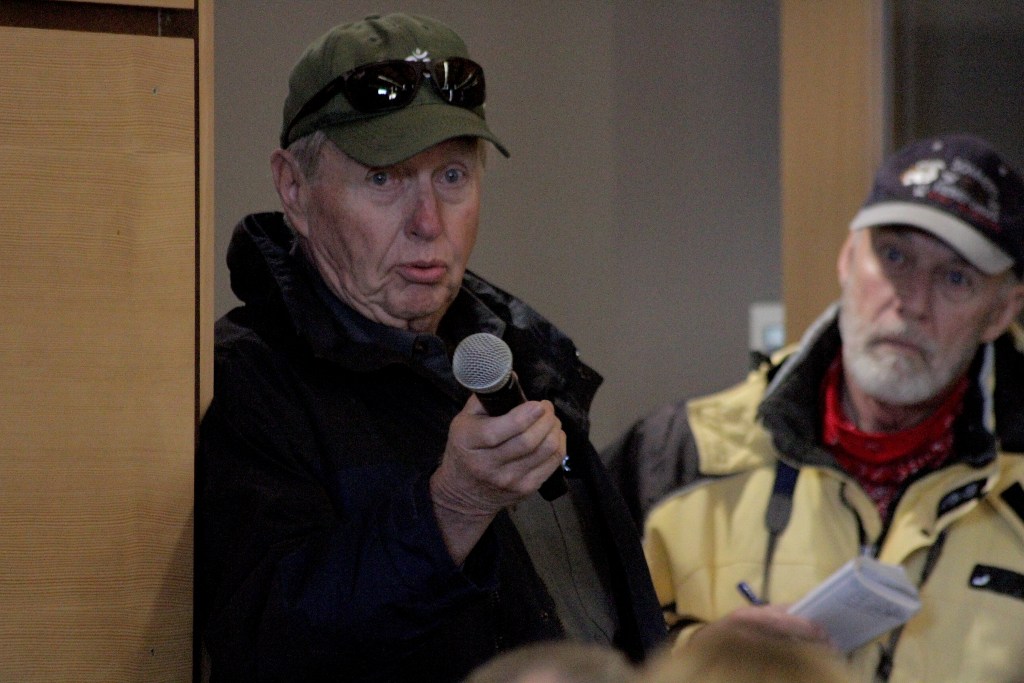
After Gordon thanked the room for partaking, Dave Racich shouted out from the entranceway, asking for the final word. The president of the Green River Valley Health Foundation agreed with the governor that money alone isn’t going to end the state’s mental health struggles, and he called for commitment from the community to take real action.
“I’ve lived in this state for 74 years, and we’ve been kicking this apple down the road for all of them,” Racich said. “I hope we don’t keep kicking this apple down the road, because we’ve seen too many people gone.”

“We only have a certain amount of resources,” the governor said. “We are trying to recruit more.”
So when a dozen ranchers need a $100+ million dollar reservoir expansion, we have plenty of resources. When it comes to helping everyday citizens, with the exact same rights, when they are in a crisis all of the sudden we are short on funding.
The forums are a great idea, and of course money is not the only solution. But someone needs to point out that our tax structure contributes to the problem. We need to spend tax money on social services such as mental health. 47th worse in the nation? We call that progress? Remember this crisis when the Legislature convenes its budget session.
It is heartening to see the Governor’s focus on mental health & substance abuse but we cannot make any substantial changes in Wyoming without more money invested by the legislature. These services have never been adequately funded in the state & are the first to be cut in down times. The Freedom Caucus is even less likely to fund mental health & substance abuse as they do not see these programs as a state responsibility. The debate regarding the funding for the suicide hot line made this very clear. The failure to provide stable funding clearly shows the lack of support these programs will receive from this caucus.