

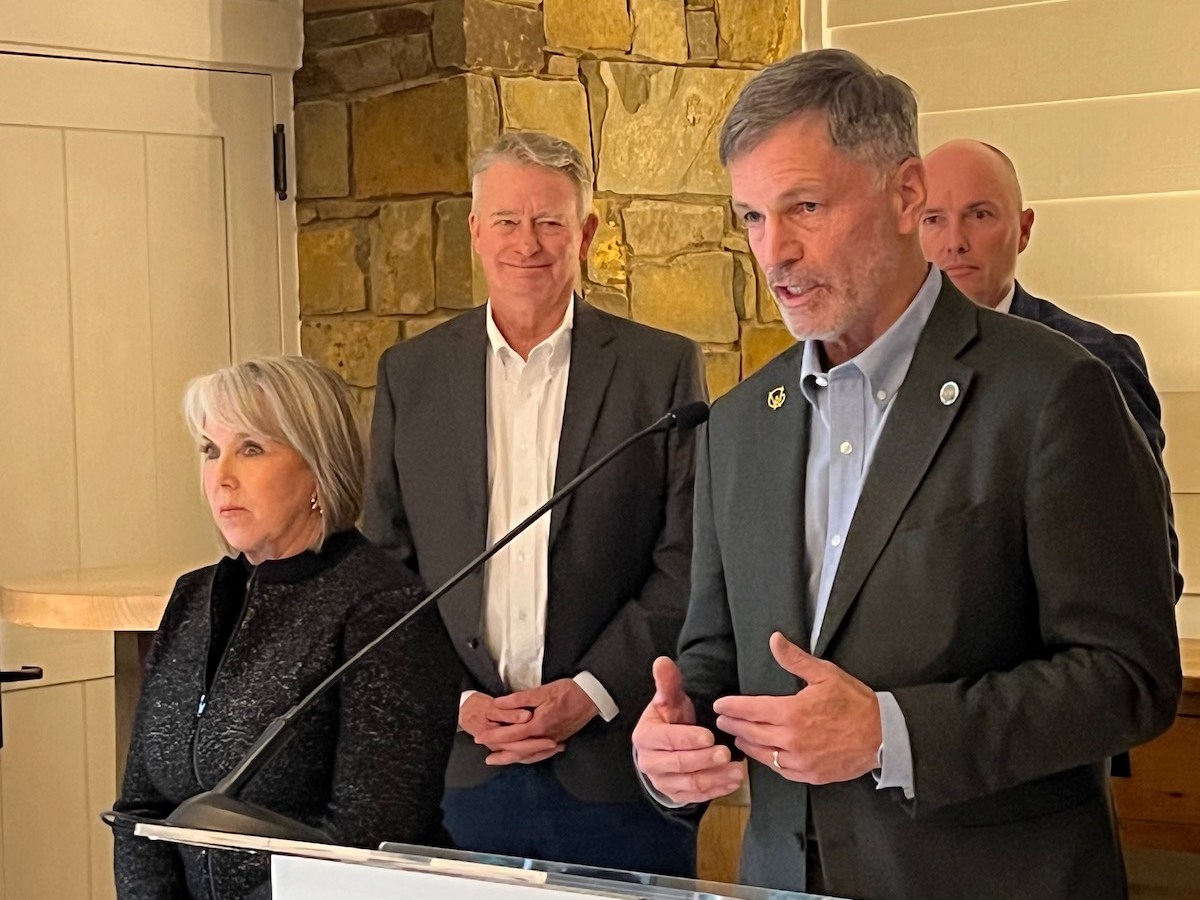
The Wyoming House appears committed to funding some $430 million for Gov. Mark Gordon to dole out at his discretion as matching support for energy projects.
The stance is in opposition to a Senate amendment to defund the programs, and it could be a major sticking point as the two chambers try to hash out a roughly $1.1 billion difference between their budget proposals.
House members of the Joint Conference Committee on Thursday told their Senate counterparts the programs remain a priority despite the upper chamber’s concerns that the Legislature is ceding spending authority to the executive branch.
The matching funds, according to House members in the Joint Conference Committee, are essential for Wyoming to compete for billions of dollars in private and federal investments aimed at modernizing the nation’s energy mix, including initiatives to “decarbonize” fossil fuels. Such efforts are a cornerstone of Gov. Mark Gordon’s “all-of-the-above” energy strategy and many see them as essential to sustaining the state’s coal, oil and natural gas industries by making their output more palatable to states with clean energy portfolio standards.
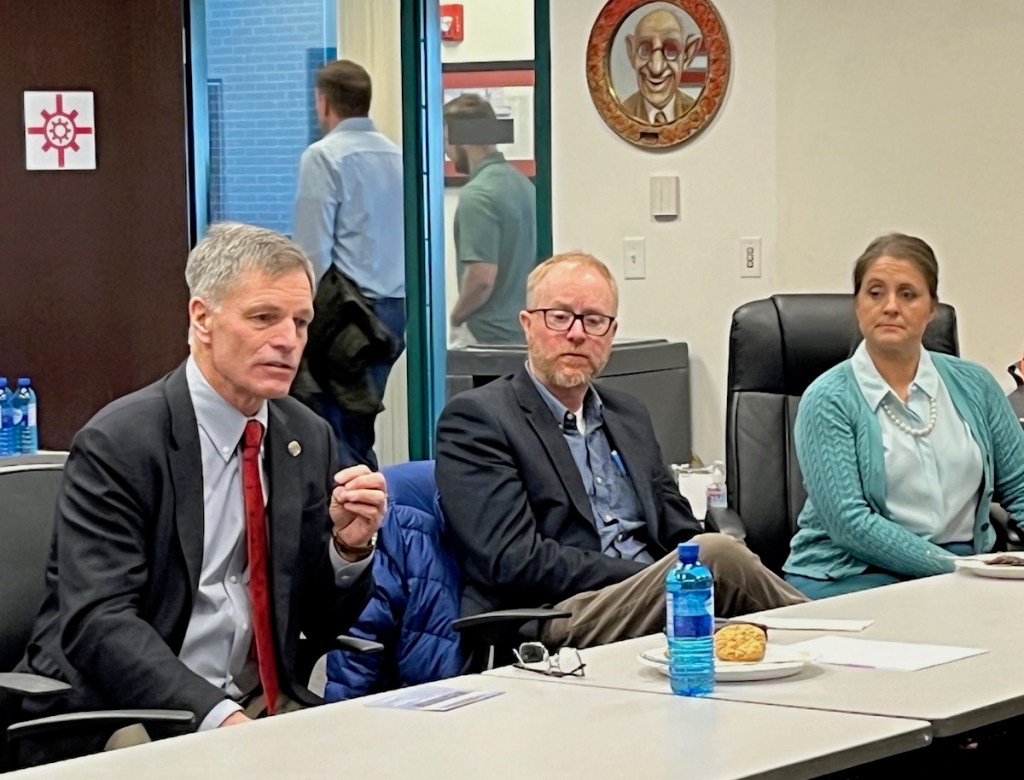
Investment and competitive grant opportunities that require matching funds move quickly, proponents have said, which is why lawmakers gave the governor’s office spending authority over the Energy Matching Funds program in 2022. The executive branch can be more nimble and responsive to potential grantees whereas the Legislature meets once a year to approve appropriations.
Moreover, Wyoming — through the governor’s office — has already awarded tens of millions of dollars to entities planning to build carbon capture, small nuclear and hydrogen energy projects in the state.
“The House absolutely doesn’t want to remove any of that funding — for the existing projects and for future potential projects.”
Rep. Tom Walters (R-Casper)
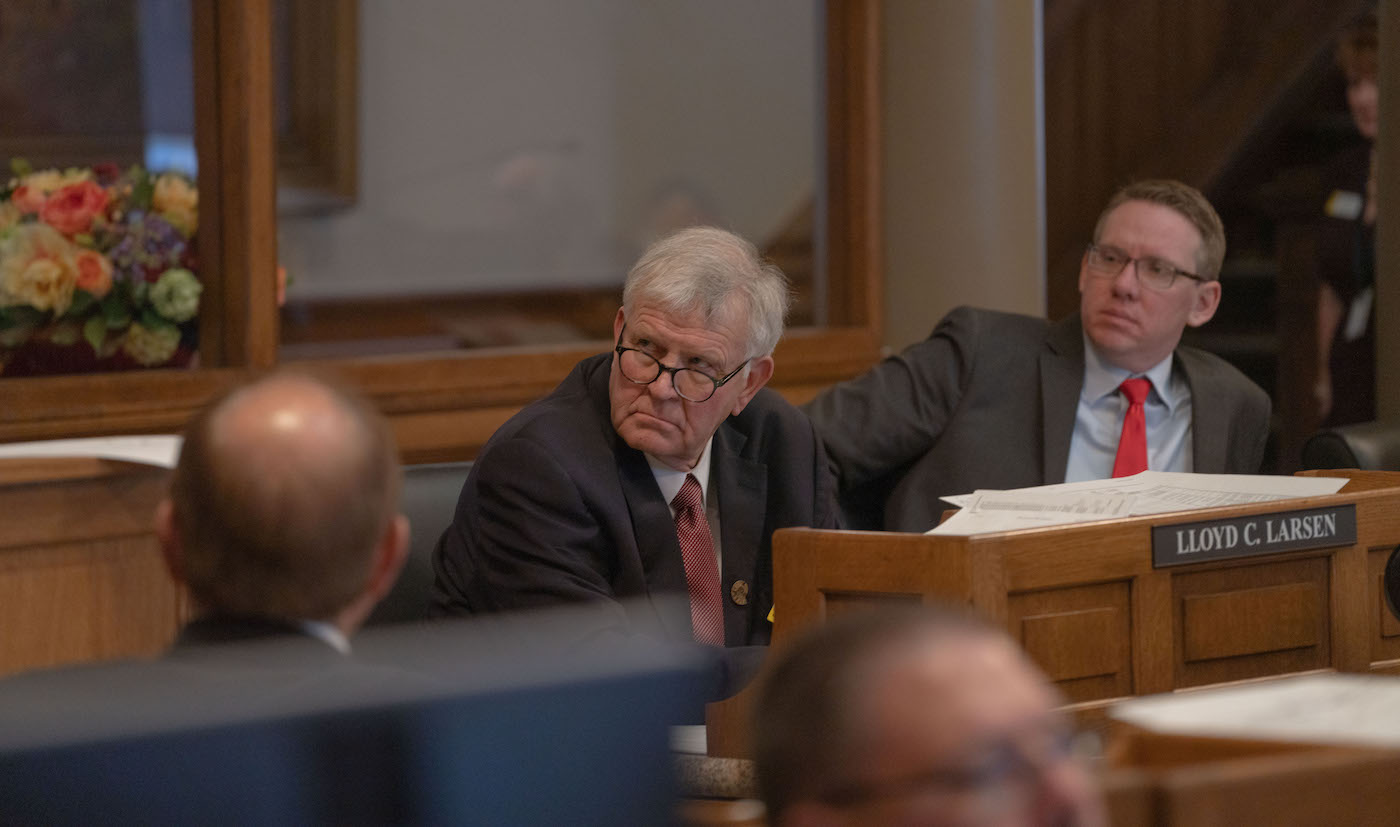
“So what we will be telling those entities that we’re interested in is we have a program here but it has no money,” Rep. Lloyd Larsen (R-Lander) told the Joint Conference Committee Thursday regarding the Senate’s proposal to defund the programs. “If you apply, we’ll take it to the Legislature and see if they want to fund it, which becomes very challenging to get participation from the private sector and the federal government.”
Carbon policy
Though discussions around the budget provision have centered on whether the Legislature should bestow the governor with discretion over hundreds of millions of dollars, underlying opposition to Gordon’s energy and climate agenda is also a factor.
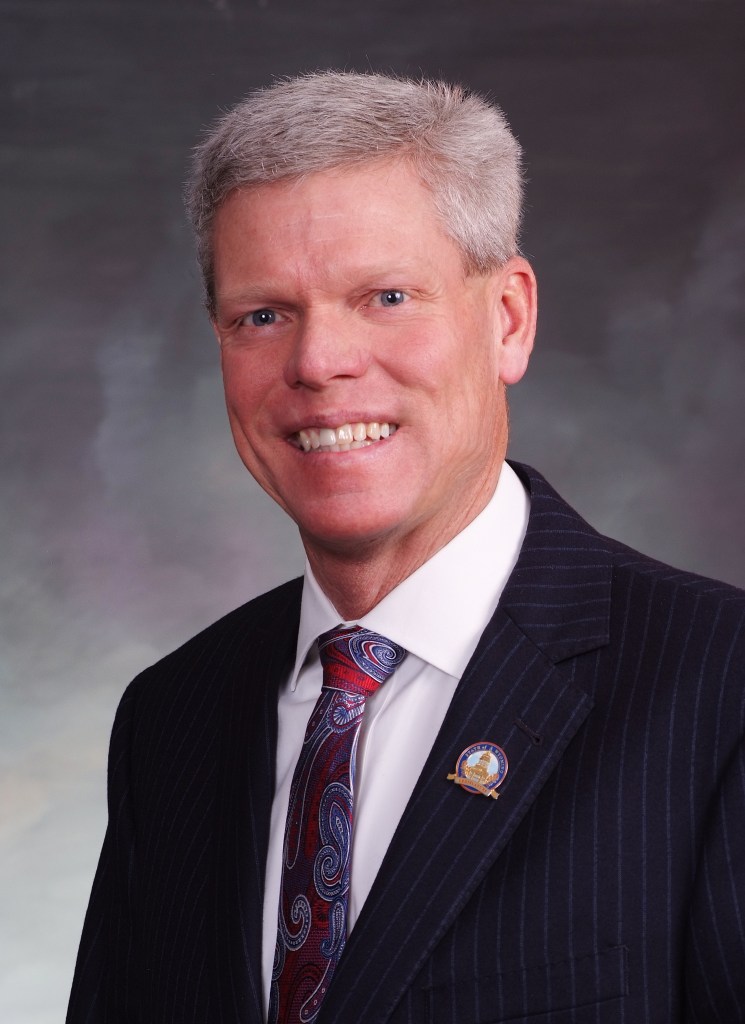
Sen. Cheri Steinmetz (R-Lingle), who brought Senate File 1 amendment 1S-3041 to defund the programs, discounts the need to curb greenhouse gas emissions and has openly opposed notions that Wyoming must produce lower-carbon energy. She convened a controversial climate denial hearing in February as chair of the Senate Agriculture, State and Public Lands & Water Resources Committee.
The primary message of the Feb. 13 hearing was the long-disproven falsehood that human-caused greenhouse gas emissions are not a major contributor to climate change or a threat to humans and the environment. Steinmetz organized the hearing amid growing criticism from the far right of the governor’s vocal efforts to make Wyoming carbon-negative.
Though there are few climate activists in the House, many see Gordon’s efforts as necessary to maintain the state’s fossil fuel-reliant economy amid buffeting market forces driven by policies from outside the state.
The eight Energy Matching Funds grantees to date that have received a combined $56.6 million have leveraged another $173 million in non-state funds to support various energy projects in Wyoming, Rep. Tom Walters (R-Casper) noted.
“The House absolutely doesn’t want to remove any of that funding — for the existing projects and for future potential projects,” Walters told WyoFile on Thursday. “There’s a little bit of negotiating to be done.”

What the legislature should be investigating, analyzing and debating is the validity of the array of pie in the sky projects lined up to mine our state treasury and federal ‘45Q’ tax credits. There’s already a long and distressing history of squandered millions eagerly loaned, granted and ‘invested’ in failed projects. Start with the Atlas Carbon loan and look at schemes like Cowboy Clean Fuels, CCS at end-of-life coal power plants and other highly questionable boondoggles. Yet all Cheyenne seems capable of is bickering over whether the governor can be trusted to write the checks and whether or not climate change is a hoax.
I would assume that Steinmetz thinks the earth is flat.