

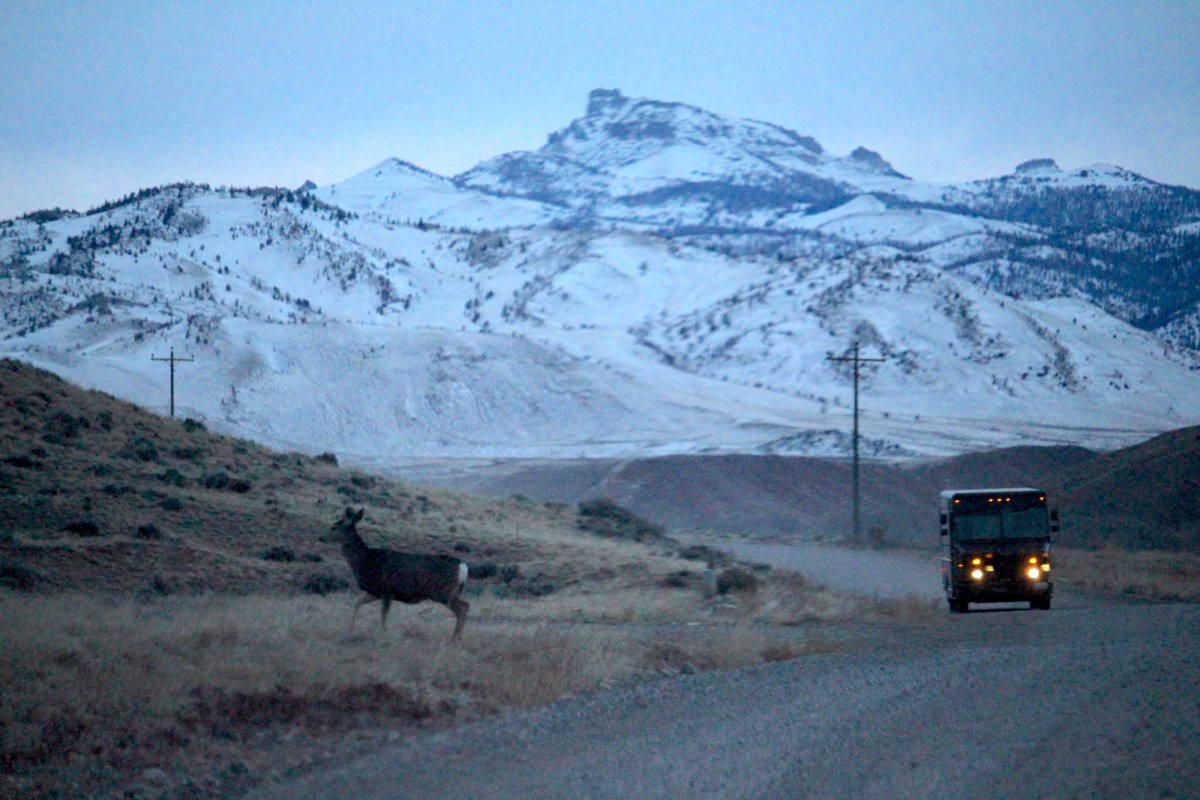
A schism has formed in the wildlife advocacy community over whether Wyoming ought to increase proposed protections for a migration corridor that leads mule deer from the Wind River Basin lowlands up into the high reaches of the Greater Yellowstone Ecosystem.
In July, the Wyoming Game and Fish Department announced it was seeking a lesser level of protections by “identifying” the Upper Wind River Mule Deer Migration Corridor — a classification that lacks any legal teeth, unlike “designating” the route. “Identifying” the route and going no further would be a first for the state agency, which has designated three mule deer migration corridors in the past and is pursuing designation of a pronghorn migration route despite opposition from industry groups.
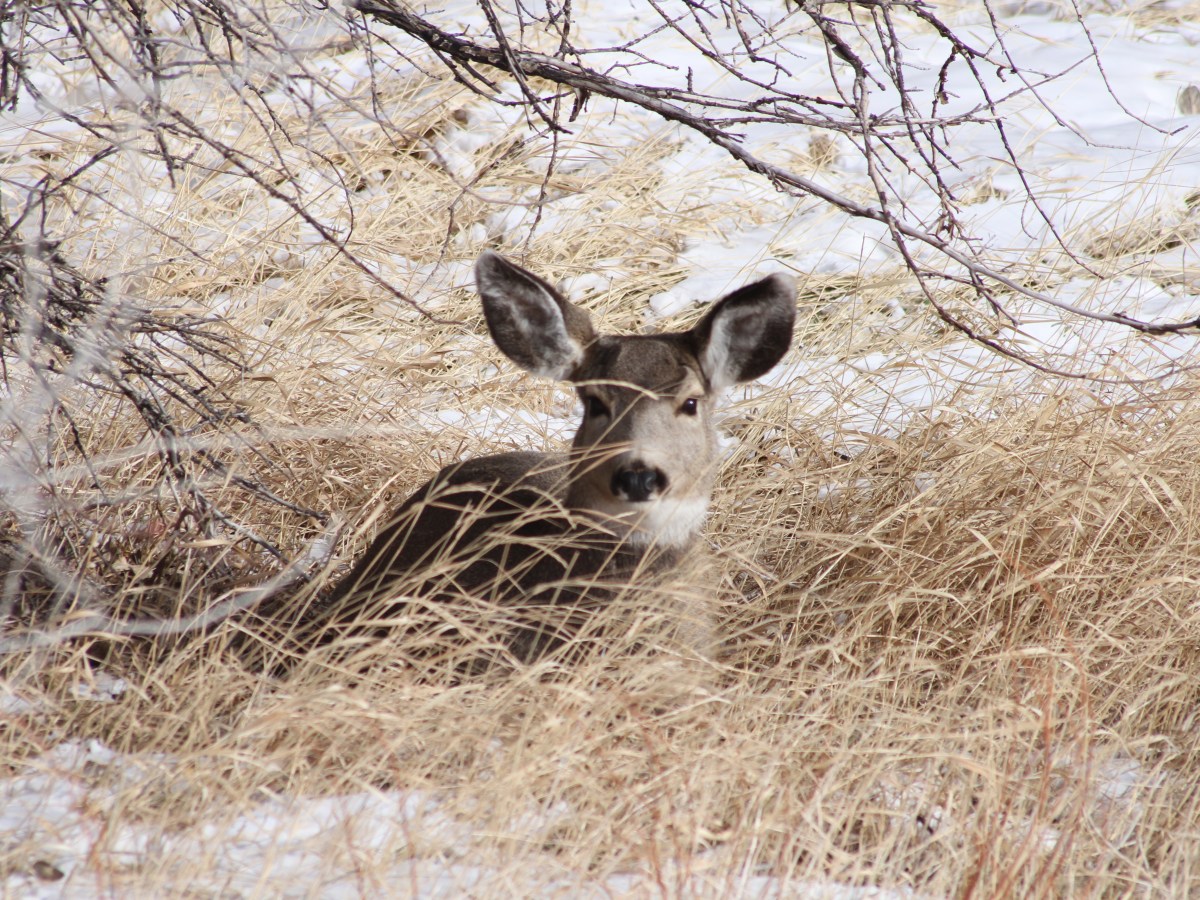
Groups that lobby on behalf of wildlife had mixed reactions to Game and Fish’s plan to seek the lesser level of protections for the migratory Dubois Mule Deer Herd.

Thousands of deer travel the generally east-west route as far as 90 miles — mostly on federal land — into the Shoshone and Bridger-Teton national forests. Since much of the federal land involved already has some protection from development, Game and Fish reasoned that the additional regulations of a designation were unnecessary.
“It seemed apparent to all of us that the threats and the risks to the functionality of the corridor just weren’t there to justify designation,” Jill Randall, Game and Fish’s big game migration coordinator, said at an early July public meeting in Dubois.

There’s significant dissent to that assessment, according to WyoFile’s review of nearly three dozen comments submitted to that agency about its plans to identify, but not designate, the migration corridor.
Criticism from conservationists
Jennifer Lamb, who directs conservation programs for The Nature Conservancy, pointed out in a comment letter that the Shoshone National Forest Plan classifies some of the corridor’s route as “suitable for oil and gas development.”
“While current activity on the forest does not suggest a high degree of risk now, it is nonetheless important to consider this given the lifespan of forest plans and the changes often seen in oil and gas development activity in response to market forces,” Lamb wrote. “If the Department settles on identification for this corridor, it is critical that WGFD keeps close track of changes that take place in this landscape over time and reconsider designation as necessary to maintain migration.”
Lamb encouraged using the designation classification. “Once a route is severed and migration ceases,” she wrote, “it is unlikely to ever be recovered.”
Other groups and individuals that shared their views struck a similar tone. The Wyoming Outdoor Council, Jackson Hole Conservation Alliance and Jackson Hole Wildlife Foundation wrote that “ideally” state wildlife managers would take the more protective step.
“It would be unfortunate, and potentially detrimental to efforts to conserve the functionality of this migration, if it were not prioritized for funding due to its being an ‘identified’ corridor versus being a ‘designated’ corridor,” the three groups stated in their comment letter.

A Wind River Basin rancher also argued for designation using similar reasoning. Landowners could be “missing out” on millions of dollars of Natural Resource Conservation Service funding in the absence of a designation, Hat Butte Ranch owner Nick Wheeler wrote in an email.
“I believe it’s important that agencies have the strongest policies to conserve our migration corridors,” Wheeler wrote. “Additionally, potential bottlenecks, which are the most critical part of migration corridors, need to be recognized and protected.”
In remarks made to the Jackson Hole News&Guide, Shoshone and Arapaho Fish and Game Director Art Lawson said that, “Personally, I think we would like to see protections” for the migration.
And support
Other stakeholders, however, support the state agency’s plans to only identify the Upper Wind River Mule Deer Migration Corridor.
Representatives for the Wyoming Wildlife Federation, Theodore Roosevelt Conservation Partnership, Muley Fanatic Foundation and Backcountry Hunters and Anglers jointly wrote that identifying the corridor would conserve mule deer by “increasing awareness, publicizing data, and leveraging funding.”
“We commend the WGFD and the Commission for forging ahead with corridor conservation in the face of mounting federal pressure and encourage continued state-led migration corridor conservation,” the groups’ letter reads.
Notably, the more hunting-aligned collective did not encourage the state to “designate” the migration corridor — a departure from their environmentalist counterparts.
Theodore Roosevelt Conservation Partnership staffer Josh Metten said that “strategically,” at this time, identification alone is a “good strategy.”
“I don’t think we’d oppose that corridor being designated.This is progress. Identification is a net positive for this corridor.
Josh metten
“I don’t think we’d oppose that corridor being designated,” said Metten, TRCP’s Wyoming field manager. “This is progress. Identification is a net positive for this corridor. Designation is not the only tool in the toolbox to … make sure this migration maintains connectivity.”
From Metten’s perspective, the advocacy groups engaging on the proposed mule deer migration corridor in the Upper Wind River are largely on the same page.
“I don’t disagree with the efforts of other orgs to pursue designation,” Metten said. “We all want the same thing: We want these corridors to be conserved.”
Here is how science meets politics and doesn’t work. Identify a critical issue through science and then do nothing about it because of politics. Shameful
Data from numerous GPS collars “identifies” the corridor(s). There is little to be gained by Game & Fish simply recognizing the collar data. All corridors should be designated, not just identified. This is BS!
The backbone of the Wyoming Game & Fish Department has sadly become less and less sturdy during the last 20 years or so. They seem to be willing to little by little, give away the farm. Pretty soon there will be nothing left.
Fully designate the migration routes now while there is little opposition to it. Why wait until it’s too late?
Half measures only create polarization. Identification ? Acknowledgement of the route is not sufficient. “Yup its there”….really?
Designation indicates a willingness to protect the wildlife resource.
The Nature Conservancy, designed as an avenue to park the ultra-riches’ money as well as leverage a considerable amount of taxpayers money in the form of grants to obtain 1,000’s of acres of real estate (access should be made public due to the high % of public funding involved) shouldn’t be the ‘go to’ organization that Wyofile repeatedly quotes in these ‘conservation’ articles.