

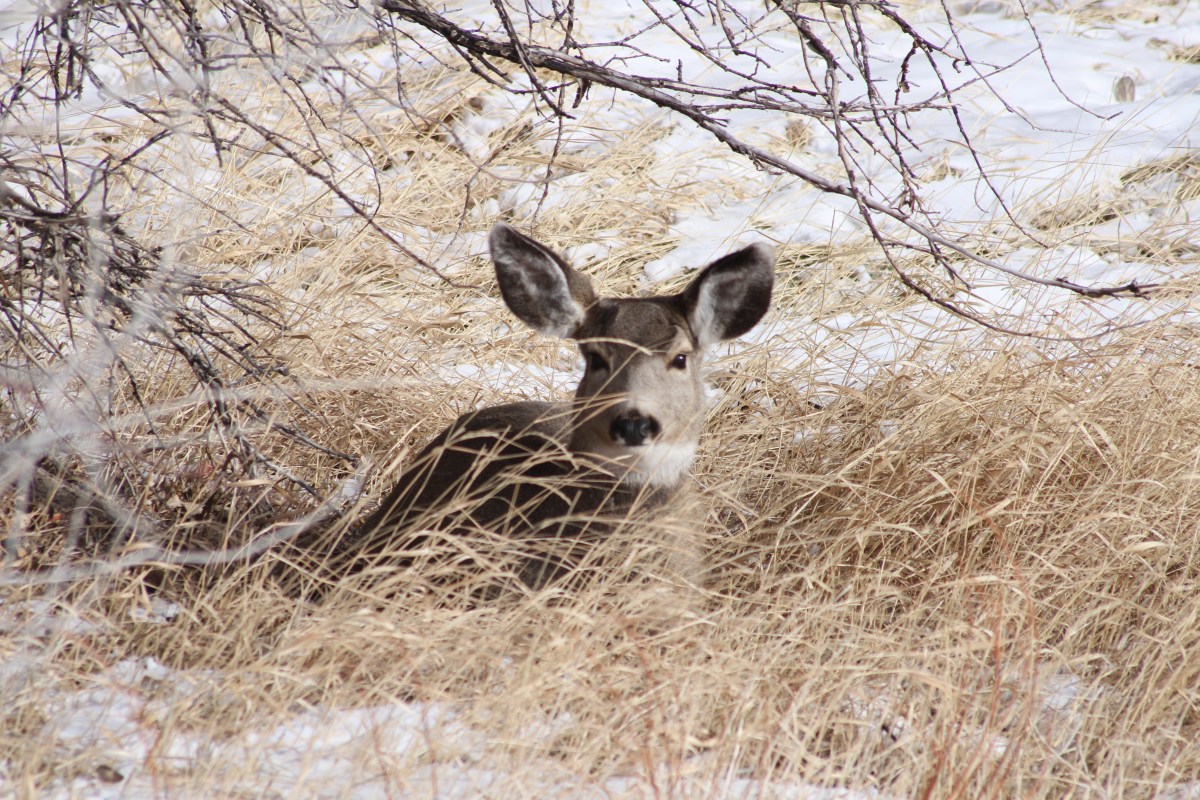
DUBOIS—Staff from the Wyoming Game and Fish Department’s Lander and Jackson regions collectively decided to delineate the route without installing the regulatory teeth of the state’s migration policy, Jill Randall recalled.
Mule deer migrating up into Wind River Basin’s high reaches and well beyond would be OK in the absence of special protections, the thinking went.
“It seemed apparent to all of us that the threats and the risks to the functionality of the corridor just weren’t there to justify designation,” Randall, who coordinates big game migration issues for the state agency, said at a July 9 public meeting.
“That, of course, can change over time,” she added. “If something with land-use changes, we can always redo this threat evaluation.”

Wyoming Game and Fish, in the meantime, is proposing its first-ever “identification” of a migration corridor — essentially a move that recognizes an ungulate herd’s seasonal travel patterns, but falls short of the “designation” that has granted three other migration corridors legal protections via a Gov. Mark Gordon executive order. The proposal is for the Upper Wind River Mule Deer Migration Corridor, which encompasses the seasonal travel paths of the highly migratory Dubois Mule Deer Herd, 75% of which head for the hills each summer. The route, which spans as far as 90 miles, takes thousands of deer from Wind River Basin lowlands on the Wind River Indian Reservation on a generally east-to-west, winter-to-summer migration into the Shoshone and Bridger-Teton national forests — some even as far as the Teton Range.
Merely “identifying” the Dubois Herd’s migration will still have benefits, Randall said. Taking the step could still free up funds for conservation efforts, and it could trigger “voluntary reviews” of projects proposed within the corridor.
Some parties are skeptical.
Dubois resident Nick Dobric, who manages Wyoming conservation issues for The Wilderness Society, wrote in an emailed statement that Game and Fish’s “pre-decisional” recommendation to ID, but not designate the corridor was “concerning.”
“Landowners will be missing out on being prioritized for millions of dollars of [Natural Resources Conservation Service] funding if this corridor is not designated,” Dobric stated. “Additionally, without designation, land managers will be limited in their abilities to site harmful projects outside of the migration corridor.”

Game and Fish officials pushed back on such critiques at the July 9 public meeting in Dubois.
“We’re not recommending designation, but I want to make it clear that it is not pre-decisional,” said Daryl Lutz, wildlife management coordinator for the agency’s Lander Region.
The public has the opportunity to weigh in, he said, and the department and its oversight body — the Wyoming Game and Fish Commission — can still change course.
“We are taking public input tonight about what you all think would be best for this corridor,” Lutz said.
Additionally, the public can weigh in online. Comments are due by Aug. 9.
Ahead of their identify-not-designate recommendation, Game and Fish officials completed an eight-page “threat evaluation.” The document breaks down the obstacles faced by 147 GPS-collared mule deer between 2014 and 2023. Migratory mule deer now and 10 years into the future still face an array of threats — development, human recreation and highway impacts were all listed — but those threats were largely predicted to remain the same. Only one new threat was expected to pop up: “Wildfire threat due to cheatgrass invasion of sagebrush ecosystem.”
The evaluation also breaks down the land ownership of the migratory animal’s habitat.
“One of the reasons for ‘identifying,’ we thought, is that the bulk of these migrations and winter ranges are on public lands,” Zach Gregory, Game and Fish wildlife biologist for the herd, said at the Dubois meeting.
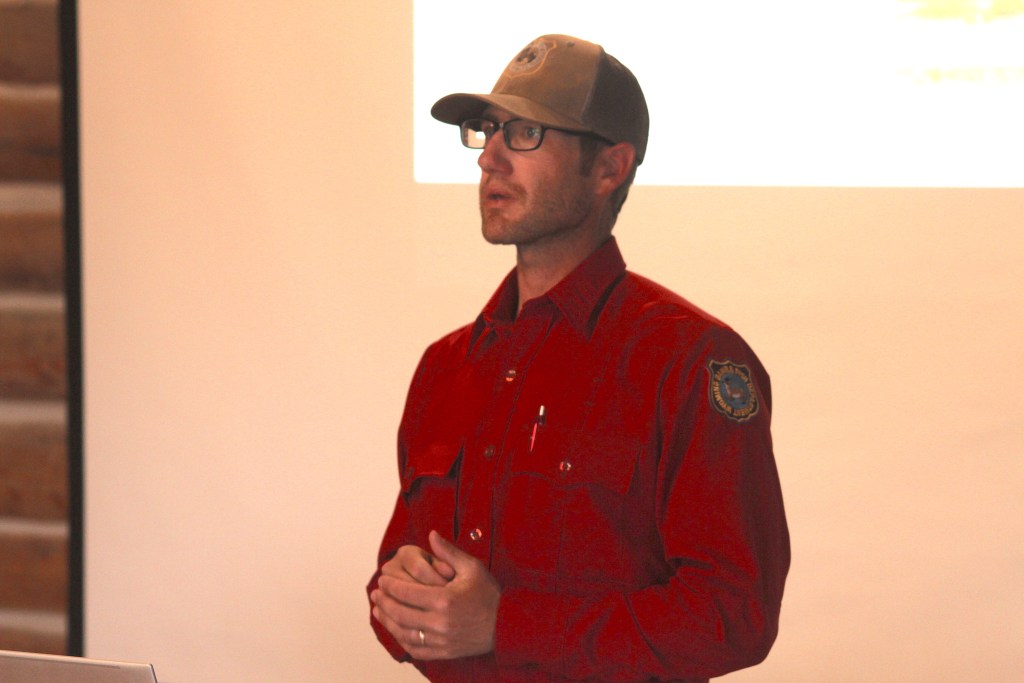
Federal land managers have their own project review processes — and are seeking Game and Fish’s input already, he said.
Another consideration for ID’ing the corridor was that the Dubois Mule Deer Herd has held up relatively well, even while the species has notoriously struggled elsewhere in Wyoming. Although the population is currently 60% below the state agency’s 8,000-deer goal, it’s hovered there, rather than continuing to decline, Game and Fish reports show.
Out of respect for the sovereignty of the Eastern Shoshone and Northern Arapaho tribes, Game and Fish’s proposed migration corridor comes to a complete halt where it runs into the 2.2-million-acre Wind River Indian Reservation. That’s not to say the deer will enjoy no protections on tribal lands.
“From the discussions we’ve had with tribal councils, they are keenly interested in doing much the same as we are with this process,” Lutz said. “My prophecy is that they’re going to do what’s right for those habitats.”
The proposed identification of the Upper Wind River Mule Deer Migration Corridor is only the second time Wyoming Game and Fish has formally examined an ungulate migration corridor since Gordon signed his executive order nearly 5 years ago. (Three corridors — Sublette, Baggs and Platte Valley mule deer — were designated prior to the revamped policy.)
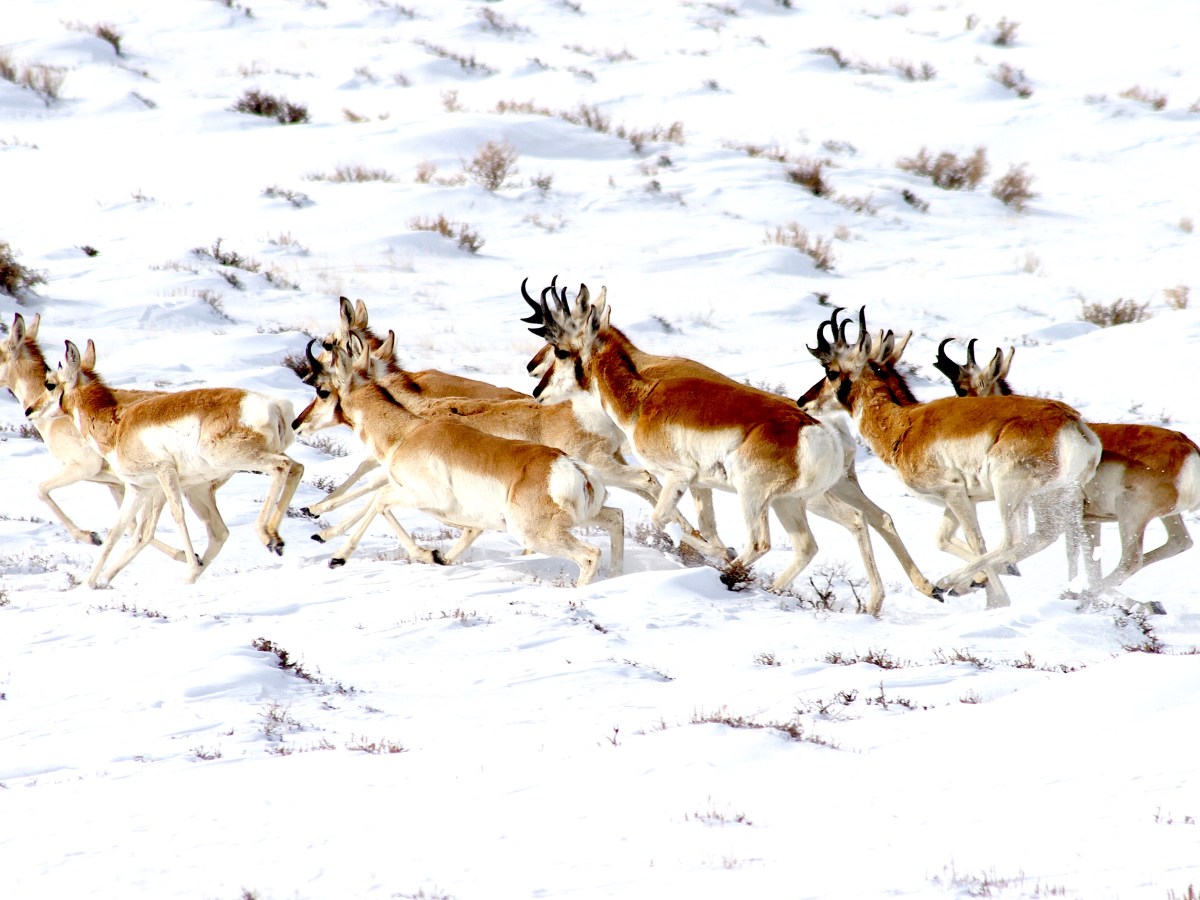
The proposed Sublette Pronghorn Migration Corridor — which spans from Interstate 80 all the way to Bondurant and Grand Teton National Park — was the first pursued since the new policy. In March, Wyoming Game and Fish commissioners unanimously voted to pursue a more protective “designation” of the embattled pronghorn path.

Here in Montana there’s been a mixed breed of white tail and mules for many of years, I’ve even shot a few myself that were mixed you can tell by the antlers because they really will have the rack shape of a white tail or vice versa
Wyoming Game and Fish should help us all to understand where our real wealth resides: in nature, in protecting BIOLOGICAL riches at a minor expense to Oil and Gas. You have found and named the herds. Please protect the land and resources they need for them (and us) to survive.
Seems to me that politics has, once again, changed the way that the GF does things. The public should be accustomed to this by now.