

This story was originally published by MPR News.
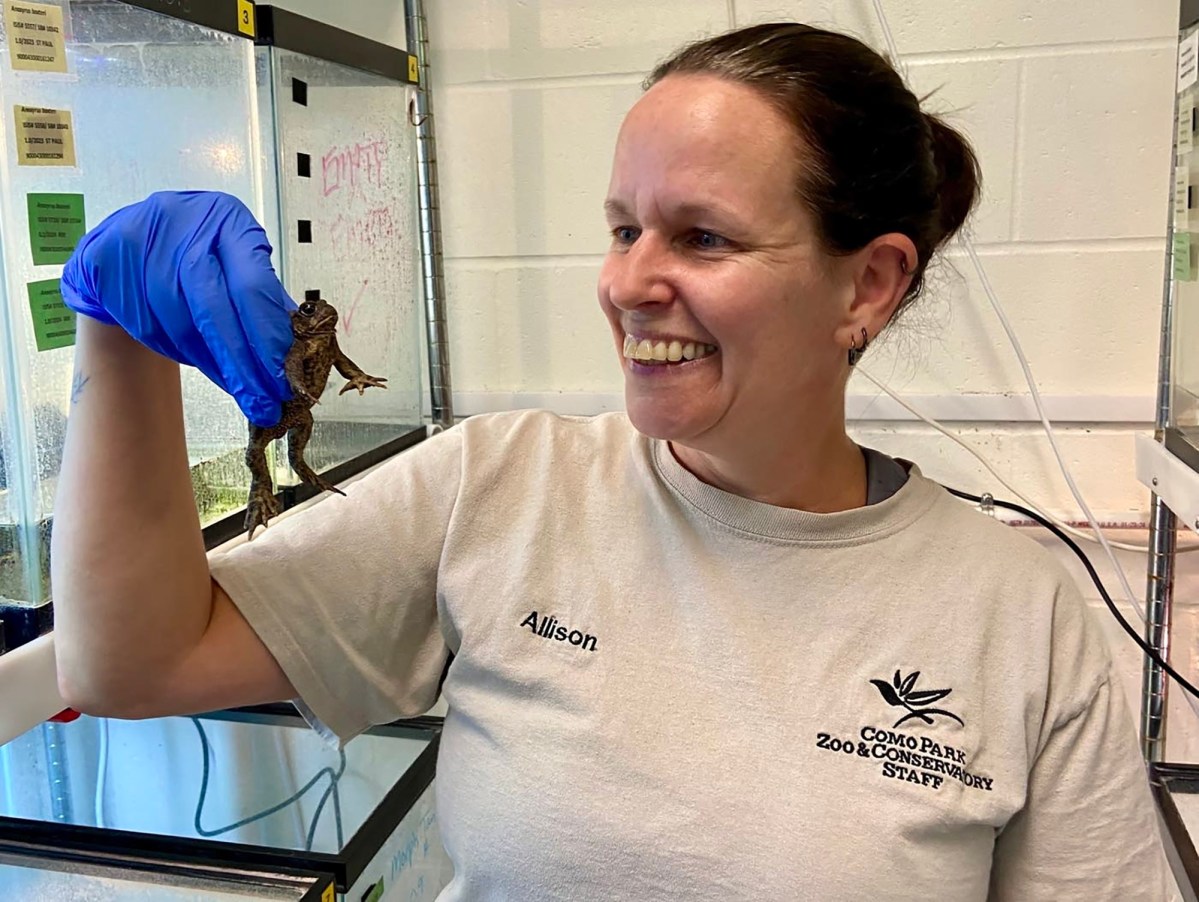
The main entrance of Como Park Zoo & Conservatory in St. Paul is busy with strollers and chatty kids on a hot weekday afternoon. Below all that, in a tiny basement room marked “biosecure,” zookeeper Allison Pizel tends to one family in particular.
“This is Meatball,” she said, holding a brown blob of a toad in a gloved hand. Meatball is a survivor, as the only member of Pizel’s breeding program to make it from egg to tadpole to toad in 2025. Meatball also belongs to one of the most endangered amphibian species in North America: the Wyoming toad.
Como is one of seven zoos, plus two other breeding sites, that are working with wildlife professionals to pull the toad from the edge of extinction by building up its population and reintroducing it to its home range.
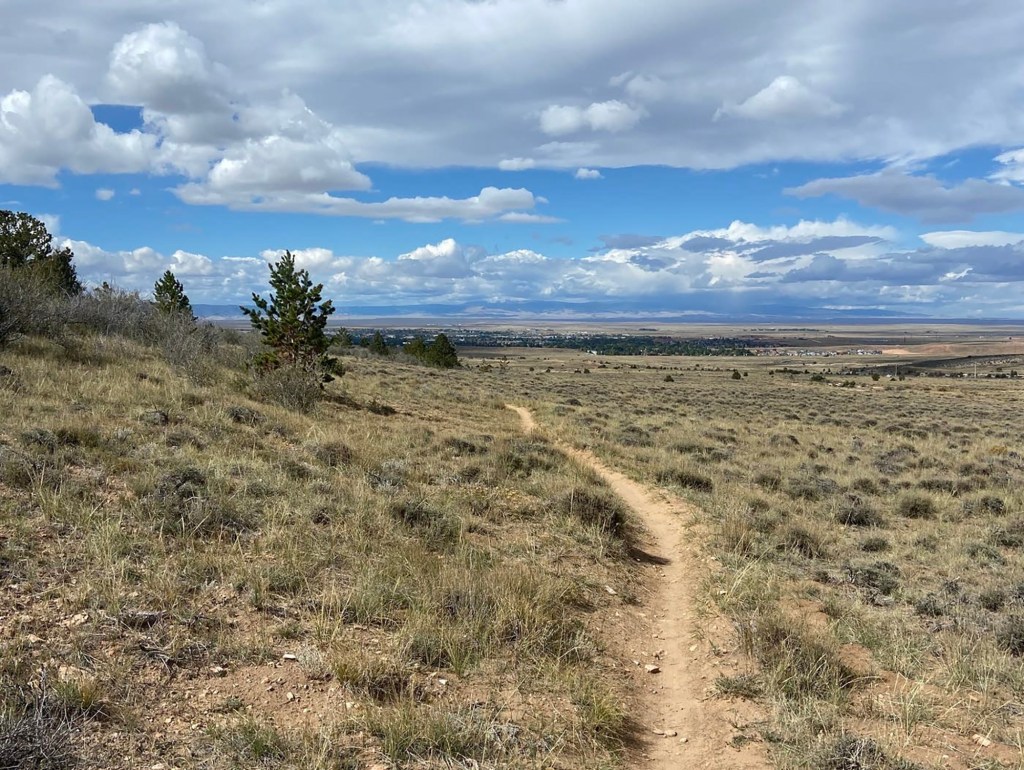
The species is native to a single valley in the state of Wyoming, called the Laramie Basin. Meatball has never been there; she grew up in the room full of tanks, where she and other toads spend their days eating crickets and mealworms.
Each year, Pizel puts some toads in what she describes as a fancy refrigerator for a short hibernation. Then, she pulls them out to breed. She gives them hormones and sets up “an ancient CD player” with their croaks.
This year was much more successful than last. Pizel recently FedExed about 3,000 tadpoles to Wyoming to be reintroduced. She blames last year’s poor numbers on a couple factors: Some toads died in hibernation, and she bred one-year-old males, which are often too young to successfully fertilize eggs.
Pizel also keeps some tadpoles to let them morph into toads in captivity. Some will breed future generations and others will go to Wyoming as adults, with microchips to help track their survival.
She does much of this work alone, and avoids contact with other amphibians, to protect the toads from a deadly skin disease called chytrid fungus. It affects many amphibians, including 20 species in Minnesota, she said, but the Wyoming toad is particularly vulnerable.
The species has suffered not only from disease, but also pesticides and habitat loss. By the mid-1980s, people thought they were gone for good, according to Wendy Estes-Zumpf, herpetological coordinator for the Wyoming Game and Fish Department.
“They were accidentally rediscovered at a private fishing pond out in the Laramie Basin, and that populations seemed to be doing really well,” she said. “But it started crashing in 1989.”
Biologists tried to rescue the species by bringing those toads into captivity and the breeding program was born. Estes-Zumpf says all the Wyoming toads alive today are descended from about ten individuals, a puddle of a gene pool.
“Genetic diversity is what helps species adapt to new threats, diseases,” Estes-Zumpf said. “That’s sort of the biggest issue in trying to help them battle chytrid fungus.”
That’s where Derek Benson comes in. He leads amphibian conservation at the Henry Doorly Zoo and Aquarium in Omaha, Nebraska. He is also in charge of what’s called the studbook for Wyoming toad recovery. Benson tracks births, deaths and breeding pairs across all the sites to try to squeeze as much diversity out of the gene pool as possible. Today, there are about 650 individual toads in captivity, he said.
“Over the last 10 years or so, we have increased that genetic diversity,” Benson said. And each of those years, he said, toads have bred in the wild, another sign of progress.
Despite some wins, the population still can’t sustain itself. It faces major obstacles, including climate conditions. Some of the toads’ habitat in Wyoming is running dry, Estes-Zumpf said, and they need water to live and reproduce.
“We had a drought last year, and a lot of our sites didn’t have sufficient water for tadpoles to metamorphose. This year it’s even worse,” she said. “We’re in an epic drought, and we’re really limited in where we can release tadpoles and toads right now.”
The lives of these toads have always been sort of unlikely, she said, which is part of what she loves about them.
“They’re not agile jumpers like frogs. They just sort of crawl around,” she said. “Somehow these awkward little creatures with grumpy faces; they’ve persisted for this long.”
When glaciers pulled back from what is now the Laramie valley roughly 10,000 years ago, they left behind a different species, the Canadian toad. It evolved into a new, local variety.
Estes-Zumpf says the toad is a special part of Laramie’s natural history. “It is Wyoming’s toad, and we can’t just sit back and let it wink out. What’s so encouraging is that so many people around the country are helping us to make sure that this doesn’t happen.”
Pizel and other zookeepers will travel to Wyoming in early August to meet with partners there and look for toads in the wild. In the longer term, she is looking forward to potentially moving her breeding program to a larger room in Como Zoo’s aquatics building.
There, zoo visitors could also get to know the Wyoming toad, through a window.


Those frogs sure are funny looking fellas.
I miss the conservatives that use to conserve. Now it’s sell it off and pave it over.
We never want to forget how Meatball’s ancestors were first found and identified, by Wyoming’s own Dr George Baxter at UW, thus given the scientific name Bufo hemiophrys baxteri. Dr Baxter’s love of herps never left him as he taught a plethora of budding fisheries students, me among them. Accompanying Doc on field trips often included sudden sightings of an amphibian and a quick lesson in taxonomy and history…..and then proceeding on to look for fishes.
Good stuff. Another UW faculty member (Beth Williams) and her WGFD spouse (Tom Thorne) had major roles in the initial captive breeding program in Sybille Canyon (now the Thorne/Williams Research Center and HMA), and in identifying diseases affecting the toads both in the wild and in captivity (including chytrid). A lot of toads passed through Sybille (and sadly, the WY State Vet Lab) back in the day.