


CHEYENNE—A second set of lawmakers took about 12 hours to accomplish what their colleagues couldn’t get done in five days — negotiate a single, unified budget between the House and the Senate.
The compromise budget maintains funding for the University of Wyoming’s gender studies program, which has been a frequent target of the far right, but does away with fiscal support for the school’s Office of Diversity, Equity and Inclusion. It restores money for school construction and an energy program operated through the governor’s office. Funding for a suicide prevention hotline remained in play, albeit at a lower level than originally proposed.
“Hopefully, we’ve done a good product for the people of Wyoming. I think that we have,” Sen. Tara Nethercott (R-Cheyenne) said Tuesday night as budget talks wrapped up. “I’m proud of the work that we’ve done.”
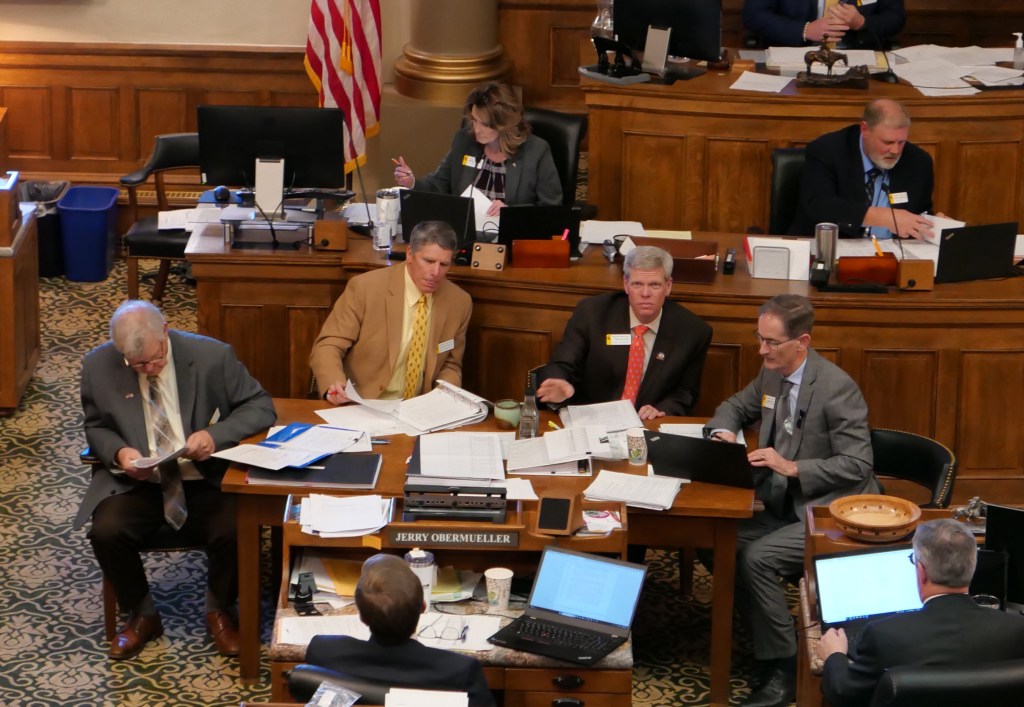
Nethercott led the Senate side of the budget bill’s conference committee — known as a free committee — after negotiations imploded. Things fell apart Monday night when House negotiators called a stalemate. The Senate appointed a second set of lawmakers to pick up the pieces, but not before plunging into a chaotic debate about bad faith and ill intentions.
With the dust just barely settled, the free committee got to work first thing Tuesday morning.
“This committee has been formed for all of 12 hours,” Nethercott said as the effort began. “We are committed to getting this budget done for the people of Wyoming and for the people watching closely in this room. So let’s get to work.”

Before 8 that night, the committee had a budget.
But the work’s not over. Both the Senate and the House must approve the budget with a simple majority vote. That’s not expected to happen until Thursday afternoon or Friday morning, once the nonpartisan staffers at the Legislative Service Office have finalized the budget and the budget report and free committee members present the bill to their respective chambers.
At that point, neither chamber may approve or reject just a portion of the bill. It’s an all-or-nothing vote.
If the bill fails in one or both chambers, a third committee may be appointed to return to negotiations. But with time limited to just hours at that point in the scheduled session, lawmakers may be forced into additional days at the Capitol or a special session sometime before July.
Free Committee
Senate President Ogden Driskill (R-Devils Tower) appointed himself, Nethercott and Sens. Dan Dockstader (R-Afton), Mike Gierau (D-Jackson) and Stacy Jones (R-Rock Springs) to the free committee.
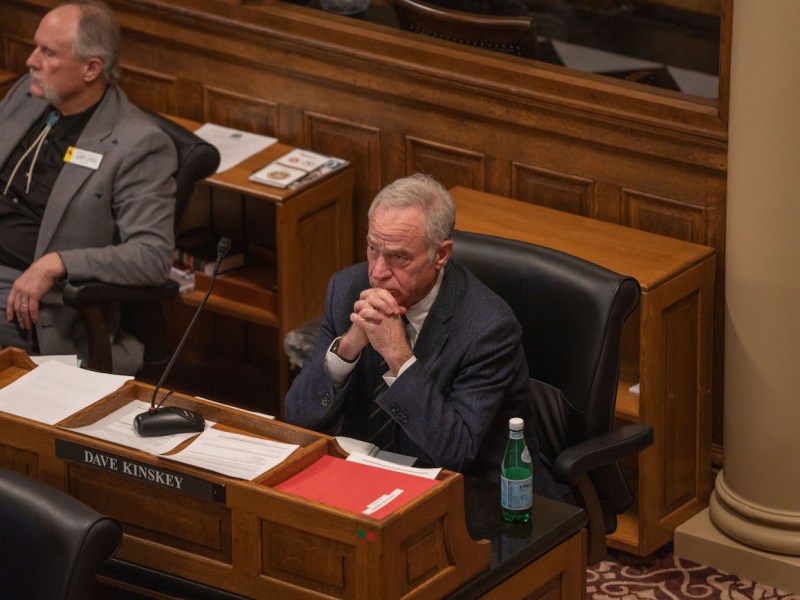
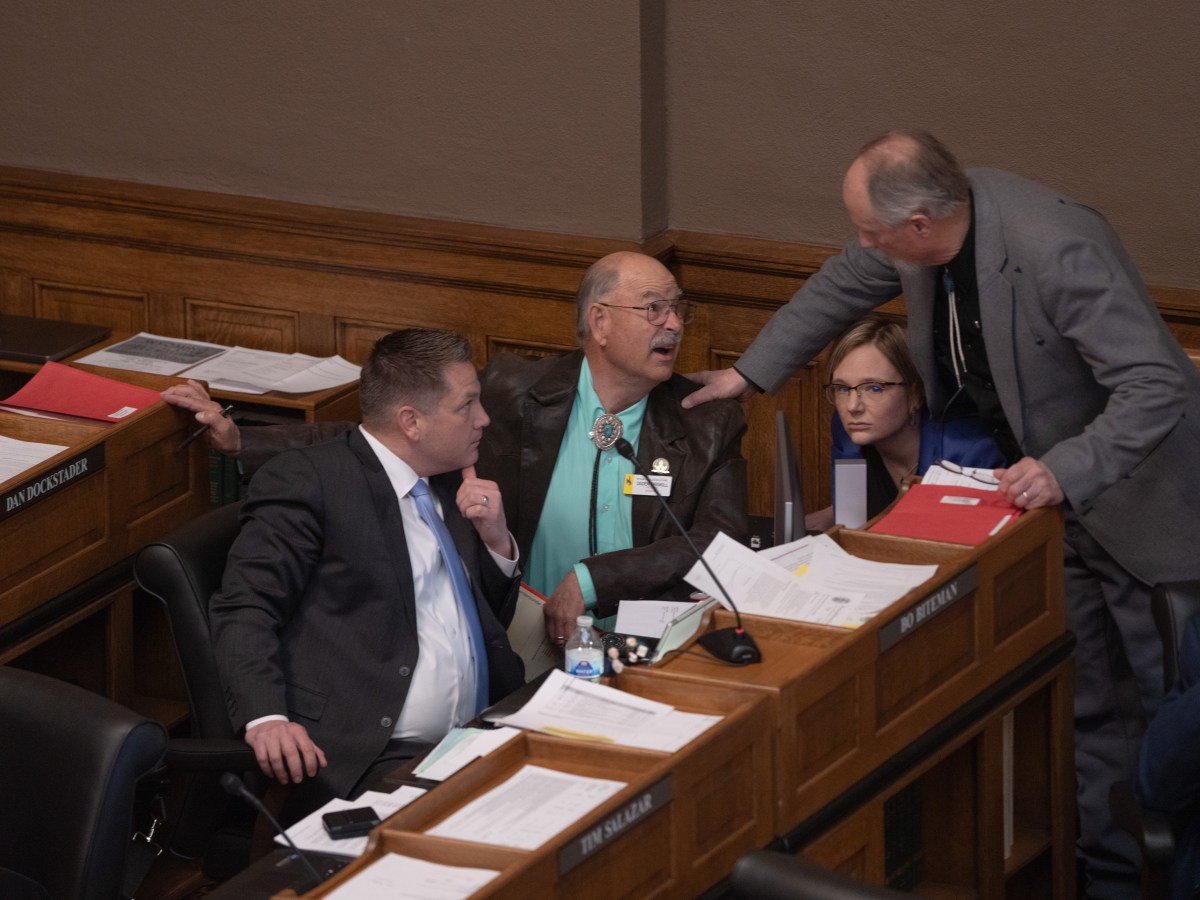
They replaced Sens. Anthony Bouchard (R-Cheyenne), Dave Kinskey (R-Sheridan), Dan Laursen (R-Powell), Troy McKeown (R-Gillette) and Tim Salazar (R-Riverton), who served on the first committee. Notably, that group, which was also chosen by Driskill, had little experience on the Appropriations Committee.
In the lower chamber, Speaker of the House Albert Sommers (R-Pinedale) appointed himself to replace Rep. Trey Sherwood (D-Laramie). Otherwise, the appointees stayed the same — Reps. Lloyd Larsen (R-Lander), Bob Nicholas (R-Cheyenne), Clark Stith (R-Rock Springs) and Tom Walters (R-Casper).
The two sides deliberated privately throughout Tuesday before reconvening around 5:30 p.m. From there, the committee zipped through dozens of motions to meet somewhere in the middle.
What’s in the bill
One compromise came down to several amendments related to the University of Wyoming.
The committee voted to keep funding for gender studies courses at UW, but upheld most of the Senate’s position on diversity, equity and inclusion at the university.
More specifically, the committee voted to defund the Office of Diversity, Equity and Inclusion but dropped a footnote from the original amendment that would have defunded “any diversity, equity and inclusion program, activity or function.” That language would have jeopardized roughly $120 million of UW’s federal research funds per year.
Additionally, the committee rejected the Senate’s position to require UW to submit a biennial budget.
One of the larger cuts the committee adopted fell on the state’s capital construction fund. That included removing funding for a new state office in Riverton as well as $69 million for the Veterans’ Home of Wyoming in Buffalo. Conversely, the committee added $2.5 million for a community recreation center in Riverton, as well as $55.8 million of federal funds for the Military Department’s entry facility in Guernsey and the F.E. Warren power station.
When it came to school construction, the committee restored $110 million that the Senate had removed. It also allocated $150 million from the school foundation fund for a new high school in Rock Springs.
Another reversion from the Senate’s position involved the governor’s Energy Matching Funds program. The upper chamber had swept the $400 million appropriation into savings and other budget accounts, but the committee restored all but $50 million.
The House and the Senate had voted differently on several footnotes related to the secretary of state’s office. Ultimately, the committee sided with the Senate and rejected language to restrict that office’s litigation powers. The committee also tossed out $100,000 to hire a third-party contractor to investigate anonymous election mailers.
Both chambers had voted to send $2 million to Texas “for the purposes of securing the United States border.” But the committee decreased that to $750,000 and specified that the dollars could only be used to reimburse Wyoming law enforcement that assists Texas.
“It’s the best way Wyoming can contribute and still maintain our healthy economy,” Rep. Walters said.
When it came to mental health, the committee reduced an appropriation to the 988 suicide hotline trust fund account from $40 million to $20 million. It also reduced spending intended to strengthen mental health resources in K-12 schools from $18.5 million to $15 million.
As for the Kelly Parcel, the committee kept a footnote to create a sale condition related to the Bureau of Land Management’s draft Rock Springs Resource Management Plan. More specifically, the federal government would be prohibited from adopting the rights-of-way restrictions proposed in the “preferred alternative” of its draft environmental impact statement.
It dropped the Senate’s footnote to require the federal government to lease the land for livestock grazing and allow public hunting for perpetuity, but kept the House’s version of the footnote.
Sen. Gierau told WyoFile Wednesday the House version was kept since it was “less prescriptive” and likely easier for the federal government to implement.
As the session is now scheduled, the window has closed for lawmakers to challenge line-item vetoes in the budget from the governor.
Correction: This story has been updated to correct details related to the Kelly Parcel.

This clear wrap up is invaluable. Thank you so much Maggie Mullen and team.
Out with Gray and in with Tara
Thanks for the concise update. I am grateful to the legislators who put in the real work without grandstanding.
I wish Wyoming voters could do better in sending thoughtful rational people to the legislature, state and local offices. This budget session alone stands out in the consequences of sending people who are not qualified to be in these positions. For starters, don’t return anyone that is a member of the “Freedom Caucus”. That caucus only panders to ‘freedom for me and not to thee’ policies and histrionics.
Agreed. Probably some of this group are my friends, but they certainly don’t represent good legislation or reasonable dialog.