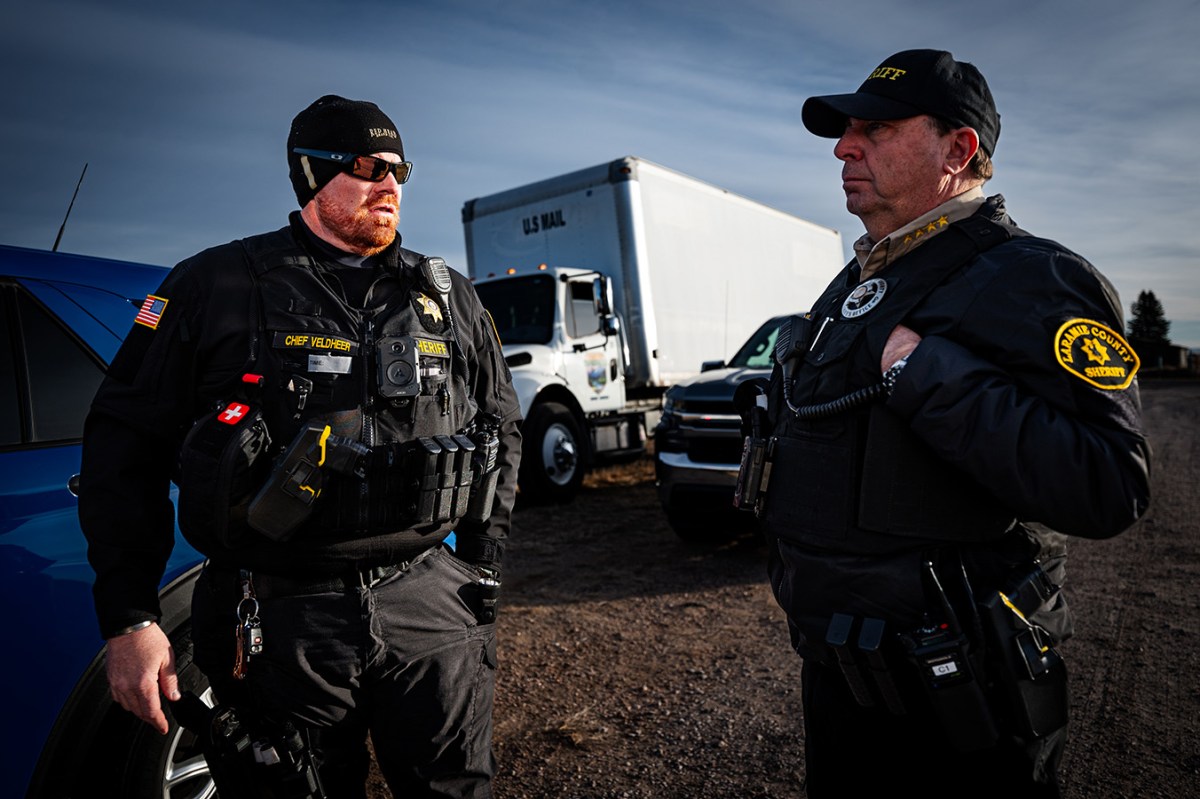
The American Civil Liberties Union of Wyoming, along with three local organizations, has filed a lawsuit against Laramie County Sheriff Brian Kozak and the Laramie County Sheriff’s Office.
The legal challenge alleges that the sheriff exceeded his statutory authority by unilaterally entering into three agreements with U.S. Immigration and Customs Enforcement outside of the proper legal processes. The lawsuit centers on Kozak’s decision to enroll the county in three models of the 287(g) program, which effectively deputize local law enforcement to perform federal immigration duties. The ACLU argues that by bypassing the Laramie County commissioners and the public process, Kozak violated state laws designed to ensure democratic oversight and the separation of powers.
The local organizations — a church, a barbershop and a nonprofit advocacy group — claim they have all suffered as a result of Kozak’s decision, and would have opposed the move had there been public input allowed prior to the partnership with ICE.
ICE in Wyoming
Laramie County is the most populous county in the state and home to one of the largest sheriff’s offices in Wyoming. For the ACLU, this makes the county a critical battlefield for the rule of law.
“Cheyenne is not a fringe case study,” said Andrew Malone, ACLU of Wyoming senior staff attorney. “The things that happen in Laramie County and Cheyenne set the template for things that happen in the rest of the state.”
Malone said the lawsuit is not merely about a policy disagreement over immigration, but about the transparency of the process.
“If the county is going to adopt these agreements, then it needs to do so in an open, transparent and democratic manner that complies with all of the same laws,” he said.
The Laramie County Sheriff’s Office made headlines in April, when it logged the greatest number of immigration arrests in the country by any local or state law enforcement agency. Many of these arrests occurred during a publicized traffic operation Kozak dubbed “Truck Around and Find Out,” which resulted in 32 immigration arrests in a single week.
Accusations against Kozak
The legal complaint details three specific ways in which Kozak allegedly acted “ultra vires,” or beyond the legal power of his office.
In the first allegation, the plaintiffs assert that under Wyoming law, the power to enter into contracts on behalf of a county belongs to the board of county commissioners, not the sheriff. The complaint notes that the board never debated, voted on or officially sanctioned the decision to enter the 287(g) agreements.
Several Laramie County commissioners were contacted for this story. While only Troy Thompson was reached before publication time, he declined to comment on this legal matter.
“Cheyenne is not a fringe case study.”
Andrew Malone, ACLU of Wyoming senior staff attorney
The second allegation against Kozak asserts that the sheriff lacked the authority to incur expenses for the 287(g) program without written permission from the county commission. Between September 2025 and January 2026, the Sheriff’s Office reportedly spent approximately $75,000 on immigration-related expenses.
Previous reporting from the Wyoming Tribune Eagle indicated that Kozak was seeking federal reimbursement for the expenditures.
The allegation is that Kozak violated the Wyoming Administrative Procedure Act. The ACLU argued that because the ICE agreements established new substantive rules for the Sheriff’s Office, allowing deputies to perform duties they previously lacked the authority to perform, Kozak was required to follow state administrative procedures. This would have required a 45-day notice to the public and an opportunity for a public hearing, if requested by 25 or more people, according to the ACLU complaint.
“Sheriffs under Wyoming law have limited authority granted by statute,” Malone said in a press release. “Sheriff Kozak blatantly overstepped his authority by enrolling Laramie County in 287(g) agreements and robbed the community of their chance to weigh in on the matter.”
When contacted for comment, Kozak told the Wyoming Tribune Eagle over text message that “It is the policy of Laramie [County] not to comment on pending claims.”
Cheyenne plaintiffs
The local plaintiffs — Juntos Wyoming, the Unitarian Universalist Church of Cheyenne and Drew’s Barbershop — say the sheriff’s actions have caused tangible harm to their operations and the broader community.
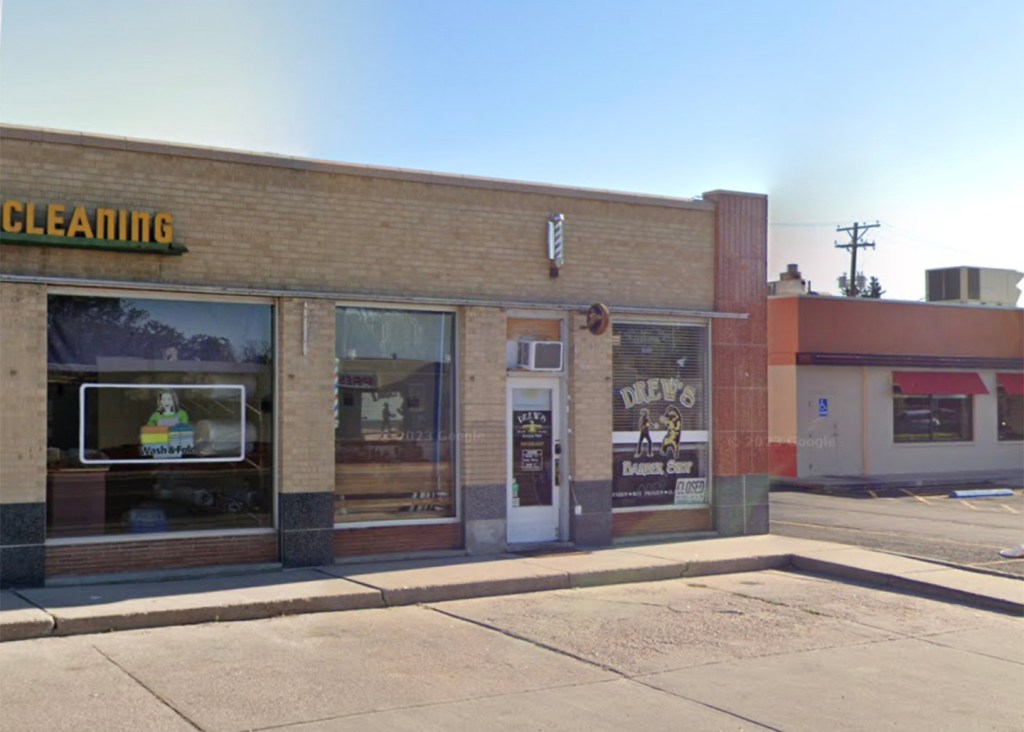
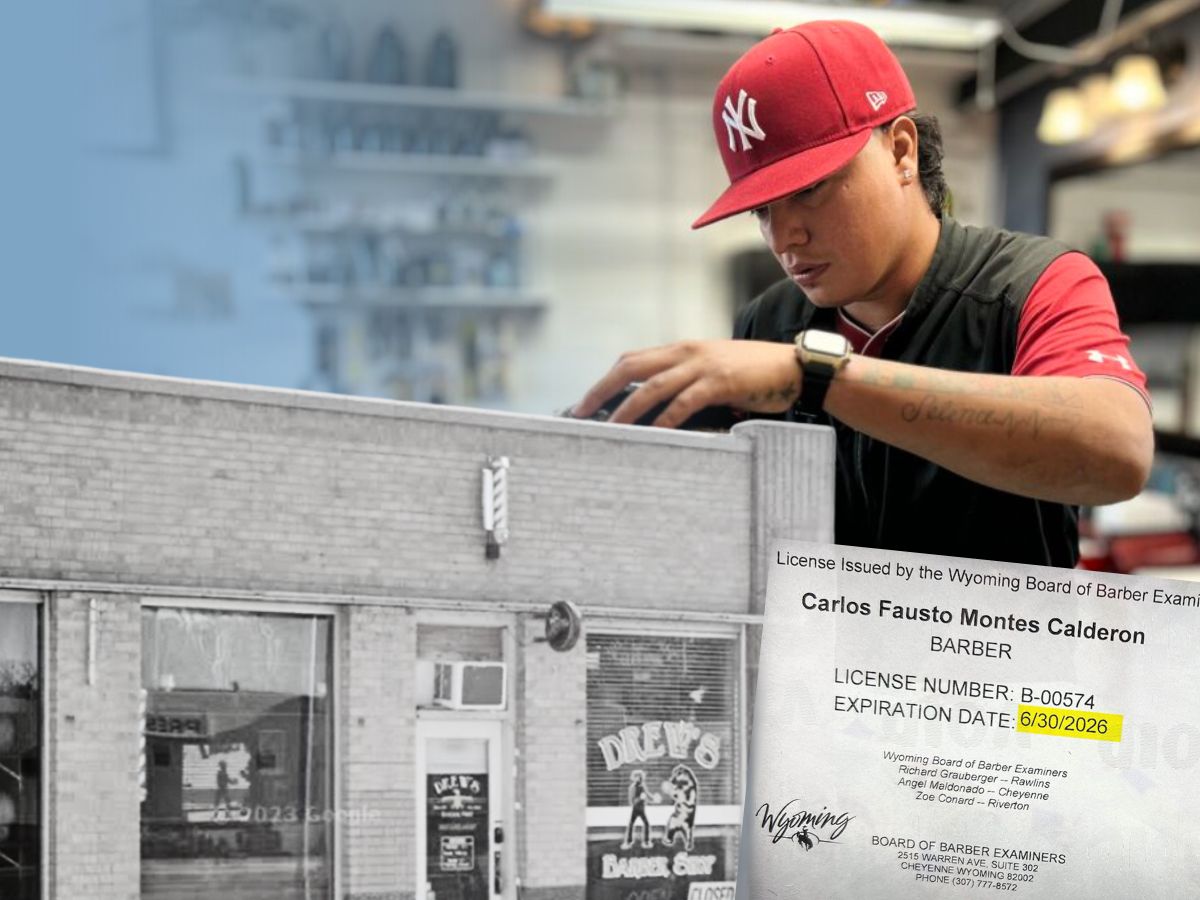
Drew Weston, owner of Drew’s Barbershop, detailed the economic and emotional toll in the legal complaint.
The lawsuit describes how an employed barber named Carlos Montes was pulled over by a deputy for an inoperable headlight and subsequently deported to Nicaragua under the authority of the 287(g) agreements.
“Strong and safe communities are built, in part, on trust between neighbors and officials,” Weston said in a press release. “Wrongful deportation was not one any law-abiding business owner could foresee. We were unable to keep our shop booths fully contracted out as a result, and it impacted our business deeply.”
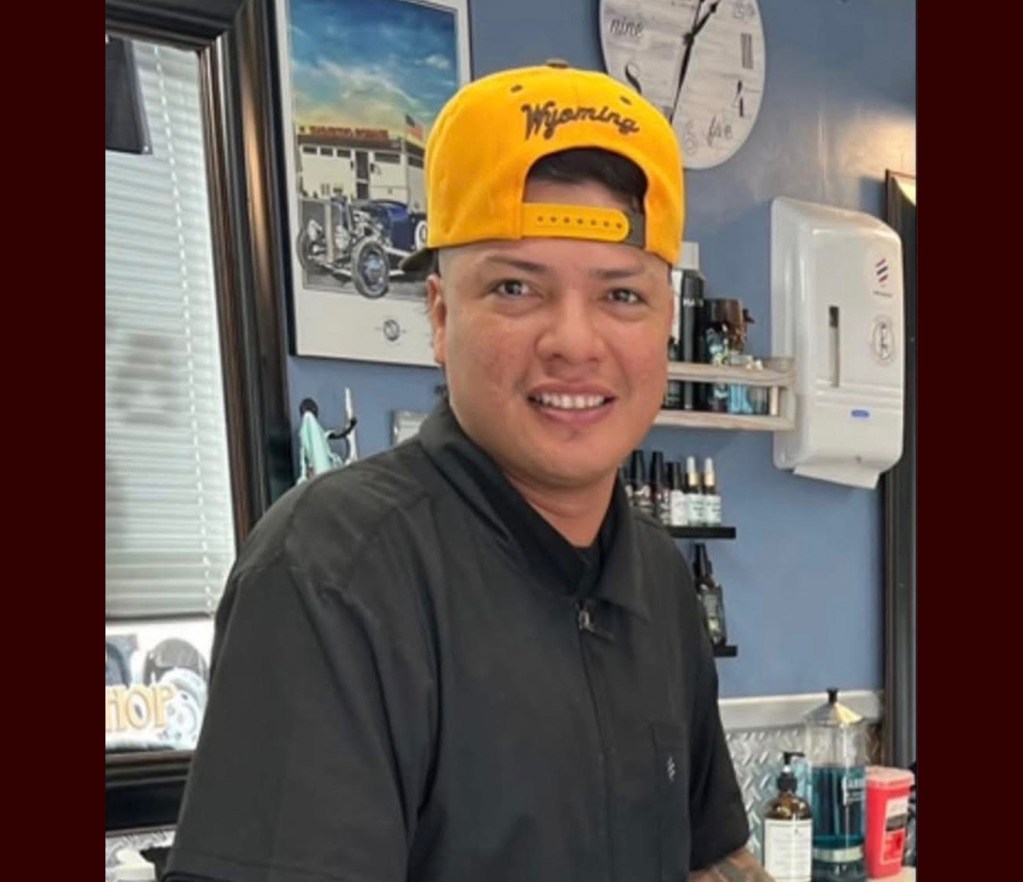
According to the legal complaint, the barbershop’s owners have since decided to sell the business due to “lost revenue from Montes no longer working at the shop.”
The Unitarian Universalist Church of Cheyenne reports it has had to redirect roughly $10,000 in charity funds, food and supplies to support families impacted by the 287(g) agreements. The church formed a specific ministry, Friends of Immigrants Responding Ethically, to handle the situation.
“Our congregants have been working incredibly hard to build connections and move resources so everyone who needs help is treated with kindness and dignity even as their families are losing parents, children, breadwinners and loved ones,” said the Rev. Elizabeth Barish Browne, the church’s senior minister, in a press release.
Rachel Martinez, communication coordinator for Juntos Wyoming, added that the sheriff’s actions have alienated marginalized communities.
“People of color and immigrant families see what is happening, hear what is being said and feel the pain when their families are broken apart,” Martinez said in a press release. “True public safety means building trust within our communities, not alienating them through fear.”
A Minnesota precedent
The ACLU’s perspective in Wyoming mirrors a similar ongoing case in Freeborn County, Minnesota. In that case, Sheriff Ryan Shea signed a 287(g) agreement unilaterally in March 2025.
Minnesota Attorney General Keith Ellison subsequently informed Shea that the agreement was invalid because state law required joint agreements to be entered into by a resolution of the board of county commissioners.
Following this, the sheriff presented a resolution to the board, which was ratified only after Shea noted that other sheriffs were facing liability and lawsuits from the ACLU.
However, a “taxpayer action” was still brought by citizens, arguing that the agreement resulted in illegal expenditures.
On May 22, 2026, a U.S. District Court judge ordered the Minnesota case be remanded to state court, ruling that it was fundamentally a matter of state law, rather than federal immigration law.
Malone cited this recent decision as a reason for optimism in the Wyoming case, noting that while state laws differ, the core principle of a sheriff exceeding authority remains the same.
Next steps
Under Kozak, Laramie County deputies have been trained by ICE to question and arrest individuals suspected of being undocumented during routine patrols, like what happened to Montes.
Kozak has previously defended the partnership as a matter of national security, public safety and upholding the rule of law. He has consistently pledged that his deputies do not engage in racial profiling.
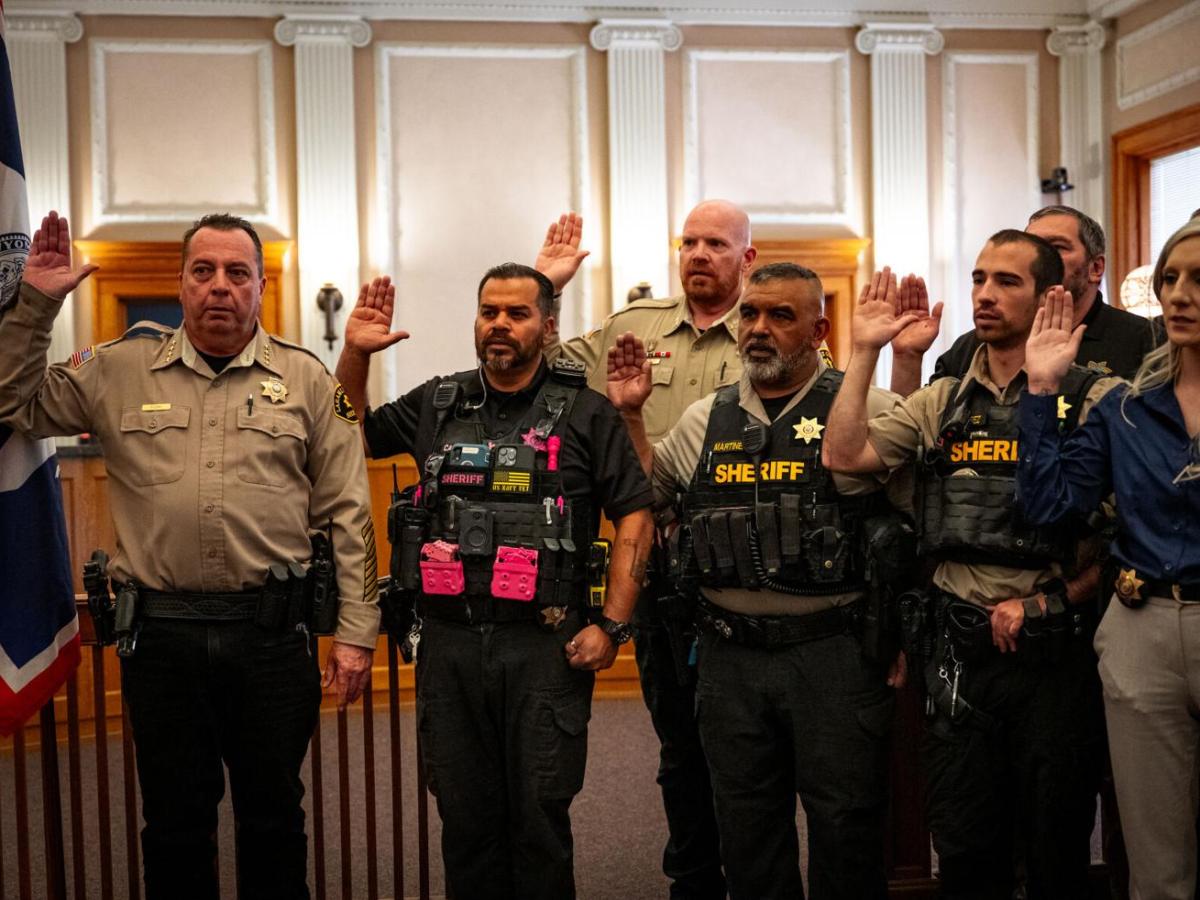
The ACLU maintains that this relationship with ICE has fundamentally changed the nature of local policing in Wyoming’s largest city.
“Lawsuits are not a speedy process,” Malone said, explaining that the sheriff’s office will now have the chance to file a formal response before the case enters the discovery phase.
For the plaintiffs, the goal is a declaratory judgment that the agreements are unlawful.
“Wyomingites deserve a transparent, democratic process.” said Libby Skarin, ACLU of Wyoming executive director, in a press release. “It’s critical to send a message that nobody is above the law. Sheriff Kozak is no exception.”