

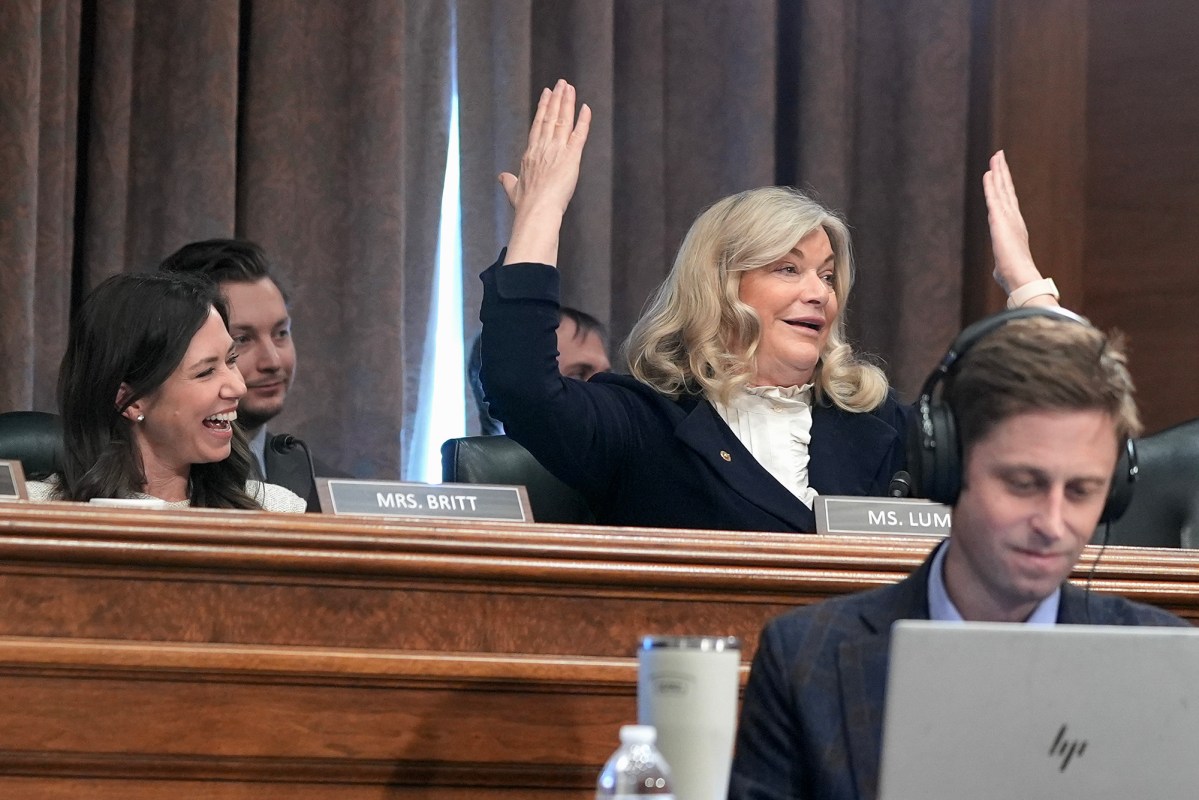
WASHINGTON—Senate Democrats on Tuesday blocked legislation to create a new regulatory framework for cryptocurrency, stalling an industry-backed effort to place new guardrails around digital assets after demanding more limits on President Donald Trump’s investments.
The 49-50 vote on whether to move forward with the legislation was a pivotal election-year test for the $2.3 trillion cryptocurrency market as the industry has pushed aggressively for a uniform set of rules. The Senate debate came as cryptocurrency companies have become a major political force, and as Trump has amassed significant wealth in crypto while in office.
While some Democrats are friendly toward the industry and support the idea of regulation, they have been adamant that the bill include strong ethics safeguards to prevent the president and his family from enriching themselves while he’s in office.
Republican Sen. Cynthia Lummis of Wyoming, who served as a lead sponsor of the bill, said she worked with Senate Democrats in good faith to address their concerns. Tuesday’s outcome, she wrote, shows “they were never truly serious about protecting consumers and preserving American leadership.
“For over a year, they presented demands and the second we met them, they made new demands and moved the goal posts,” she wrote in a social media post. “Today they voted against real limitations on politicians’ personal crypto investments. They voted against protecting American consumers from the scammers and fraudsters this bill would have shut down. They voted against American leadership, and handed China and every one of our foreign competitors exactly what they wanted. Democrats chose politics over the American people—again. That’s not leadership on their part, that’s surrender to their radical, socialist base.
Democratic opposition appears to have only solidified two months before the midterm elections, despite significant donations that crypto groups have given to some Democrats in recent years. In the end, no Democrats supported the measure.
“Let’s make sure that we do not pass a crypto bill that will let Donald Trump continue to rake in billions of dollars in crypto profits while working families across this country struggle to deal with higher prices and an economy that gets worse by the day,” said Massachusetts Sen. Elizabeth Warren, the top Democrat on the Senate Banking Committee.
Several Democrats who have been supportive of the bill aside from the ethics concerns said they were still open to negotiating.
Virginia Sen. Mark Warner said he still wants regulation of the crypto industry, but “we cannot pass landmark legislation governing this industry while allowing the president of the United States to personally profit from it.”
In comments to reporters before the vote, Lummis suggested that if Democrats blocked the bill, there would be no more negotiations.
“I think we’re done,” she told reporters, according to Punchbowl News. “It’s over. Because we’ve been working on this bill for over a year, and we’ve given them over 120 of their requests. That’s enough.”
Trump agrees to some changes as Democrats push back
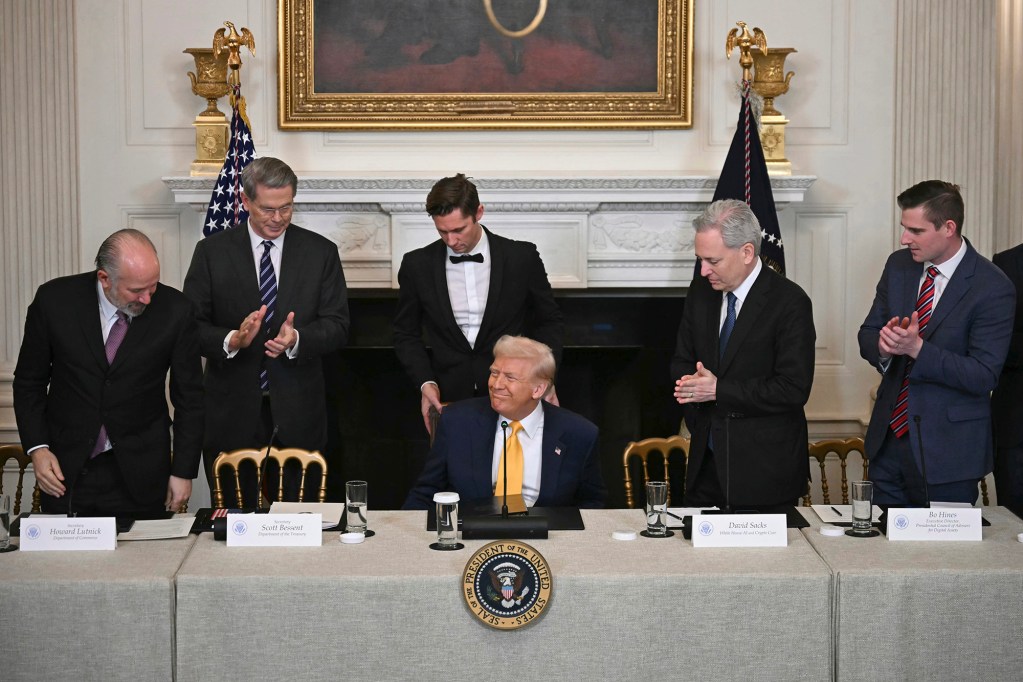
As Democrats made clear they would block the bill, Trump agreed to some concessions on ethics, including new restrictions on federal elected officials from issuing digital assets like the presidential meme coins he and his wife Melania launched before he took office for his second term. He agreed to new concessions Sunday, such as additional powers for state attorneys general that Democrats had sought to enforce the crypto measures.
Those concessions were not enough for Democrats, who sent a counteroffer late Monday to expand the ethics provision but were not able to strike a final deal. Among other issues, they said the bill still needed stricter enforcement and a requirement for Trump or any future president to divest if holdings reach a certain value.
“Instead of spending their time twisting themselves into knots to appease President Trump, Republicans should have worked more closely with Senate Democrats to craft a bill that could pass with strong ethics provisions,” said Arizona Sen. Ruben Gallego, who was involved in last-minute talks with GOP senators on the bill.
Republicans needed Democratic support to win the 60 votes necessary to move forward on the bill in the 53-47 Senate.
North Carolina Sen. Thom Tillis, a Republican who worked with Gallego to strengthen the ethics provision, said before the vote that he was pleased with Trump’s latest concessions.
“We’re so close,” Tillis said. “It’s just a shame to not take this opportunity.”
Trump has amassed big crypto profits
Trump’s family has raked in big profits in the crypto sector since he was reelected, including the meme coin, announced the day before Trump took office. Top investors were invited to a private reception with the president.
Trump’s family also has a controlling stake in World Liberty Financial, a crypto firm co-founded with the president’s special envoy Steve Witkoff. Trump reported more than $500 million in revenue from World Liberty Financial sales of crypto products, including “governance tokens,” in his annual disclosure report filed with the Office of Government Ethics. That is a significant share of the more than $1.4 billion that the president reported from crypto businesses last year.

A measure enacted into law last year regulating stablecoins, a type of cryptocurrency, barred members of Congress and their families from profiting off them, but it did not extend to Trump or his family.
Legislation aims to give crypto firms legal certainty
Republicans who have been working on the legislation for more than a year say it could now stall indefinitely. The House and Senate will be out of session during October and before the elections, and the dynamics could significantly shift if Democrats win back the majorities of the House or Senate, or both, in November.
Lummis said beforehand that a no vote means ”opposing real ethics reforms on politicians’ personal investments, handing American leadership in digital assets to our foreign competitors, and leaving Americans with zero protections in the digital asset markets.”
Supporters say the legislation aims to give the industry more legal certainty and protect consumers by creating a broad set of guardrails and regulatory requirements, including better enforcement to prevent bad actors and protections to prevent a market collapse.
As talks continued Tuesday morning, Lummis posted on X that it was “now or never for the Clarity Act,” referring to the bill’s name.
“The time for negotiating is over,” she wrote.
Crypto cash has flooded campaigns
Opponents, mostly Democrats, say the bill is a giveaway to the industry as crypto companies have become generous donors to candidates in both parties around the country.
“It’s no secret that they are seeking to ram a bill through Congress based upon not the merits of the bill, but the threat that they will spend even more money in elections against people who vote against it,” said Democratic Sen. Chris Murphy of Connecticut.
In 2024, the crypto industry spent more than $130 million in congressional races, including $40 million in Ohio and $10 million each in Arizona and Michigan.
“DC received a clear message that being anti-crypto is a good way to end your career, as it doesn’t represent the will of the voters,” Brian Armstrong, the CEO of Coinbase, the nation’s largest crypto exchange, wrote in a social media post the day after the 2024 election.
Associated Press writers Seung Min Kim and Joey Cappelletti contributed to this report.


What, no mention of the Lummis’s sellout of thousands of acres of her family’s ranch … for a data center, or two?
You can’t trust trump or lummis!!
Hmmmm, sounds like the Dems act just like the Repubs. Imagine that! Maybe you should all sit down and without the Ds and Rs after your names and come together with the interests of the people of this nation as your constituents. We all want the same things and all I see is destruction in every direction because some of you have blinders on and are letting trump ruin our nation.
What a disgrace Lummis is just bending the knee to Trump . Who has ripped this country off for Millions
The clarity act is a scam, and of course she is angry it didn’t pass because she has made millions off of the crypto industry. She has been bought and paid for and expects Wyoming to continue filling her pockets.
Lummis herself – were she ethical – should not have cast a vote on the bill either considering that she owns several hundred thousand dollars worth of Bitcoin herself, and her son-son-in law is also deeply invested in Bitcoin and the crypto industry.
Wyoming’s own crypto queen is still trying to enhance he own stash. Maybe those who stand to benefit most should not be writing legislation.
The orange menace has made over $2 billion dollars while in office. I read that his son Donald junior went from $50 million to over $300 million while daddy is in office, a six fold increase. A Russian oligarch paid for his wedding. Corruption much? I do think Russia has something over Trump. Lummis should have added in the protections that they asked for, thankfully she’ll be gone soon.
Sounds just like the Biden Family 4 short years ago.
“Meet the new boss, same as the old boss”
Amazing that Americans havent figured out the lyrics to The Who’s “Wont get fooled again”, are are continually fooled year after year due to strict adherence to partisan politics and complete lack of independent thought.
Crypto has knowingly paid for both sides of the political isle. They’ve been caught and sent people to jail for it and yet nothing changes.
Chad.
Oh man! To conflate Trump’s corruption to Biden is the epitome of cultish behavior.
They are ALL corrupt, Steve. Some just make more than others.
Trump just gets off on triggering those who can be triggered and not hiding the fact he is corrupt.
Instead of looking at $$$ made through corruption, look at innocent lives taken.
Bush, Clinton, Bush, Obama, Trump, Biden… whats the difference, they are ALL evil.
He will most likely be impeached with in the next year and possibly removed from office by looking at the Senate flips that about to take place.
Dont know what cult you are referring to?
Chad – you’ve got to be joking – the Family Trump is the most corrupt, conniving, crooked , political tribe in US history. Hunter’s misdeeds and laptop are an amateur embarrassment next to these experts.
You’re absolutely right Linda. There is NO realistic comparison between the Trumps and the Bidens when it comes to corruption in office.
LOL, surely you have forgotten the Bush Family.
Trump is merely far more open about his misdeeds as he doesnt seem to care.
GHWBush&son was literally organized crime running this nation for decades, with millions more innocent lives taken than mango mussilini.
Lummis is part of the clown show!
“Lummis is part of the clown show.” She sure is! What a hypocrite and unethical Trump boot-licker and ass-kisser.
Lummis, who is leaving Congress, hoped the bill would spike the value of her hoard of corruptocurrency and give her a nice, cushy retirement… not caring a bit about the harm it would do to the dollar’s status as the world’s exchange currency, helping China and Russia. Glad to see her corruption, and that of Trump, not legitimized.
The article needs more context. I would like to know Lummis’ and other supporters connections to crypto including what their financial disclosures show and any contributions received from members of the industry .
Lummis, last I checked (which has been awhile to be sure) owns at least 3 BTC. Nearly $250,000 worth currently.
Additionally, her son-in-law Will Cole appears to be deeply invested in Bitcoin and indeed is the person she credits with convincing her to buy Bitcoin. He is not a public official so the extent of his holdings is not known. But yes, her and her children appear to have considerable ties and holdings in the crypto industry.