

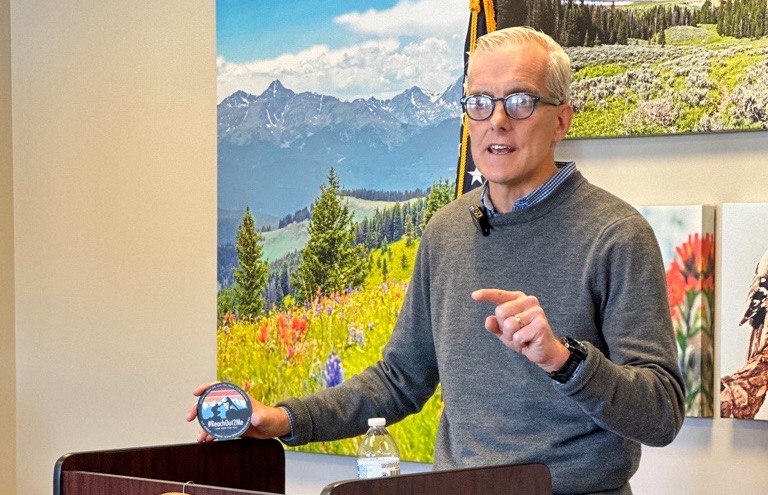
U.S. Veterans Affairs Secretary Denis McDonough traveled around Wyoming late last month, raising awareness of how many veterans the PACT Act has helped so far, and how many more people can now access VA benefits.
“Starting March 5, if you’re a veteran of any deployment in the post-911 period, any deployment related with the global war on terrorism, you are now eligible for VA health care,” he said during a press conference in Sheridan on Feb. 29.
Even if veterans didn’t deploy overseas but were exposed to toxins, chemicals or nuclear weapons, they are as of March 5 also eligible to access VA Health Care — via the PACT Act.
The act’s full name is Sergeant First Class Heath Robinson Honoring our Promise to Address Comprehensive Toxics Act, and it aimed to get more aid to veterans who had diseases that were hard to prove were a result of their service. Congress passed the act on Aug. 2, 2022, and President Joe Biden signed it into law a few days after.
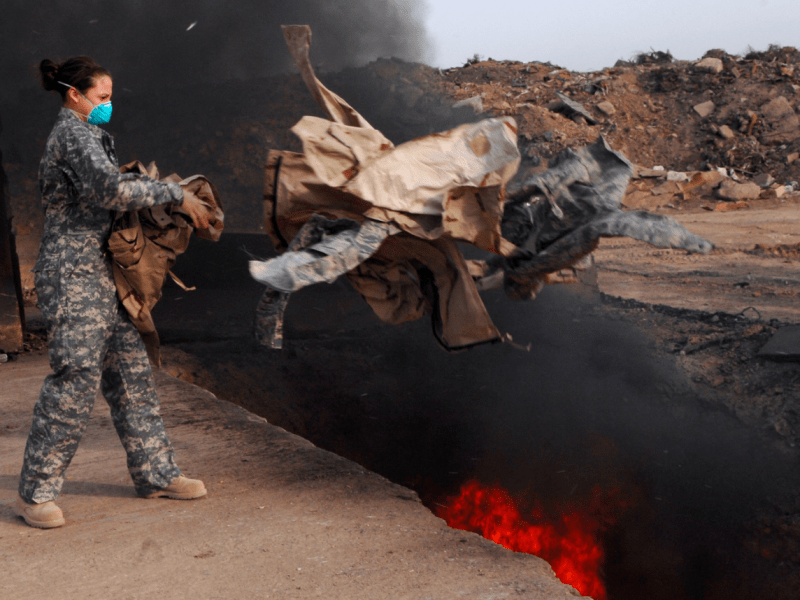
For example, many veterans were exposed to toxins via massive burn pits overseas, which they attributed to respiratory illnesses and cancers. Until the PACT Act, though, most were turned away when they sought assistance or disability claims.
Now, certain veterans are entitled to benefits for more than 20 categories of “presumptive” diseases, which researchers have linked to toxic exposures people on active duty faced. They range from emphysema to brain cancer.
Last year, Michael Elbrecht told WyoFile he was initially turned away for his asthma, too. He now works at the Sheridan VA Medical Center, encouraging others to give the agency another chance after the PACT Act worked for him. Secretary McDonough wants the same thing.
“Maybe we failed them the first time around,” he said. “I’d ask them to give us another shot.”
And if veterans aren’t seeking benefits because they believe others need them more, McDonough said, there are no limits to accessing benefits. Claims actually help the agency get a picture of who needs what kind of help, taking into consideration where they served and who they served with.
“Every veteran has earned access to VA and the VA benefits,” he said. “And so you, Wyoming’s veterans, you are not taking from any other veteran.”
The numbers
About 75% of Wyoming, excluding the eastern edge and southeast corner, is served by the Sheridan VA. Of that area, more than 9,000 veterans have been screened for toxic exposures and more than 4,000 have been connected to further resources, according to Sheridan VA Chief of Staff Dr. Eric Crawford. That includes experts like pulmonologists or other specialists.
“So our facility as of [the end of February], but really since the PACT Act has been passed, has been a top national performer in getting from screening to connection with an indicated resource,” he said. “More than 99% of the veterans that have been identified as having a follow-up need have been connected with the appropriate resource.”
In Wyoming as a whole, as of Feb. 26, the VA reports having received 3,749 benefit claims specifically related to the PACT Act.
At the national level, there were concerns about reaching enough veteran women — who have felt alienated by the national VA in the past — but Crawford said that’s been a strong suit of Wyoming’s efforts.
“We have a dedicated woman veterans program manager [Misty Bybee, a licensed clinical social worker],” he said. “And the data would suggest that women veterans are enrolling and coming to the Sheridan VA at a greater rate than any other institution in the [Veterans Integrated Services Network] 19 region.”
That region includes Wyoming, Montana, Utah, Colorado, Oklahoma and part of Nevada.
To reach more Native Americans, McDonough said there has been a multi-pronged approach. As of last year, Native veterans no longer have to pay a copay when they get care at the VA, he said. There are also efforts to improve coordination between the VA and Indian Health Service, including a new agreement to reimburse veterans for care they get at IHS.
“Maybe we failed them the first time around. I’d ask them to give us another shot.”
VA Secretary Denis McDonough
And finally, he said, there are efforts to make it easier for tribes to establish their own veteran service officers — a group that helps veterans navigate the benefits landscape.
“We’ve now done this with three tribes,” he said. “It started with the Navajo in New Mexico and Arizona. But when those tribal VSOs get accreditation from the VA, we see a direct and commensurate increase in claims from that tribe.”
Other interested tribes that want to work with the VA on the tribal representation expansion project can call 1 (800) 698 – 2411.
Still, nearly half of Wyoming’s estimated 48,000 veterans aren’t connected with the VA, McDonough said. That’s concerning, in part, because it can lead to worse outcomes.
“Veterans who get their care from VA have better health outcomes over time. That’s proven in study after study,” he said. “There is a direct correlation to lower rates of suicidality among veterans who get compensation benefits from the Veterans Benefits Administration.”
Early estimates show that Wyoming is still home to the third-highest rate of suicide, down from years at the top spot.
McDonough encouraged Wyoming veterans to seek out services if they are in crisis, either at the VA or at any hospital in the state. Through the Compact Act, suicide care for veterans in any emergency room is covered, whether they are VA members or not.
“VA will provide the treatment or cover the costs for treatment including transportation, inpatient or crisis residential care for up to 30 days, and outpatient care for up to 90 days,” the VA states.
So far, 80 Wyoming veterans have taken advantage of those resources, McDonough said. And if veterans don’t know where to go, they can also call 988 and press 1, he said, “and we can even get you into care as soon as that day.”
More than 1,000 veterans utilized Wyoming’s Suicide and Crisis Lifeline in its first year.
The PACT Act hasn’t been able to attract as many new, unconnected Wyoming veterans as they initially expected, Crawford said. Still, he’s hopeful the secretary’s visit and word of how successful his local VA branch has been in helping veterans through the process will bring in new faces.
“In almost all respects, we’re exceeding private sector performance in terms of how quickly we can get somebody seen, and in terms of the quality and effectiveness of the care rendered to the veteran,” he said. “So I’m hopeful that with new information being disseminated about the PACT Act, and being able to share that kind of performance, that we do see an influx of new veterans.”
For those in rural far-flung areas long distances from VAs, though, McDonough said there are also efforts to improve their beneficiary travel system, make more telehealth options available, deploy more outpatient clinics and bolster community partnerships.
“The ‘tyranny of distance’ is obviously a military term, but if we see it here in Wyoming often,” he said.
Beyond helping veterans affected by toxins and chemicals, the PACT Act increases access to benefits for their families, increases toxic exposure screenings, bolsters health research and covers more presumptive illnesses for Vietnam-era veterans.
To find out more, go to va.gov/pactact.
More tips on how best to submit claims can be found in WyoFile’s previous reporting here.


Let’s not forget that both Senator Barrasso and Senator Lummis voted against the PACT Act, turning their backs on tens of thousands of veterans now suffering and dying of illnesses caused by burn pits. Both Senator Lummis and Barrasso voted against this legislation on more than one occasion (see Cowboy State Daily article dated August 4, 2022).No Democrats voted against the legislation, but multiple Republicans voted against it including Barrasso and Lummis. Shame on both of them.
As I quietly celebrate Veteran’s Day this year, I can find no more grievous insult to the 240+ year sacrifices of our Veteran community than WY standing tall in helping elect a convicted felon and draft dodger, who called US Service Members suckers and losers, as the next CINC.
“In times of war and not before, God and the soldier we adore. But in times of peace and all things righted, God is forgotten and the soldier slighted.” – RK