


GREEN RIVER—The Green River City Council chambers became a battlefield of beliefs as city officials and residents sparred over a proposal to install automated license plate readers at the city’s entrances.
The controversy began when the council considered a 100% federally funded grant intended for the purchase and installation of Automated License Plate Recognition technology.
While proponents argued the system is a vital tool for modern law enforcement, a vocal contingent of residents presented a starkly different view, characterizing the cameras as an unconstitutional infringement on the privacy of law abiding citizens.
Police Chief Shaun Sturlaugson addressed the council during a July 7 meeting to clarify the department’s intent, emphasizing that the technology would be used “reactively” rather than “proactively.”
“It’s a tool that we want to use to help us be more efficient and quicker in our enforcement.”
Shaun Sturlaugson, Green River Police Chief
According to the chief, the department does not plan to use the readers for routine traffic enforcement, such as identifying expired registrations.
Instead, the cameras would be linked to the National Crime Information Center system to alert officers when a vehicle associated with a serious crime or a missing person enters the city.
“It’s a tool that we want to use to help us be more efficient and quicker in our enforcement,” Sturlaugson said, citing a hypothetical example of a runaway child from Cheyenne. He argued that while officers currently must memorize vehicle descriptions and license plates, the ALPR system would provide an immediate, automated alert the moment a “flagged” vehicle passes a camera at the edge of town.
“That gives us an opportunity to immediately act on that and go find that car,” he said.
Much of the public’s concern centered on the involvement of Motorola, the private company that would provide the software and cloud storage for the data. Residents questioned the security of the information and the potential for it to be sold or accessed by third parties.
“[Liberty] is surrendered one reasonable sounding exception at a time… until we wake up to discover that the freedoms we inherited existed only in theory.”
Gregory Sherwin, Green River resident
One resident questioned where the surveillance would end. Another citizen pointed to a lack of state statutes in Wyoming to regulate how this data is audited or monitored.
“Motorola violated California’s strict policy standards,” one speaker claimed, noting that without similar laws in Wyoming, there would be no legal recourse if data were mishandled.
Sturlaugson countered that the data would be stored in a cloud managed by Motorola and subject to a retention policy of less than 30 days, after which it would be “automatically scrubbed.”
However, he admitted, “I have no control over what Motorola does” with the data once it is in its system.
Lifelong resident Gregory Sherwin delivered a stern warning about the erosion of civil liberties. Sherwin argued that the system banks on “the odds of flipping a coin 10 times in a row and getting heads,” noting that fewer than 1% of scanned vehicles are typically connected to any crime.
“Liberty is rarely lost all at once,” Sherwin told the council. “It is surrendered one reasonable sounding exception at a time… until we wake up to discover that the freedoms we inherited existed only in theory.”
He urged the council to reject the expansion of surveillance and defend the presumption of innocence.
Sherwin and others also highlighted the risk of technological error, citing incidents in other states where innocent families were held at gunpoint by police due to misidentified license plates.
Council member Ron Williams expressed concern regarding the long-term costs of software updates, noting that while the initial grant is 100%, the city would likely be responsible for ongoing maintenance and upgrades.
“Every time the government gives us a grant… we end up taking the cost from here on out,” Williams remarked.
Council member Sherry Bushman questioned the broad definition of “terrorism” used to justify the Homeland Security grant.
Sturlaugson defined terrorism as any act “designed to create terror,” including mass shootings or attacks on government buildings and argued the cameras could help intercept potential threats before they reach local schools.
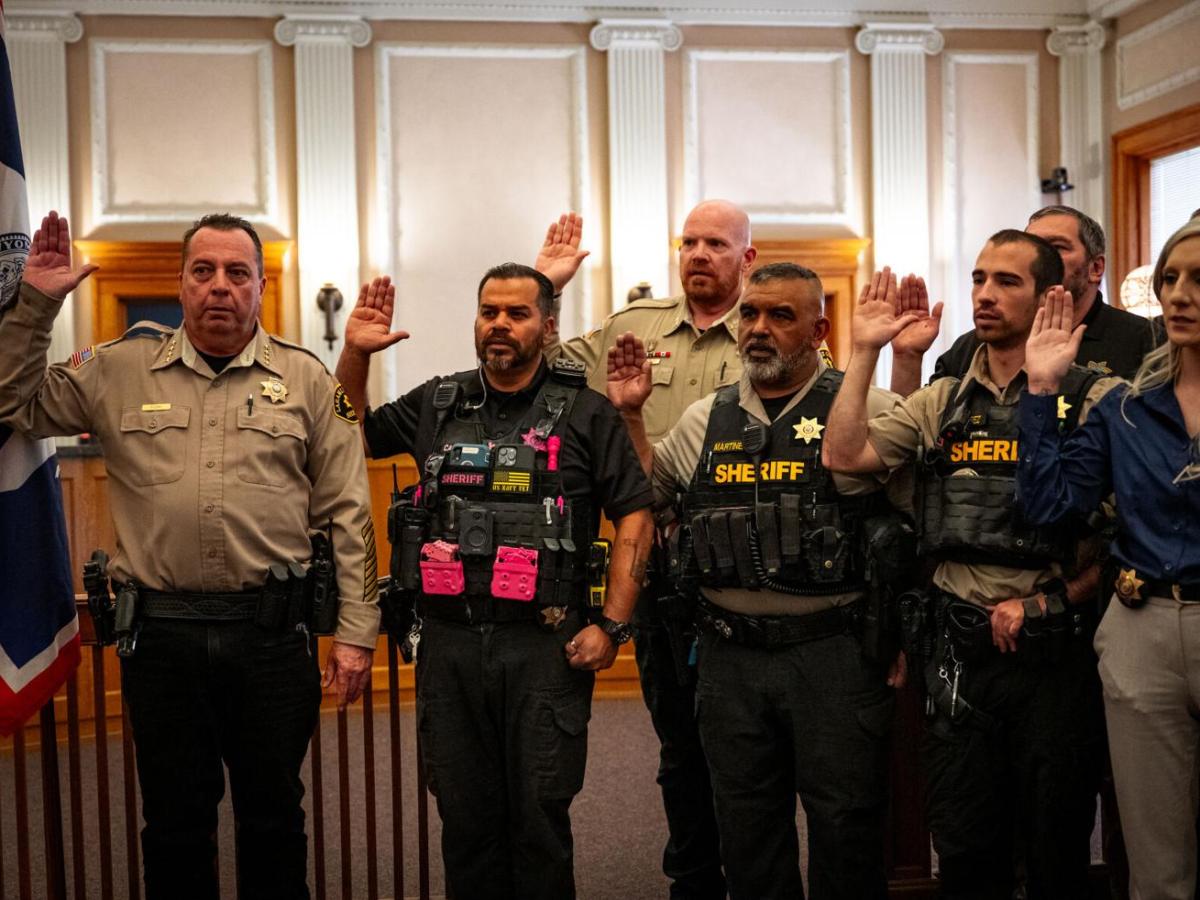
In a final attempt to reach a compromise, Council member Gary Killpack moved to table the decision to a future workshop, arguing that the council was only hearing one side of the issue and should seek more community input.
“I think we as a council would be derelict in our duties without hearing both sides,” he said.
However, the motion to table died for lack of a second.
Ultimately, the council voted down the motion to approve the state grant agreement, with Killpack casting the sole vote in favor.
Consequently, the proposal to implement the license plate reader project was rejected.

I was born and raised in Casper wy in 1972. Moved to Colorado in the early 90’s.
Me and my children are victims of this servalence system. My entire reputation, family and my life in Garfield county co, for 25 years was systematiclly Dismantled by law enforcement there and the 9th judical system. I ran here in 2024 thinking my home town will help me. Boy was I wrong. More towns need to STOP this servalence system until there is more oversight to monitor law enforcements misuse.
When it is misused they(law enforcement)uses that same system to keep individuals silent, scared and in hiding.
I have learned the past 3 years there is no where I can hide.
I pray someday I will see my children again.
Councilman Killpack should maybe understand the input was only one sided, because NO ONE WANTS IT!
Good choice Green River!