

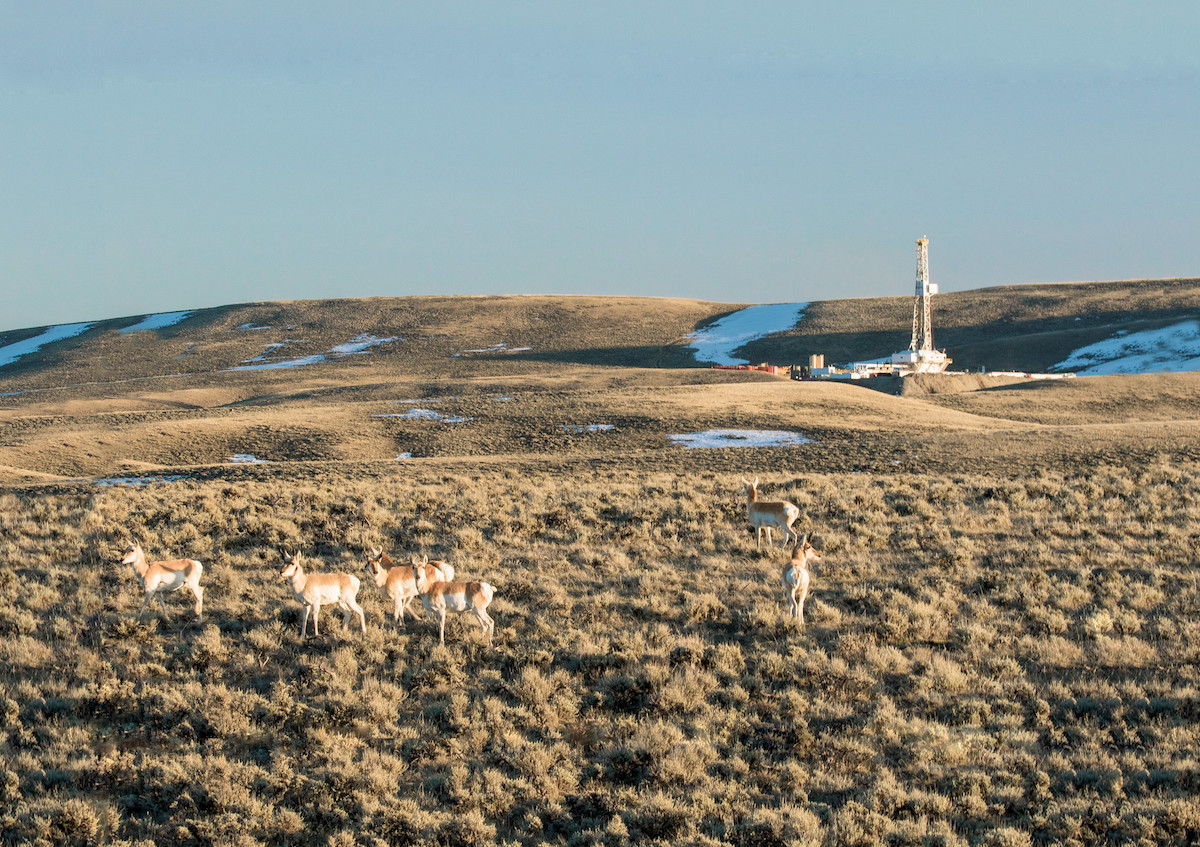
As leaders and advocates, we know that public participation is essential to transparent decision-making, and it’s what builds trust. Public process — especially when it comes to decisions affecting our public lands and property rights — is not bureaucracy for its own sake, but something that helps catch mistakes, improves terms in lease agreements, protects water supplies and cultural sites, and avoids conflict.
Opinion
Under newly proposed revisions to the federal onshore oil and gas program, the Bureau of Land Management intends to hollow out this process, defying the centuries-old values that make our government one of, by and for the people.
To start with the most shocking example, BLM would no longer be required to notify landowners of plans to offer natural resources beneath their land for development. The agency manages some 57 million acres of these “split estate” lands, which means a private landowner holds the rights to the surface property while BLM controls the minerals beneath it.
The notification process has always been imperfect, but under current rules, landowners can generally see what’s coming and receive notice at the leasing stage, when they can still protest the sale, ask questions and potentially negotiate surface protections. With notification requirements gone, the first a surface owner may hear about a project could be much later in the process, maybe even when a company is already applying for a permit or when a survey crew shows up. In our states — Montana, New Mexico and Wyoming, which have the most split estate acreage in the country — that is unacceptable.
The proposal also significantly shortens the overall comment and protest period, despite the fact that agency director Steve Pearce recently said “a lot of public input” is the answer to balancing the many uses of BLM lands. Currently, the public has 90 days total to weigh in on a proposed lease sale: a 30-day scoping period, a 30-day comment period on the environmental review and a 30-day protest window once a sale is announced. BLM’s proposal eliminates the first two and cuts the third to just 10 days, while adding a new processing fee of $1 per page for protest filings over 50 pages.
Sidestepping landowner notification, combined with fewer and shortened comment windows, means drastically fewer opportunities to raise concerns before decisions are locked in. These are not just procedural adjustments; they’re silencing mechanisms that degrade public trust and government accountability.
This loss of accountability also shows up in how the proposal treats cleanup, forcing liability onto taxpayers by slashing minimum bonding rates, or the amount an operator must set aside for cleanup once a well’s productive life ends. Even though reclaiming a single well can cost tens of thousands of dollars or more, the proposed rule would reduce bonding requirements to levels set as far back as the 1950s.
It is fundamentally un-American to undermine basic property rights, reduce public comment periods to mere days, hand corporate responsibility off to taxpayers and impose fees on using your voice. If this rule is finalized, it will cost us not just access to and protections for our lands, but a vital stone in the foundation of our democracy.
The concept of public process is as old as this country’s founding and was codified in 1946 under the Administrative Procedure Act, giving the public a formalized say in government decisions that affect and directly shape our communities. It makes sense that this idea would and should apply to the agency that oversees 245 million acres of surface land and 700 million acres of subsurface mineral estate — more than any other federal government entity.
In the American West, one of the most powerful means of democratic participation is weighing in on decisions that affect the lands where we live, work and recreate. BLM’s proposed rule is a chance to defend our democratic rights by exercising them, and the agency is legally required to respond to public comments during its planning and rulemaking processes. For those who care about our shared land, the right to protect private property, and a participatory democracy, you can ask your local or tribal government to pass a resolution, contact your Congress members, and share your concerns before BLM’s comment period ends Aug. 24.

The United States is a constitutionally limited Republic, not a democracy. I wish people would stop using that term.
I don’t even recognize this. Country anymore . Donald Trump and his cronies need to be removed from power immediately! They are running this country into the ground, to outfit themselves and their own self serving agenda! It is truly disgusting on every level . This is a dictatorship ! There is no more for the people, by the people. Our wildlife Natural Resources, natural world is being exploited on every level .
This mid-term election could be the most important election ever since the forefathers wrote the constitution. The far right wants a king and serfs. The serf will be subservient to the king. The rich will control our government with the Citizens United they will buy the government. The vote will no longer be what runs our country. Millions have already been spent to buy everyone from city council to the president. Wyoming has already become a state where its riches are sent to the few through the Freedom Caucus. It is time to act and take back our country. If you can just get the vote of those who don’t care and don’t vote it can be stopped. I don’t see that happening. Congress and the Supreme court are already in the hands of the rich. It is time for a revolution. The fires are already burning, not only in our forests but also in our government. Democracy could disappear. I can’t see the future but I can see what has or country has become. Democrats don’t have the money or the leadership to fight back.
Interesting that you say that since the governors of CO and IL are both billionaires, while the biggest donors to the dem party, Soros, Singham, and styer are all billionaires.
Dt and cronies want our public lands— for drilling, data centers and wealthy land owners, etc. we must resist or we will rue the day.
In 2024 Donald trump told the oil and gas leaders that if they donated 1 billion dollars to his campaign he would immediately eliminate regulations for energy development and stop clean energy.