

In an effort to slash spending by the Federal Emergency Management Agency, White House officials are considering drastically raising the threshold for how much damage a natural disaster must cause before local governments will qualify for federal help rebuilding.
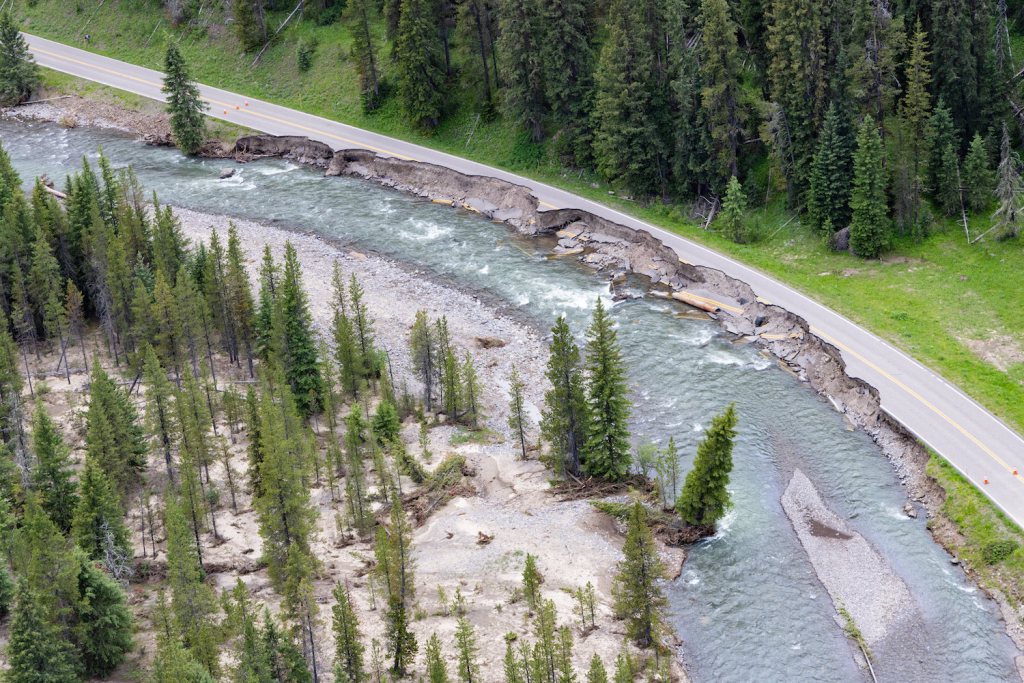
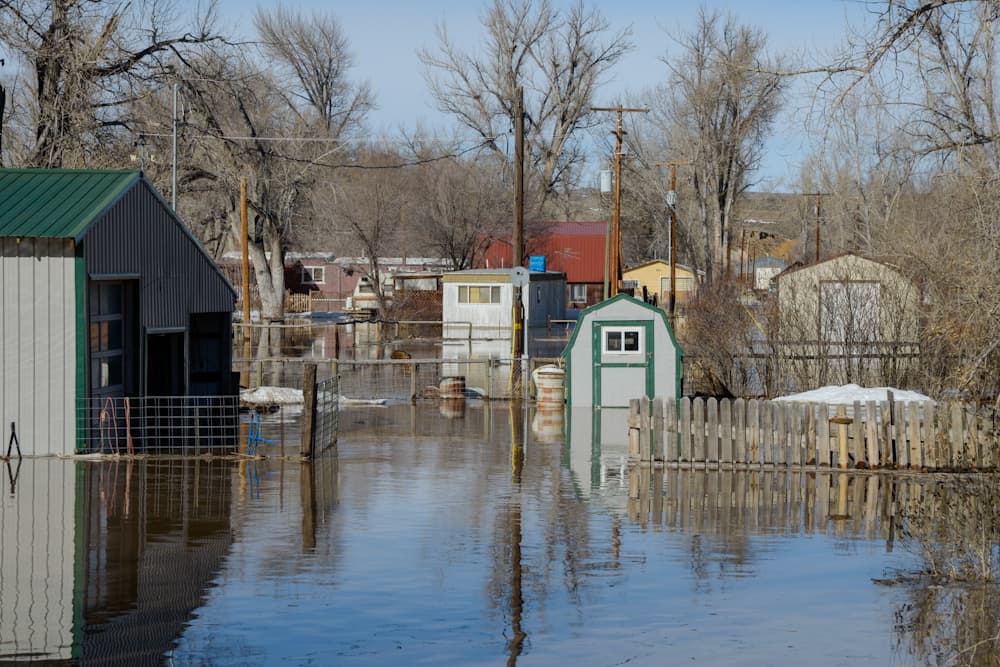
Under the new proposed criteria, Wyoming’s state and local governments wouldn’t have been eligible for federal compensation for public infrastructure losses in recent disasters of note — including last year’s historic wildfires and flooding in 2023 and 2017 — an official with the Wyoming Department of Homeland Security told a state legislative committee Monday.
Under the current calculation, a disaster has to do more than $1.1 million in damage to public infrastructure before Wyoming can turn to the federal government for help. President Donald Trump’s administration is considering changing that threshold to $4.4 million, according to an internal memo reported on by CNN.
Wyoming, with its wide open spaces, reaches the current threshold much less often than more crowded and urban states, where wildfires, hurricanes and other natural disasters can damage swathes of infrastructure quickly.
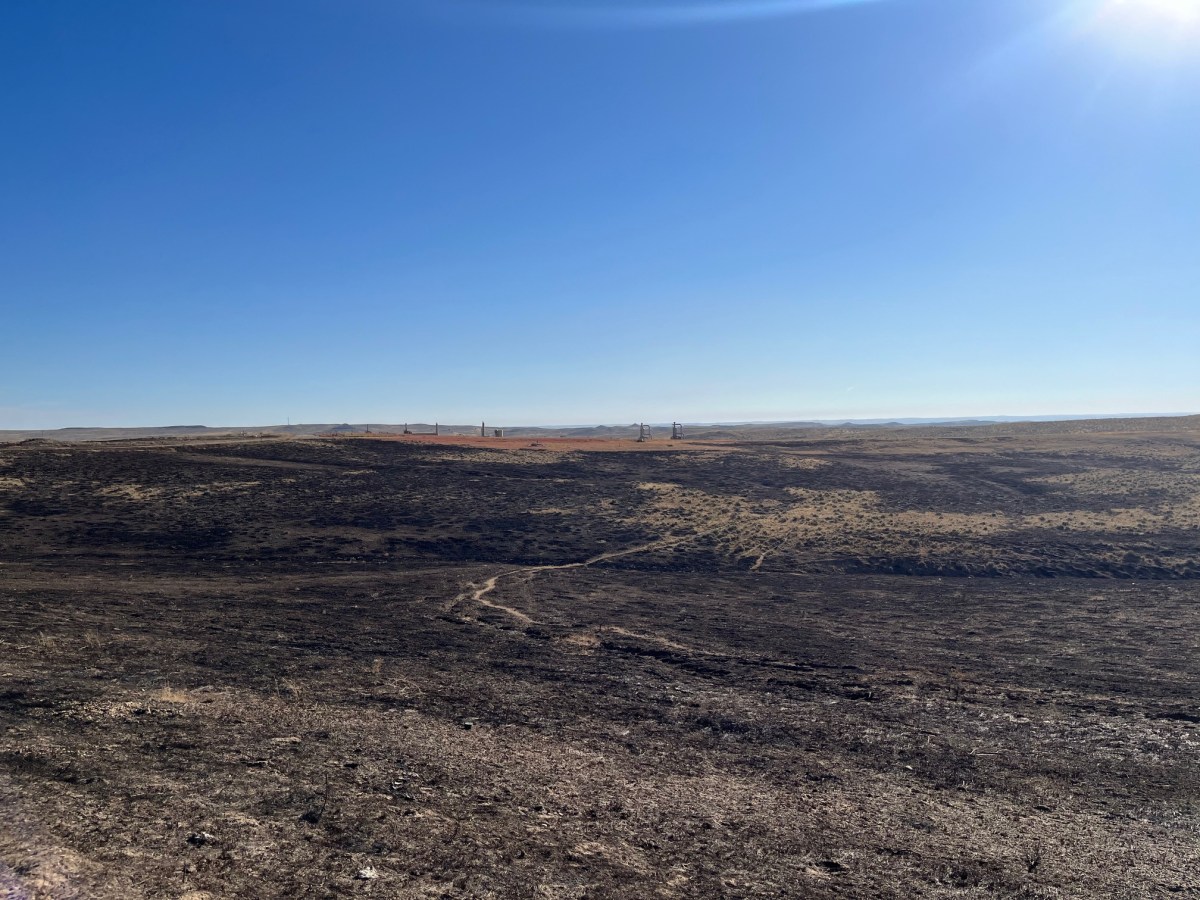
The most recent example is last August’s wildfires in northeastern Wyoming. Those fires cost the state tens of millions of dollars to fight, and did tens of millions of dollars more in damage to ranch land and other private property. In the grand scheme of those costs, public infrastructure losses were relatively slight, Ashley Paulsrud, the Wyoming Department of Homeland Security’s finance section chief, told WyoFile.
The fires burned the power lines and poles of a rural electric company, Paulsrud said, and the price tag for damage extended above $1.1 million, but remained considerably below $2 million. Then-President Joe Biden awarded the federal disaster designation last year, covering the utility’s rebuilding cost.
But Paulsrud worried about what could occur if a wildfire, tornado or any other disaster were to devastate one of Wyoming’s small or medium towns. The disaster could cause immense destruction to towns with limited municipal budgets, while still not doing enough damage to hit the federal government’s proposed new threshold. That might leave the town reliant on the state to cover rebuilding costs.
The prospect that Wyoming could be shut out of federal relief in such a case is “pretty scary,” Paulsrud told the Joint Judiciary Committee on Monday during its meeting in Torrington. It is just one area in which the Trump administration’s efforts to slash federal spending could cut into her office’s work in Wyoming, Paulsrud said.
The Wyoming Department of Homeland Security receives 92% of its funding from the federal government, Paulsrud said. It is also the administrator of federal grant programs that fund emergency service personnel for local governments. Many of those funding streams are in doubt, Paulsrud said. Normally at this point in the year, the agency would have insight into its funding for the coming one, she said, but the state has not received word on those grants.
Trump and U.S. Secretary of Homeland Security Kristi Noem have been critical of FEMA and have promised to dramatically reduce the agency’s funding. So far, the proposals floated publicly indicate they propose to do so by shifting the cost burden for recovering from disasters to the states impacted by them.
The move to raise the threshold for public assistance funding comes as Trump has rejected providing federal disaster designations to at least three states already during his second term, according to CNN. Trump rejected a request from Washington state for a major disaster declaration in the wake of a destructive winter storm last year. He also rejected requests from Arkansas and Kentucky for the designation in the wake of severe storms and tornadoes that killed more than 40 people across four states and ravaged some towns.
In Wyoming, last year’s wildfire season was particularly severe and drained nearly all of the state’s disaster response coffers. Gov. Mark Gordon used virtually all of the funds available to him for emergencies to respond to the disasters, he told lawmakers ahead of the 2025 legislative session.
Legislators restored that emergency funding and granted the governor the ability to draw up to $30 million from the state’s rainy day fund if future wildfires draw those accounts down again. They also created both a grant and a loan program to help impacted ranchers recover. Those discussions were contentious during the legislative session, with many lawmakers reluctant to create a grant program that would help property owners and businesses recover from the wildfires.
Wyoming is one of five western states without a state-funded disaster recovery program to address calamities that do not meet the requirements for federal disaster assistance.
Paulsrud told lawmakers her department may ask for a significant increase in state funding this year, given the possibility Wyoming won’t be able to count on the federal government for future disaster relief. “Most likely our budget ask will be a lot different this year,” she said.

Sadly, I fear many people will be ruined over the next few years, as FEMA stops responding to disasters…and no one will deserve what’s coming.
Don’t forget how Biden’s administration spent millions of FEMA funds on feeding homeless and illegal migrants.
This is false. No funds from FEMA’s emergency/disaster response program were diverted to house or provide services for migrants. Funds were allocated by Congress to the US Customs and Border Protection budget for the Shelter and Services Program, and were administered by FEMA. Separate Congressional allocations.
No Todd you’re wrong. Denver used $150 million of FEMA money to do so. Right now Denver and 2 other cities have filed lawsuits to get the FEMA MONEY that Trump froze. It was reimbursement money from FEMA. That how the scam worked. Todd you’re wrong.
Larry – the facts I posted are freely available. Reuters (among many others) did a nice job fact checking your claim; I suggest you do a little real homework. There’s no excuse to be this misinformed with the internet at your fingertips.
You’re speaking to a boomer brick wall. Larry has no use for factual information. A good portion of his generation believe everything they read on facebook. You are not able to sway them from their idiotic conspiracy theories.
It should be the states taking care of its citizens in time of Disaster. Not the feds. The states have more than enough funds to do so. If needed they can tap the state college/university’s endowment money to take care of state citizens. Plus democrat run states like Colorado/California/Illinois were spending FEMA funds on homeless and illegal migrants thus wasting FEMA MONEY. IT THE STATES JOB TO HELP THEIR CITIZENS.
Feeding starving people? Can’t have that! What’s this world coming to?
I’m not quite sure what people thought was going to happen. Trump promised he would slash, trash and burn. It had to come from somewhere. Now we all have to live with ill-conceived fallout of bad choices by both the voters and Trump. The country is getting what we apparently thought we wanted.
I’m betting our congressional delegation will add their support for whatever number 47 tells them to do, rather than what is actually good for Wyoming.
I wish someone could explain to me why the Trump Administration is so opposed to having FEMA available to respond to natural disasters and emergencies in the U.S. They happen all the time in one place or another. I have been wondering this past year what the difference would be this year from last in response to a nasty wildfire season from the Federal Government. I watched the Elk Fire from my house and the job the Feds, State, Local Governments plus volunteers did to contain it was pretty impressive. They managed to muster up 1,000 people plus 15 aircraft or so to fight the fire. Is a big chunk of that effort going to go away? I do know that President Trump has a simpletons knowledge of what causes and what it takes to fight a large wildfire. He showed that in California in his first term and blamed Californians for the fires that they had. He told them they needed to rake the forests more. Look it up if you don’t believe me. Not only that he blamed the destructive California wildfires last fall on the State not making enough water available to fight fires, ignoring the fact that high sustained winds caused the fires to spread faster than anyone could respond. So what did he do? He had the Army Corp of Engineers release water from dams far away from last falls fires in the dead of winter when the fires were done burning. Figure that one out.
Rock. It is states responsibility to aid its citizens in time of disaster. They have enough money to do so. If one lives in a forest. It up to YOU to trim trees bushes back before a fire. It up to YOU TO BE PREPARED. You live on river bank. It up to you to be prepared to stay dry. It not up to rest of taxpayers to bail you out.
Don’t forget, this is what WY voters voted for when they overwhelming voted for Trump.
And they will yell the loudest when FEMA doesn’t show up.