

Here’s a one-question quiz voters should ask all legislative candidates to take.
Opinion
It’s simple: Look at these two photos and then answer this query: “Which one shows the issue affecting children that you, as a Wyoming lawmaker, think the state needs to spend more time addressing, and why?”
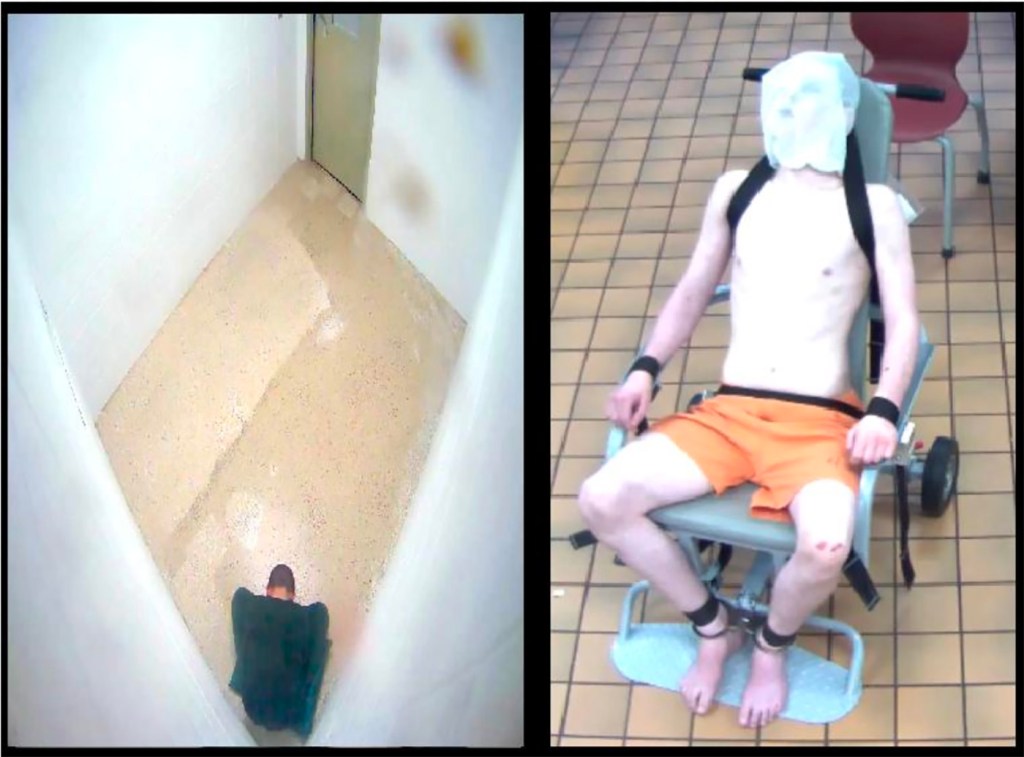
The first photo shows a teen at the Wyoming Boys’ School wearing only shorts, strapped to a restraint chair with a hood over his head.
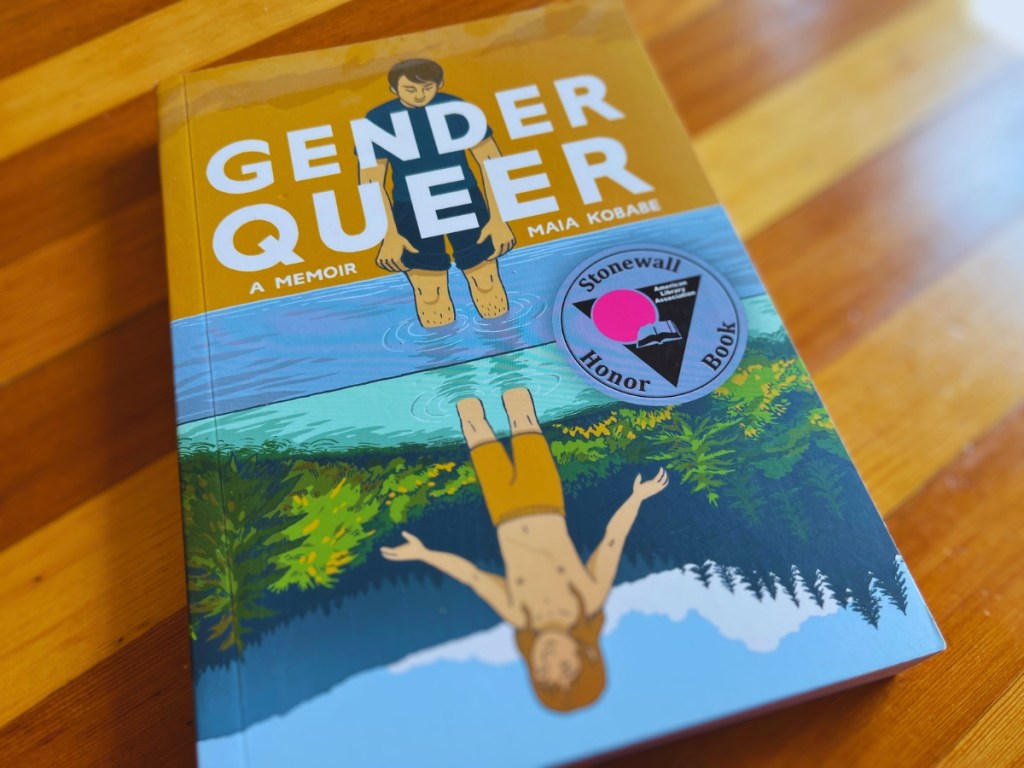
The second is the cover of a book. It says, “Gender Queer.”
The first image is instantly reminiscent of Abu Ghraib, the Iraqi prison where photos of the U.S. military torturing detainees shocked the world. It is not an isolated incident but a graphic, in-your-face example of how some kids sent by courts to the Boys’ School have been treated by staff. It demands immediate attention.
The second image is an LGBTQ-themed graphic memoir that many Wyoming legislators use to try to effectively ban it and all similar reading material at school and county libraries.
During the 2026 legislative session, lawmakers did not draft any bills to address repeated allegations that minors had been abused at the Wyoming Boys’ School, a juvenile detention facility south of Worland.
Not a single bill addressed any aspect of the juvenile justice system, which has been the subject of state task forces and committees for decades. Stacks of reports have been produced, with little legislative action to address myriad problems.
What did get a massive amount of attention and soak up hours of precious time during the budget session?
House Bill 10, “Sexually explicit material in libraries–requirements.”
The bill, sponsored by the Joint Judiciary Committee — which declared in 2021 that its top priority was juvenile justice — would require a book with any “sexually explicit” content to be housed in a library’s adult section. If people found such content accessible to children, they could sue the library.
House Bill 10 passed the House, which is controlled by the far-right Freedom Caucus, by a 48-13 vote. The Senate Judiciary Committee gave it a thumbs-up, but the bill never made it to the full chamber.
Senators who generally align with the Freedom Caucus moved to suspend the rules and put HB 10 at the top of the general file. The motion died, 13-18.
Sen. Cale Case, R-Lander, summed up why it was appropriate for the bill to be killed: This issue is best handled by local library boards and communities, and between parents and their children. Not the state.
It’s crucial for the Legislature to stop catering to the Moms for Liberty and other groups that have long tried to punish LGBTQ+ individuals, and focus on juvenile justice issues instead.
Wyoming, for decades, has had some of the highest juvenile incarceration rates in the nation, and is one of three states that refuse federal funds to help. There is no uniform system of tracking juvenile justice cases; each county has its own system.
Wyoming’s Republican and Democratic primaries will be held Aug. 18.
Beware of candidates who close their eyes to a problem that has been well documented and getting worse.
Finding out about allegations of abuse and mistreatment at the Boys’ School is admittedly difficult, and have only been made public through excellent reporting and litigation. Citing juvenile privacy laws, the Wyoming Department of Family Services, which oversees the facility, refuses to provide records or other information about the number, nature or resolution of incidents.
State law requires such allegations to be confidential Child Protective Services cases. CPS is a component of DFS, which means the agency investigates the allegations itself, without any external oversight or transparency.
At a 2021 Joint Judiciary Committee meeting — the year juvenile justice was its top priority — members heard a 10-minute overview of the Boys’ School. Afterward, the panel’s co-chairman, then-Rep. Jared Olsen, R-Cheyenne, who is now a senator, made this observation:
“Maybe four years ago, I visited the Boys’ School and I had lunch there. And I recall having chicken fingers. And I just have to say, it was actually really good.”
I can’t help thinking about a committee meeting where Olsen compared “Gender Queer” to Hustler, a pornographic magazine.
A 2022 series about allegations of abuse at the school by WyoFile and the Casper Star-Tribune used external police reports, affidavits and first-person accounts to document deteriorating conditions at the facility.
In 2016, the Boys’ School purchased a restraint chair. It wasn’t used until two years later; by 2021, the chair was used 13 times.
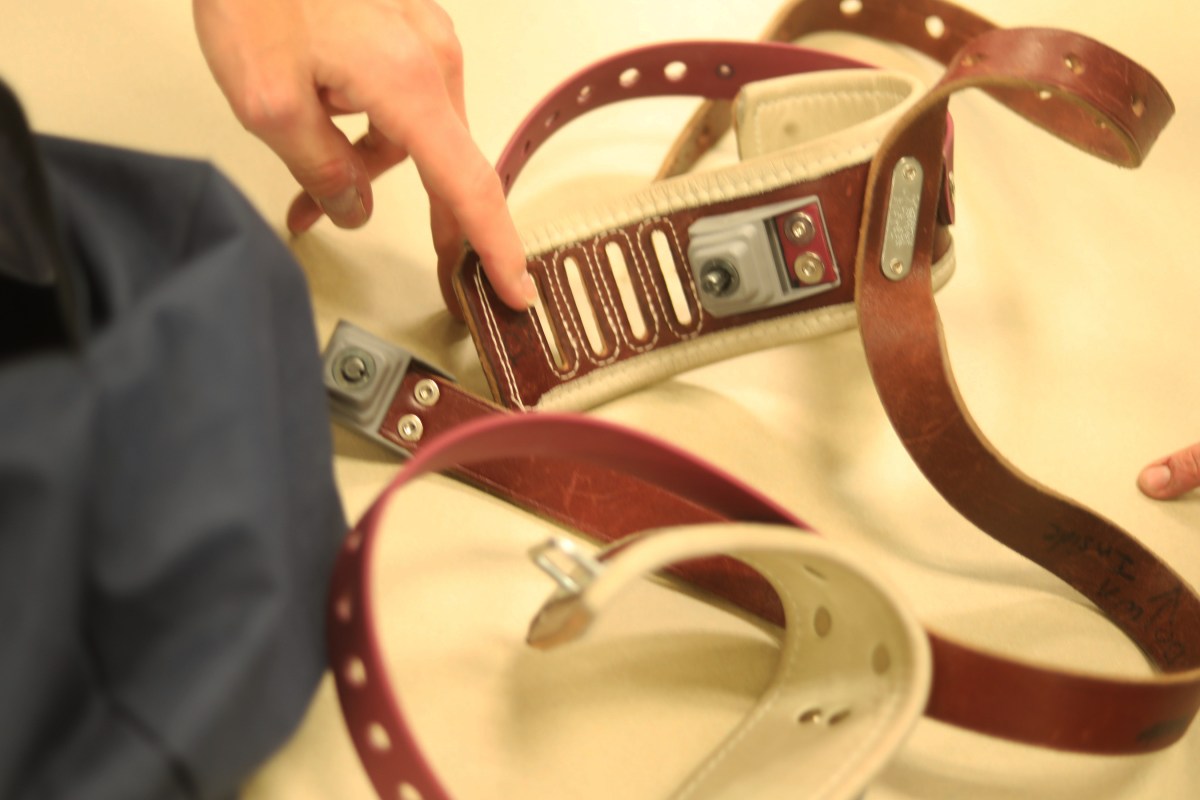
A warning states it should not be used for more than two hours. A 2024 lawsuit filed against the school by six former residents alleges one plaintiff, Rees Karn, was kept in solitary confinement one time for 30 days. For approximately two weeks during that period, according to the suit, Karn was strapped in a restraint chair by his wrists, ankles and mid-section for up to 12 hours a day. Karn is the boy in the first photo of our candidate quiz.
The plaintiffs’ recent response to the state’s motion to dismiss the lawsuit has new information, including video, photos and depositions.
Some may read about the alleged incidents and not fully comprehend the level of pain and suffering the boys were forced to endure. But the impact of the photo of the hooded Karn strapped to the chair is powerful and undeniable. When you see it, you won’t forget it.
Above the photo is a quote attributed to a defendant, staff member Thad Shaffer: “[The] best part of the chair is watching the kids scream and cry like a fucking child … that’s what makes it worth it.”
Solitary confinement, plaintiffs allege, is often used as punishment, despite courts uniformly recognizing it is particularly harmful to children and people with mental health disabilities.
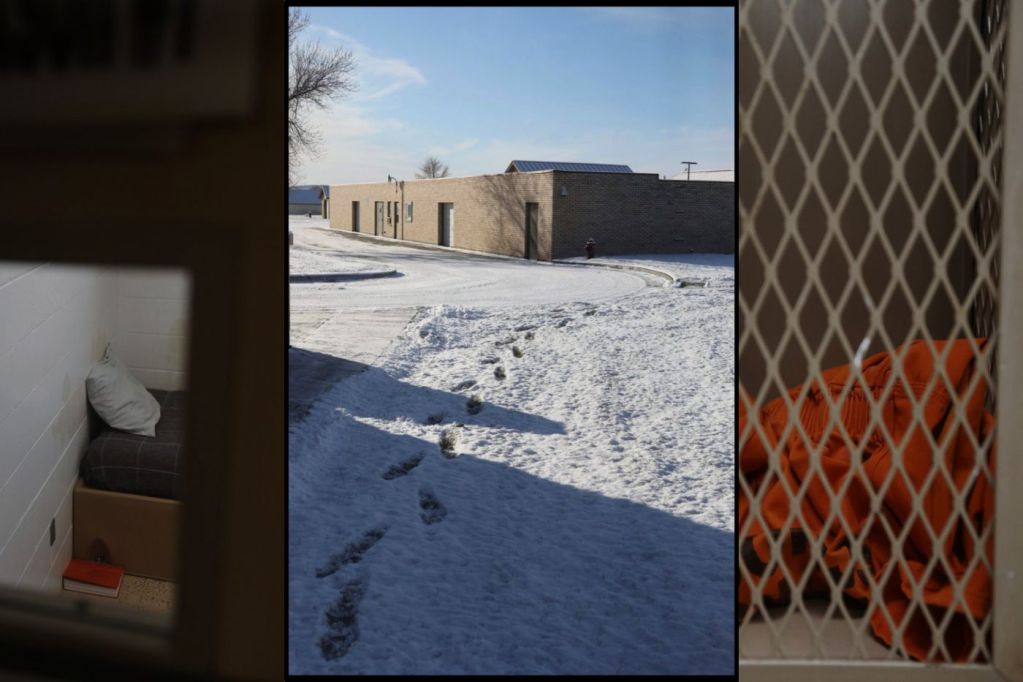
Solitary confinement is in an 8-by-10-foot cinder-block room, with bare floors, a combination toilet and sink, two cameras, no windows to look outside and no chair to sit on. At night, boys are given a thin mattress.
There is no educational instruction or therapy at this “school” for boys who are in solitary confinement, the plaintiffs describe. Books are rarely allowed.
There is no limit to how long a boy may be in solitary confinement. DFS does not provide data on the actual length of holds that exceed 72 hours.
Plaintiff Haiden Willis testified that he spent 75% of his time at the institution locked in solitary, often with no mattress or pillow.
Some of the most damning evidence against the defendants is the depositions of staff members who testified under oath that people “frequently” falsified records, including incident reports.
One staff member said almost every incident report at the school from 2022 to 2024 was falsified. Another recalled raising concerns about falsified reports but was ignored by supervisors.
That staff member testified he told Shaffer he wouldn’t sign a report because it was untruthful, but he was told to sign it or find a new job.
Before this election, voters should remind candidates that libraries are places where children go to learn and be inspired, and librarians, communities and parents don’t need them to decide what kids can read.
Detention centers should help troubled adolescents become better people with the assistance of well-trained, caring staff members and programs designed to help keep them out of trouble when they go home.
When facilities abuse and mistreat kids, Wyoming needs legislators who will take action to stop it, not look for red-meat social issues to please MAGA supporters.

I remember way back when I was a kid so like 60 years ago we heard horror stories about the Boys school. It was a threat. If you’re bad you’ll get sent to WORLAND.
I am not sure the stories were true but they scared me…..
You’ve made it clear that now the stories are true. If these stories don’t wake the free dumb carcus up nothing will.
People of Wyoming get out at vote these people out.
Now addressing porn in libraries. KIDS NOWDAYS HAVE PORN IN THEIR POCKETS. Maybe those wonderful moms should look controlling their kids access to their phone and their computers.
Porn is everywhere. It is really not a library issue
Mr. Drake, have you ever worked in the corrections field? I have. The hood is so the inmate doesn’t spit on you. The restraint chair is for self harm. Removal of property is due to misuse of property. If anything, youth corrections should come under the wyoming DOC, not DFS, ensuring proper staff training and the following of policies.
If the boys home is a real corrections facility, it should be operated as such. I done condone mistreatment of inmates but none of them got there by appropriate behavior either.
“I dont condone mistreatment, BUT”
Spit hoods, often used after an inmate is pepper sprayed equivalent to torture.