

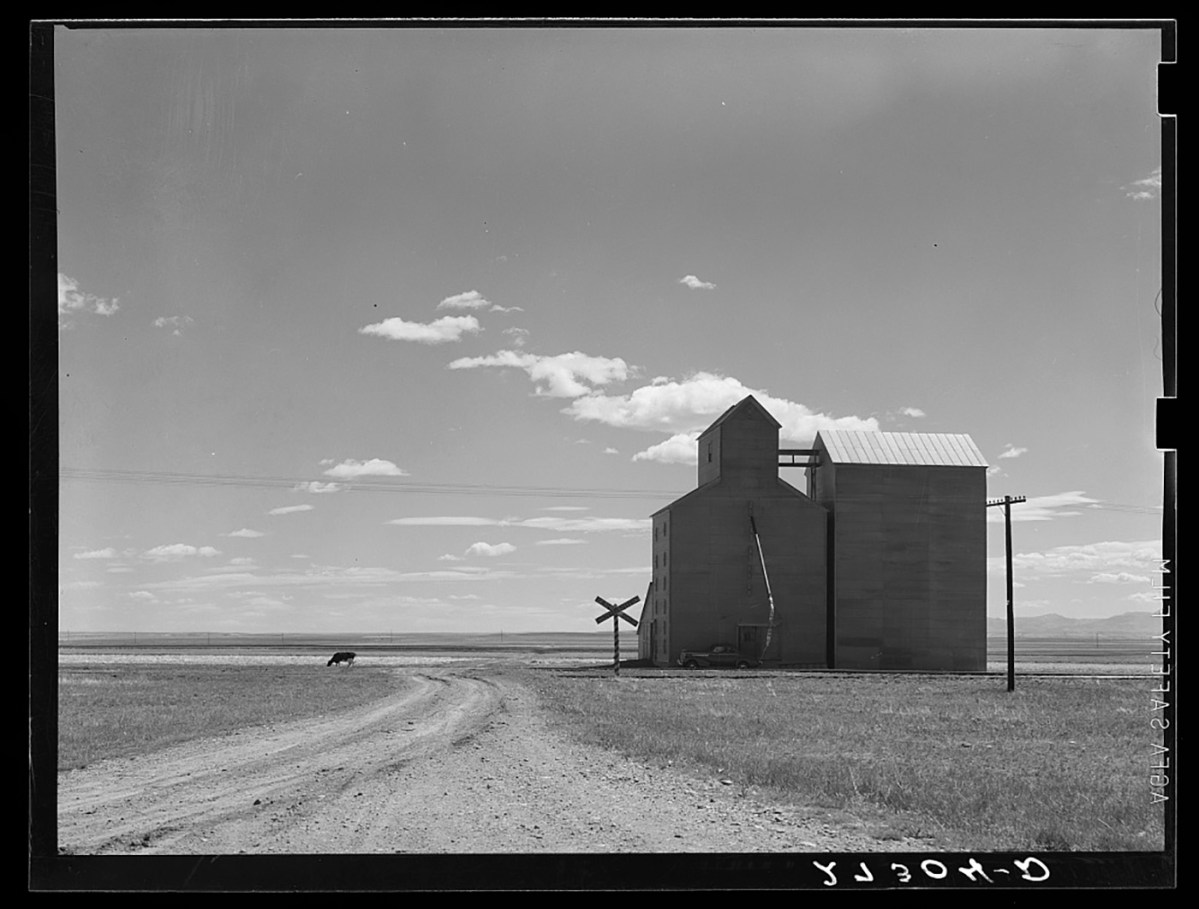
My friend Philip Aaberg died in late May. Phil was born in Havre, Montana, and raised in Chester, a town of 850 on the Highline, 60 miles south of the Alberta border, the seat of Liberty County. As a boy learning piano in a vast rural wheat-growing area of the West, he’d take the train on weekends to Spokane, Washington, where he received private lessons. After high school, he won a Leonard Bernstein Scholarship to study at Harvard College, where he received a bachelor’s in music. He then moved to Oakland, California, where he was a member of the Elvin Bishop Band. The group was at the height of its fame, and the job offered a good living.
Opinion
But after a time, Phil found playing the same basic riffs over and over was unsatisfying. He left the band and signed a contract with Windham Hills Records, producing several very successful solo piano recordings. The day came when that also didn’t fully answer the questions Phil asked of music and of himself.
Returning to Chester where he’d grown up, Phil told me he wanted to show people, both outsiders and his friends and neighbors, that being from a small town in the great outback of northern Montana didn’t condemn one to being mediocre, that being good at something is not so much the result of individual genius as of individual and collective effort. If you work hard at something, you get better at it. In Chester, Phil and his wife Patty opened and ran a B&B and a recording studio. Phil began performing regularly throughout Montana while continuing to travel widely to play on stages far from home.
I first met Phil through a phone call he made telling me that he was a composer working on a choral piece celebrating the landscape and history of northern Wyoming and that he would like to use poetry I’d published as the basis for the work’s text. He called the piece “Ucross, Pop. 25,” which is what it says on the sign at the junction of US Highways 14 and 16 southeast of Sheridan and northeast of Buffalo.
When the Ucross piece was finished, Phil invited me to be one of the musicians playing for the premier. In addition to Phil on piano, the musicians included a Julliard-educated violinist who had received several Grammy nominations and the cellist in the band Brave Old World, first-place winner at the International Klezmer Festival in Safed, Israel. The cellist had also played with Country Joe and the Fish, the Bay Area rock band that performed “The Vietnam Rag” at Woodstock in 1969. “Come on all you big strong men, Uncle Sam needs your help again, he got himself in a terrible jam, way down yonder in Vietnam.”
Decades later, you could sing the same song and simply change the place where Uncle Sam got himself into a jam. But my subject is not government perfidy, it’s the ways in which a single life can transcend perfidy by helping us to believe in our abilities and so to believe more generously in the abilities of others.
Before beginning rehearsal for the finished Ucross piece, I was nervous and not a little bit intimidated. Being from a small town in northern Wyoming, I had to some degree internalized the notion that rural means mediocre and so worried I would not be able to keep up with the other musicians. When we finished the first run through of the music, Phil had a big grin on his face. I knew we’d done well — even me — and figured that was what had pleased Phil. But when he spoke it was to say, “I told you he’d be fine. You know there are plenty of great musicians who aren’t famous.”
I tell this little story not so much to prove my capability to myself and to others as to show the deep commitment Phil had to his place and to the people of that place. His music reflected his playful generous spirit and the geography from which he’d come and to which he returned — the sky and earth of the northern Rockies and Great Plains, the noise of the weather and the silence of the space. Phil showed again and again in his own work and in his way of encouraging others that we can be more than we often imagine, that we only need to commit ourselves to each other and to what we love.

I only learned today that Phillip Aaberg passed away in May. His music moves me so deeply every time I listen to it. I’ll never forget listening to ‘Before Barbed Wire’ driving down a highway in the pouring rain with tears streaming down my face. And seeing him perform was pure joy. Deepest sympathy to his friends, family and fans on the loss of a great composer and performer.
I don’t know how I got hooked on his music but I did. The world will always miss those who give with pure joy.
I have his “High Plains” CD. It is a wonderful piece.