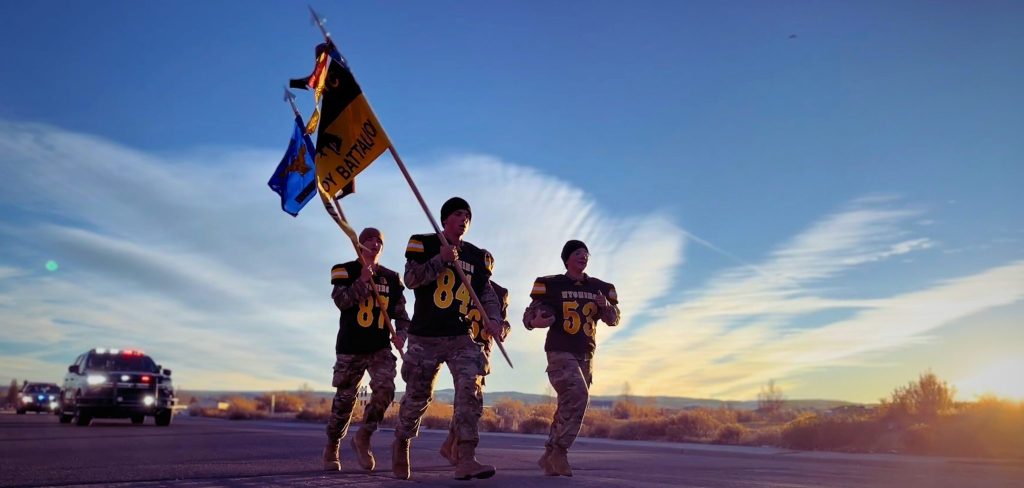
On the night of Aug. 18, 1920, the phone rang at Grace Raymond Hebard’s home in Laramie. Tennessee had just become the 36th state to ratify the 19th Amendment, finally securing woman suffrage as the law of the land. Hebard burst into applause, startling the operator on the line, then went out to help ring the bells at Laramie’s Episcopal cathedral.
Hebard, a University of Wyoming professor, had spent the better part of a year lobbying governors and legislators from Wyoming to Connecticut to help bring that night about. Her home state gave her reason to feel entitled to celebrate: Wyoming entered the Union in 1890 as the first state in the nation to guarantee women full, unrestricted voting rights. Statehood wasn’t the end of the story. It was the start of a decades-long argument, carried by Wyoming women onto the national stage, over whether the rest of the country would catch up.
Two years after admission, Wyoming women became the first in the nation to vote in a presidential election. By the 1890s, Colorado, Utah and Idaho had followed Wyoming’s lead. The state’s 1869 suffrage law, passed by a territorial legislature that few outsiders were watching, had become a model other states began to export.
Building the case, nationally
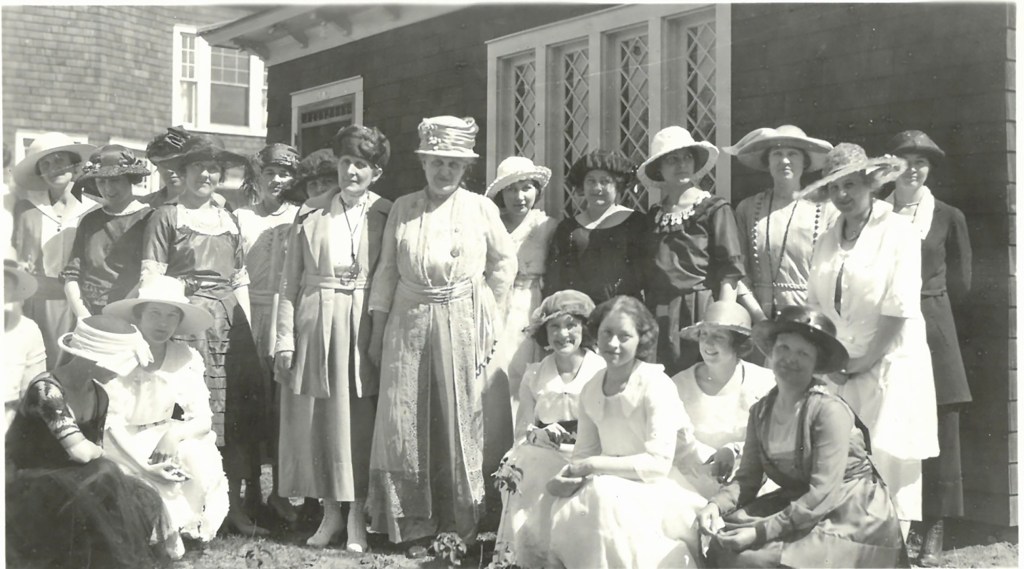
Much of that work happened through organizations, not headlines. In July 1916, the National Council of Women Voters held its third convention in Cheyenne, drawing about 25 Wyoming women and 16 delegates from other states, including Hebard and Mary Godat Bellamy, the state’s first woman legislator. The convention voted to affiliate with the National American Woman Suffrage Association, or NAWSA, then the country’s dominant suffrage organization.
That affiliation put Wyoming inside the machinery of the national fight. Congress passed the 19th Amendment in June 1919, requiring ratification by 36 of the 48 states, and suffragists nationwide began a coordinated push to get there.
Hebard and the ratification fight
Wyoming’s role in that push centered on Hebard herself. Born in 1861 in Clinton, Iowa, she earned a Bachelor of Science in civil engineering from the University of Iowa in 1882, then worked in Cheyenne as a draftsman before a brief, unhappy stint as deputy state engineer. She found a better opportunity at the newly opened University of Wyoming in Laramie, where she built a four-decade career, and she stayed close with her Iowa classmate Carrie Chapman Catt throughout.
Late in 1919, Wyoming suffragists formed a 26-person ratification committee led by Hebard. On Nov. 11, 1919, Catt, by then NAWSA’s nationally prominent president, met with the committee in Laramie as part of a final lobbying push. The committee’s task: Persuade Gov. Robert D. Carey to call a special session of the Legislature, because Wyoming’s regular session wouldn’t meet again in time to make the ratification deadline. Fellow committee member Theresa Jenkins, a well-known Wyoming suffragist and temperance orator, appealed to Carey directly. Carey’s answer, as Jenkins later recounted it, was personal: “Mrs. Jenkins, if for no other reason than that you have asked me to do this I would call this session, for I know that if you did not think it the right thing for me to do you would not have asked it.”
Carey called the session. The Legislature convened Jan. 26-28, 1920. When the Senate ratified unanimously on the first day, Hebard marked the occasion by presenting each senator with a rose; the House followed a day later and got carnations instead. Carey signed the resolution Jan. 28, making Wyoming the 27th of the 36 states needed.
By late March 1920, two-thirds of the states had ratified the amendment. Suffragists hoped Connecticut Gov. Marcus H. Holcomb would provide the final vote needed, and Catt recruited Hebard for the Suffrage Emergency Corps to press him. In Connecticut, Hebard made her case by pointing at her own record: “I am not making a plea for myself. I have voted for 38 years. What man in the audience has for 38 consecutive years voted for every state, county and municipal election, and during 10 years of that time traveled 104 miles every time he voted?” Despite the pressure, Holcomb, a staunch anti-suffragist, refused to budge. It took five more months, and a narrow vote in Tennessee, to finally put the amendment over the top. .
The limits of “every woman”
Yet the claim to equal voting rights was broader than the reality. Wyoming’s 1869 law required voters to be citizens or swear intent to become one — a bar that excluded Native American women, who were not recognized as U.S. citizens, and Chinese immigrant women, barred from naturalization under federal law. The 19th Amendment didn’t fix that gap. Native American women didn’t gain citizenship until the Indian Citizenship Act of 1924, and many states continued to bar Native voters through other means for decades after.
A wave of firsts
With the amendment ratified, Wyoming women kept adding to the state’s list of national firsts, some of them almost immediately.
Dayton elected Susan Wissler mayor in 1912, Wyoming’s first woman to hold the office. Jackson went further in 1920, voting in an all-woman town council that the national press nicknamed the “petticoat government.”
The biggest first was still to come. In 1924, a month after her husband, Gov. William B. Ross, died in office, Nellie Tayloe Ross was elected to succeed him. She took the oath Jan. 5, 1925 — the first woman governor in U.S. history.
Other firsts took longer to arrive. Women had briefly served on Wyoming juries in 1870, but that right had to be rebuilt from scratch: Not until 1950 did Louise Spinner Graf serve as foreman of a jury in Green River, the first in the state to include women in eight decades. Verda James, a schoolteacher in Casper, reached the Wyoming House in 1954 and served eight terms.
Then, in 1980, Cheyenne schoolteacher Harriett Elizabeth “Liz” Byrd became the first Black woman elected to the Wyoming Legislature. For nearly a decade there, she fought for one thing: a state holiday honoring Martin Luther King Jr. Nine times she introduced the bill. In 1990, it finally passed, as Martin Luther King Jr./Wyoming Equality Day.
Thyra Thomson and the Equal Rights Amendment
By the early 1970s, Wyoming’s highest-ranking elected woman was Secretary of State Thyra Thomson, in office for 24 years. When Congress passed the Equal Rights Amendment in 1972, Thomson used her position to lobby for it.
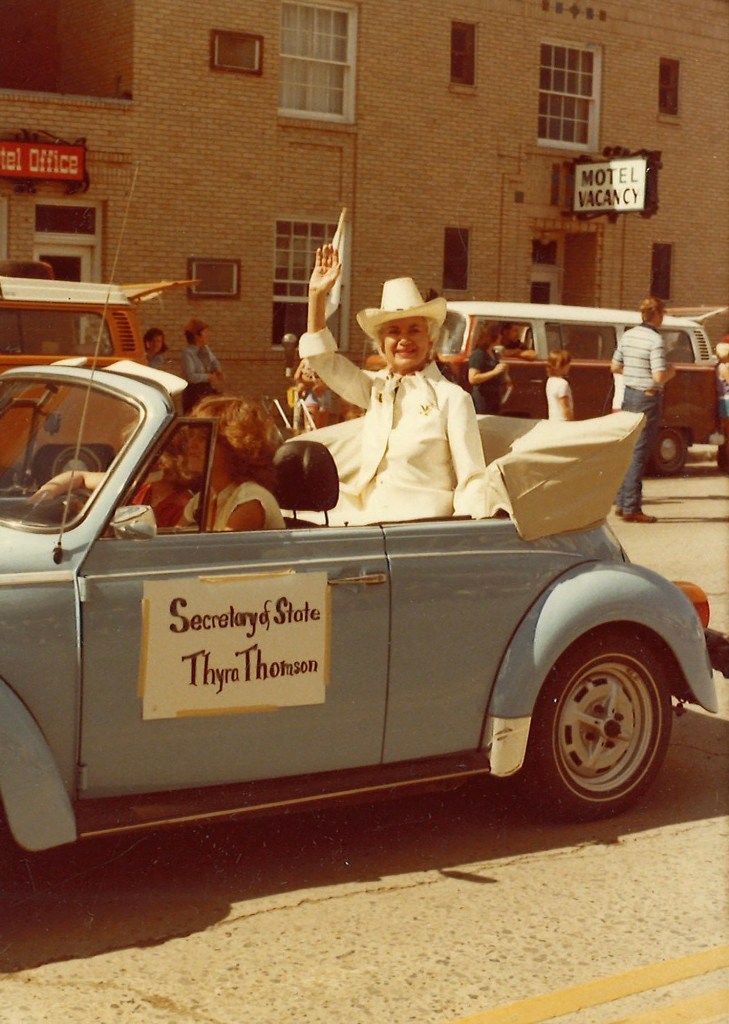
She didn’t have to make the case from scratch. The Legislature’s own Commission on the Status of Women had already made it in a 1972 report that didn’t soften the finding: “although our state is known as the ‘Equality State’…sex discrimination does exist and, in many cases, is accepted as normal.”
The Equal Rights Amendment vote that followed was closer than the state’s suffrage history might suggest, and the opposition wasn’t simply men against women: Many letters against ratification came from women who said they already had all the rights they wanted. The Wyoming House ratified 40 to 21 on Jan. 16, 1973. The Senate was the real fight, ratifying 17 to 12 on Jan. 24, making Wyoming the 23rd state to approve the amendment. Behind that vote stood a coalition of women’s organizations led by Selia Ribeiro and Julia Yelvington, backed publicly by both Gov. Stan Hathaway and Thomson herself.
The following year, only seven of the Legislature’s 92 members were women, six in the House and one in the Senate. Thomson said as much at a Casper Women’s Conference banquet that December: Wyoming’s early advances hadn’t finished the job. Federal equality laws were poorly enforced, and some state laws written to protect women had instead boxed them out.
Thomson kept making that case for the rest of her career. At a Cheyenne Equal Rights Amendment rally in 1981, she distilled it to one line: “All human beings must be equal and free. Love is liberation.” She was just as blunt about what hadn’t changed: Wyoming had never passed equal-pay legislation, a gap she said gave the Equality State a “black eye.” Testifying before a legislative committee in 1985, she cited women earning 54 cents for every dollar paid to men and dismissed cost objections outright: “Cost was the argument used against doing away with child labor and slavery.”
Where Wyoming stands now
The numbers suggest that the state’s early momentum didn’t carry as far as its reputation. In 1985, women held 24 of Wyoming’s 94 state legislative seats — a share that still ranked third in the nation. Four decades later, the number of seats held by women is almost unchanged — 24 of 93 in 2026 — but other states have gained ground, dropping Wyoming’s national rank to 41st.
The pay gap Thomson cited in 1985 has also outlasted her. Wyoming law has barred gender-based wage discrimination since an 1869 equal-pay statute for teachers, but Wyoming still has one of the largest gender pay gaps in the country. The pattern holds all the way to the top: The state hasn’t elected a second woman governor since Ross left office a century ago; its “first” has had no second.
Related Articles:
Women’s Suffrage and Women’s Rights (Special Topics page)
“Then I Breathed Freely:” Black Women Vote in Wyoming, 1870
Grace Raymond Hebard: Shaping Wyoming’s Past
South Pass City
Bibliography
- “Suffrage for Women – The Push to Ratify the 19th Amendment,” American Heritage Center, University of Wyoming, August 16, 2021.
- Rebecca Hein, “Wyoming Ratifies the 19th Amendment,” WyoHistory.org, Sept. 30, 2019.
- Mike Mackey, “Grace Raymond Hebard: Shaping Wyoming’s Past,” WyoHistory.org, Nov. 29, 2014.
- “Votes for Women – The 1920 Ratification Campaign,” American Heritage Center, Dec. 8, 2019.
- “Votes for Women! Remembering Carrie Chapman Catt, Suffragist,” American Heritage Center, Feb. 26, 2018.
- Jennifer Billock, “Women Have Been Voting in Wyoming for 150 Years, and Here Is How the State Is Celebrating,” Smithsonian Magazine, June 7, 2019.
- Indian Citizenship Act, Pub. L. No. 68-175, 43 Stat. 253 (1924), Enrolled Acts and Resolutions of Congress, 1789–2011, General Records of the United States Government, Record Group 11, National Archives, Washington, D.C.
- Tom Rea, “Wyoming’s First Woman Mayor,” WyoHistory.org, October 23, 2019.
- “A List of Firsts for Wyoming Women,” WyoHistory.org, July 29, 2019.
- Tom Rea, “The Ambition of Nellie Tayloe Ross,” WyoHistory.org, November 8, 2014.
- Bill Barton, “Louise Graf, Jury Foreman and Green River Citizen,” WyoHistory.org, September 20, 2016.
- Wyoming Legislative Service Office, “Verda James, First Full-term Woman Speaker of Wyoming’s House of Representatives,” WyoHistory.org, November 8, 2014.
- “Liz Byrd, First Black Woman in Wyoming’s Legislature,” WyoHistory.org, May 24, 2015.
- “Wyoming Equality Day: Liz Byrd’s Quest to Honor Martin Luther King, Jr.,” American Heritage Center, Jan. 16, 2017.
- Leslie Waggener, “On Her Own: The Life of Thyra Thomson” (unpublished article, forthcoming on WyoHistory.org), citing Bruce Thomson oral history interview, March 13, 2026, American Heritage Center and “Wyoming Women of Note,” Wyoming Secretary of State’s Office.
- “Wyoming Ratifies the Equal Rights Amendment,” WyoHistory.org, Dec. 3, 2019.
- T. A. Larson, History of Wyoming, 2nd ed., rev. (Lincoln: University of Nebraska Press, 1978), 610.
- Waggener, “On Her Own” (unpublished article), citing Thyra Thomson, remarks on the occasion of State and ERA rallies, June 30, 1981, Box 4, Thyra Thomson Papers, Coll. No. 09148, American Heritage Center.
- Waggener, “On Her Own” (unpublished article), citing Thyra Thomson, “Comparable Worth” (testimony before the Joint Appropriations Committee on House Bills 380 and 385, Wyoming Legislature, January 30, 1985), Box 4, Thyra Thomson Papers.
- Center for American Women and Politics (CAWP), “Wyoming,” Eagleton Institute of Politics, Rutgers University
- McCormick, “Women’s History Month in Wyoming,” WyoHistory.org blog, March 12, 2025