

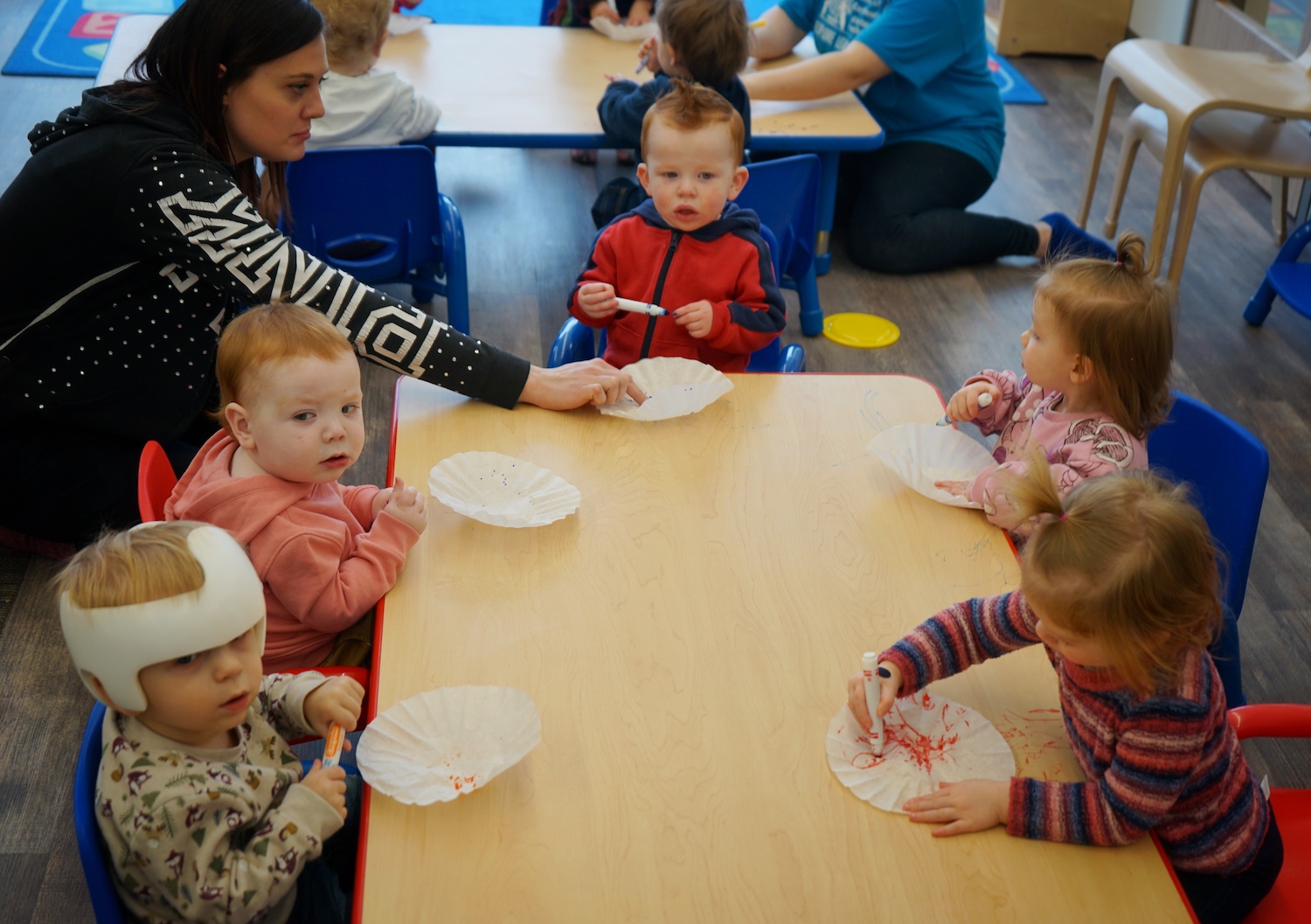
A Senate committee Friday stripped the early childhood education component of a bill designed to help families pay for non-public school or pre-K expenses — excising support some say is desperately needed to fill Wyoming’s preschool gaps.
“The pre-K aspect of this bill is the only part of the bill that really has me supporting the bill, and that’s been the case all along,” committee member Sen. Chris Rothfuss (D-Laramie) said. “I’ve been effectively swallowing the rest of the bill, which I think is pretty clearly unconstitutional, to finally move forward after 14 years some availability of pre-K for a diverse population and state of Wyoming where I believe it’s needed.”
House Bill 166 – Education savings accounts-1 has been killed and revived, amended heavily and contested by everyone from the Wyoming Education Association to homeschool parents.
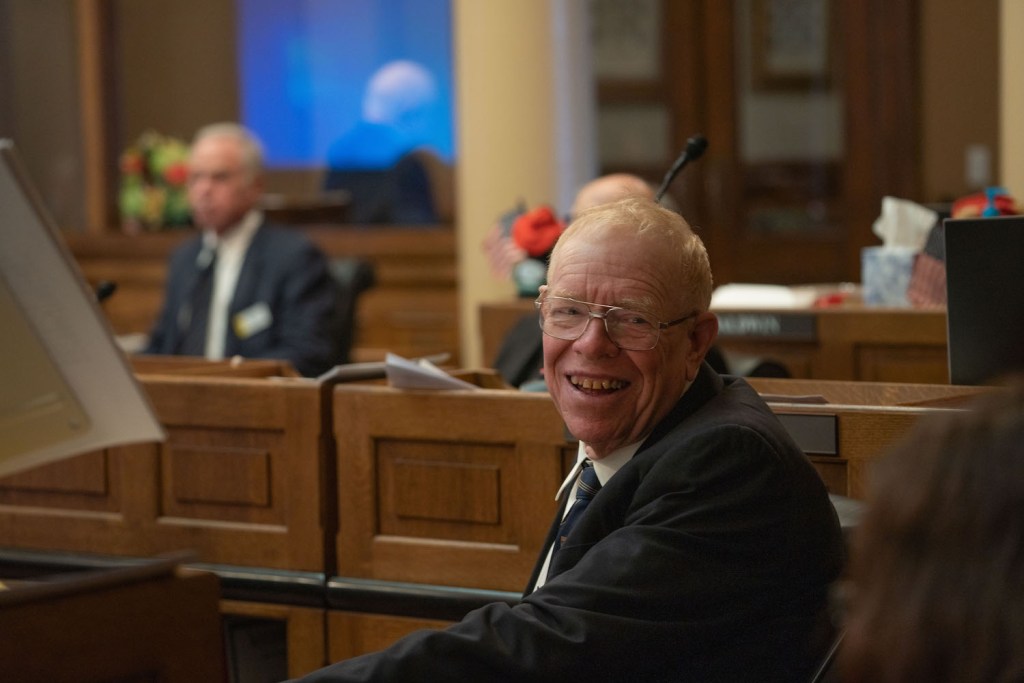
Senate Education Committee Chair Charlie Scott (R-Casper) said he originally supported the pre-K element, but that testimony convinced him the early childhood education component “is not ready quite for primetime.”
The amendment to remove that component, which Scott called “major surgery,” passed 4-1. Sen. Evie Brennan (R-Cheyenne), who proposed the change, did not share her reasoning for the amendment.
The committee also stripped the means testing that would have made families eligible for the program based on income. That was intended to provide the state legal coverage because the Wyoming Constitution doesn’t allow public funds to be used for private education, though it does allow the state to support low-income families.
Evolution of a bill
House Bill 166 evolved from the ashes of twin education bills that failed in the 2023 session and reflects growing conservative advocacy for parental choice. The 2023 measures would have given families $6,000 per K-12 student for tuition at any non-governmental school or related educational expenses.
After taking heat from the far right for blocking the legislation, Speaker of the House Albert Sommers (R-Pinedale) brought what he touted as compromise legislation to the Joint Education Committee during the interim.
The bill that emerged, House Bill 19 – Education savings accounts, would have created “education savings accounts” for qualified families to spend state funds on costs associated with preschool or non-public-school education. Though it was committee-sponsored, which usually translates to a better chance of consideration, it failed introduction on the first day of the session.

Rep. Ken Clouston (R-Gillette) then introduced the latest bill version. This one included a tiered-income system, providing $1,000-$5,000 based on family income. It also allowed expenses for kids as young as 4. His bill passed through the House.
What they said
Several homeschool parents expressed concerns to the Senate Education Committee that the bill could impact homeschoolers who don’t participate in the ESA program. Others said it’s akin to using public dollars for private education, which they oppose.
The Wyoming Education Association continued to rail against the bill, which it has been doing since the interim.
“The Wyoming Education Association does not support this bill by any means,” WEA Government Relations Director Tate Mullen told the committee last week. “We did conduct an independent policy analysis utilizing criteria such as accountability, administrative feasibility, policy efficiency, policy cost-effectiveness and constitutional considerations that impact political feasibility. The bill fails every single one of these measures.”

One of the group’s more substantial concerns, he said, was the early childhood education component. Though his group is a staunch supporter of the kind of high-quality early childhood education that provides a return on investment in terms of better success later in life, the bill did not ensure that standard.
“What this bill does, it throws money without providing the structure and the supports needed to provide that high-quality early childhood education to yield those results,” he said. “We would like to see a pre-K bill done right.”
He wasn’t alone in that view.
“It would be better to have a standalone early childhood education bill,” Rothfuss said, but added that it won’t be an easy road. “And again, the only reason I’ve supported this is that every time we’ve had a standalone early childhood education bill in the past, it’s failed because it didn’t have sufficient support. So this little monster was created to try and bring together a couple of communities of support, to try to get two concepts across the finish line.”
Sen. Bo Biteman (R-Ranchester) also said he’d like pre-K and K-12 separated. “They both need to stand alone and pass or fail based on their own merits,” he said.

They were worried that they almost helped working families with a massive issue (daycare costs) so they had to scrap the bill.